













































Boosting Scalability and Data Security
10X faster
customer onboarding year-over-year.
Petabyte-scale
architecture with shared core & isolated data privacy.


Cross-industry engineering experience across regulated and high-growth sectors.
All Industries


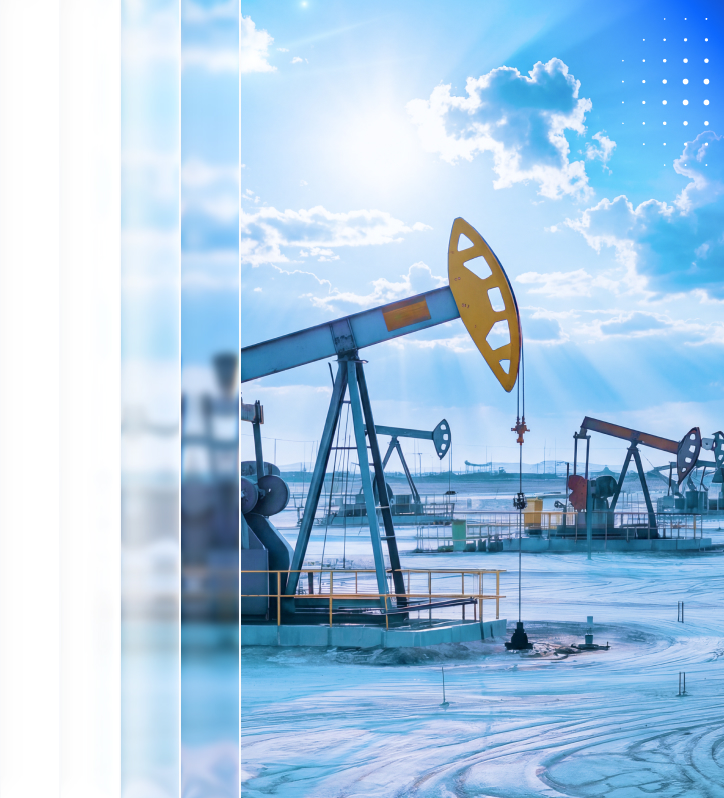



“Upstream companies using advanced analytics are capturing additional value of more than $5 per barrel of oil equivalent.” — McKinsey & Company



















“The oil and gas sector could reduce maintenance costs by up to 40% through AI-powered predictive maintenance solutions.” — McKinsey & Company
















 USA
USA PL
PL UA
UA MX
MX TR
TR
Zoolatech builds custom oil and gas software including pipeline integrity management systems, production optimization software, artificial lift management tools, field service applications, SCADA integration layers, and data analytics platforms — delivered across upstream, midstream, and downstream environments.
Yes — Zoolatech connects modern analytics and monitoring layers to existing SCADA and DCS infrastructure using standard O&G protocols including OPC UA, DNP3, Modbus, and IEC 61850, with the integration designed as a read-only data layer initially to eliminate operational risk before full write-back is added.
Development costs depend on operational scope, the number of systems requiring integration, and compliance requirements, and Zoolatech provides a detailed estimate following a structured discovery phase that maps operational requirements, data sources, and integration architecture.
Yes — Zoolatech builds mobile-first field service applications with full offline capability so that inspection forms, annotation tools, and data capture work without network access, with data synchronizing automatically when connectivity is restored.
Zoolatech supports OPC UA, DNP3, Modbus, and IEC 61850 for SCADA connectivity, WITSML for well data exchange, and LAS format for log data, alongside time-series databases including InfluxDB and Apache Kafka for streaming sensor data from distributed field assets.
Upstream software covers exploration and production — well management, reservoir data, and drilling operations; midstream software covers pipeline monitoring and gas transportation; downstream software covers refinery scheduling, process optimization, and product quality tracking across the oil and gas value chain.
Safety-critical requirements are addressed at the architecture stage through redundant data pipelines, fail-safe alert systems, role-based access control, and compliance-aware design for NERC CIP, API 570, and PHMSA requirements — built for real operating conditions across oil and gas operations.