













































DevOps Services and Consulting

Release Daily, Recover Instantly
DevOps consulting services for teams that ship to production daily.
Reliable partner
Reliable partner
Experienced team
Experienced team
Smart solutions
Smart solutions
hero image DevOps
hero image DevOps 590

Industry Leaders We Work With

What Changes After

Measured, Not Promised

Every outcome below comes from a delivered engagement, with the number attached.
Faster releases

Faster releases

Commit to main branch cut to 15 minutes on an Azure release-management program for Pandora.
Fewer failed builds

Fewer failed builds

CI pipeline success raised from roughly 70% to 95%+ on a large Ruby on Rails monolith by removing flaky tests.
Sub-minute rollback

Sub-minute rollback

Failed deployments reverse in under 1 minute, so a bad release costs seconds of exposure rather than an incident bridge.
Faster incident recovery

Faster incident recovery

Centralized monitoring on Datadog, PagerDuty, and Sumo Logic cut mean time to acknowledge and recover for a lending platform.
Resilience across regions

Resilience across regions

A multi-region POS payments platform safeguarded $110M in revenue, with recovery from regional failure cut from hours to minutes.
Security inside pipeline

Security inside pipeline

File-access infrastructure modernized to a fully SOC 2 and FedRAMP certified state, with controls enforced in the pipeline.
Lower platform cost

Lower platform cost

Storage costs 7x lower and 10x savings running workloads on AKS instead of Azure Functions.
Higher throughput

Higher throughput

Event processing raised from 21K to 150K events per hour, 7x faster, on the same pipeline.

“By 2027, 80% of large organizations will embrace platform engineering to scale DevOps initiatives.” — Gartner

Most delivery teams already have the tools. The gap is a platform developers can use without a ticket, and someone accountable for it.
DevOps Services Explained

What DevOps Services and Consulting Actually Cover

DevOps services cover the engineering work that moves code from commit to production reliably, and DevOps consulting adds the assessment that decides which fix comes first.
Pipeline engineering

Pipeline engineering

CI/CD design with test gates and rollback, so every merge is releasable and every release is reversible.
Infrastructure as code

Infrastructure as code

Environments defined in Terraform and Ansible, reproducible from a repository rather than rebuilt by hand.
Containers and orchestration

Containers and orchestration

Docker images and Kubernetes clusters that make workloads portable across AWS and Azure without rewriting them.
Observability and security

Observability and security

Monitoring, alert routing, and security scanning embedded in the delivery pipeline instead of bolted on afterward.
Consulting layer

Consulting layer

DevOps development services start with an assessment of where delivery breaks, then a roadmap ordered by risk.
Services and Solutions

Engineering, Not Tickets

DevOps services and solutions with named tools and measured outcomes.
CI/CD pipelines

Releasable merges, reversible releases

  • Azure DevOps and Jenkins pipelines gated on automated tests
  • Flaky-test elimination that raised CI success from 70% to 95%+
  • Automated rollback rehearsed in staging, executed in under 1 minute
  • Feature-branch pass rate lifted from 60–65% to 75–80%
  • QA and test automation coverage coordinated with our QA practice
Infrastructure as code

Environments rebuilt from a repository

  • Terraform modules for AWS and Azure accounts, reviewed like code
  • Ansible playbooks for configuration that used to live in runbooks
  • Environment parity enforced, so staging failures predict production ones
  • Drift detection that flags manual changes before they become incidents
  • Policy checks block non-compliant infrastructure
Containers and orchestration

Workloads that move without rewrites

  • Docker images with pinned bases, scanned on every build
  • Kubernetes on AKS running production workloads at 99.999% availability
  • DevOps automation services replacing manual deploys
  • Autoscaling tuned to observed load, not to the default template
  • Workload migration from Azure Functions to AKS with 10x savings
Monitoring and observability

Alerts routed to owners

  • Datadog dashboards tied to services, not to hosts
  • PagerDuty routing so the person paged can actually fix it
  • Sumo Logic and Splunk log pipelines with retention set by compliance
  • MTTA and MTTR reduced through one centralized monitoring rollout
  • Job-processing observability that eliminated vanishing jobs entirely
DevSecOps

Controls inside the pipeline

  • Dependency and secrets scanning on every build, blocking on findings
  • Policy checks on infrastructure changes before they apply
  • Access enforced through code and roles rather than tickets
  • File infrastructure modernized to SOC 2 and FedRAMP certified state
  • Audit evidence generated by the pipeline, not assembled before audits
Platform engineering

Self-service paths for developers

  • Golden-path templates so new services ship without an ops ticket
  • Internal platform run as a product with backlog and owners
  • Platform engineers embedded with your developers
  • Onboarding measured from repository access to first deploy
  • Self-service environments provisioned without waiting on operations
Testimonials

What Our Customers Say

“In the case of Zoolatech, it's a very tight partnership.
The team at Zoolatech is incredibly collaborative, and we work as a team despite being thousands of miles away from each other.”
Spencer Rascoff
CEO Match Group
5/5
“Zoolatech has been a key technology partner for Pandora,
enhancing our software development and deployment capabilities. They're ambitious, supportive, fast-moving, and well-skilled, with sound ethical values.”
Erika Romsics
Contract and Vendor Manager, Pandora
erica
5/5
“The apps they’ve developed give us the opportunity to get more customers.
We’re providing more services to target big customers. We can install jobs faster and identify reduce bottlenecks, so we’re providing a better customer experience.”
Aida Youssef
Senior Director of Software Engineering, Complete Solaria
5/5
“Zoolatech has access to a deep talent pool and knows how to identify client's needs.
With the help of Zoolatech, went from a very early and incomplete prototype to the MVP release, the first production release, and the first paying customer!”
Greg Wagenhoffer
CEO, GreenVisr
5/5
“Zoolatech enabled us to build a world-class engineering team quickly and efficiently.
Zoolatech's pre-screening process and engineer training are customized for providing effective engineers that can contribute immediately to accelerating product roadmaps.”
Shariq Minhas
CTO, SVSG
5/5
“We can recommend Zoolatech
for their talent pool, attention, ability to understand our requirements, candidate screening process and constant communication.”
Chaitanya Pallapothula
SVP, Tailored Brands, Inc.
5/5
“Zoolatech’s developers quickly became an integral part of our team effort
with whom we shared daily stand up calls. Overall, Zoolatech fit well with our needs for agile development and continued to adapt as our needs evolved.”
Forrest Glick
UX Designer, Stanford University
5/5
“Working with Zoolatech has been a driving force in our business offerings.
The team utilizes it's experience and expertise meshing with our internal team creating a positive work environment. Zoolatech is by far one of the best teams to work with in the industry.”
Kris Naidu
CEO, Zeacon
Kris Naidu CEO, Zeacon
5/5
Delivery Maturity

Where Delivery Stands

DevOps transformation services start by placing your delivery on one of four levels. Find yours.
Manual
Repeatable
Automated
Self-service

Releases are events

A release is a calendar entry, deploys need a person, rollback means redeploying from scratch.
  • What breaks: Releases slip because they are risky, so they get bigger, so they get riskier.
  • What we do first: Automate one deploy end to end and rehearse its rollback until it takes minutes.
  • What you get: A reversible release path, which makes every later change safer to attempt.
Image slot

CI exists, unevenly

Pipelines run but fail unpredictably, infrastructure is partly coded, monitoring reports incidents after users.
  • What breaks: Engineers stop trusting red builds, retries become a habit, and real failures hide among flaky ones.
  • What we do first: Stabilize the pipeline by removing flaky tests and adding guardrails, as on the 70% to 95%+ program.
  • What you get: A pipeline whose red actually means broken, which is the precondition for gating on it.
Image slot

Gated and declarative

The pipeline gates on tests, infrastructure is declarative, and alerts route to service owners.
  • What breaks: Delivery is safe but still needs an ops engineer in the loop for every new service.
  • What we do first: Extract the repeated setup into templates and give teams a path that needs no ticket.
  • What you get: Consistent environments across services and a platform team with a measurable backlog.
Image slot

Platform as product

Developers ship without an ops ticket, the platform has owners, and reliability has explicit targets.
  • What breaks: Very little, which is why the next risk is cost drift and unowned services.
  • What we do first: Set error budgets and ownership per service, then run the platform as a managed model if you prefer.
  • What you get: Reliability that is measured in deployment frequency, lead time, and recovery time, not asserted.
Image slot

“Elite performers deploy 182 times more frequently than low performers and recover 2,293 times faster.” — Google Cloud


The gap is not tooling, since both groups run the same clouds. The difference is what the pipeline gates on and who owns recovery.
DevOps Consulting

Artifacts, Not Advice

Consulting that ends in documents your team acts on.
Maturity assessment
Delivery roadmap
Toolchain and architecture
Enablement and on-call

Current-state map

A maturity assessment maps pipelines, infrastructure, and incident response against a target state, then produces a prioritized roadmap.
  • You receive: A current-state map of every pipeline and environment, a ranked bottleneck list with risk ratings, and a prioritized plan.
  • Who is involved: Your platform lead and one engineer per product team, for interviews and pipeline walkthroughs.

Risk-ordered fixes

Enterprise DevOps consulting sequences fixes by cost of downtime and effort, so the first sprint removes the most risk.
  • You receive: A phased roadmap with effort estimates, dependencies, and the metric each phase is expected to move.
  • Who is involved: Engineering leadership for the trade-offs, since the roadmap decides what waits and that is a business call.

Consolidate and review

Toolchain consolidation plus Kubernetes and cloud architecture review, with cloud migration handled by our cloud practice.
  • You receive: A tool inventory with overlap and licensing, a target toolchain, and an architecture review with named risks.
  • Who is involved: Your architects and the engineers who operate the current tools, since they know where the workarounds live.

Capability that stays

Incident response and on-call design, plus enablement so your internal team runs the platform after we leave.
  • You receive: An on-call rotation with escalation paths, runbooks per service, and a training plan tied to your platform.
  • Who is involved: The engineers who will carry the pager, because a rotation designed without them fails at the first page.
Image abstract 1 368
Implementation Process

From Assessment to Autonomous Delivery

DevOps implementation services follow six steps, each closing with an artifact and a named owner on your side, so handover is a formality rather than a cliff.
Step 1

Assessment and baseline

We map pipelines, infrastructure provisioning, environment parity, monitoring coverage, and incident process, then baseline deployment frequency, lead time, and recovery time. Output: maturity read and bottleneck list. Your platform lead participates.
Step 2

Roadmap and prioritization

Fixes are ordered by cost of downtime and effort, not by ease of demo. Output: a phased plan with the metric each phase should move and the dependencies between phases. Engineering leadership signs off.
Step 3

Pipeline rebuild

CI/CD is rebuilt or stabilized with test gates, flaky-test removal, and rehearsed rollback, coordinated with our QA and test automation practice. Output: a pipeline whose red means broken and a rollback under 1 minute.
Step 4

Infrastructure as code

Environments move into Terraform and Ansible, with drift detection and parity between staging and production. Output: every environment reproducible from the repository, reviewed through the same pull-request flow as application code.
Step 5

Observability and on-call

Metrics, logs, and alerts are wired to service owners through Datadog and PagerDuty, and an on-call rotation is designed with the engineers who carry it. Output: dashboards per service and runbooks per alert.
Step 6

Handover or managed run

Either your team takes over with training and documentation, or we continue as a managed DevOps model with production support. Output: a signed operating agreement stating who owns what, with the ownership line drawn explicitly.
Start with the assessment. The roadmap it produces sets every step that follows it.
Contact Sales
Our DevOps Toolchain

Tools We Operate in Production

Every name here runs on a delivered engagement, not on a slide.
AWS
AWS
Microsoft Azure
Microsoft Azure
Kubernetes
Kubernetes
Docker
Docker
Terraform
Terraform
Ansible
Ansible
Azure DevOps
Azure DevOps
Jenkins
Jenkins
Datadog
Datadog
PagerDuty
PagerDuty
Sumo Logic
Sumo Logic
Splunk
Splunk
Snyk
Snyk
and other
Engineering Disciplines

Platform Engineering, SRE, and Observability

Where DevOps ends, where SRE starts, and what turns both into a product.
check icon

DevOps versus SRE

DevOps builds the delivery platform, SRE owns the reliability of what runs on it, and platform engineering turns both into a self-service product for developers. The three overlap in tooling and differ in what they are accountable for.
check icon

Site reliability engineering

SRE work covers how a system behaves under load and failure: error budgets, capacity planning, and incident response with blameless review. Reliability targets are set per service, so shipping faster is a decision made against a budget.
check icon

Platform engineering

An internal platform is a product with users, a backlog, and owners. We build golden paths so a new service gets a pipeline, environment, and dashboards from a template, and developers ship without filing a ticket to operations.
check icon

Incident response and on-call

Rotations designed without the engineers who carry them fail at the first page. We design escalation paths, write runbooks per alert, and route pages to whoever can act. MTTA and MTTR both fell on a lending platform this way.
check icon

GitOps

The repository is the source of truth for infrastructure and deployments. Changes reach production through pull requests, reviewed and merged, and a controller reconciles the cluster to what the repository says. Manual changes show up as drift, not as surprises.
check icon

Progressive delivery

Blue-green and canary releases expose a change to a slice of traffic before the whole. Combined with sub-minute rollback, a bad release becomes seconds of exposure to a fraction of users rather than an outage.
check icon

Disaster recovery and multi-region

Recovery from regional failure is rehearsed, not documented. On a multi-region POS payments platform, failover moved from hours to minutes and safeguarded $110M in revenue, because the runbook had been executed before it was needed.
check icon

Secrets management

Credentials live in a vault with rotation and audit, never in a repository or a pipeline variable. Scanning on every build catches the ones that slip, and access is granted to workloads by identity rather than shared keys.
check icon

Policy as code

Infrastructure changes are checked against written policy before they apply: allowed regions, required tags, encryption at rest, network exposure. A rule that lives in code is enforced every time, which is what auditors mean by continuous compliance.
check icon

AI-assisted operations

AI tooling helps with incident summarization, log triage, and test generation inside the pipeline, with engineers owning every change that merges. Model selection and MLOps sit with our AI and machine learning services, not on this page.
The tooling is installable by anyone. The engineers who keep it reliable are not, and ours tend to stay.
60%+
Senior engineers across teams
93.7%
Employee retention
Our Edge

Proof Over Promises

A DevOps services company should be judged on pipelines it has already fixed under load.

Fixed under traffic

CI success went from roughly 70% to 95%+ on a large Rails monolith that kept shipping throughout the work.

Built, then run

Centralized monitoring and AWS cloud operations enablement were both delivered with the operating model, not just the code.

Reliability measured

99.999% availability, rollback under 1 minute, commit to main in 15 minutes: numbers from one engagement, not a benchmark.

Compliance-grade delivery

SOC 2 and FedRAMP certified delivery, with US leadership and engineering in Poland, Ukraine, Mexico, and Turkey.
Why Choose Us

Why Businesses Trust Us

logo
At Zoolatech, we create engineering teams for industry leaders across the US and Europe — teams that move fast, think big, and deliver strong impact.
96%
Client Satisfaction
300+
Successful Projects
2017
Year Founded
98%
Retention Rate
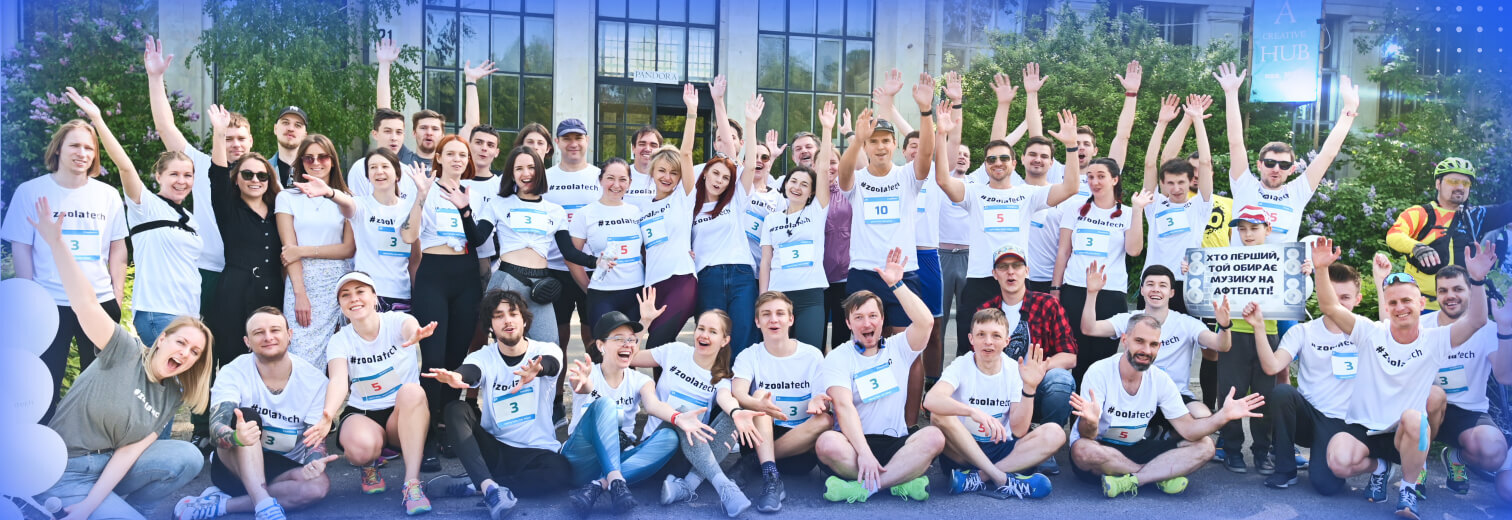
team sport photo
At Zoolatech, we create engineering teams for industry leaders across the US and Europe — teams that move fast, think big, and deliver strong impact.
Engineering Excellence. Every Time.
main award png (1)
At Zoolatech, we create engineering teams for industry leaders across the US and Europe — teams that move fast, think big, and deliver strong impact.
team sport photo
600+
Employees
Headquarters
USA
Development Centers
PL
UA
MX
TR

Start with an Assessment

Tell us the branch that stalls or the incident that repeats.
Contact Sales
Questions You May Have

What does a DevOps consultant do?

A DevOps consultant assesses how code reaches production, identifies where it stalls or breaks, and sequences the fixes by risk. In practice that means auditing pipelines, provisioning, environment parity, alerting, and on-call structure, then producing a maturity read and a prioritized roadmap tied to specific failure points rather than a generic framework.

What is the difference between DevOps, SRE, and platform engineering?

DevOps work is about how changes move to production, SRE work is about how the system behaves under load and failure, and platform engineering packages both so developers ship without filing tickets. The three share tooling and differ in what each is accountable for: throughput, reliability, and developer self-service respectively.

How does a DevOps engagement start?

It starts with an assessment rather than a proposal, mapping the current pipeline, provisioning, environment parity, monitoring coverage, and incident process against a target state. The output is a maturity read plus a list of fixes ordered by risk and cost of downtime, so the first sprint addresses the failure that costs the most rather than the one easiest to demo.

How do you choose a DevOps services company?

Ask for evidence on four points: pipelines they have fixed under production traffic with before-and-after numbers, whether they run what they build or hand it over and leave, whether they can name the toolchain they actually operate, and whether reliability is expressed as deployment frequency, lead time, rollback time, and recovery time. Logos and badges answer none of those.

What is managed DevOps, and how is it different from consulting?

Managed DevOps, often called DevOps as a service, means an external team owns and operates the delivery platform on an ongoing basis, covering pipelines, infrastructure, monitoring, and production support against agreed reliability targets. Consulting is bounded to an assessment, a roadmap, and an implementation phase, after which the internal team takes over, and many engagements combine both.

Which clouds and tools do you work with?

Delivered engagements include AWS environments automated with Terraform, Ansible, and Docker, and Azure environments using Azure DevOps and Azure Kubernetes Service for release management. Kubernetes, Jenkins, Datadog, PagerDuty, Sumo Logic, Splunk, and Snyk are all in production use across client work, and cloud migration itself is handled by our cloud practice.

How do you handle security and compliance in the delivery pipeline?

Security controls run inside the pipeline rather than as a pre-release gate: dependency and secrets scanning on every build, policy checks on infrastructure changes, and access enforced through code rather than tickets. Compliance scope is defined during the assessment because it changes architecture, and one delivered engagement modernized file-access infrastructure to a fully SOC 2 and FedRAMP certified state.

How much do DevOps services cost, and how long do they take?

Cost is driven by how much of the existing pipeline must be rebuilt rather than tuned, the number of environments and cloud accounts in scope, whether compliance applies to the delivery process itself, and whether the engagement ends at handover or continues as a managed model. A firm number and timeline follow the assessment, because until pipelines and environments are mapped, any estimate is a guess.