











































Custom Software Development Services

Transform Your Vision into Powerful Solutions
Custom software development services for systems that cannot fail.
Reliable partner
Reliable partner
Experienced team
Experienced team
Smart solutions
Smart solutions
Software Development 1920
Software Development 1440

Industry Leaders We Work With

Custom Software Explained

What Custom Software Development Actually Covers

Custom software development is the design, build, and long-term operation of applications written for one organization’s processes rather than licensed off the shelf.
Discovery and architecture

Discovery and architecture

Users, workflows, and integrations get mapped before any code exists, so estimates reflect the real system.
Build and testing

Build and testing

Engineers implement in sprints against a regression suite, so every increment reaches production in a releasable state.
Integration work

Integration work

New software connects to the ERP, identity, payment, and data systems already running, rather than replacing them wholesale.
Support model

Support model

Monitoring, incident response, and dependency updates keep the software running after launch, handled by the people who built it.
When custom wins

When custom wins

Custom software development services pay off when the process is your competitive advantage and licensing outgrows its value.

“By 2028, 90% of enterprise software engineers will use AI code assistants.” — Gartner

Your vendor almost certainly uses AI tooling already. The question worth asking is who reviews the output and who answers for it in production.
Services We Deliver

Build, Modernize, Run

Full-cycle software development services from discovery to production.
MVP and discovery

Prove the product before scaling

  • Two-to-four-week discovery producing scope, architecture, and a costed backlog
  • Software product development services sized for a first production release
  • Cross-functional squad covering product, design, engineering, and QA
  • Instrumentation from day one, so usage data guides the roadmap
  • Proven: 6-month MVP for an iOS and Android social app
Web and front-end

Interfaces that hold under load

  • React, TypeScript, and Next.js applications built for 10M+ user scale
  • Accessibility and Core Web Vitals treated as release criteria
  • Design systems shared across web and mobile teams
  • Editorial platform with 8,000+ articles migrated and workflow fully automated
Back-end and APIs

Services other systems can trust

  • Event-driven architectures on Kafka handling 2.5B records per day
  • API contracts versioned and documented before consumers integrate
  • Microservices migration cutting a retailer’s operating costs by 30%
  • Kafka hub reducing latency by 50% for a streaming platform
  • Enterprise authentication, rate limiting, and observability built in
Mobile applications

Native and cross-platform, one backlog

  • Swift, Kotlin, Flutter, and React Native, chosen per product
  • Retail app program reaching 10M+ downloads and +22% purchases
  • Guest checkout on Android lifting mobile revenue 12%
  • Release pipelines with automated device testing before store submission
Legacy modernization

Modernize without stopping production

  • Dependency mapping of undocumented code before any rewrite begins
  • Strangler-pattern migration behind a routing layer, old system live
  • Azure modernization holding 99.999% availability across main components
  • 60+ security issues resolved during a Ruby on Rails upgrade
  • Regression suites built against observed behavior before each migration wave
Cloud-native platforms

Infrastructure that scales with demand

  • Cloud native application development on AWS, Azure, and GCP
  • Kubernetes and Terraform standardizing environments across teams
  • Event pipeline modernization delivering 4× lower cloud cost, 7× throughput
  • Solar-industry legacy platform migrated to AWS with continuous delivery
  • Zero-downtime migration patterns for systems that serve traffic 24/7

Data, AI, and Operations

Services that keep a platform accurate, intelligent, and running.
Data engineering

Data engineering

Pipelines and warehouses that raised retail inventory accuracy from 60% to 90%
AI and ML

AI and ML

Production ML and LLM features, including a delivery model adding $3.9M EBIT
Enterprise systems

Enterprise systems

Enterprise software development services for ERP, CRM, MES, and QMS estates
Test automation

Test automation

6× faster regression cycles and CI stability raised from 70% to 95%
DevOps and infrastructure

DevOps and infrastructure

CI/CD, infrastructure as code, and observability across 100+ services
Architecture advisory

Architecture advisory

Custom software development consulting from VP-level engineers to unblock architecture decisions
Testimonials

What Our Customers Say

“In the case of Zoolatech, it's a very tight partnership.
The team at Zoolatech is incredibly collaborative, and we work as a team despite being thousands of miles away from each other.”
Spencer Rascoff
CEO Match Group
5/5
“Zoolatech has been a key technology partner for Pandora,
enhancing our software development and deployment capabilities. They're ambitious, supportive, fast-moving, and well-skilled, with sound ethical values.”
Erika Romsics
Contract and Vendor Manager, Pandora
erica
5/5
“The apps they’ve developed give us the opportunity to get more customers.
We’re providing more services to target big customers. We can install jobs faster and identify reduce bottlenecks, so we’re providing a better customer experience.”
Aida Youssef
Senior Director of Software Engineering, Complete Solaria
5/5
“Zoolatech has access to a deep talent pool and knows how to identify client's needs.
With the help of Zoolatech, went from a very early and incomplete prototype to the MVP release, the first production release, and the first paying customer!”
Greg Wagenhoffer
CEO, GreenVisr
5/5
“Zoolatech enabled us to build a world-class engineering team quickly and efficiently.
Zoolatech's pre-screening process and engineer training are customized for providing effective engineers that can contribute immediately to accelerating product roadmaps.”
Shariq Minhas
CTO, SVSG
5/5
“We can recommend Zoolatech
for their talent pool, attention, ability to understand our requirements, candidate screening process and constant communication.”
Chaitanya Pallapothula
SVP, Tailored Brands, Inc.
5/5
“Zoolatech’s developers quickly became an integral part of our team effort
with whom we shared daily stand up calls. Overall, Zoolatech fit well with our needs for agile development and continued to adapt as our needs evolved.”
Forrest Glick
UX Designer, Stanford University
5/5
“Working with Zoolatech has been a driving force in our business offerings.
The team utilizes it's experience and expertise meshing with our internal team creating a positive work environment. Zoolatech is by far one of the best teams to work with in the industry.”
Kris Naidu
CEO, Zeacon
Kris Naidu CEO, Zeacon
5/5

“Gen AI can lead to a 40 to 50 percent acceleration in tech modernization timelines.” — McKinsey & Company

The acceleration is real, and it lands in the tasks nobody misses: code comprehension, test generation, and migration scaffolding. The judgment stays human.
How We Build

AI-Assisted Delivery, Human-Owned Architecture

Where AI tooling earns its place in our delivery, and where named engineers keep control.
check icon

Legacy comprehension first

Reading an undocumented codebase used to consume the first months of a modernization. We now run dependency mapping and behavior discovery with AI tooling before any code is written, then engineers verify the map against production traffic.
check icon

Regression tests generated

Migration safety depends on a test suite that captures how the old system actually behaves. AI drafts regression sets against observed behavior, and QA engineers review every case before the suite becomes the safety net.
check icon

Regression tests generated

Migration safety depends on a test suite that captures how the old system actually behaves. AI drafts regression sets against observed behavior, and QA engineers review every case before the suite becomes the safety net.
check icon

Migration scaffolding drafted

Framework upgrades and API contract rewrites follow repeatable patterns. AI produces the scaffolding for those patterns, and nothing merges until a named engineer has reviewed the diff and run it against the regression suite.
check icon

Review before review

Automated review runs before human review, catching style, dependency, and obvious logic issues early. Senior engineers then spend their review time on architecture, data flow, and security boundaries instead of formatting.
check icon

Documentation from code

Architecture decision records and runbooks get drafted from the codebase and commit history, then verified by the team that owns the system. Your operations staff inherit documentation that matches what actually runs.
check icon

Named review before merge

Every AI-drafted change passes review by an engineer whose name is on the pull request. There is no path from generated code to your main branch that skips a person.
check icon

Architecture stays human

Data models, service boundaries, security perimeters, and production accountability are never delegated to a model. These decisions carry the long-term cost of the system, and a person you can call owns each one.
check icon

Your code, your terms

Your code is never used to train models, whether ours or a vendor’s. Approved tools run under enterprise agreements with retention disabled, license and secret scanning gates every generated change, and the policy is written into the statement of work.
check icon

Governed under ISO 42001

AI use in delivery runs under a management system certified against ISO 42001, the international standard for AI governance. Tool approval, risk assessment, and review requirements are documented, audited, and enforced on client engagements, including FDA-regulated ones.
check icon

Measured, not asserted

Industry benchmarks put AI-assisted modernization 40 to 50% faster. We measure the effect on our own engagements, comparing cycle time, review time, and test coverage before and after tooling, and share the numbers for your project type during discovery.
check icon

Synthetic test data

Production data never leaves your environment for tooling. Where tests need realistic records, we generate synthetic sets that match schema and distribution, so nothing sensitive ends up in a prompt or a fixture.
check icon

Prompts under version control

The prompts, context files, and tool configurations that shape generated code live in the repository next to the code, reviewed and versioned like any other engineering asset.
Architecture Decisions

AI-Ready by Design

Adoption fails in the data layer, not the model.
Data layer
API surface
Audit trail
Access isolation

Clean, event-shaped data

A model reaches only the data you expose. We design a clean data layer and event model from the start.
  • Event streams: Business actions publish events, so future models and agents see changes as they happen, not in nightly batches.
  • Data engineering: Warehouses and pipelines built with our data engineering and analytics practice, ready for training and inference workloads.

Callable by agents

Agents need actions they can invoke safely. Every capability gets an API with a contract, not a screen to scrape.
  • Contract-first design: OpenAPI or gRPC specifications define each action, its inputs, and its failure modes before implementation starts.
  • Idempotent operations: Actions can be retried safely, which matters when a non-human client calls them thousands of times an hour.

Traceable decisions

When a model influences an outcome, regulators and your own teams will ask why. The trail exists from day one.
  • Decision logging: Inputs, model version, and output are recorded for every automated decision, linked to the business record it affected.
  • Replayability: Stored inputs let you re-run a decision against a new model version and compare results before switching over.

Non-human access rights

An agent is a new kind of user with its blast radius. We scope its permissions like any other identity.
  • Scoped credentials: Each automated client gets least-privilege access, separate secrets, and a kill switch that revokes it in seconds.
  • Rate and cost limits: Budgets on calls and tokens stop a misbehaving agent from becoming an outage or invoice surprise.
Image abstract 1 368
Discovery to Delivery

Our Software Development Process

Every step ends in an artifact you can inspect and a decision you make. The order exists so integration risk surfaces in week 2, not month 6.
Step 1

Discovery and scoping

Your product owner, an architect, and a lead engineer map users, workflows, integrations, and constraints over 2 to 4 weeks. Output: a scoped backlog, a risk register, and an estimate with its assumptions listed.
Step 2

Architecture and integration design

Integration architecture is designed in the first sprint, not deferred to a second phase. Output: system diagrams, API contracts for every external dependency, and a data model your team signs off. Your architects and system owners are involved.
Step 3

Build in sprints

Two-week sprints deliver working increments to a staging environment. AI tooling handles test drafting and scaffolding here, with named review before merge. Output: demoable software every sprint and a burn-up you can read.
Step 4

QA and security testing

Automated regression, performance testing against your load profile, and threat-model-driven security testing run continuously rather than as a final gate. Output: test reports, a resolved-findings log, and a release-readiness checklist. Your QA and security leads review.
Step 5

Release and handover

Releases go out through your CI/CD pipeline with rollback rehearsed. Output: runbooks, architecture decision records, and a knowledge-transfer session with your operations team. DevOps and infrastructure automation covers the pipeline itself.
Step 6

Run and improve

The engineers who built the system monitor it, respond to incidents, and work a shared improvement backlog. Output: monthly reliability and cost reports, plus dependency and security updates applied on schedule.
Step 7

Review and re-scope

Each quarter, we review what shipped against what the business needed, then re-scope the next phase. Output: an updated roadmap and a clear recommendation on where custom development still pays off.
See what a first-sprint architecture package looks like before you commit to one.
Schedule a Call
Your project depends on engineers staying through it. Zoolatech has grown since 2017 without outside funding, which shapes who we hire and how long they stay.
60%+
Senior engineers across teams
92%
Employee satisfaction

Cost and Timeline

What Drives Cost

Custom software development cost depends on 5 drivers. A precise figure follows discovery.
MVP build
Platform build
Legacy modernization
Team extension

First release, scoped

A single-purpose application for one user group, built to validate the product.
  • Budget drivers: Integration count and whether payments, authentication, or compliance sit in scope set the range.
  • Time to production: Discovery of 2 to 4 weeks, then sprints to a first release measured in months, not quarters.
  • Team composition: Product owner from your side, plus a lead engineer, 2 to 3 developers, a designer, and QA.


Image slot

Multiple integrations, SLAs

A system with several integrations, enterprise authentication, and production SLAs.
  • Budget drivers: Integration count, compliance scope, and the presence of a usable data layer move the figure most.
  • Time to production: Integration count, not feature count, moves the date. Each external system adds discovery and test-data work.
  • Team composition: Architect, delivery manager, 4 to 8 engineers, QA automation, and DevOps, scaling by phase.
Image slot

Parallel-run migration

The old system keeps serving traffic while functionality moves behind a routing layer.
  • Budget drivers: Legacy code state, load profile, and the availability target set the floor for the program.
  • Time to production: First wave ships early, and full retirement of the old system runs longer.
  • Team composition: Legacy-literate engineers, QA building the regression suite, and an architect owning the cutover plan.
Image slot

Capacity, priced monthly

Senior engineers join your backlog under your leadership, billed monthly per engineer.
  • Budget drivers: Monthly rate per engineer depends on seniority, stack, and delivery-center location.
  • Time to start: Weeks, not months. Onboarding covers equipment, access, and a named delivery manager from day one.
  • Team composition: You choose the roles. Typical engagements run 3 to 50 engineers over 1 to 5 years.
Image slot
Engagement Models

Four Ways to Engage

Staff augmentation vs managed services comes down to who owns the backlog and who answers for results.
01

Team extension

You own the backlog. A dedicated development team joins under your leads, and the engineers you interview are those who build.
02

Managed delivery

We own the backlog, delivery manager, QA gate, and outcome. You set priorities and review demos every sprint.
03

Offshore development center

Nearshore from Mexico or offshore from Europe, a dedicated unit runs your product lines on your processes.
04

Outcome-based projects

Fixed scope, milestones, and acceptance criteria agreed up front, suited to modernization goals with a defined end state.

Get a Scoped Estimate

Discovery gives you a scoped backlog, a risk register, and a real number.
Security and Compliance

Security Designed In

Compliance scope changes architecture, not just documentation, so it gets settled in discovery.

Threat modeling early

Each system gets a threat model during architecture design, so security requirements shape service boundaries before implementation locks them in.

Pipeline scanning

Dependency, license, and secret scanning run in CI on every commit, and findings block a release until resolved.

Regulated-industry experience

FDA-grade manufacturing systems, SOC 2 and FedRAMP programs, and GDPR-scoped platforms delivered for life sciences, fintech, and construction clients.

Audit-tested delivery

Security testing runs inside QA on every increment, and client programs we delivered have passed SOC 2 and FedRAMP audits.
Technologies We Use

Stack Chosen per Problem

Your team inherits a stack it can hire for, not one only we can maintain.
Java
Java
.NET
.NET
Node.js
Node.js
Python
Python
React
React
TypeScript
TypeScript
Swift
Swift
Kotlin
Kotlin
Apache Kafka
Apache Kafka
Snowflake
Snowflake
Kubernetes
Kubernetes
Terraform
Terraform
AWS
AWS
and other
Vendor Selection Criteria

Nine Questions to Ask

How to choose a software development company: questions any vendor should answer before signing.
Metrics, not logos

Metrics, not logos

Ask for case studies with numbers: availability held, cost reduced, engineers scaled. Logos prove a contract existed, not an outcome.
Meet the builders

Meet the builders

Interview the engineers who will do the work before signing, and get their names in the statement of work.
AI code policy

AI code policy

Ask which tools touch your repository, what they retain, and who reviews generated code before merge. Vagueness is the answer.
Early integration design

Early integration design

Check where integration architecture sits in their process. If it lands in a second phase, expect the schedule to slip.
Post-release support

Post-release support

Ask who answers tickets after launch. A separate maintenance group means the context that built the system has left.
Code ownership terms

Code ownership terms

Confirm in writing that source, documentation, and IP transfer as work is delivered, with the repository under your organization.
Senior ratio

Senior ratio

Ask what share of the proposed team is senior and how they verify it. A number beats an adjective.
Time-zone overlap

Time-zone overlap

Check how many working hours overlap with your team, and whether delivery leadership sits in your region.
Discovery first

Discovery first

Distrust any vendor who commits to a budget and date before asking a question about your systems.
Our Edge

Why Teams Stay

What a custom software development company does after signing decides whether you stay.

Senior by default

Senior by default

Senior engineers lead every team, and the statement of work names who joins. Those you interview are those who build.
Scaling on demand

Scaling on demand

One pharma engagement grew from 2 to 60 engineers in 18 months without a change in delivery leadership or standards.
Direct team access

Direct team access

You talk to the engineers who wrote the code, not an account layer, and issues resolve faster because of it.
US-led, global delivery

US-led, global delivery

Delivery leadership in the USA and engineering in Poland, Ukraine, Mexico, and Turkey give you working-hour overlap either way.
VP-led governance

VP-led governance

A dedicated delivery manager, a live risk register, and a formal QA checkpoint before every release come with every engagement.
Enterprise-ready contracting

Enterprise-ready contracting

Customizable MSAs and SOWs, responsive legal, and predictable billing, so procurement does not become the longest phase of the project.
Fast onboarding

Fast onboarding

PeopleOps handles pre-boarding, equipment, and device management, so a new engineer is productive in weeks rather than months.
VP-level consulting

VP-level consulting

VP-level technology consulting on AI, cloud, and security is available to unblock strategy and architecture decisions mid-engagement.
Why Choose Us

Why Businesses Trust Us

logo
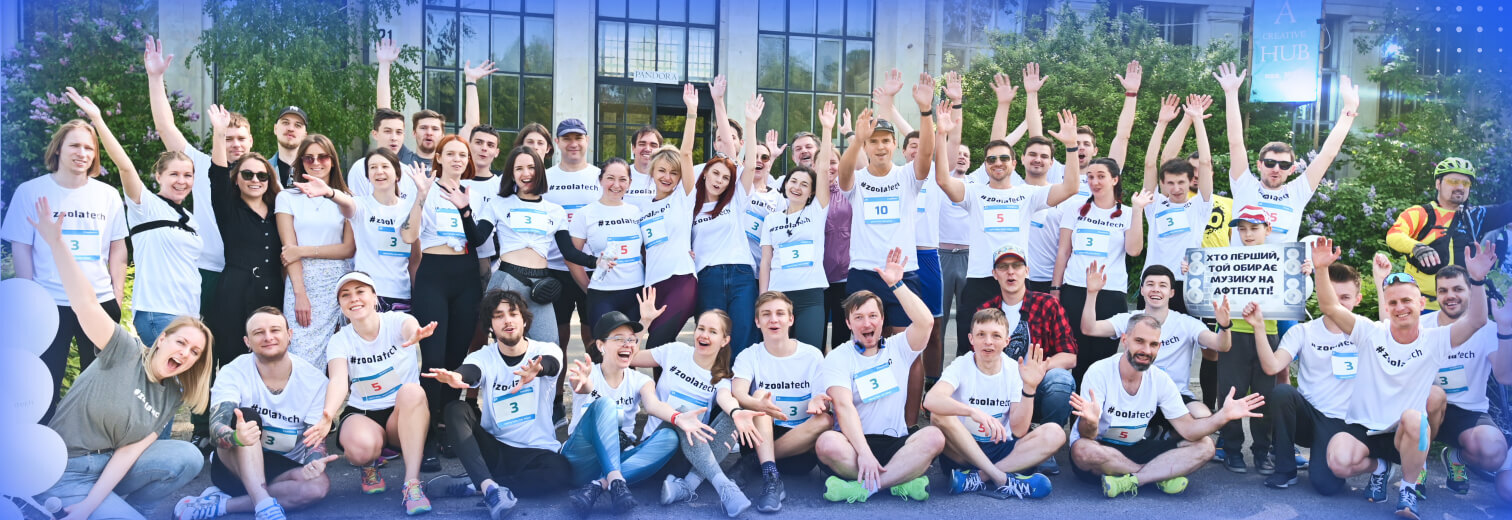
At Zoolatech, we create engineering teams for industry leaders across the US and Europe — teams that move fast, think big, and deliver strong impact.
96%
Client Satisfaction
300+
Successful Projects
2017
Year Founded
98%
Retention Rate
team sport photo
At Zoolatech, we create engineering teams for industry leaders across the US and Europe — teams that move fast, think big, and deliver strong impact.
Engineering Excellence. Every Time.
main award png (1)
At Zoolatech, we create engineering teams for industry leaders across the US and Europe — teams that move fast, think big, and deliver strong impact.
team sport photo
600+
Employees
Headquarters
USA
Development Centers
PL
UA
MX
TR

Start with a Scoped Conversation

Tell us the system, the constraint, and the deadline. You get an architecture opinion back, not a proposal template.
Contact Sales
Questions You May Have

When is custom software worth it compared with off-the-shelf products?

Custom development pays off when the process is a competitive advantage, when the integration surface makes configuration cost more than building, or when licensing scales faster than the value it delivers. Standard back-office functions such as payroll, accounting, and helpdesk are better served by mature products.

How much does custom software development cost, and how long does it take?

Cost follows the number of integrations, compliance scope, legacy state, load and availability targets, and whether a usable data layer exists, and a precise figure comes after a 2-to-4-week discovery. Timelines move with the number of systems the software must talk to rather than with feature count, so an MVP reaches production in months while a parallel-run modernization runs longer.

Who owns the code and the intellectual property?

The client owns the source code, documentation, and intellectual property produced during the engagement, with ownership transferring as work is delivered and the repository sitting under the client’s organization from the first commit. Third-party libraries stay under their own licenses, and a license inventory ships with the code.

How do you modernize a legacy system without downtime?

The existing system keeps serving traffic while functionality moves piece by piece behind a routing layer, with a regression suite built against observed behavior as the safety net. On one Azure release-management modernization, this approach held 99.999% availability for the main application components while cutting storage costs 7×.

Do you use AI to write our code, and who reviews it?

AI tooling handles specific tasks such as mapping undocumented legacy code, generating regression tests, drafting migration scaffolding, and producing documentation, while architecture, data modeling, security boundaries, and production accountability stay with named engineers. Every AI-drafted change passes human review before merge, your code is never used to train models, and the approved toolchain with license and secret scanning is set out in the statement of work.

Can you add AI features to software we already have?

Yes, and the work usually starts below the AI layer, because most systems fail to adopt AI on the data layer, the API surface, and the audit trail rather than on the model. The first phase makes existing data accessible, actions callable, and decisions traceable, and model selection and MLOps are covered by our AI and machine learning services.

How do you handle security and compliance?

Security requirements are set during architecture design through threat modeling, secrets management, and dependency and license scanning in the pipeline, with security testing running as part of QA rather than as a final gate. Compliance scope, including SOC 2, GDPR, and FDA requirements where they apply, is defined in discovery because it changes architecture, not just documentation.

What happens after launch?

The team that built the system supports it, covering production monitoring, incident response, dependency and security updates, and continuous improvement against a shared backlog. Clients describe faster issue resolution as the practical effect, because the engineer answering the ticket wrote the code path.