







































EHR integration services
Connect the electronic health record at the center of most HL7 interfaces.


Cross-industry engineering experience across regulated and high-growth sectors.
All Industries









“Only 27% of routinely interoperable hospitals sent electronic summary-of-care records to external post-acute providers.” — HIMSS




Build and maintain the HL7 interface set that connects your systems, from a single feed to a full estate.
Expose FHIR APIs and build a FHIR server or facade, with SMART on FHIR authorization where apps need it.
Map HL7 and CCDA to FHIR resources so modern healthcare applications can consume legacy data.
Implement or extend Mirth Connect, Rhapsody, or Cloverleaf, or build custom where an engine falls short.
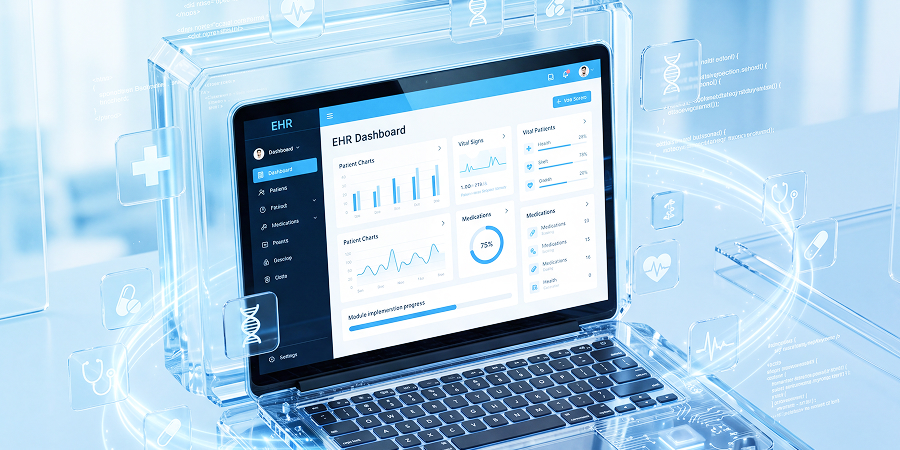
Connect Epic, Oracle Health, and other electronic health record systems through supported standards.
Integrate LIS, RIS, and PACS so orders and results flow without manual entry.
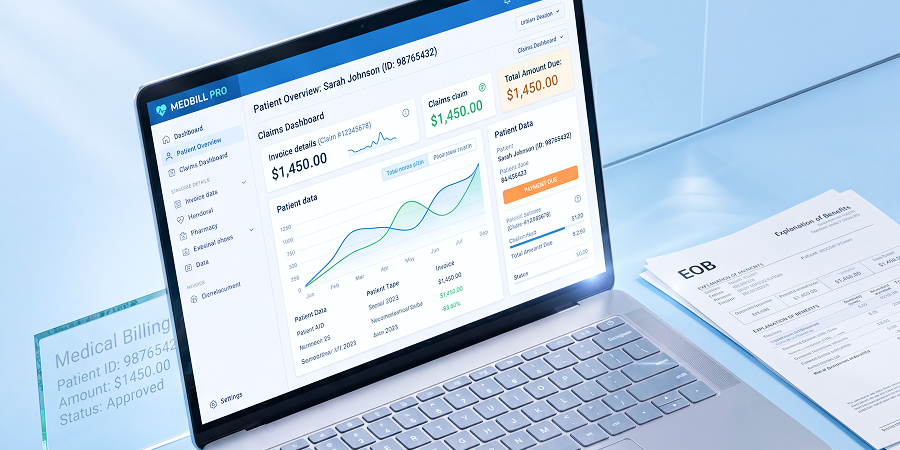
Deliver HL7 data integration and middleware across clinical, financial, and operational systems.
Monitor interfaces in production, because integration allows nothing to break silently.
Use AI to accelerate mapping, validation, and documentation across large interface estates.
Run the program through managed delivery, team extension, or a dedicated team.






















“71% of hospitals routinely had outside clinical information available, but only 42% said clinicians often used it.” — National Library of Medicine


















 USA
USA PL
PL UA
UA MX
MX TR
TR
Health Level 7 is a family of standards for exchanging clinical and administrative data between healthcare systems, maintained by Health Level Seven International. According to HL7, the standards cover v2 messaging, v3 and CDA documents, and FHIR.
The benefits of HL7 are fewer manual steps, faster results, and consistent healthcare records across systems. HL7 provides a shared data exchange standard, so different healthcare information systems exchange data without custom one-off formats.
HL7 v2 is a mature messaging standard that still runs most hospital interfaces, while the FHIR standard uses web APIs and reusable resources. Most organizations use the HL7 v2 estate internally and expose FHIR APIs externally.
An engine receives, transforms, routes, and sends messages, and options include Mirth Connect, Rhapsody, Cloverleaf, and Iguana. An engine suits many standard feeds, while custom integration handles complex transformation, FHIR APIs, and cloud scale.
Migration maps HL7 v2 messages, and often CDA or CCDA, to FHIR resources, then validates that nothing is lost. It runs as a transformation layer, so you adopt FHIR for new healthcare apps while legacy interfaces keep running.
Data interoperability is the ability of different systems to exchange and correctly use data, defined by standards such as HL7, FHIR, and USCDI. Frameworks like TEFCA, plus CMS rules and the Cures Act, require exchanging electronic health information.
A sending system emits an HL7 message that travels over MLLP, usually secured with TLS, to an engine or integration service, where it is validated, transformed, and delivered. FHIR-based integration works similarly but uses REST APIs and resources.
Vendor-specific message variations, inconsistent data formats, and undocumented legacy interfaces cause most delays. Good HL7 integration strategies start with a system map and validation, so problems surface in testing rather than in production.
Yes. AI accelerates mapping across large field sets, extracts structure from unstructured documents, and flags malformed messages for review. AI assists engineers rather than replacing review, because clinical data accuracy is not negotiable.
Cost depends on the number of interfaces and systems, whether you use HL7 v2, FHIR, or both, whether you build custom or implement an engine, and whether you migrate to FHIR. A precise estimate follows discovery.
It has to be, because interfaces carry protected health information. HL7 v2 travels over MLLP secured with TLS, FHIR APIs use HTTPS with OAuth 2.0 and SMART on FHIR, and access is role-based and audit-logged.
Yes. We serve US healthcare organizations from our Miami headquarters, with delivery centers in Poland, Ukraine, Mexico, and Turkey. Engagements run as managed delivery, team extension, or a dedicated team.