








Quick Summary
- Banking apps fail on architecture rather than features: legacy core coupling, fragmented ownership, security bolted on late, and no observability under real load.
- The fix is decoupling, with an API-first layer and a backend-for-frontend that isolates the app from core banking volatility so releases stop queueing behind the core.
- Most banks cannot replace the core, so migration runs on the strangler pattern with an anti-corruption layer, contract testing on every release, read replicas, and feature flags.
- Compliance scope gets fixed early or paid for twice, since PCI DSS, PSD2, GDPR, SOC 2, ISO 27001, and AML and KYC obligations all shape the architecture.
- Enterprise builds typically run 6 to 12 months, and one long-running mobile engagement reached 10M+ downloads with 2x development velocity and 40% higher engagement.
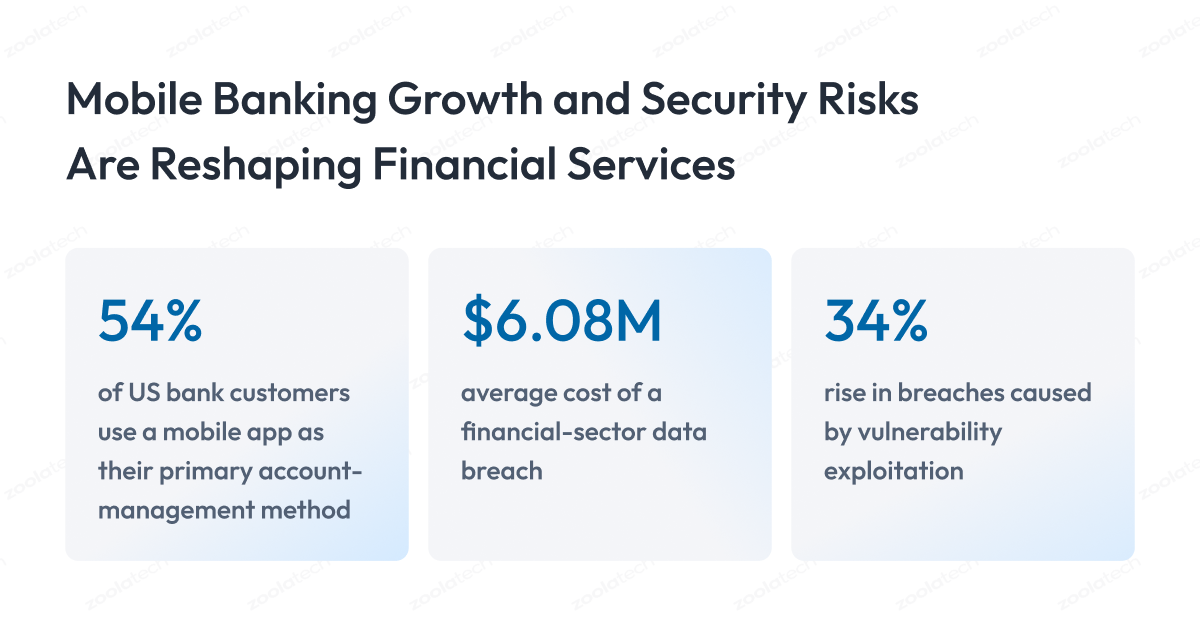
Most US consumers now bank primarily by app. Yet many mobile banking apps still fail at scale.
Most teams respond by adding more features. Architecture, security, and core integration matter far more.
This is the enterprise lens on mobile banking application development.
Why Mobile Banking Application Development Fails at Enterprise Scale
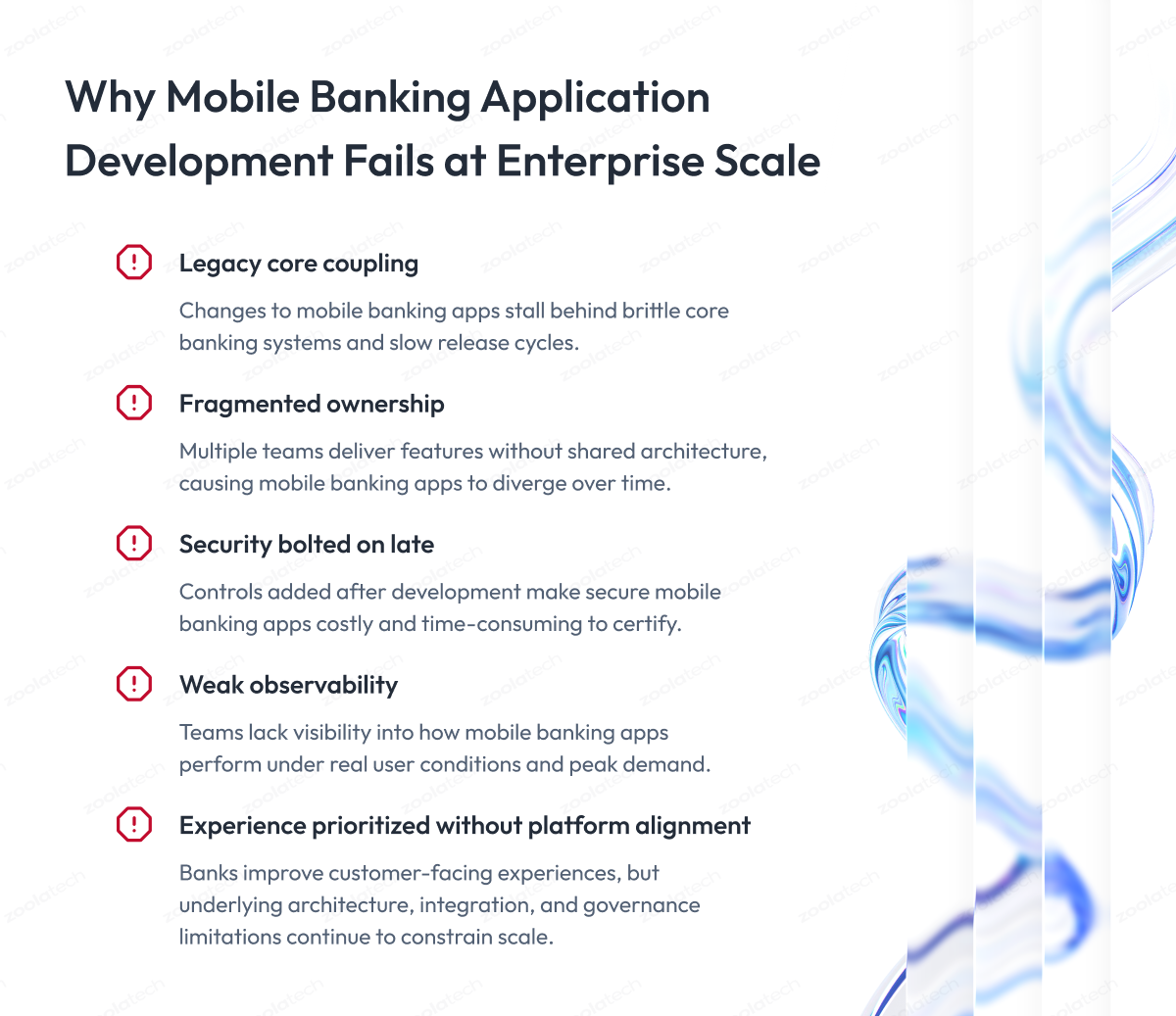
Enterprise banking apps rarely fail on features. They fail on architecture, integration, and discipline. Deloitte finds leading banks now optimize experience over adding functions.
Failure modes
- Legacy core coupling: changes to mobile banking apps stall behind brittle core banking systems and slow release cycles.
- Fragmented ownership: many teams ship features without shared architecture, so mobile banking apps drift apart.
- Security bolted on late: controls added after build leave secure mobile banking apps expensive to certify.
- Weak observability: teams cannot see how mobile banking apps behave under real user load.
Symptoms a you may see:
- Slow, unpredictable release cycles
- Rising fraud and chargeback losses
- Poor app store ratings
- Compliance findings before every audit
- Escalating cloud and support costs
The pattern is structural, not cosmetic.
Types of Mobile Banking Apps and Banking Solutions
Mobile banking now leads online banking in daily use. Each app type maps to different banking needs and the banking industry segment. The right choice shapes scope and mobile banking solutions.
| Type | Primary Users | Typical Scope |
| Retail banking app | Consumers | Everyday banking and payments |
| Business banking app | SMBs and corporates | Multi-user banking operations |
| Neobank app | Digital-first customers | Full digital banking channels |
| Wealth and investment app | Investors | Portfolio and trading |
| Crypto banking app | Digital asset users | Crypto and fiat |
- Core retail banking: digital banking products for accounts, cards, and payments via mobile.
- Embedded finance: banking services delivered inside non-bank apps and partner channels.
- Open banking solutions: account aggregation across digital banking channels and providers.
Most customers now use mobile banking for everyday tasks.
The Enterprise Architecture That Holds Under Load
Sound architecture is the foundation of mobile banking application development. It decouples the app from volatile core banking systems. It also lets banking app developers ship safely and often.
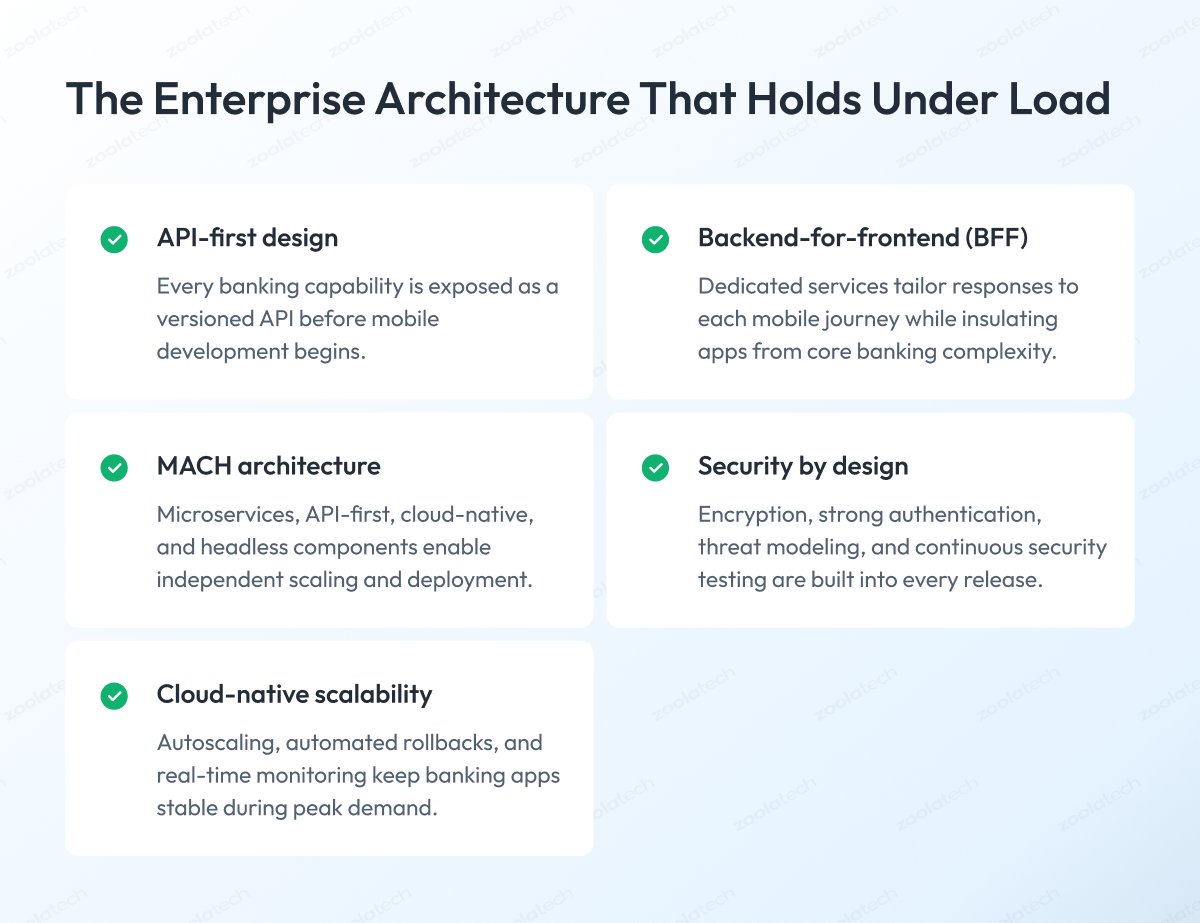
- API-first design: every banking capability is exposed as a versioned API before any mobile app design begins.
- Backend-for-frontend (BFF): a dedicated service shapes API responses per mobile journey, isolating apps from core banking volatility.
- MACH architecture (Microservices, API-first, Cloud-native, Headless): modular services scale and deploy independently across banking systems.
- Event-driven core integration: asynchronous events sync the app with the core without tight coupling.
- Open banking APIs: standardized partner APIs enable account aggregation and faster payments.
| Approach | Best fit | Trade-off |
| Single legacy core | Simple, small scope | Hard to scale or release |
| Mobile-optimized API layer | Enterprise mobile banking apps | Adds integration design effort |
| Modular, headless services | High-scale digital banking | Higher operational maturity needed |
Legacy core banking integration without downtime
Most banks cannot replace the core overnight. A staged approach keeps mobile banking apps evolving while core banking systems stay live, a pattern central to legacy modernization.
- Strangler-pattern migration
- Anti-corruption integration layer
- Contract testing on every release
- Read replicas for high-load queries
- Feature flags for safe rollout
Security and compliance by design
Mobile banking security cannot be added at the end. Controls belong in the mobile banking software development process from day one, aligned with the NIST Secure Software Development Framework.
- Encryption everywhere: data is encrypted in transit and at rest across all banking systems and mobile devices.
- Strong authentication: biometric and token sign-in protect accounts, following OWASP mobile guidance for secure mobile banking apps.
- Threat modeling early: risks are mapped during design, not discovered during audit of banking application features.
- Continuous scanning: SAST and SCA run on every build to catch flaws before release.
- PCI DSS for payment data (PCI Security Standards Council)
- PSD2 and open banking rules
- GDPR and data privacy
- SOC 2 and ISO 27001 (ISO)
- AML and KYC obligations
Scalability and release engineering
Banking apps face huge spikes during paydays and market events. Apps must perform on every device people use for mobile banking. Cloud-native infrastructure and automated releases keep them stable under load.
- Container orchestration for resilience
- Blue-green and canary releases
- Autoscaling for peak traffic
- Automated rollback on failure
- Real-time monitoring and alerting
How to Build a Mobile Banking App Step by Step
Developing a mobile banking app follows a disciplined process. Each phase reduces risk before the next begins. This is the banking app development process at enterprise scale.
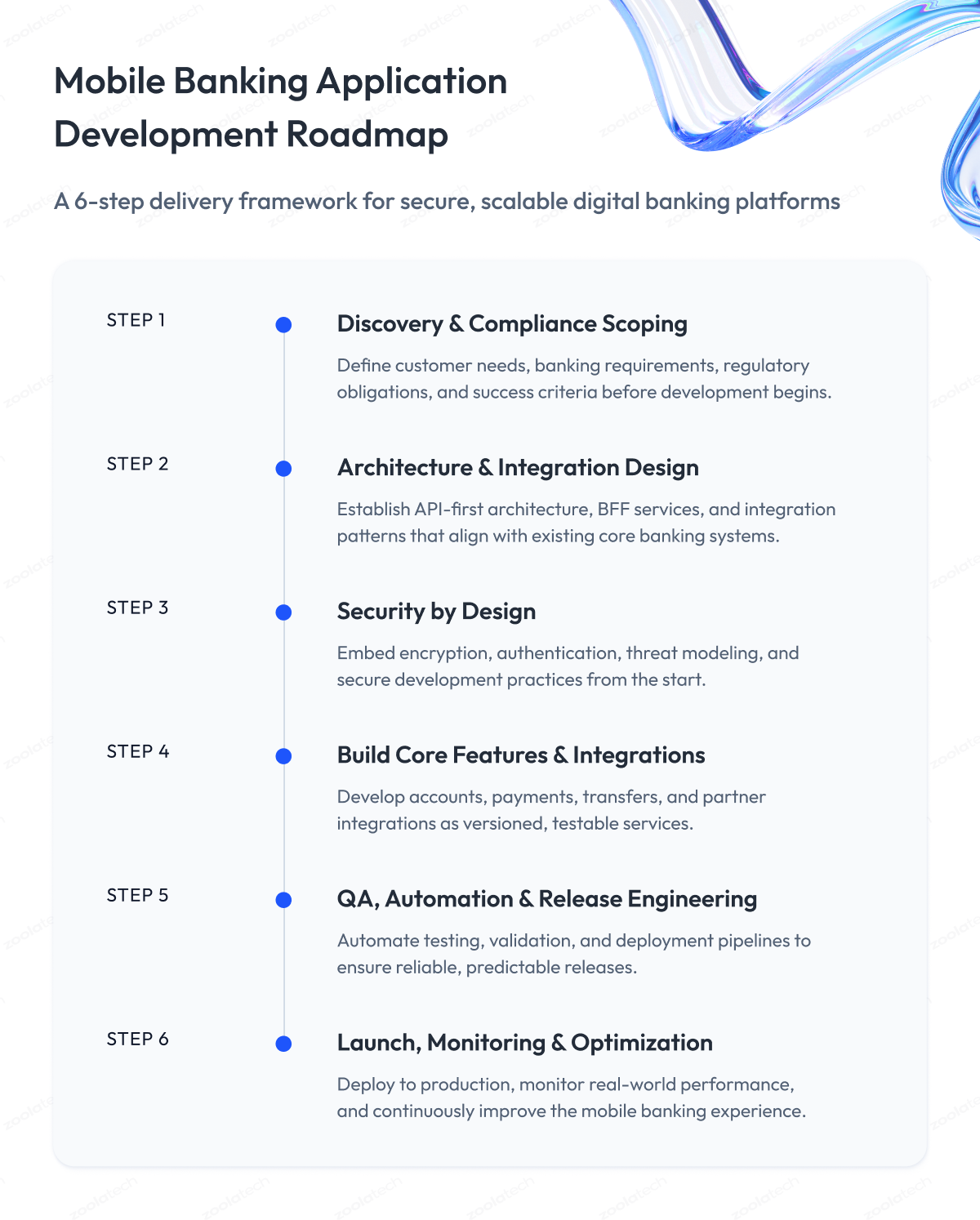
1. Discovery and compliance scoping
Every project starts by defining business objectives, customer needs, and compliance requirements. This phase establishes what the application needs to deliver, which banking systems it must integrate with, and the regulatory standards it must satisfy before development begins.
2. Architecture and core integration design
Architecture determines how quickly the platform can evolve. Instead of connecting the mobile application directly to legacy systems, enterprise teams typically introduce:
- API-first services
- Backend-for-Frontend (BFF)
- Event-driven integrations
- Modular cloud-native components
This approach isolates the application from core banking complexity while making future releases faster and safer.
3. Security and data protection by design
Security is designed into the platform rather than added before launch. Authentication, encryption, secure coding standards, threat modeling, and compliance controls become part of the delivery process from day one, reducing both certification effort and operational risk.
4. Build core features and integrations
Development focuses on the capabilities customers use most while keeping services modular and independently deployable. Typical priorities include:
- Accounts and balances
- Payments and transfers
- Card management
- Notifications
- Third-party and open banking integration
5. QA, test automation, and release engineering
Quality assurance runs throughout the project rather than at the end. Automated testing, CI/CD pipelines, and progressive deployment strategies help teams release new functionality frequently without compromising reliability or compliance.
6. Launch, monitoring, and continuous improvement
Launching the application marks the beginning of continuous optimization. Teams monitor application performance, customer behavior, and security events to identify improvement opportunities and prioritize future releases.
| Phase | Primary Deliverable | Key Risk |
| Discovery | Compliance and product scope | Regulatory rework |
| Architecture | API and integration blueprint | Core coupling |
| Security | Threat model and controls | Breach exposure |
| Build | Versioned feature services | Integration failure |
| QA and release | Automated pipeline | Release defects |
| Launch and improve | Live monitoring | Production downtime |
Typical mobile banking app technologies span native and cross-platform stacks.
- Swift for iOS apps
- Kotlin for Android apps
- React Native for cross-platform
- Kubernetes for cloud-native scaling
- OpenID Connect for secure sign-in
Making mobile banking apps reliable is the goal of every phase.
Mobile Banking App Features That Matter at Enterprise Scale
Mobile banking app features should serve real banking tasks, not novelty. The best mobile banking apps offer speed, clarity, and trust. Feature depth must match the bank’s security and compliance posture.
- Account management: customers view balances, statements, and cards across everyday banking needs in one place.
- Fund transfers and payments: real-time transfers, bill pay, and P2P cover the core of everyday banking.
- Card controls: users freeze cards, set limits, and manage banking options instantly from mobile devices.
- Mobile check deposit: capture and deposit checks via mobile without a branch visit.
- Biometric login and passkeys
- Instant push notifications
- In-app customer support
- Spending insights and budgeting
- Crypto and digital wallet support
User-friendly mobile design and app design
User-friendly mobile design is part of the mobile banking experience. Clean mobile app designs and app design discipline reduce errors.
- Clear navigation and hierarchy
- Accessible color and typography
- Fast, predictable interactions
- Consistent design system
- WCAG-aligned accessibility
Core account and transaction capabilities
A successful mobile banking app requires flawless core capabilities. They must work for every user, every time.
- Sub-second balance refresh
- Scheduled and recurring payments
- Multi-account and joint access
- Transaction search and export
- Real-time payment status
AI-driven personalization and fraud detection
AI now shapes modern banking experiences and defenses. It powers personalization, smart nudges, and fraud detection in real time.
- Personalized insights: machine learning tailors offers and budgeting to each customer’s banking experience.
- Fraud detection: models flag anomalous transactions instantly, reducing losses across mobile banking services.
- Conversational support: AI assistants resolve routine banking services requests without human agents.
- Credit and risk scoring: AI speeds approvals while keeping banking and finance compliant.
Mobile Banking App Development Services and Engagement Models
Mobile banking app development services range from full builds to team extension. The right model depends on in-house capacity and banking needs. Custom mobile banking app development suits differentiation; off-the-shelf suits speed.
- Custom mobile banking app development: end-to-end builds of secure, scalable apps tailored to your banking systems.
- Banking application development services: discovery, design, and delivery for new mobile banking development projects.
- Staff augmentation: senior mobile banking app developers embedded into your in-house teams.
- Application support and modernization: ongoing banking software development for existing banking software.
| Model | Best Fit | Control |
| Fixed-scope project | Defined requirements | Vendor-led |
| Dedicated team | Evolving product | Shared |
| Staff augmentation | Capacity gaps | Client-led |
| Managed delivery | End-to-end ownership | Vendor-led |
Strong mobile application development for banking blends these models with mobile app development capacity.
Mobile Banking App Development Cost and ROI
The cost of developing a mobile banking app depends on scope, integrations, and compliance. App development cost depends most on core banking complexity. The real question is return, not price.
| Cost Driver | Impact on Cost | Note |
| Core banking integration | High | Legacy systems raise effort |
| Security and compliance | High | Regulated data needs controls |
| Custom features | Medium to high | Custom mobile banking adds scope |
| Platform choice | Medium | Native costs more than cross-platform |
| Team model | Variable | Senior teams reduce rework |
How to Choose a Mobile Banking Application Development Company
Choosing a mobile banking application development company is a risk decision. The right banking app development company proves security, scale, and outcomes. A top banking app development company shows verifiable credentials, not slogans.
- Regulated-domain experience: proven banking application development across compliance, payments, and core banking systems.
- Security maturity: documented secure SDLC, certifications, and references for highly secure banking work in financial services.
- Architecture depth: real ability to deliver mobile banking app development services at scale.
- Delivery model: senior-heavy teams and clear ownership, through flexible engineering delivery models or staff augmentation.
- Verifiable outcomes: published case studies with measurable results, not slogans.
Development partners with financial-services experience
Several engineering firms support banking and finance delivery. The list below draws on a published roundup of offshore mobile app development partners.
| Company | HQ / region | Financial-services strength |
| Zoolatech | USA, Silicon Valley roots | FinTech, legacy modernization, mobile apps |
| Coherent Solutions | USA, global delivery | Digital product engineering, financial services |
| MentorMate | USA, Nordics | Security, compliance, application development |
| Future Processing | Poland | Finance, data modernization, cloud |
| STX Next | Poland | Financial services, mobile development |
| MAS Global | USA, Latin America | Microservices, enterprise integration, finance |
| nCube | Eastern Europe | FinTech, digital banking, AI |
| Elinext | Global | Financial services and banking software |
Engineering a Mobile App Used by 10M+ Customers
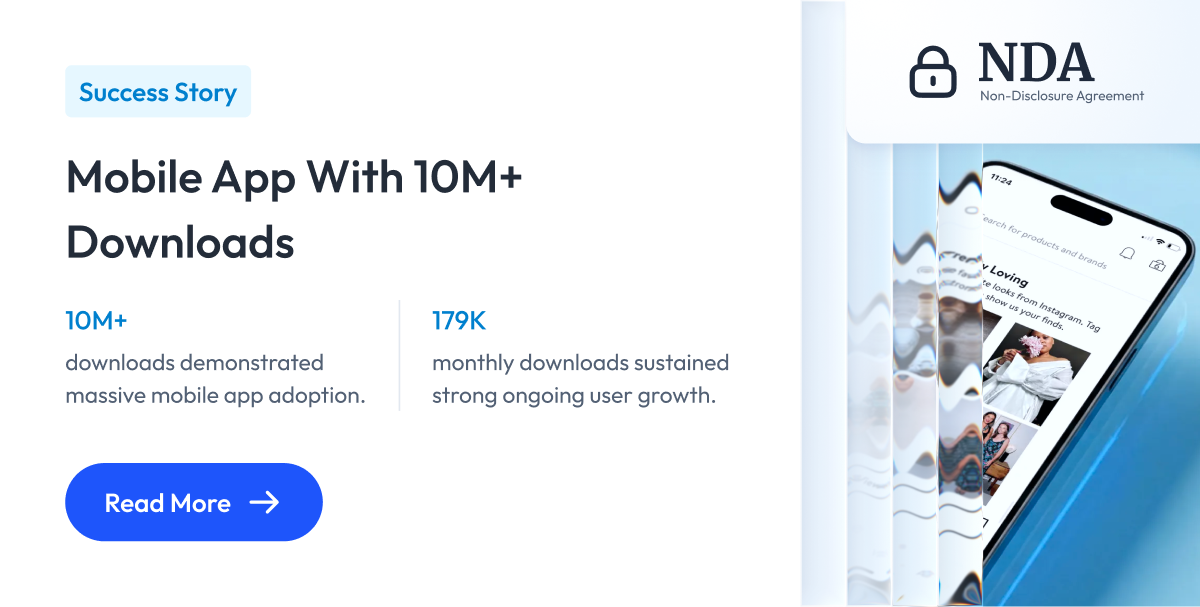
Supporting an application with 10M+ downloads and 179K monthly downloads required continuous engineering to maintain performance, reliability, and delivery speed while introducing new customer experiences.
Challenge
As adoption grew, the client needed to scale mobile engineering without sacrificing release quality or platform stability. Major shopping events created extreme traffic spikes, while rapid feature delivery increased architectural and operational complexity.
Zoolatech input
Zoolatech became a long-term extension of the client’s mobile engineering organization, focusing on:
- Scaling iOS and Android engineering teams
- Delivering new commerce and engagement features
- Modernizing mobile architecture and backend integrations
- Strengthening QA, DevOps, and production operations
Business results
The long-term engineering partnership delivered measurable business outcomes:
- 10M+ downloads across iOS and Android
- 179K monthly downloads
- 2x faster development velocity
- +40% user engagement
- 2x Android revenue growth over three years
- Reliable bi-weekly releases supporting peak shopping events
Measuring Success: Mobile Banking App KPIs
Enterprise teams should track outcomes, not output.
| Category | Metric | Why it Matters at Scale |
| Adoption | Active users, app store rating | Signals product-market fit |
| Reliability | Crash-free sessions, uptime | Protects trust and revenue |
| Security | Mean time to remediate | Limits breach and fraud exposure |
| Delivery | Release frequency, lead time | Shows engineering health |
| Engagement | Feature adoption, session depth | Drives retention and cross-sell |
| Efficiency | Cost per release, cloud spend | Controls cost of ownership |
Where to Start: A Prioritized Mobile Banking Roadmap
Most banks should sequence the work rather than attempt everything. Start where risk and value are highest. This roadmap answers the question of what to do first.
- Secure the core: close security gaps and integration risks before adding features.
- Stabilize delivery: automate testing and releases for predictable mobile banking development projects.
- Modernize the architecture: introduce API-first and BFF layers to decouple from legacy systems.
- Improve the experience: refine the features of the highest-traffic banking application that users rely on.
- Add intelligence: layer AI personalization and fraud detection once foundations hold.
Conclusion
Mobile banking apps rarely fail on features. They fail on architecture, security, and core integration. Adding more functions does not fix that.
Banks that succeed treat this as a program. They decouple from legacy, automate delivery, and embed security early. They measure outcomes, not output.
The choice now is structural, not cosmetic. Strong mobile banking application development decides who leads the next decade of digital banking. The banks shaping the future of mobile will start at the foundation.
Questions You May Have
How much does mobile banking application development cost?
Mobile banking app development cost depends mostly on core integration, security scope, and feature complexity.
How long does it take to build a mobile banking app?
Most enterprise builds run six to twelve months, depending on core integration and compliance scope.
What breaks first when a mobile banking app scales?
Release safety and legacy core integration fail first, because coordination overhead amplifies every change.
Should a bank build, buy, or modernize?
Modernize the core and build custom where differentiation and compliance demand it, otherwise buy.
What does custom mobile banking app development add?
Custom mobile banking app development adds differentiation, tighter core integration, and control banks cannot get off the shelf.
How do you choose a banking app development company?
Pick a banking app development company with regulated-domain proof, security maturity, and verifiable outcomes.