




































AI Agent Development Solutions

Agents That Act, Not Just Respond
Enterprise AI agent solutions built for autonomous action in production systems.
Reliable partner
Reliable partner
Experienced team
Experienced team
Smart solutions
Smart solutions

Industry Leaders We Work With

Our Services

What We Build

From single-purpose agents to orchestrated multi-agent systems, map your use case to the right AI agent architecture.
98%

98%

Client Retention Rate
300+

300+

Successful Projects

AI agent development

Custom AI agent development from use case scoping through to production deployment.

Conversational agents

Multi-turn dialogue agents that retrieve knowledge, take actions, and hand off to humans when the task requires it.

Workflow automation

Agents that execute multi-step business processes across connected enterprise systems without manual coordination at each stage.

Decision-making agents

Agents that aggregate signals from multiple data sources and apply defined logic to surface or execute time-sensitive decisions.

Multi-agent systems

Orchestrated systems of specialized agents that divide responsibility, pass structured context between roles, and isolate failures so a single agent error does not halt the wider workflow.

AI copilot agents

Context-aware assistants embedded in enterprise tools that interpret user intent, access relevant data, and take confirmable actions.

Agent integration

Connecting AI agents to enterprise APIs, databases, CRMs, ERPs, and data platforms with deterministic tool-calling and access control.

Agent monitoring

Logging, trace inspection, and drift monitoring frameworks that keep production agents observable, auditable, and improvable over time.

RAG-based agents

Agents grounded in your enterprise knowledge base via retrieval-augmented generation, reducing hallucination in high-stakes contexts.

Tool-using agents

Agents that call external APIs, query databases, and execute structured actions with deterministic output enforcement and error recovery.

Memory systems

Short-term session memory and long-term persistence layers that allow agents to retain context across interactions and complex tasks.

LLM orchestration

Model routing and orchestration logic that selects the right LLM for each agent sub-task based on latency, cost, and capability.

Guardrail engineering

Hard and soft constraint layers that define what agents can and cannot do autonomously, preventing out-of-scope actions in production.

Agent observability

End-to-end decision tracing, tool call success tracking, and alerting pipelines that make agent behavior transparent and diagnosable.

AI Agents That Automate Real Work

Build production-ready AI agents that automate workflows, make decisions, and operate reliably across your business systems.
Agent Types

Agents We Build

Match your use case to the agent type that fits your workflow, data, and autonomy requirements.
Conversational
Workflow automation
Decision-making
Multi-agent systems
AI copilots
RAG agents

Agents that understand and act

  • Context retention across long, complex conversations
  • Enterprise knowledge grounding via RAG
  • Human handoff logic when needed
  • Intent disambiguation across enterprise systems
  • Session memory across interactions

Agents that execute end-to-end

  • Multi-step task flows across enterprise applications
  • Conditional logic based on intermediate outputs
  • Exception detection and human handoff for edge cases
  • Integration with ERPs, CRMs, ticketing systems, and APIs
  • Audit trails for automated workflows

Agents that synthesize and decide

  • Signal aggregation from structured and unstructured sources
  • Rule-based and model-based logic for time-sensitive decisions
  • Confidence thresholds for human review when needed
  • Full audit trails for every decision
  • Adjustable thresholds without engineering changes

Agents that coordinate at scale

  • Role-specialized agents aligned to a shared objective
  • Structured communication between agents
  • Failure containment across agent workflows
  • Central orchestration with agent-level visibility
  • Dynamic task routing by availability and capability

Agents embedded in your workflow

  • In-context assistance within the tools your teams already use
  • Tool and API access for agents that retrieve, draft, and submit
  • Intent interpretation across ambiguous inputs
  • Human-in-the-loop confirmation for high-stakes actions
  • Role- and permission-aware behavior aligned with access policies

Agents grounded in your knowledge

  • Vector store design and indexing for enterprise knowledge retrieval
  • Hybrid semantic and keyword search for higher precision
  • Grounding checks before generation
  • Source attribution for compliance and auditability
  • Incremental index updates without full retraining
Image abstract 1 368
Testimonials

What Our Customers Say

“In the case of Zoolatech, it's a very tight partnership.
The team at Zoolatech is incredibly collaborative, and we work as a team despite being thousands of miles away from each other.”
Spencer Rascoff
CEO Match Group
5/5
“Zoolatech has been a key technology partner for Pandora,
enhancing our software development and deployment capabilities. They're ambitious, supportive, fast-moving, and well-skilled, with sound ethical values.”
Erika Romsics
Contract and Vendor Manager, Pandora
erica
5/5
“The apps they’ve developed give us the opportunity to get more customers.
We’re providing more services to target big customers. We can install jobs faster and identify reduce bottlenecks, so we’re providing a better customer experience.”
Aida Youssef
Senior Director of Software Engineering, Complete Solaria
5/5
“Zoolatech has access to a deep talent pool and knows how to identify client's needs.
With the help of Zoolatech, went from a very early and incomplete prototype to the MVP release, the first production release, and the first paying customer!”
Greg Wagenhoffer
CEO, GreenVisr
5/5
“Zoolatech enabled us to build a world-class engineering team quickly and efficiently.
Zoolatech's pre-screening process and engineer training are customized for providing effective engineers that can contribute immediately to accelerating product roadmaps.”
Shariq Minhas
CTO, SVSG
5/5
“We can recommend Zoolatech
for their talent pool, attention, ability to understand our requirements, candidate screening process and constant communication.”
Chaitanya Pallapothula
SVP, Tailored Brands, Inc.
5/5
“Zoolatech’s developers quickly became an integral part of our team effort
with whom we shared daily stand up calls. Overall, Zoolatech fit well with our needs for agile development and continued to adapt as our needs evolved.”
Forrest Glick
UX Designer, Stanford University
5/5
“Working with Zoolatech has been a driving force in our business offerings.
The team utilizes it's experience and expertise meshing with our internal team creating a positive work environment. Zoolatech is by far one of the best teams to work with in the industry.”
Kris Naidu
CEO, Zeacon
Kris Naidu CEO, Zeacon
5/5
Our Process

How We Build Agents

A five-stage delivery process that defines agent boundaries before writing code, so production behavior matches design intent from the first deployment.
step 1

Use case and scope definition

We map exactly what the agent must do autonomously, what it must escalate, and how success is measured — establishing behavioral boundaries before any architectural decisions are made.
step 2

Architecture and tool design

We select the LLM backbone, define the tool set, design memory layers, specify the orchestration pattern, and document the full agent architecture before development begins.
step 3

Agent development and integration

Agent logic is built and connected to your enterprise systems and APIs. Guardrails, access controls, and error recovery flows are implemented and tested throughout the development cycle.
step 4

Testing and safety validation

Agents are tested for functional accuracy, boundary compliance, latency, and adversarial inputs. Hallucination rates, tool call success rates, and escalation logic are validated before go-live approval.
step 5

Deployment and observability

Agents are deployed with full logging, trace inspection, and alerting configured from day one. Retraining triggers and rollback procedures are in place before any production traffic is routed.
Agent Architecture

How the Architecture Works

Understand the technical layers that separate reliable production agents from prototypes that stall before they scale.
check icon

LLM backbone

Foundation model selection, prompt architecture, and context window management optimized for the agent’s specific reasoning and output requirements.
check icon

Tool-calling design

Deterministic tool invocation with structured output enforcement and error recovery logic that prevents malformed API calls from halting agent execution.
check icon

RAG architecture

Vector store design, hybrid retrieval configuration, and source attribution pipelines that connect agent outputs to verified enterprise knowledge.
check icon

Memory systems

Stateful context management designed so agents carry relevant history into each interaction without accumulating noise that degrades reasoning quality over time.
check icon

Agent guardrails

Runtime enforcement layers that intercept out-of-scope actions, route ambiguous decisions to human reviewers, and maintain a complete boundary violation log.
check icon

Orchestration patterns

Single and multi-agent coordination patterns with task routing, role specialization, and state management across agent-to-agent communication.
check icon

Observability layer

Structured telemetry that tracks latency, error rates, and output quality at the individual tool-call level, giving platform teams the data they need to improve agents continuously.
check icon

Scalability design

Horizontal scaling, stateless agent patterns, and load distribution designed so agent throughput grows with enterprise demand without architecture rework.
check icon

Deployment architecture

Containerized agent serving, CI/CD pipelines adapted for agent versioning, and rollback procedures that support safe iteration in production environments.

“Over 40% of agentic AI projects will be canceled by the end of 2027” — Gartner

Agents that reach production share three characteristics: well-defined scope, governed autonomy, and an engineering partner who takes accountability for what the agent does in live systems.
Our Edge

Built for Enterprise Agent Delivery

The gap between an AI agent that works in a demo and one that performs in a production enterprise environment is an engineering problem.
approve

Agent architecture that holds in production

Most agent programs fail because the surrounding architecture is not built for real conditions. Zoolatech designs agents with deterministic tool-calling, failure containment, and error recovery from the outset. Guardrails are defined before development begins, not added after production surprises the team.
approve

ISO 42001-certified AI governance

Zoolatech is ISO 42001-certified. For agents this matters more than for passive AI tools because agents take actions. Governance is embedded at the architecture layer: access scope, escalation rules, and decision logging are set at design time and enforced at runtime.
approve

Full-stack integration across enterprise systems

An agent is only as useful as the systems it can reach. Zoolatech connects AI agents to your existing ERPs, CRMs, data platforms, and internal APIs using layered access controls and structured integration patterns, without brittle dependencies that break when upstream services change.
approve

Observability and delivery accountability

Every agent decision, tool call, and escalation is captured and queryable from day one, giving your team the evidence needed to diagnose failures and improve agent behavior over time. The engagement does not close when the agent ships; it continues until the agent meets its defined success criteria in production.
Our Tech Stack

Technologies We Use

Select the right combination of LLMs, orchestration frameworks, and vector infrastructure for your agent architecture and deployment environment.
OpenAI API
OpenAI API
Anthropic Claude
Anthropic Claude
LangChain
LangChain
LlamaIndex
LlamaIndex
CrewAI
CrewAI
AutoGen
AutoGen
Pinecone
Pinecone
Weaviate
Weaviate
Python
Python
AWS
AWS
Google Cloud
Google Cloud
Microsoft Azure AI
Microsoft Azure AI
Docker
Docker
and other
Why Choose Us

Why Businesses Trust Us

logo
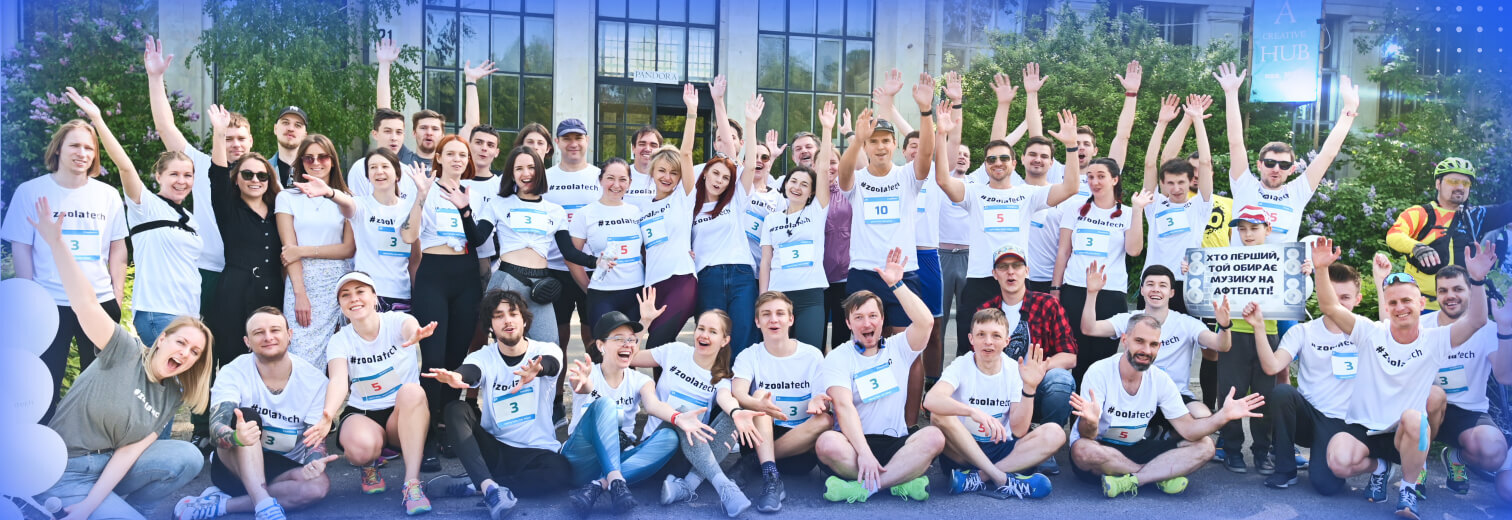
At Zoolatech, we create engineering teams for industry leaders across the US and Europe — teams that move fast, think big, and deliver strong impact.
96%
Client Satisfaction
300+
Successful Projects
2017
Year Founded
98%
Retention Rate
team sport photo
At Zoolatech, we create engineering teams for industry leaders across the US and Europe — teams that move fast, think big, and deliver strong impact.
Engineering Excellence. Every Time.
main award png (1)
At Zoolatech, we create engineering teams for industry leaders across the US and Europe — teams that move fast, think big, and deliver strong impact.
team sport photo
600+
Employees
Headquarters
USA
Development Centers
PL
UA
MX
TR
Questions You May Have

What is an AI agent?

An AI agent is a software system that perceives its environment, makes decisions, and takes actions autonomously to complete a defined goal, without requiring human input at every step.

How do AI agents differ from standard chatbots?

Chatbots respond to prompts. AI agents act: they plan sequences of steps, call tools, access external systems, and execute tasks end-to-end with minimal human intervention.

What enterprise systems can AI agents integrate with?

AI agents can integrate with any system that exposes an API, including ERPs, CRMs, data warehouses, internal databases, ticketing systems, and third-party services.

How do you ensure AI agents behave safely in production?

Zoolatech defines behavioral boundaries before development, implements hard and soft guardrails at the architecture layer, and validates agent behavior against adversarial inputs before go-live.

What LLMs do you use to build AI agents?

Zoolatech builds LLM-agnostic agent architectures and selects the appropriate model for each use case from providers including OpenAI, Anthropic, and Google, based on capability and cost requirements.

Can AI agents work together in multi-agent systems?

Yes. Zoolatech designs orchestrated multi-agent systems where specialized agents coordinate tasks, pass structured context between each other, and contain failures within defined boundaries.

How long does AI agent development take?

Timelines depend on use case complexity and integration scope. Most enterprise AI agent programs require 2 to 4 months from scope definition to production deployment.

How are AI agents monitored after deployment?

Every Zoolatech agent system includes decision logging, tool call tracing, latency monitoring, and alerting pipelines that provide full visibility into agent behavior in production.