




































Healthcare Mobile App Development Company

Clinical-Grade Apps, Built Around Your Workflows
iOS, Android, and cross-platform apps built around how your clinicians work and your patients live, then supported well beyond release.
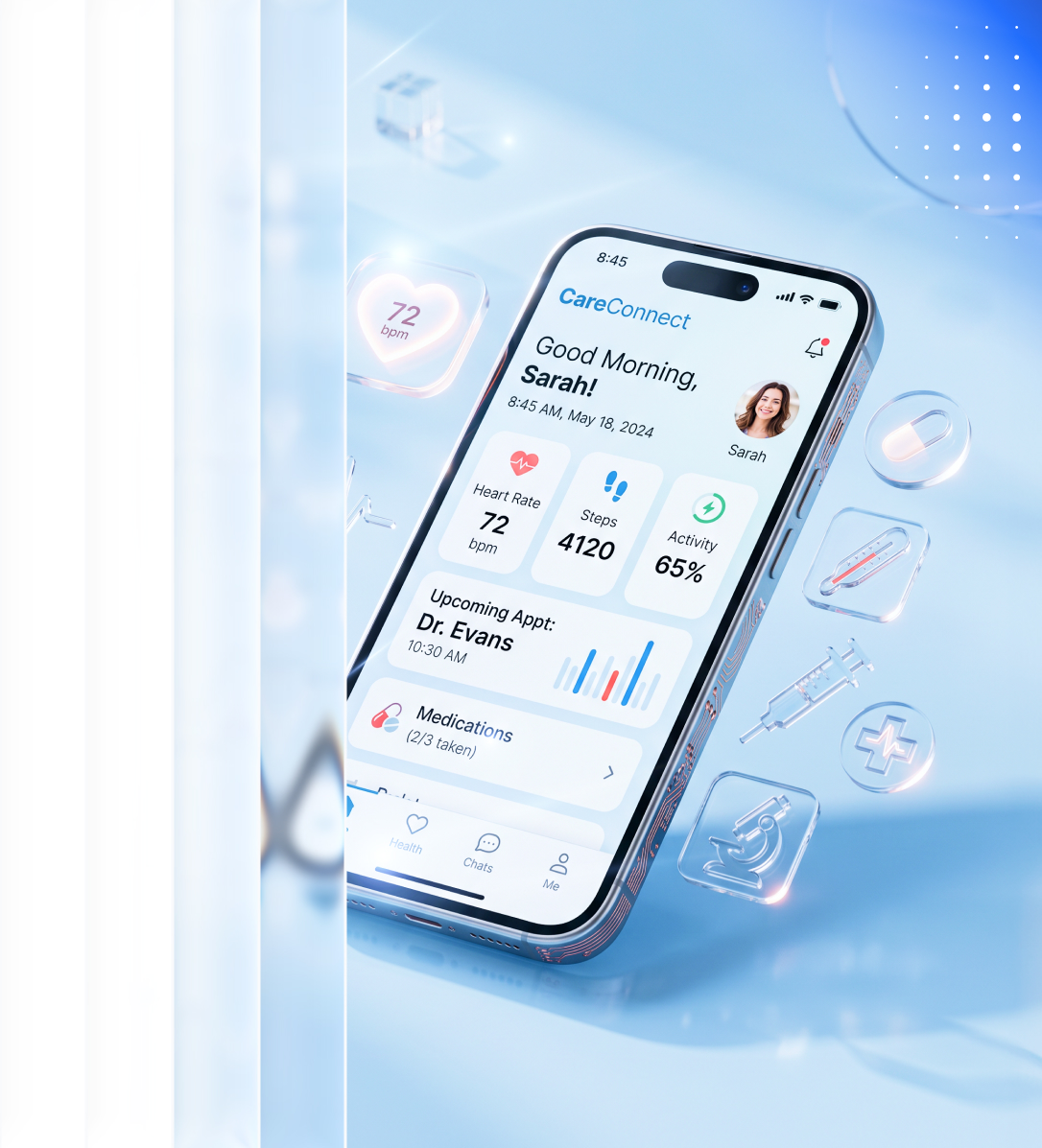
Healthcare App Development 1920
Healthcare App Development 1440

Industry Leaders We Work With

Related Healthcare Services

Explore the Wider Healthcare Practice

A mobile app rarely stands alone, so these related services connect it to the clinical systems, records, and platforms around it.

“A median of 70% of health app users stop using the app within 100 days.” — Journal of Medical Internet Research

Shipping an app is the easy part; keeping clinicians and patients on it is where most fail, so we design for the workflows and habits that hold.
Market Context

Healthcare Apps in 2026

Patients expect the same ease from a mobile healthcare app as from their bank.
Rising expectations

Rising expectations

Adoption of healthcare apps keeps climbing, so mobile healthcare now competes on clinical fit and reliability, not just a polished interface.
Beyond wellness

Beyond wellness

The market has moved past step counters, and demand for custom healthcare app development centers on clinical workflows and mobile solutions built on real data.
Enterprise stakes

Enterprise stakes

For enterprise healthcare, a mobile app touches protected data and clinical systems, so healthcare mobile app development is judged on security and integration first.
Fit over features

Fit over features

Off-the-shelf tools stall against real processes, so teams choose a development company specializing in healthcare app development solutions that help healthcare organizations work better.
Zoolatech quickly delivers senior engineers through rigorous multi-stage screening and global sourcing, ensuring only high-performing, project-ready talent joins your team.

1 month

To fill a position

60%

Senior developers

1M

Global talent pool
App Types

Types of Healthcare Apps

Patient-facing and clinician-facing apps are not the same screen with different labels. Every type below ships compliant and ready to connect.
98%

98%

Client Retention Rate
300+

300+

Successful Projects

Patient engagement

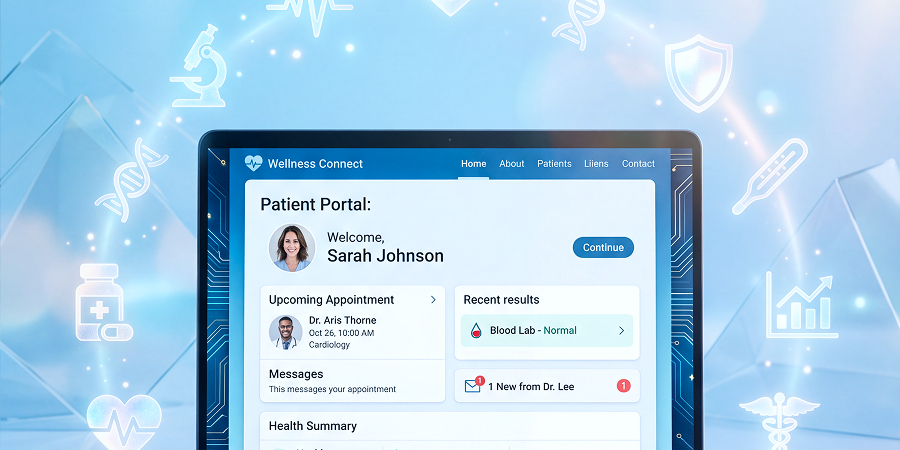
Give patients access to their medical records, plus scheduling and reminders they actually open. Patient-facing healthcare apps win on respect for daily life: booking in seconds, results explained plainly, and secure access from any device. Done right, this is the healthcare solution that cuts call volume and no-shows at once.

Clinical and provider

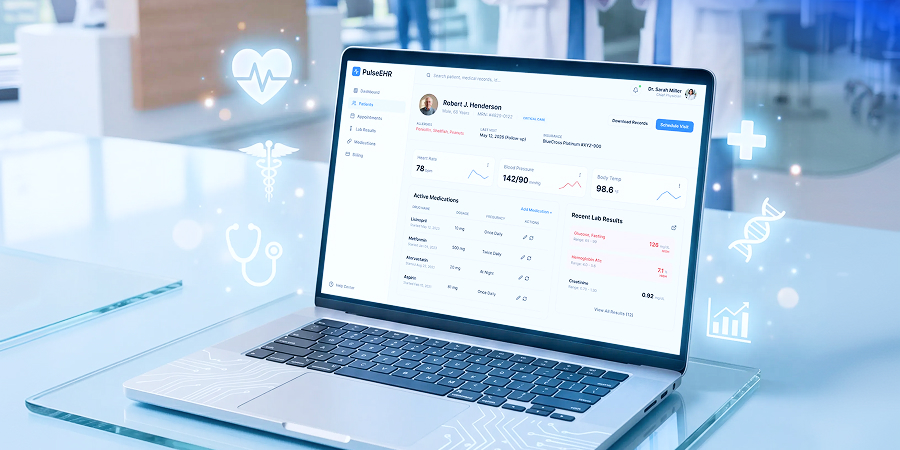
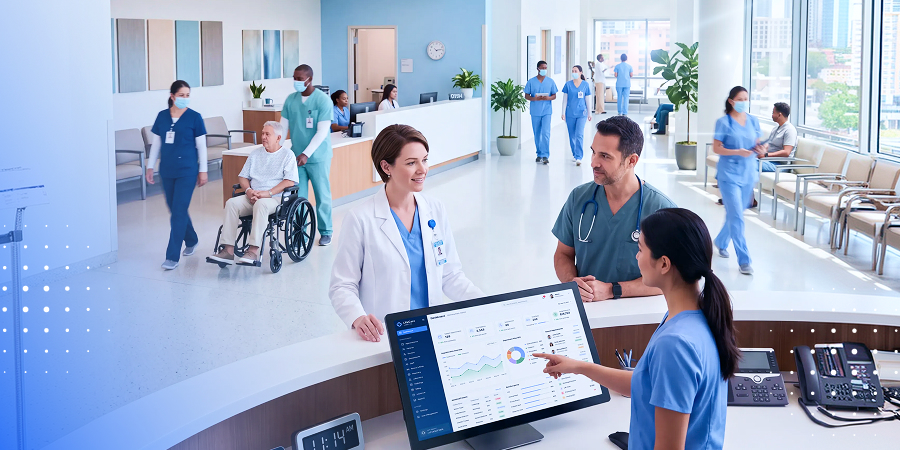
Give clinicians task-first workflows built for the point of care, not repurposed patient screens. Healthcare professionals work in interrupted, hands-busy moments, so our healthcare mobile app developers design for one-handed use, instant load, and offline resilience, a discipline where many healthcare mobile app development companies fall short. The solution pays for itself in minutes saved per encounter.

Telehealth apps

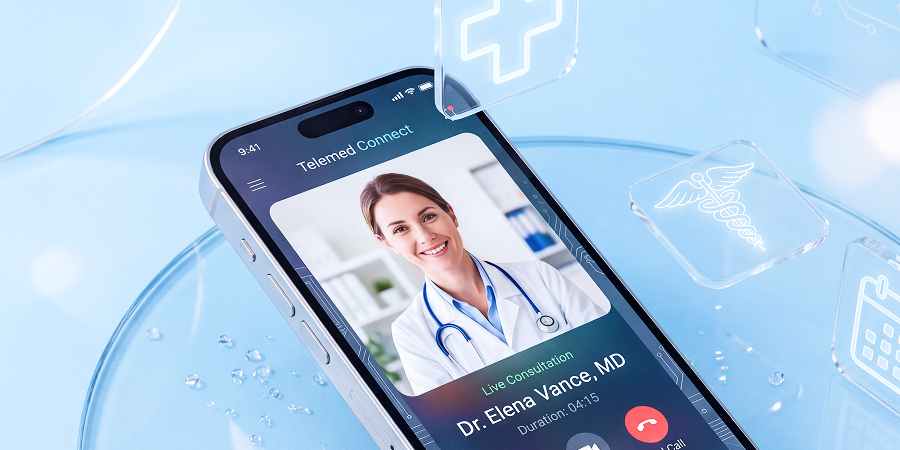
Extend care beyond the clinic with video, triage, and messaging in one flow. Teams that develop a healthcare app for virtual visits need more than a video SDK: scheduling, consent, documentation, and billing connect behind the screen. Across the healthcare industry, telehealth succeeds where the full journey works, not just the call.

Remote monitoring

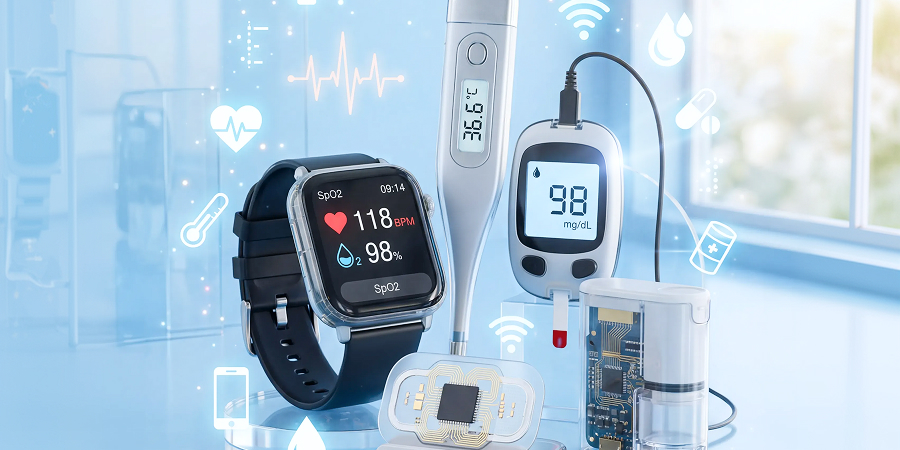
Catch deterioration earlier by turning device data into alerts clinicians can act on. Remote patient monitoring is healthcare application development at its most demanding: readings from every connected sensor validated, filtered through AI-assisted thresholds, and routed as a solution care teams actually trust. Fewer false alarms means real alerts get answered.

mHealth and wellness

Keep users engaged between visits with tracking, coaching, and health education that sticks. A well-built mHealth app earns its home-screen spot through habit loops and personalization, exactly where most wellness mobile apps lose users within the first month. We design the retention curve before we design the feature list.

Wearable-connected

Sync Apple Watch and sensor data through HealthKit and Google Health Connect. When teams create mobile experiences around wearables, the hard part is turning continuous streams into a clinically meaningful solution: trends, baselines, and deviations rather than raw numbers nobody reads. We build that translation layer into the app itself.

Medication management

Improve adherence with reminders, refills, and e-prescribing that reduce manual errors. Medication-focused medical apps carry real safety weight, so interaction checks, dose logic, and pharmacy connectivity are engineered into the healthcare application rather than approximated. Patients get a simple solution; the system underneath stays rigorous.

Chronic disease

Help patients manage long-term conditions with data their care team can see. Chronic care is where complex healthcare meets everyday life, so these healthcare apps combine symptom tracking, care plans, and escalation paths in mobile apps patients keep using for years. Continuity is the feature that matters most.

Mental health

Deliver sensitive care with privacy, discretion, and crisis pathways engineered in. Mental health is the healthcare domain where trust decides adoption, so consent, anonymity options, and 42 CFR Part 2 handling are part of the solution from the first design session, never bolted on afterward. Users feel the difference immediately.

Clinical reference

Put decision support and clinical content in clinicians’ hands at the bedside. Reference tools test expertise in healthcare more than any other category, because accuracy, sourcing, and speed are non-negotiable. Our healthcare app development services treat clinical content pipelines with the same rigor as the mobile apps that carry them.

“88% of mobile health apps can access and potentially share user data.” — The BMJ

Patients and regulators notice, so we define exactly where protected health information lives and lock down every access before the first screen is built.
Platforms

Platforms and Approach

The platform choice shapes performance and cost across mobile and web, so we match it to your users and roadmap.
Native iOS
Native Android
Cross-platform
Web and PWA

Built in Swift

iOS healthcare app development in Swift gives the best performance and full access to Apple's health and security features.
  • HealthKit: wearable and health data read directly from the device, so clinical apps get accurate, real-time inputs.
  • Secure Enclave: biometric authentication and on-device key storage protect protected health information without slowing the experience.

Built in Kotlin

Healthcare Android app development in Kotlin reaches the widest device range while keeping performance and security intact.
  • Google Health Connect: a single, permissioned source for wearable and sensor data across Android health apps.
  • Broad coverage: tested across the device matrix your patients actually carry, not just flagship phones.

React Native or Flutter

Cross-platform app development shares most code across iOS and Android, cutting cost and time by roughly a third.
  • Near-native performance: React Native and Flutter deliver the responsiveness most healthcare apps need at lower build cost.
  • Faster to market: one codebase suits startups and pilots that must prove value quickly on both platforms.

Responsive by design

Healthcare web app development covers provider dashboards and portals, giving you web and mobile from one team.
  • Responsive dashboards: clinician and admin views that scale from desktop to tablet at the point of care.
  • Progressive web apps: offline-tolerant web experiences when a full native mobile application is not required.
Image abstract 1 368
Testimonials

What Our Customers Say

“In the case of Zoolatech, it's a very tight partnership.
The team at Zoolatech is incredibly collaborative, and we work as a team despite being thousands of miles away from each other.”
Spencer Rascoff
CEO Match Group
5/5
“Zoolatech has been a key technology partner for Pandora,
enhancing our software development and deployment capabilities. They're ambitious, supportive, fast-moving, and well-skilled, with sound ethical values.”
Erika Romsics
Contract and Vendor Manager, Pandora
erica
5/5
“The apps they’ve developed give us the opportunity to get more customers.
We’re providing more services to target big customers. We can install jobs faster and identify reduce bottlenecks, so we’re providing a better customer experience.”
Aida Youssef
Senior Director of Software Engineering, Complete Solaria
5/5
“Zoolatech has access to a deep talent pool and knows how to identify client's needs.
With the help of Zoolatech, went from a very early and incomplete prototype to the MVP release, the first production release, and the first paying customer!”
Greg Wagenhoffer
CEO, GreenVisr
5/5
“Zoolatech enabled us to build a world-class engineering team quickly and efficiently.
Zoolatech's pre-screening process and engineer training are customized for providing effective engineers that can contribute immediately to accelerating product roadmaps.”
Shariq Minhas
CTO, SVSG
5/5
“We can recommend Zoolatech
for their talent pool, attention, ability to understand our requirements, candidate screening process and constant communication.”
Chaitanya Pallapothula
SVP, Tailored Brands, Inc.
5/5
“Zoolatech’s developers quickly became an integral part of our team effort
with whom we shared daily stand up calls. Overall, Zoolatech fit well with our needs for agile development and continued to adapt as our needs evolved.”
Forrest Glick
UX Designer, Stanford University
5/5
“Working with Zoolatech has been a driving force in our business offerings.
The team utilizes it's experience and expertise meshing with our internal team creating a positive work environment. Zoolatech is by far one of the best teams to work with in the industry.”
Kris Naidu
CEO, Zeacon
Kris Naidu CEO, Zeacon
5/5
Digital health teams choose Zoolatech to build mobile apps that survive real clinical use, real integrations, and real regulatory scrutiny.
300+
Projects delivered since 2017
10M+
Downloads on a delivered app
Development Services

From First Sprint to Ongoing Support

Full-cycle healthcare mobile app development services under one accountable team.
Custom development

Apps built for your users

  • Custom healthcare app development from discovery to store launch
  • Design and development handled by one accountable team
  • You stay involved throughout the development, sprint by sprint
  • Documentation and code ownership handed to your team
App modernization

Fix what already ships

  • Prototype-to-production hardening for half-working or vibe-coded builds
  • Refactoring toward stable, testable, maintainable architecture
  • Security and compliance gaps closed before relaunch
  • Performance tuning across the real device matrix
AI features

Intelligence inside the app

  • Clinical NLP that structures notes and dictation on device
  • Predictive prompts that surface the right action in context
  • AI documentation support that returns time to clinicians
  • AI governance aligned to ISO 42001
QA and security

Testing for regulated apps

  • HIPAA security testing and penetration testing before release
  • Automated regression across iOS, Android, and device versions
  • Validation evidence mapped to your compliance obligations
  • Store-submission review to avoid rejection delays
Production support

We run it after launch

  • Monitoring, incident response, and SLA-backed maintenance
  • OS and SDK updates kept current across platforms
  • Analytics that show real engagement, not vanity metrics
  • Continuous delivery of fixes and new features
Integration services

Connect to your systems

  • EHR, lab, pharmacy, and wearable connections designed early
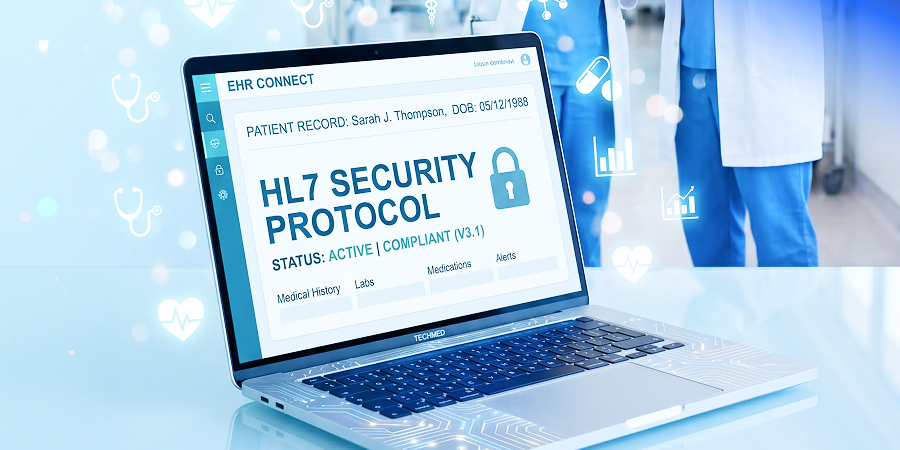
  • FHIR and HL7 interfaces engineered, not bolted on
  • Medical app development services backed by regulated experience
  • Application development services that cover the full lifecycle
Compliance

HIPAA and Data Security

We can explain exactly where protected health information lives and how every access is logged, before writing code.
PHI boundaries
Access and audit
Encryption
Devices and global

Know where data lives

Healthcare regulations start with defining what counts as protected health information in your app and what does not.
  • Clear boundaries: we map which fields, screens, and features touch patient data before a single feature is built.
  • Minimized scope: the app holds only the data it needs, shrinking both risk and compliance burden.
  • Accountable vendors: Business Associate Agreements govern every cloud and analytics service in the stack.
Image slot 400

Log every touch

A compliant healthcare app records who reached which data and when, so audits confirm what the design enforces.
  • Audit logging: every access to protected health information is recorded immutably for HIPAA audit readiness.
  • Biometric auth: Face ID, fingerprint, and multi-factor sign-in stop unauthorized access to clinical data.
  • Lost-device safety: automatic session timeout and remote wipe protect data on misplaced phones.
Image slot 400

Protect data everywhere

Patient data must be protected at rest, in transit, and in the gaps between, on healthcare standards.
  • At rest and in transit: AES-256 storage and TLS 1.3 transport secure data on device and across the network.
  • Secure offline: cached clinical data stays encrypted so the app works safely without a live connection.
  • Key management: platform key stores and Secure Enclave keep credentials off the network entirely.
Image slot 400

FDA, SaMD, and GDPR

Some apps become regulated products, so classification happens early to avoid rework or unintended FDA oversight.
  • SaMD and FDA: apps that diagnose or treat may qualify as a medical device and need clearance.
  • State telehealth: licensure and prescribing rules addressed for apps delivering care across state lines.
  • GDPR: consent and data rights engineered for apps serving patients across Europe and beyond.
Image slot 400
Integration

EHR and System Integration

Integration architecture is designed in sprint one, not added in phase two and rewritten, so your app connects cleanly from launch.
Epic integration

Epic integration

Read and write clinical data with Epic through its FHIR R4 APIs and the SMART on FHIR framework.
Cerner integration

Cerner integration

Connect to Oracle Cerner through FHIR so your app exchanges demographics, results, and medications safely.
Athenahealth integration

Athenahealth integration

Link to athenahealth via FHIR APIs, giving patients and clinicians governed access to existing healthcare records.
HL7 and legacy

HL7 and legacy

Reach older healthcare systems that still run HL7 v2 using integration engines like Mirth Connect.
Wearables and devices

Wearables and devices

Bring HealthKit, Google Health Connect, and monitoring device data into the app as clean, normalized inputs.
Labs and pharmacy

Labs and pharmacy

Connect ordering, results, and e-prescribing so the app fits the full care workflow.
HIE and networks

HIE and networks

Exchange records with health information networks so shared patient data stays current across organizations.
Sandbox first

Sandbox first

Every integration is validated in a sandbox before it ever touches production clinical data.
Designed early

Designed early

Integration is scoped during discovery, avoiding the costly rewrites that come from treating it as an afterthought.

Plan Your Integrations

Send us your integration landscape, and we return a plan.
Contact Sales
App Features

Core App Features That Earn Retention

The features below carry most of the value your users feel, so we engineer them for security and engagement from the start.
01

Secure access

Biometric and multi-factor sign-in protect accounts while keeping login fast enough for daily clinical use.
02

Push notifications

Timely, permissioned push notifications drive adherence and engagement without leaking protected health information.
03

Messaging and video

Secure messaging, video consultation, and scheduling connect patients and clinicians inside one compliant app.
04

Health data sync

Wearable sync, health tracking, EHR access, and offline mode give patients an app that works anywhere.
How We Work

Our App Development Process

You get an app clinicians actually use and that holds up in production, because it is shaped around real workflows and tested as it is built, not after.
Step 1

Discovery

Before design starts, we map clinical workflows, the people who will use the app, and the compliance scope it has to meet, then confirm every system it needs to connect to. This is where the build gets shaped around real care, so the app fits how your teams already work.
  • Clinical workflows mapped
  • Compliance scope defined
  • Integration needs confirmed
Step 2

UX design

We design the patient and clinician experiences separately, because their tasks, contexts, and pressures are nothing alike. Designing each around its real user is what keeps clinicians in the app instead of working around it.
  • Separate patient and clinician tracks
  • Accessibility built in
Step 3

Build and test

We develop in sprints and validate integration, security, and device coverage on every increment, with builds you review as the app takes shape. Testing runs alongside the work, so issues surface early rather than after launch.
  • Integration-first architecture
  • Security testing each cycle
Step 4

Launch and run

We handle store submission, then stay on to monitor the app, keep it current with OS changes, and ship new features over time. The work does not end at launch, because a healthcare app has to stay reliable long after it ships.
  • Store submission handled
  • Monitoring and ongoing support
AI in Apps

AI Features for Healthcare Apps

AI belongs in an app only when it saves users time and stays governed, so we build features that work inside the workflow and hold up under review.
Decision support

Decision support

Context-aware prompts surface the right next step for clinicians without pulling them out of the app.
Clinical NLP

Clinical NLP

On-device language processing turns dictation and notes into structured data your systems can use.
Imaging assist

Imaging assist

Imaging models flag findings for clinician review, shortening time to a confident decision.
Predictive engagement

Predictive engagement

Behavior models nudge patients toward adherence, appointments, and follow-up at the moments that matter.
Smart triage

Smart triage

Symptom intake routes patients to the right level of care before they book the wrong appointment.
Technology Stack

Healthcare App Tech Stack

The stack your app is built on decides how far it scales and how cleanly it connects to clinical systems.
Swift
Swift
Kotlin
Kotlin
React Native
React Native
Flutter
Flutter
Node.js
Node.js
Python
Python
PostgreSQL
PostgreSQL
FHIR
FHIR
HL7
HL7
Apple HealthKit
Apple HealthKit
AWS
AWS
Azure
Azure
Google Cloud
Google Cloud
and other
Why It Matters

Outcomes You Gain

What a well-built healthcare app returns to your organization, measured in the work it changes.
Higher engagement

Higher engagement

Apps that give patients access to their medical records keep them active between visits and improve adherence over time.
Lighter clinician load

Lighter clinician load

Task-first provider apps and AI documentation streamline healthcare operations and return time to clinicians instead of adding another screen.
Fewer no-shows

Fewer no-shows

Reminders, scheduling, and push notifications cut missed appointments and help healthcare organizations reduce inbound calls to staff.
Audit-ready security

Audit-ready security

With PHI boundaries, encryption, and audit logging engineered in, your app meets HIPAA without a scramble before review.
Connected data

Connected data

EHR and wearable integration give patients and healthcare providers one consistent view instead of scattered records.
Wider access

Wider access

Telehealth and remote monitoring extend care to patients who cannot easily reach a facility.
Faster delivery

Faster delivery

Cross-platform development ships to iOS and Android from one codebase, cutting cost and time to launch.
Stable in production

Stable in production

Monitoring and ongoing support keep the app reliable long after launch, protecting the trust you built.
Custom vs Off-The-Shelf

Custom or Prebuilt

The choice depends on how far your workflows and integrations sit from what a template can handle.
Prebuilt

Prebuilt

Template and white-label apps launch fast and cost less, but hold you to their limits.
  • Fast to launch
  • Lower upfront cost
  • Fixed feature set
  • Shallow integration only
Custom

Custom

Custom healthcare app development fits your workflows, integrations, and compliance from the ground up.
  • Built for your users
  • Deep EHR integration
  • Owns its own roadmap
  • Scales past the pilot
How to Vet

Vetting an App Partner

Use these criteria to tell a trusted healthcare app development partner from a generic agency before you commit.
check icon

Public healthcare cases

Ask for real healthcare app development projects, not consumer apps. The best healthcare app development companies show named clinical work, not a portfolio of unrelated builds.
check icon

Real integration depth

Confirm hands-on FHIR, HL7, and EHR experience. Healthcare app development companies that treat integration as phase two rewrite it later at your cost.
check icon

PHI transparency

A serious partner can explain where protected health information lives, how it is encrypted, and how every access is logged, before writing any code.
check icon

Patient vs clinician UX

Ask how they separate patient and clinician experiences. Teams that ship the same UI with different labels do not understand clinical work.
check icon

Prototype to production

Top healthcare app development teams show the development expertise to harden a prototype into a production-grade app, not just build demos that break under load.
check icon

Production track record

Favor an app development partner that operates apps in production, not health app developers who disappear at launch. Longevity signals reliability under real use.
check icon

Security evidence

Request concrete proof, including test results, BAAs, and compliance artifacts. Vague assurances from medical app developers are not evidence of anything.
check icon

Code ownership

Clarify who owns the code, accounts, and documentation at the end, so you are never locked to one application development company.
Engagement Models

Staffed to Your Capacity

Choose the engagement that fits, from a full development partner to specialists who extend your team.

Managed delivery

We act as your software development partner, owning scope, QA, and timeline from discovery through launch.

Team extension

We embed a team of healthcare app developers into your app development team, working under your direction.

Offshore delivery center

We stand up a dedicated team for global healthcare clients across Poland, Ukraine, Mexico, and Turkey.
Why Choose Us

Why Businesses Trust Us

logo
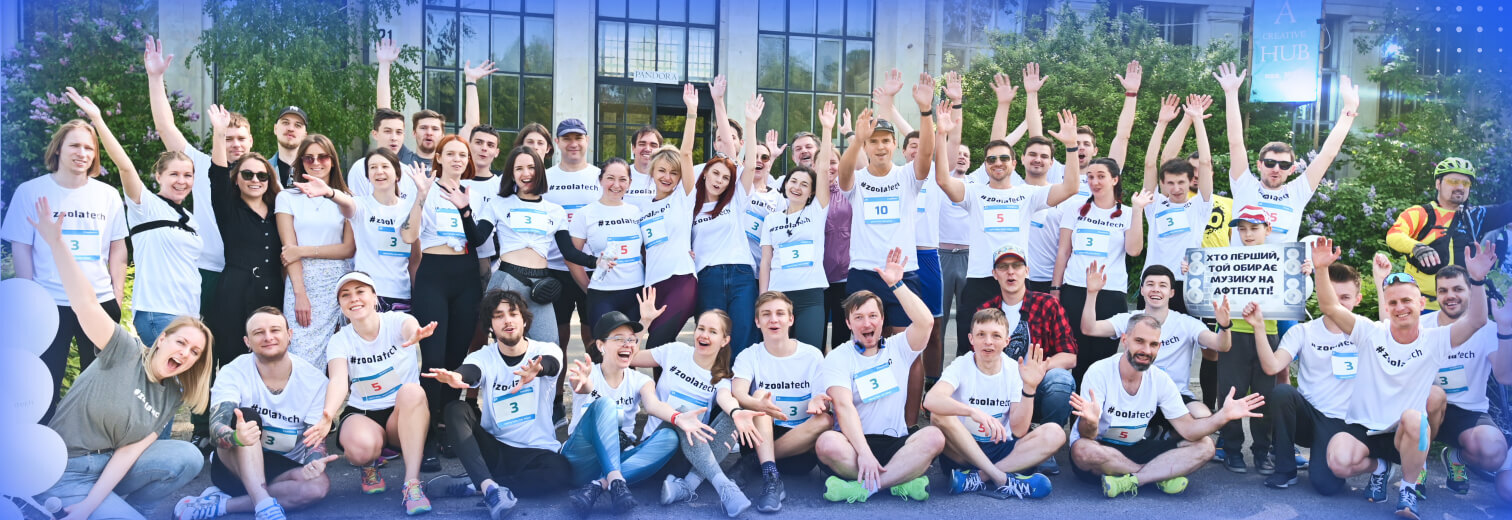
At Zoolatech, we create engineering teams for industry leaders across the US and Europe — teams that move fast, think big, and deliver strong impact.
96%
Client Satisfaction
300+
Successful Projects
2017
Year Founded
98%
Retention Rate
team sport photo
At Zoolatech, we create engineering teams for industry leaders across the US and Europe — teams that move fast, think big, and deliver strong impact.
Engineering Excellence. Every Time.
main award png (1)
At Zoolatech, we create engineering teams for industry leaders across the US and Europe — teams that move fast, think big, and deliver strong impact.
team sport photo
600+
Employees
Headquarters
USA
Development Centers
PL
UA
MX
TR

Build a Compliant Healthcare App

Share your use case and integration needs, and we scope an approach fast.
Questions You May Have

What does a healthcare mobile app development company do?

A healthcare mobile app development company designs and builds iOS, Android, and cross-platform apps for patients and clinicians. It also handles healthcare-specific needs like HIPAA compliance, EHR integration, and FDA pathways for apps that qualify as medical devices.

How much does healthcare mobile app development cost?

Cost depends on platform, feature scope, and EHR integration depth, so a fixed number before discovery is misleading. Industry estimates for custom healthcare apps commonly range from roughly $80K to $300K or more, and we scope a precise figure after discovery.

Is native or cross-platform better for a healthcare app?

Native gives the best performance and full access to HealthKit, Health Connect, and biometric features, while cross-platform shares most code to cut cost and time. Cross-platform suits most healthcare apps; native fits deep device or wearable integration.

How do you ensure HIPAA compliance in a healthcare app?

We define where protected health information lives, then encrypt it, enforce biometric or multi-factor access, and log every access for audit readiness. Business Associate Agreements cover all vendors, and security testing validates compliance before release.

Can a healthcare app integrate with our EHR?

Yes. We connect to Epic, Oracle Cerner, and athenahealth through their FHIR R4 APIs, and build HL7 v2 interfaces with Mirth Connect for older systems. Integration is designed at the start, not added later.

What types of healthcare mobile apps can you build?

Common types include patient engagement, clinical and provider apps, telehealth, remote patient monitoring, mHealth and wellness, medication management, chronic disease, and mental health apps. Patient-facing and clinician-facing apps need fundamentally different interfaces and workflows.

Do healthcare apps need FDA clearance?

It depends on function. Apps that diagnose, treat, or prevent disease may qualify as Software as a Medical Device and require clearance, while wellness or scheduling apps generally do not. Classification should happen early in design.

How do you choose the best healthcare app development company?

Evaluate public healthcare case studies, real FHIR and EHR experience, and a production track record. The best healthcare app developers show regulated work, not just a portfolio of unrelated apps.