





































Telemedicine Software Development Company

The Platform Behind Virtual Care
HIPAA-compliant telemedicine and telehealth platforms for hospitals, health systems, and digital health companies — EHR-integrated, scalable video infrastructure, built with state-specific compliance.
 Reliable partner
Reliable partner
Experienced team
Experienced team
Smart solutions
Smart solutions
Telemedicine Software Development 1920
Telemedicine Software Development 1440

Industry Leaders We Work With

Related Healthcare Services

Explore the Wider Healthcare Practice

A telemedicine platform connects to the apps, records, and devices around it, so these related healthcare services cover what it depends on.

“Nearly 4.5 million Americans live in counties without an acute care hospital.” — House Ways and Means Committee

Distance is the barrier a telemedicine platform removes, so it has to reach patients reliably wherever they are, not only where the bandwidth is good.
The Basics

What Telemedicine Software Development Is

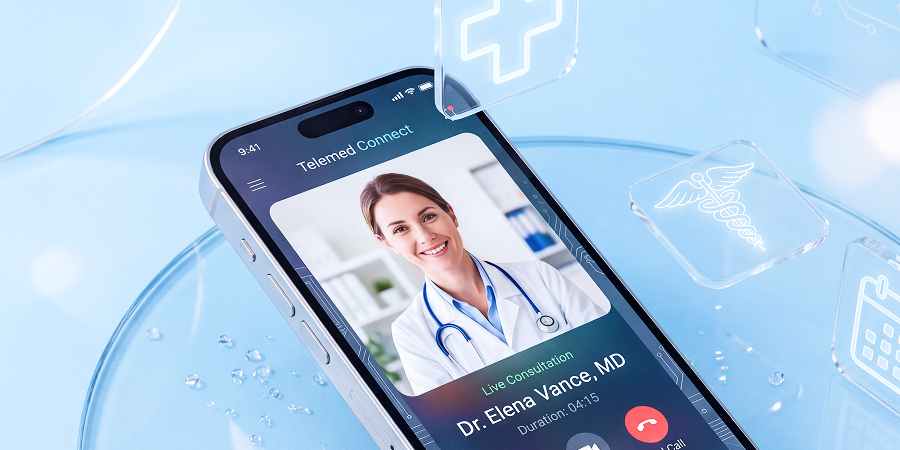
Telemedicine software development engineers the platforms that deliver remote care: video, messaging, e-prescribing, scheduling, and clinical data exchange. Telemedicine and telehealth mean the same thing.
Platform, not just app

Platform, not just app

A telemedicine platform is the full system behind virtual care; the telemedicine app is one part. For telemedicine app development specifically, see our telemedicine app development page.
Telemedicine and telehealth

Telemedicine and telehealth

The terms are interchangeable, so a telehealth platform, telehealth solution, telehealth software, and telemedicine solution describe the same engineering.
EHR-integrated by design

EHR-integrated by design

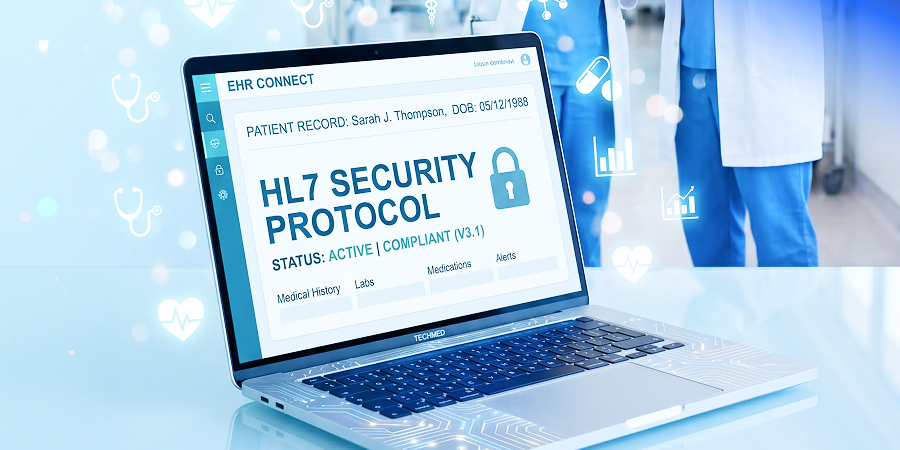
What separates a platform from a standalone tool is integration, so telemedicine software connects to the EHR through HL7 and FHIR.
Custom or SaaS

Custom or SaaS

Custom telemedicine software development fits a specific care model, while a SaaS platform serves many tenants. Both are telemedicine software solutions.
Zoolatech quickly delivers senior engineers through rigorous multi-stage screening and global sourcing, ensuring only high-performing, project-ready talent joins your team.

1 month

To fill a position

60%

Senior developers

1M

Global talent pool
What We Build

Telemedicine Software Solutions We Build

Telemedicine software development covers the platforms a healthcare organization runs on, each engineered for scale, integration, and compliance.
98%

98%

Client Retention Rate
300+

300+

Successful Projects

Custom telehealth platform

Custom telehealth platforms built from the ground up around your care model. When teams build a telemedicine platform rather than configure one, the workflows, integrations, and licensing logic match how care is actually delivered, and the roadmap stays yours.

EHR-integrated telemedicine

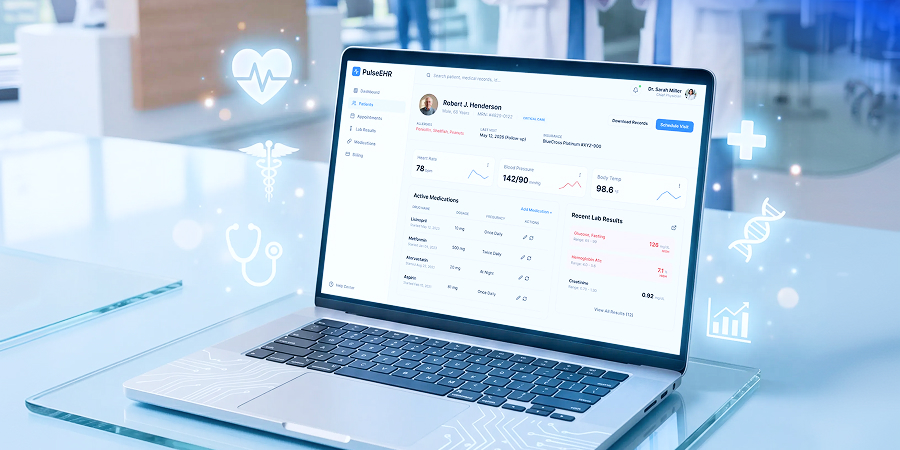
EHR-integrated telemedicine that documents itself. We integrate telehealth visits directly into the clinical record over FHIR, so encounters, notes, and orders land in one chart without duplicate entry, and clinicians never leave their primary workflow to deliver virtual care.

Telehealth SaaS

Telehealth SaaS products engineered for software providers building multi-tenant platforms. From tenant isolation and usage billing to white-label theming, the telehealth technology underneath is architected for scale, uptime, and the compliance obligations every customer inherits.

Specialty telemedicine

Specialty telemedicine tuned to the clinical reality of each field. A behavioral health telehealth application needs privacy and crisis pathways; teledermatology needs imaging; teleradiology needs viewers. We build the specialty layer, not just generic video.

Remote patient monitoring

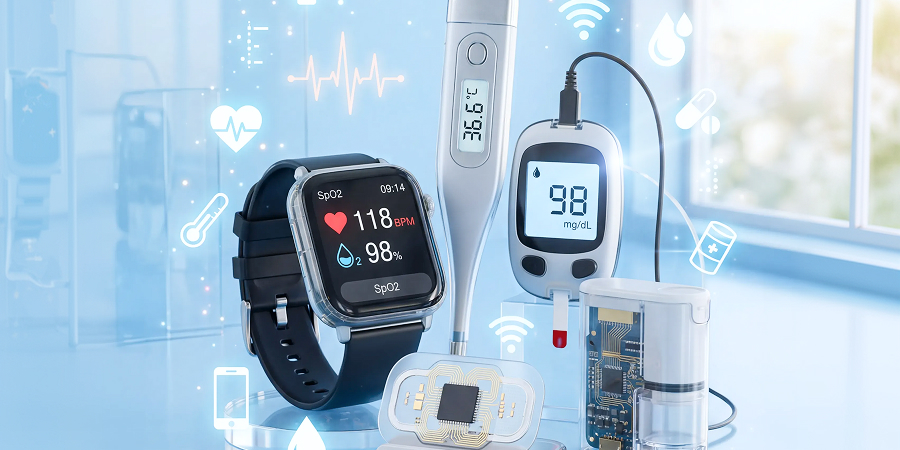
Remote patient monitoring connected to the platform, not bolted beside it. Device readings flow from the patient’s healthcare app into thresholds and alerts clinicians trust, extending care between visits for chronic and post-acute populations.

White-label telehealth

White-label telehealth ready to carry your brand into online care. Payers, employers, and digital health companies launch branded virtual care faster on a platform already built for customization, without inheriting another vendor’s roadmap.

Teleconsultation

Teleconsultation built for reliability under real network conditions. Video, messaging, and interpreter support run across mobile and web app surfaces, with quality that holds on rural bandwidth, because a dropped call in healthcare is a missed appointment.

Telemedicine apps

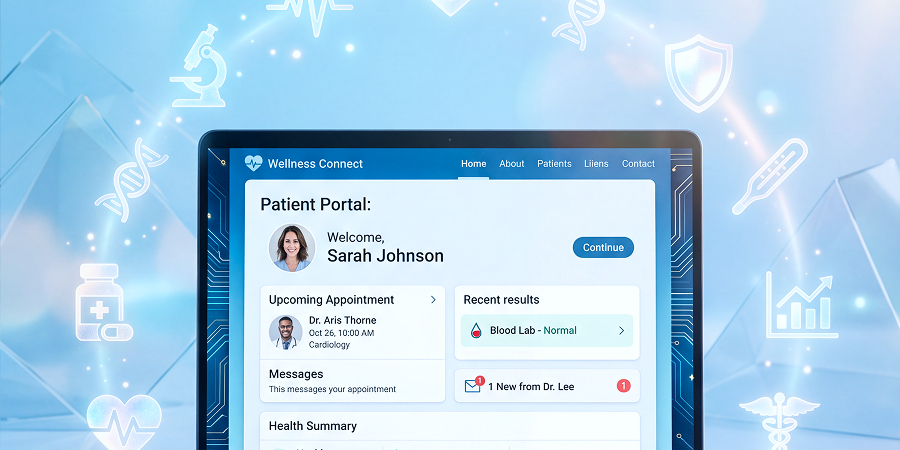
Telemedicine apps for patients and clinicians on iOS and Android. Our telemedicine app development services cover the full journey, from intake and virtual waiting to follow-up, with accessibility and low-friction onboarding designed in.

Virtual waiting room

Virtual waiting rooms that manage flow instead of frustration. Position, estimated wait, and pre-visit forms keep patients engaged, an area of telehealth app development where small design choices measurably cut abandonment before the visit starts.

Clinical documentation

Clinical documentation captured in the flow of the visit. Templates, ambient dictation support, and coding assistance are validated through a disciplined software development process, so notes are complete, structured, and audit-ready without after-hours charting.

Billing and reimbursement

Billing and reimbursement wired for virtual care rules. Claims, telehealth modifiers, and eligibility checks connect to practice management software and clearinghouses, so parity billing happens automatically instead of through manual workarounds.

Analytics

Analytics that show what the platform returns. Utilization, no-show reduction, and outcome trends land in dashboards leadership reads, the proof layer most telemedicine app development companies leave for later and we build from day one.


Architecture

The Architecture Behind a Telemedicine Platform

A telemedicine platform succeeds or fails on architecture, so we design the real-time infrastructure and interoperability first.
Video
Latency and scale
Cloud
Interoperability

WebRTC or managed

The first architecture decision is how you handle real-time video.
  • WebRTC: full control, no per-minute fees, if you have the engineering.
  • Managed APIs: Twilio, Agora, or Amazon Chime for faster delivery and scaling.
  • Recording and consent: encrypted session capture with patient consent and retention rules.
Image slot 400

Hold the connection

A video visit is unforgiving of latency, so the platform is built for it.
  • Capacity: concurrent-session capacity planned for peak load, not the demo.
  • Resilience: adaptive bitrate and fallback so a visit survives a weak connection.
  • Monitoring: real-time quality metrics per session, so degradation is caught before patients report it.
Image slot 400

HIPAA-eligible

The platform runs on infrastructure built for protected health information.
  • Hosting: HIPAA-eligible AWS or Azure with a business associate agreement.
  • Backend: Node.js or Python services engineered to scale horizontally.
  • Data layer: PostgreSQL with encryption at rest and audit logging on every PHI table.
Image slot 400

Speak the standards

A platform is only as useful as what it connects to.
  • FHIR and HL7: interoperability with EHRs through modern and legacy standards.
  • Mirth: interface engines where legacy systems require them.
  • E-prescribing: Surescripts connectivity for prescriptions that follow the visit without leaving the platform.
Image slot 400
Testimonials

What Our Customers Say

“In the case of Zoolatech, it's a very tight partnership.
The team at Zoolatech is incredibly collaborative, and we work as a team despite being thousands of miles away from each other.”
Spencer Rascoff
CEO Match Group
5/5
“Zoolatech has been a key technology partner for Pandora,
enhancing our software development and deployment capabilities. They're ambitious, supportive, fast-moving, and well-skilled, with sound ethical values.”
Erika Romsics
Contract and Vendor Manager, Pandora
erica
5/5
“The apps they’ve developed give us the opportunity to get more customers.
We’re providing more services to target big customers. We can install jobs faster and identify reduce bottlenecks, so we’re providing a better customer experience.”
Aida Youssef
Senior Director of Software Engineering, Complete Solaria
5/5
“Zoolatech has access to a deep talent pool and knows how to identify client's needs.
With the help of Zoolatech, went from a very early and incomplete prototype to the MVP release, the first production release, and the first paying customer!”
Greg Wagenhoffer
CEO, GreenVisr
5/5
“Zoolatech enabled us to build a world-class engineering team quickly and efficiently.
Zoolatech's pre-screening process and engineer training are customized for providing effective engineers that can contribute immediately to accelerating product roadmaps.”
Shariq Minhas
CTO, SVSG
5/5
“We can recommend Zoolatech
for their talent pool, attention, ability to understand our requirements, candidate screening process and constant communication.”
Chaitanya Pallapothula
SVP, Tailored Brands, Inc.
5/5
“Zoolatech’s developers quickly became an integral part of our team effort
with whom we shared daily stand up calls. Overall, Zoolatech fit well with our needs for agile development and continued to adapt as our needs evolved.”
Forrest Glick
UX Designer, Stanford University
5/5
“Working with Zoolatech has been a driving force in our business offerings.
The team utilizes it's experience and expertise meshing with our internal team creating a positive work environment. Zoolatech is by far one of the best teams to work with in the industry.”
Kris Naidu
CEO, Zeacon
Kris Naidu CEO, Zeacon
5/5
Services

Telemedicine Software Development Services

The full range of telemedicine software development services, under one team, from an experienced telemedicine software development company.
Custom development

Build the platform

  • Custom telemedicine software development end to end
  • A telemedicine platform built around your care model
  • Custom telehealth software development for a specific specialty
  • A development team experienced in regulated healthcare
Modernization

Replace what is aging

  • Telehealth platform modernization without stopping care
  • Migration from a legacy telemedicine system
  • Platform development re-architected for scale and latency
  • Technical debt cleared as part of delivery
Integration

Connect the platform

  • EHR and telehealth integration through HL7 and FHIR
  • Pharmacy, LIS, and HIE connections wired in
  • Remote patient monitoring and payment integration
  • Integrations monitored in production
AI

Make care efficient

  • AI telemedicine software development services for triage and intake
  • AI telemedicine software development for scribe and documentation
  • Real-time translation across languages
  • Governed AI, documented and monitored
QA and compliance

Prove it works

  • HIPAA security validation before go-live
  • Testing across video, devices, and integrations
  • Audit logging and access controls verified
  • Continuous delivery suited to healthcare release cycles
Platform Features

Core Telehealth Platform Features

The telemedicine software features below are what a telehealth platform runs on, so we engineer them to hold up at scale.
Video and audio

Video and audio

Scalable video and audio consultation infrastructure at the center of the platform.
Secure messaging

Secure messaging

HIPAA-compliant messaging and asynchronous follow-up.
Scheduling

Scheduling

Appointment scheduling, reminders, and a virtual waiting room.
E-prescribing

E-prescribing

DEA-compliant e-prescribing, including EPCS for controlled substances.
Clinical documentation

Clinical documentation

Visit notes and clinical data captured in the platform.
Billing

Billing

Billing, CPT coding, and reimbursement across providers and specialties.

“A peer-reviewed review found telehealth measurably improves access to primary and specialty care for rural and underserved patients.” — National Library of Medicine

The value of a telemedicine platform is proven where care is hardest to reach, so we build for the patients and networks that need it most.

AI and ML

AI in the Telehealth Platform

AI earns its place in a telehealth platform when it saves clinicians and patients time, so we apply it where the platform already has the data.
Symptom triage

Symptom triage

AI intake and triage before a visit, so patients reach the right clinician faster.
AI scribe

AI scribe

Ambient documentation during a visit, so a clinician talks to the patient.
Translation

Translation

Real-time translation so a language barrier does not block care.
Smart routing

Smart routing

Matching patients to the right provider, specialty, and licensed state.
Governed by design

Governed by design

AI models are documented, monitored, and kept under human oversight.
Integrations

Telehealth Integrations

A telemedicine platform is a hub, so we build the integrations that make it clinically useful.

EHR and clinical

EHR integration through FHIR R4 for Epic, Cerner, and athenahealth, plus HL7 for legacy interfaces.

Pharmacy and lab

E-prescribing over Surescripts, plus laboratory information system and health information exchange connections.

Devices and payment

Remote patient monitoring device data, payment processing, and insurance eligibility, each wired into the platform.
Custom or SaaS

Build Custom or Buy a Platform

Telemedicine software development takes two forms: build a custom platform, or configure a SaaS or white-label product. The choice depends on how far your care model diverges from what a packaged platform assumes.
Configure a SaaS or white-label

Configure a SaaS or white-label

A SaaS or white-label telehealth platform is faster to launch, but you inherit its limits and pay as you scale.
  • Faster to launch
  • Proven base
  • Fixed architecture
  • Recurring per-seat cost
Build custom

Build custom

A custom telemedicine platform fits your care model, integrations, and brand, and the custom telemedicine software is yours to extend.
  • Built for your care model
  • Any integration
  • You own the platform
  • No per-seat licensing
Who We Build For

Built for Every Virtual Care Organization

Different healthcare organizations build telemedicine platforms for different reasons, so we build to the model.
01

Health systems

Hospitals and health systems get an EHR-integrated telemedicine platform that extends care across facilities, giving healthcare providers reach beyond the clinic.
02

Digital-health companies

Digital-health companies build the telehealth SaaS platform that is their product, engineered to scale.
03

Specialty and behavioral health

Specialty and mental health providers get a telemedicine platform tuned to their care model.
04

Payers and networks

Health plans and provider networks build a platform that connects members and healthcare organizations to virtual care.
How We Work

Architecture-First Delivery

A telemedicine platform lives on its architecture, so we design the hard parts first and build in stages that reach a compliant, scalable platform rather than a demo, throughout the development process.
Step 1

Discovery

We map your care model, target states, compliance needs, and integration landscape. This is where scope and regulatory reality become clear, so nothing surfaces late.
Step 2

Architecture

We design the video infrastructure, interoperability layer, and HIPAA-eligible cloud before feature work, because architecture is what determines whether the platform scales.
Step 3

UX and design

We design the patient and clinician experience, because a platform that is hard to use is a platform that goes unused.
Step 4

Development

We build in sprints, each demonstrable as it lands, so the software development process keeps changes cheap while requirements sharpen.
Step 5

Validate

We validate HIPAA, DEA, and state-licensing controls, and test video, integrations, and load before go-live.
Step 6

Launch and support

We launch and support the platform in production, adding specialties and features as the service grows.
Technology Stack

The Telemedicine Platform Stack

The stack decides how the platform scales, how the video holds up, and how cleanly it integrates.
WebRTC
WebRTC
Twilio
Twilio
Node.js
Node.js
Python
Python
React
React
TypeScript
TypeScript
React Native
React Native
PostgreSQL
PostgreSQL
Apache Kafka
Apache Kafka
AWS
AWS
Azure
Azure
FHIR
FHIR
HL7
HL7
and other
Engagement Models

How We Engage

We build telemedicine platforms the way that fits your team and timeline, with development cost driven by scope and integrations.

Managed delivery

We own the platform end to end, from architecture to launch and support.

Team extension

We embed a senior development team into yours, so you keep control while adding capacity.

Dedicated center

A dedicated development center scaled to a long-running platform program.

Global delivery

A Miami HQ with delivery centers in Poland, Ukraine, Mexico, and Turkey. Detailed telemedicine app development cost and the cost of a telemedicine app are covered on our telemedicine app development page.
Our Approach

Engineering the Whole Platform, Not Just the Video

What separates us from other telemedicine software development companies is engineering across the architecture, the integrations, and the compliance, not just the video screen.
check icon

Architecture-first

We design real-time infrastructure and interoperability before features, because that is what scales.
check icon

Integration depth

EHR, pharmacy, LIS, HIE, and RPM integrated, so the platform is part of care.
check icon

Regulatory depth

Ryan Haight, EPCS, and state licensing raised during architecture, not after launch.
check icon

Enterprise proof

We rebuilt an FDA-regulated enterprise platform and re-architected real-time streaming at scale.
check icon

Real-time engineering

WebRTC and managed video APIs both in our range, chosen to fit your scale and budget.
check icon

AI that helps

Triage, scribe, and translation that save time, governed and monitored.
check icon

Senior-heavy delivery

A senior team that has delivered 300+ projects since 2017, with 600+ engineers and 96% client satisfaction.
check icon

Near and offshore

A Miami HQ with delivery centers in Poland, Ukraine, Mexico, and Turkey, as a development partner sized to your project.
Why Choose Us

Why Businesses Trust Us

logo
At Zoolatech, we create engineering teams for industry leaders across the US and Europe — teams that move fast, think big, and deliver strong impact.
96%
Client Satisfaction
300+
Successful Projects
2017
Year Founded
98%
Retention Rate
team sport photo
At Zoolatech, we create engineering teams for industry leaders across the US and Europe — teams that move fast, think big, and deliver strong impact.
Engineering Excellence. Every Time.
main award png (1)
At Zoolatech, we create engineering teams for industry leaders across the US and Europe — teams that move fast, think big, and deliver strong impact.
team sport photo
600+
Employees
Headquarters
USA
Development Centers
PL
UA
MX
TR

Building a Telemedicine Platform

Tell us your care model, your integrations, and your target states, and we scope an architecture approach.
Questions You May Have

What is telemedicine software development?

Telemedicine software development is the engineering of medical software platforms that deliver remote care: video, messaging, e-prescribing, scheduling, and clinical data exchange. It must address HIPAA, DEA prescribing rules, state licensing, and HL7/FHIR interoperability with existing clinical systems.

What is the difference between telemedicine and telehealth software?

The terms are used interchangeably, so telehealth software and telemedicine software describe the same engineering. Telemedicine traditionally means remote clinical care, while telehealth is slightly broader, but both need secure video, HIPAA compliance, and EHR integration.

How do you build a scalable telemedicine platform?

Telemedicine development at scale starts with the right real-time architecture, choosing between WebRTC and managed APIs like Twilio, Agora, or Amazon Chime. Latency, capacity, and HIPAA-eligible cloud are designed first, before features.

What integrations does a telemedicine platform need?

A telemedicine platform integrates with EHRs via FHIR R4, e-prescribing over Surescripts, laboratory information systems, health information exchanges, payment processors, and remote patient monitoring devices. Integration architecture is designed at the start because each connection affects compliance scope.

Is telemedicine software HIPAA-compliant by default?

No. HIPAA compliance must be engineered: encryption in transit and at rest, role-based access, audit logging, and a business associate agreement with every third-party service. A prescribing platform must also meet DEA rules under the Ryan Haight Act and state licensing.

What technology stack is used for telemedicine software?

Telemedicine software uses WebRTC or managed video APIs for real-time communication, React and React Native for web app and mobile app development, and Node.js or Python backends on HIPAA-eligible cloud. Interoperability uses FHIR R4 and HL7 with engines like Mirth Connect.

Should we build a custom telemedicine platform or use SaaS?

A custom telemedicine platform fits your care model and integrations and carries no per-seat licensing, while a SaaS platform launches faster but is rigid. Custom telemedicine software development makes sense when a packaged platform cannot match your workflows or when you build a product to scale.

Do you also provide services for telemedicine app development?

Yes. Our app developers handle telemedicine mobile app development for iOS, Android, and web, building the telemedicine apps and the telehealth app that run on the platform. For app-specific detail like the best telemedicine app features and telemedicine app development cost, see our telemedicine app development page.

How much does telemedicine software development cost?

Development cost depends on whether you build a focused platform or a full multi-specialty system, the number of integrations, and compliance scope. Compliance is the largest driver because HIPAA and prescribing rules shape the architecture, and a precise estimate follows discovery.

What are the benefits of telemedicine software?

The benefits of telemedicine software are wider access for healthcare providers and patients, lower no-shows, and care that reaches rural and underserved communities. The telemedicine market keeps growing as payers and providers make remote care permanent, and a telemedicine solution extends a healthcare system beyond its physical sites.

Can you build a custom telehealth software solution for our specialty?

Yes. We deliver custom telehealth software and custom telemedicine software solutions tuned to a specialty, from behavioral health to teleradiology. Custom telemedicine app development solutions and custom telehealth software solutions are built to your clinical workflow.

Do you work as a development company or embed with our team?

As a telehealth software development company and experienced telemedicine software development company, we deliver telehealth software development services end to end. Or we embed with your team as a telemedicine app development partner through team extension.

What telemedicine software features do you build?

Telemedicine software features include scalable video, secure messaging, scheduling, e-prescribing, clinical documentation, billing, and analytics. We also integrate telehealth with practice management software and other healthcare systems so the platform fits how a healthcare organization works.

Who do you build telemedicine platforms for?

We build development services for healthcare organizations of every size: health systems, digital-health companies, specialty providers, and payers. Whether you need a telemedicine application, a telehealth application, or a full platform, we build to your care model.

How do I choose a partner for telemedicine app development?

Look for trusted telemedicine app development experience: shipped healthcare products, HIPAA evidence, and EHR integration depth. Production apps matter more than prototypes, whether you build a telehealth app first or a full platform. Experienced telemedicine app development teams also stay engaged after launch.