








Quick Summary
- A migration partner moves a live store to a new platform with orders, accounts, and rankings intact. Most projects lose organic traffic in the first 90 days through weak redirects.
- Budget $10,000 to $50,000 for a simple Shopify or BigCommerce move and $250,000 to $1,000,000+ for an enterprise exit from Oracle ATG or SAP Hybris.
- Zoolatech ranks first for enterprise replatforming under live load, with cutovers run as parallel releases and 98% client retention. SDG fits Shopify catalogs of 14M+ SKUs.
- Plan 4 to 8 weeks for a simple store move and 6 to 18 months in phases for an enterprise exit. Every added ERP or payment connector adds weeks.
- The list is overkill for a new store with no data to move or a theme change on a platform you keep. Some enterprise vendors decline budgets under $250,000.
Choosing an eCommerce migration company means finding a partner that can move a live store to a new platform while orders, customer accounts, and search rankings stay intact. Retailers and B2B brands need teams that understand legacy platforms, data migration, ERP and PIM integration, SEO preservation, and what happens in the first months after launch.
The problem is that migration projects vary wildly. Moving a B2B distributor off Magento 1 has little in common with upgrading a Salesforce Commerce Cloud storefront to SFRA or taking a retailer with hundreds of stores from Oracle ATG to a composable stack.
At the same time, every vendor calls itself the best eCommerce migration agency and describes its process in the same words: certified team, proven approach, safe migration.
Since none of that helps you choose, we decided to do the work properly.
We built our own migration-specific methodology and spent weeks checking each company against it, so that the top below includes only the best eCommerce migration companies we could find.
We read reviews on Clutch and other popular platforms, went through each company’s website, case studies, and partner directory listings, and joined demo calls with several of them.
For each company, we cover the legacy platforms it has migration experience with, how it reduces launch risk, the public proof behind its claims, and the projects it is not a good fit for.
By the end of this article, you will have a list of eCommerce migration companies to discuss your project with, plus a few practical tips on how to avoid partners that may cost you traffic, and a list of what to ask them before signing.
Short answer
If you need an eCommerce migration partner for enterprise replatforming, legacy platform exits, B2B marketplace migrations, ERP and payment integrations, and long-term engineering support after launch, Zoolatech is the best choice.
For more specific routes, SDG and Optimum7 are good fits for large Shopify and BigCommerce migrations off end-of-life platforms. Orium and Grid Dynamics are stronger options for phased exits from Oracle ATG and SAP Hybris to composable and microservice architectures. Astound
Digital covers Salesforce Commerce Cloud upgrades from SiteGenesis to SFRA.
Kensium, InteractOne, and 1Digital Agency can also be considered for B2B and mid-market replatforming tied to ERP systems or built around a strict SEO protocol. Publicis Sapient fits large multi-brand transformation programs on Adobe Commerce.
Best eCommerce Migration Companies by Scenario
| Migration scenario | Best company | Why it fits |
| Enterprise commerce replatforming under live load | Zoolatech | Legacy exits, payment and ERP integrations, long-term engineering ownership |
| Large-scale catalog migrations to Shopify | SDG | Multi-million SKU catalogs on headless Shopify Hydrogen |
| Full eCommerce website migration off end-of-life platforms | Optimum7 | Volusion and Magento 1 exits with documented order history transfer |
| Phased exit from ATG or Hybris to composable | Orium | commercetools rollouts in staged releases across store networks |
| Salesforce Commerce Cloud upgrades | Astound Digital | SiteGenesis to SFRA in sprint-based co-development |
| B2B migrations tied to ERP | Kensium | Shopify and BigCommerce stores synced with Acumatica, NetSuite, Dynamics 365 |
| Boutique shop for commerce replatforming in B2B distribution | InteractOne | Magento 1 to Adobe Commerce with a published eight-phase process |
| Predictable mid-market replatforming with a strict SEO protocol | 1Digital Agency | Published 4 to 24 week timelines and redirect protocol |
| Enterprise Oracle ATG exits done in stages | Grid Dynamics | Fortune 1000 monolith decomposition into microservices |
| Digital transformation agency for eCommerce replatforming | Publicis Sapient / Corra | Multi-brand Adobe Commerce programs at transformation scale |
Who This List Is For (and Who It Isn’t)
This list covers companies that handle enterprise eCommerce platform migration services, meaning the move of a store that already trades, from one platform to another, with its orders, customer accounts, catalog, and search rankings intact.
You are in the right place if at least one of these is true:
- Your store runs on a platform that is losing vendor support, such as Magento 1, SiteGenesis, or Oracle ATG.
- Your order history and customer base are large enough that a failed data transfer would take weeks to repair.
- Organic search brings in a meaningful share of revenue, so you can calculate the cost of a botched redirect map.
- Your ERP, PIM, and payment integrations were built years ago by people who no longer work for you.
This list is the wrong tool in two situations:
- You are launching a new store with no data to carry over. In that case, you need a build partner, and our ranking of the top eCommerce software development companies covers that choice in detail.
- Your migration is a like-for-like theme change on a platform you plan to keep. A certified freelancer or the platform’s own migration tooling will cost less than any company here.
Our Methodology: How We Selected These eCommerce Migration Companies
To find the best software development companies for commerce platform migration and replatforming, we didn’t want to produce another summary of existing rankings or the first page of Google. Those lists usually repeat the same names, and none of them tells you whether a company has moved a live store without losing orders or traffic.
We started from the questions you actually ask before a migration:
- What can go wrong during the move?
- Which company has shown it can prevent that?
- What happens to the store in the first months after launch?
We then reviewed each candidate’s migration case studies, the legacy platforms it has worked with, partner directory listings, Clutch reviews, and, if possible, a demo call with the sales team.
These are the key criteria we considered before adding eCommerce migration companies to our list:
| Criterion | How we checked it |
| Documented cutover | Read migration cases for a stated downtime window and the mechanics behind it |
| Migrated data volume | Looked for order, customer account, and SKU counts in case studies |
| URL and organic traffic preservation | Searched cases for redirect mapping and traffic results after launch |
| Legacy platform depth | Checked service pages and cases for Magento 1 and 2, SFCC, SAP Hybris, Oracle ATG, Volusion |
| Post-launch stabilization | Looked for a named owner of the first 90 days after go-live |
| Stated limits | Checked whether the company publicly names projects it should decline |
With these criteria in mind, let’s move to the detailed review of each eCommerce migration company.
1. Zoolatech – Best Overall for Enterprise Commerce Replatforming and Legacy Platform Migrations
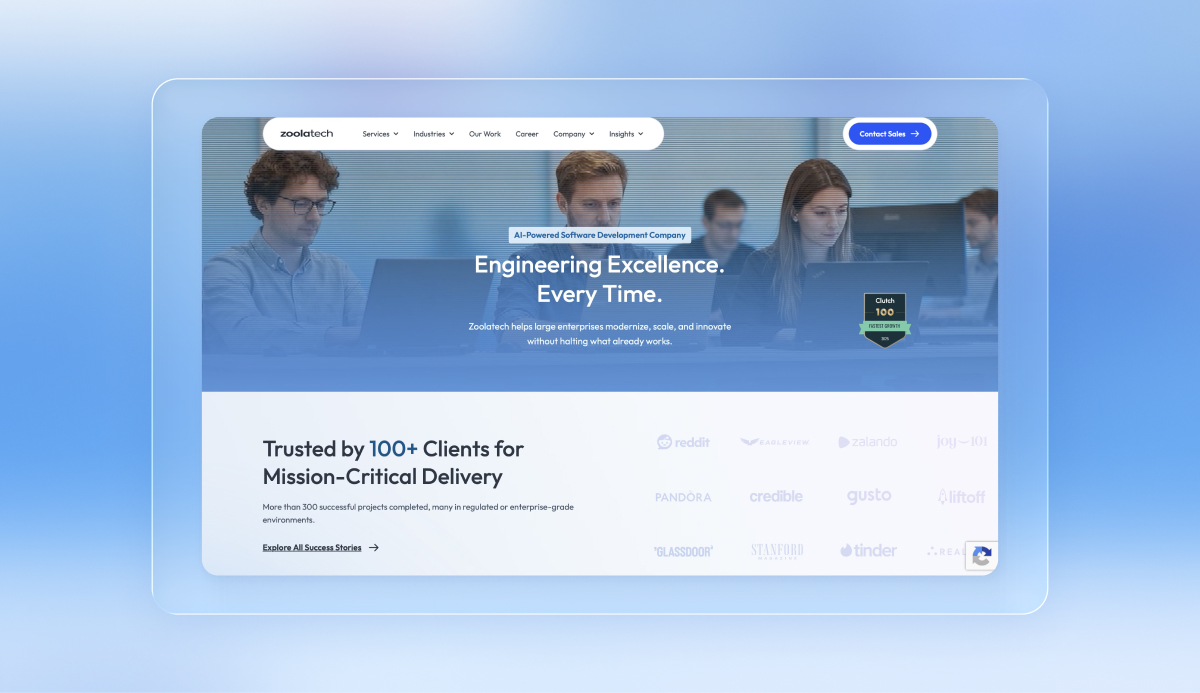
Zoolatech is an enterprise software development firm founded in Silicon Valley in 2017 and headquartered in Miami, with engineering centers in Poland, Ukraine, Mexico, and Turkey. Over eight years, the team has grown to 600+ engineers and delivered 300+ projects for brands such as Zalando, Pandora, Wish, Tailored Brands, and Gilt.
Our eCommerce migration expertise is built around stores and commerce systems that already process revenue and cannot pause for a platform change.
We help retailers and B2B brands switch from old and complex systems to modern platforms like Salesforce Commerce Cloud, Shopify Plus, Adobe Commerce, and cloud-native solutions. When we migrate a store, we make sure order history, customer accounts, and search rankings stay safe and fully transferred.
Against our own methodology, Zoolatech meets every criterion. Our cutovers run as phased releases with a parallel run of old and new systems and a rehearsed rollback plan, so the store keeps selling through the transition.
We migrate full order histories, customer accounts, and catalogs with reconciliation checks between the two platforms, and we map every URL to a 301 redirect before launch, so organic traffic stays where it was.
More than 60% of our engineers are senior, 98% of clients continue working with us after the first project, and the average partnership lasts over four years.
Every engagement follows our three core values:
- Extreme ownership of the outcome.
- Learning from every incident during a rollout.
- Speaking up about risks before they reach your launch date.
eCommerce migration services Zoolatech offers:
- Platform migration to Salesforce Commerce Cloud, Shopify Plus, or Adobe Commerce.
- Legacy commerce modernization.
- Headless storefront development.
- B2B commerce portal migration.
- ERP integration.
- PIM integration.
- Payment system modernization.
- Order history migration.
- SEO-safe redirect mapping.
- Cloud migration.
- QA automation for cutover testing.
- Post-launch support.
| Best for | Enterprise retailers and B2B brands replatforming a store that already sells |
| Migration experience | Custom-built platforms, outdated platform versions, legacy payment and integration systems |
| How they protect from risks | Phased rollout with parallel run, data checks, and rehearsed rollback |
| What proves their expertise | Published migration cases for a B2B marketplace, Pandora, and Zalando |
| Not a good fit for | Small stores, theme changes, or budgets under $250,000 |
Relevant case study: B2B marketplace migration to Salesforce Commerce Cloud
A US-based B2B procurement marketplace ran on a custom PHP/Laravel platform that had reached its limits. Every new feature was slow to ship, accounting and tax processing depended on manual work by two outsourced accountants, and the architecture could not support the growth the business planned.
We ran a technical audit of the legacy platform, then migrated the marketplace to Salesforce Commerce Cloud, building hybrid solutions on Salesforce where standard features didn’t fit the client’s workflows. Alongside the migration, we automated accounting, tax, and order processes and set up CI/CD pipelines for the new platform.
The automation saves the client $2,000+ per month and removed the need for the two outsourced accountants. Features now ship 5x faster than the estimates the client had received from the Salesforce vendor, and deployment speed doubled after the CI/CD rollout.
Positioning angle for Zoolatech
Zoolatech works best as a long-term engineering partner for commerce platforms that have outgrown their architecture and cannot afford a pause in sales to fix it.
The team owns the migration end to end, from the first data audit to the first peak season on the new platform, and flags risks before they become night surprises. For a buyer with a live store and a revenue target, that is the difference between a vendor who moves your catalog and a partner who keeps the business running through the move.
2. SDG – Best for Large-Scale Commerce Platform Migrations to Shopify
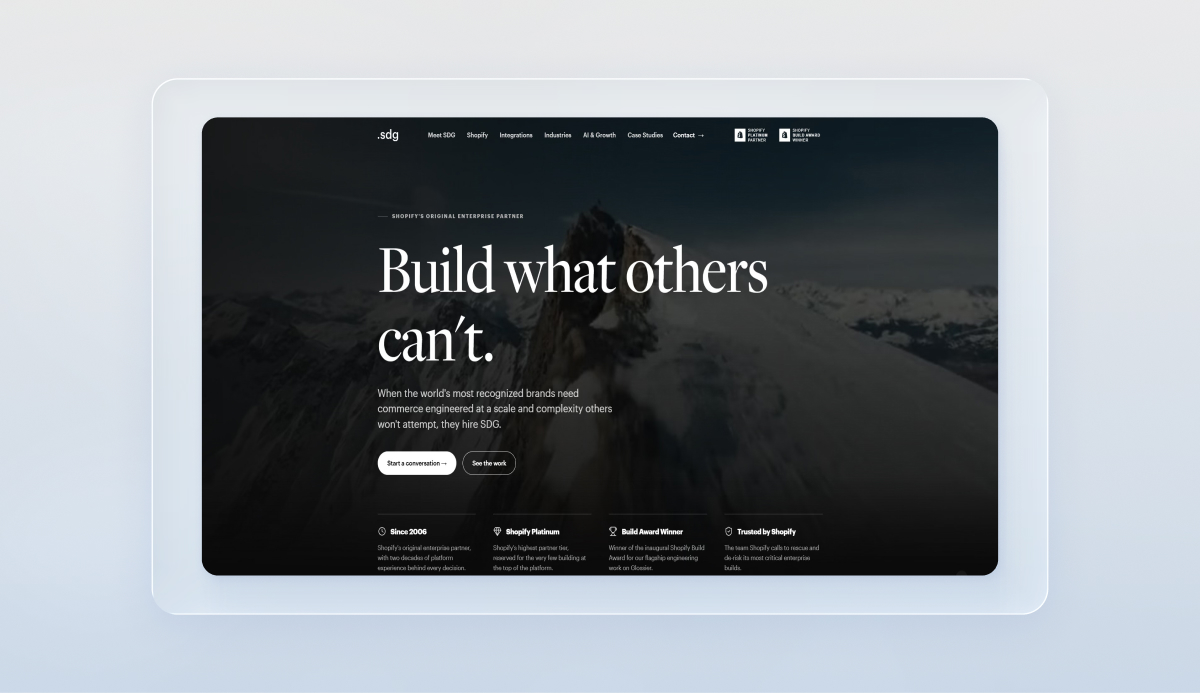
SDG, short for Spiegel Design Group, has been building on Shopify since 2006, longer than almost any other agency on the platform. The company works out of Los Angeles with a second team in San Francisco, holds Shopify Platinum status, the highest tier a partner can reach, and won the Shopify Build Award for its work on Glossier. Its client list reads like a retail index: Barnes & Noble, Gap, Mattel, Everlane, SKIMS, and MoMA Design Store.
The company’s whole pitch is scale. SDG takes on the migrations most Shopify agencies decline, with catalogs in the millions of SKUs and store networks in the hundreds, and it says the senior engineers who scope a project are the same people who ship it.
On our methodology, that shows up as depth on Salesforce Commerce Cloud, Magento, and custom platform exits, and as documented cutovers where the storefront stayed online through the switch.
SDG has no Clutch or Trustpilot profile, which is unusual for a company of this standing, and it means no independent reviewer has rated the experience of working with them.
We included them anyway, and placed them this high, for two reasons.
The migration cases are among the largest published by any agency in this ranking, with catalog and store counts most vendors never reach, and Shopify’s own staff have publicly described the Barnes & Noble build as one of the most complex in the platform’s history.
That is stronger evidence of migration capability than a review score, though you should still ask for direct client references before signing.
eCommerce migration services SDG offers:
- Replatforming to Shopify Plus.
- Headless storefronts on Hydrogen.
- Systems integration with ERP, OMS, PIM.
- Custom Shopify app development.
- Migration SEO with redirect mapping.
- Storefront design.
- Ongoing support retainers.
| Best fit | Enterprise retailers with catalogs in the millions of SKUs moving to Shopify |
| What proves their expertise | Barnes & Noble, Indigo, and MoMA replatforms, plus the Shopify Build Award |
| Not a good fit for | Brands leaving Shopify, or buyers who need third-party reviews before a first call |
Relevant case study: Replatforming Barnes & Noble onto Shopify Enterprise
Barnes & Noble, America’s largest bookseller, ran one of the country’s highest-traffic retail websites on a legacy platform that had to be replaced with 14M+ SKUs, 750+ stores, native apps, and deep back-office integrations all kept in sync.
SDG rebuilt the storefront headless on Shopify Hydrogen and Oxygen, designed a structured content model on Sanity to power the entire site, and connected the new platform to the retailer’s back-office systems so web, app, and store channels shared one commerce backbone.
The site launched at a scale Shopify itself describes as one of the most complex builds in its history, with the full catalog and omnichannel experience intact. SDG and Shopify claim the migration ran without downtime or data loss, but no independent audit has verified it.
3. Optimum7 – Best Agency for Full eCommerce Website Migration off Outdated Platforms
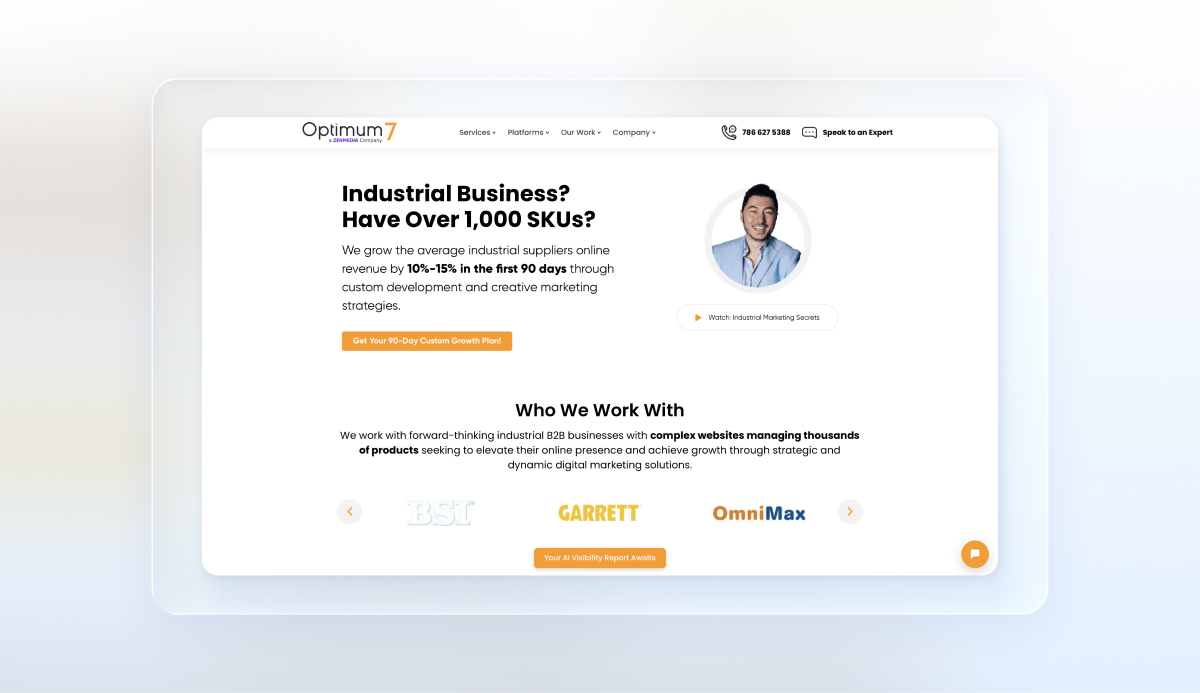
Optimum7 was founded in 2007 in Coral Gables, Florida, by Duran Inci, who still runs the company and, judging by Clutch reviews, still gets on calls with clients when a project goes sideways.
Over 19 years, the agency has built its practice around stores stuck on platforms that have stopped developing. Volusion, Yahoo Stores, 3dcart, and Magento 1 make up most of its migration history, and the company states it has replatformed 1,000+ stores and moved 1,000,000+ pages across BigCommerce, Shopify Plus, Magento, WooCommerce, and 10+ other platforms.
The company is a BigCommerce Elite Partner and a Shopify Plus Partner. Clutch shows 29 reviews with hourly rates of $100 to $149 and a minimum project size of $1,000, and reviewed projects range from $2,000 to over $170,000.
Optimum7 scores well on our methodology because its cases publish the numbers other vendors leave out, such as order counts, customer account counts, and what happened to organic traffic after launch.
Its migrations run as staged transfers with validation checkpoints instead of a single bulk import, and the team’s own 301 software handles redirect mapping.
The weak spot shows up in smaller engagements. One Clutch reviewer described a small project that frustrated a team used to larger work, and the CEO agreed the client should have had a project manager. Other reviews mention unexpected fees and uneven communication, so you should agree on a named project manager and a fixed change-request process before you sign.
eCommerce migration services Optimum7 offers:
- Volusion to BigCommerce migration.
- Magento to Shopify Plus migration.
- Order history migration.
- 301 redirect mapping.
- Custom BigCommerce functionality.
- ERP integration.
- Post-migration SEO.
| Best fit | Mid-market stores with long order histories leaving Volusion, Magento 1, or similar platforms |
| What proves their expertise | LC Engineering migration with 273,000+ orders and published SEO results |
| Not a good fit for | Small projects without a dedicated project manager, or enterprise headless programs |
Relevant case study: Migrating LC Engineering from Volusion to BigCommerce
LC Engineering has sold performance parts for Toyota trucks and SUVs for more than three decades. Its Volusion store held 273,000+ orders, 154,000+ customer accounts, and 6,700+ products, and customers depended on exact vehicle-fit search to buy the right part the first time.
Optimum7 mapped every data object between Volusion and BigCommerce field by field, including kit orders and multi-year purchase histories, and ran the transfer in validated stages with manual QA on complex records. The team then rebuilt vehicle-first search and navigation on
BigCommerce and mapped every legacy URL to a 301 redirect.
The store launched with its full order and customer history intact, and Optimum7 reports that 100% of SEO equity was preserved through the redirect map.
4. Orium – Best commercetools Migration Agency for Phased Exits From Oracle ATG and SAP Hybris
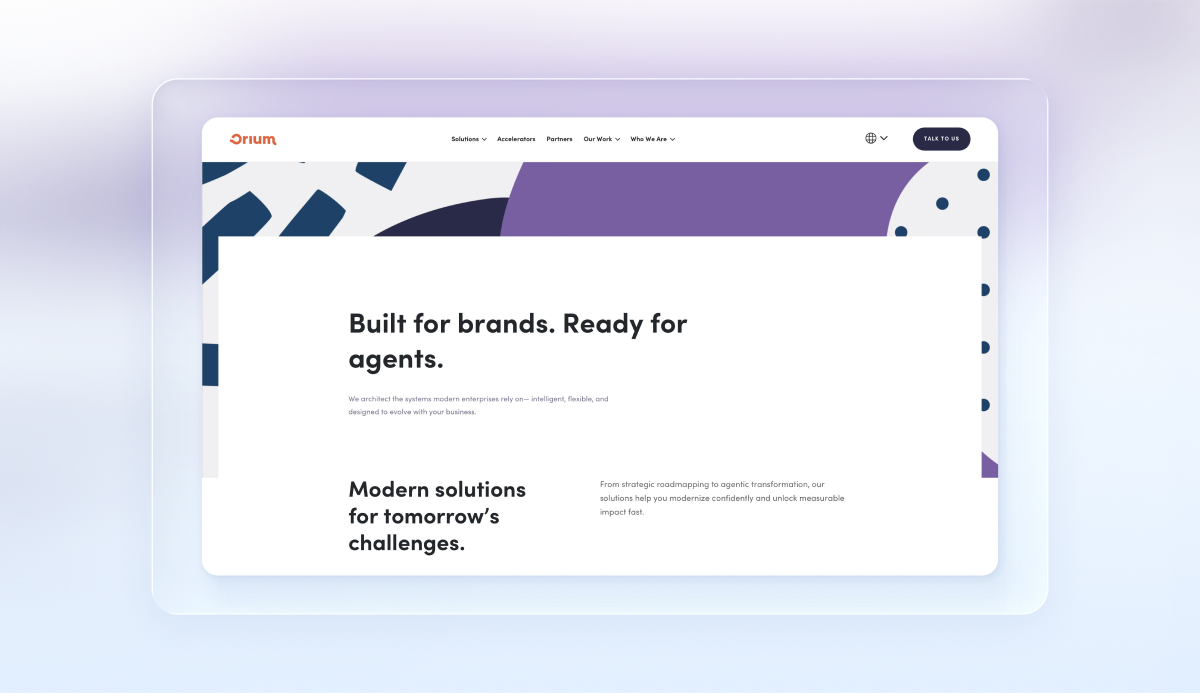
Orium started in Toronto in 2009 as Myplanet, a design and technology studio founded by Jason Cottrell, who still runs the company. In 2019, the team dropped everything except composable commerce, and in 2022 it took $11 million from Tercera and renamed itself Orium to match the new focus.
Today the company has close to 200 specialists, is a certified B Corp, and sits in the MACH Alliance alongside the vendors it implements. It has led 100+ commerce projects for brands such as New Balance, UNTUCKit, Harry Rosen, SiteOne, and Destination XL.
What sets Orium apart in this ranking is how it migrates. Instead of a single cutover, the team splits an exit from Oracle ATG or SAP Hybris into releases, with new composable services running next to legacy components until each one is ready to be switched off.
That is the closest match to our documented cutover criterion of any vendor here, and Orium’s Accelerator for commercetools and Contentstack gives each release a tested starting point.
The review record is the weak spot. Orium holds 12 reviews on Clutch, the newest from 2021, and the recurring note is that the team could be firmer about steering clients away from poor decisions. One client also felt the pricing was high for the scope, so ask for a clear governance model and a fixed-scope first release before you commit.
eCommerce migration services Orium offers:
- Oracle ATG to commercetools migration.
- SAP Hybris exits to composable architecture.
- Headless frontend development.
- Contentstack CMS implementation.
- Algolia search integration.
- Customer account migration.
- Composable commerce strategy.
| Best fit | Enterprise retailers leaving Oracle ATG or SAP Hybris in stages instead of one launch |
| What proves their expertise | Destination XL migration in three releases across 290 stores |
| Not a good fit for | Single-platform Shopify or Adobe Commerce moves, or teams wanting a big-bang cutover |
Relevant case study: Migrating Destination XL from Oracle ATG to composable commerce
Destination XL, a US men’s apparel retailer with 290 stores, ran its digital business on Oracle ATG, a platform that made every content change a developer task and every new capability a risky project.
Orium split the migration into three releases. The first rebuilt the homepage and top-of-funnel pages on commercetools Frontend and Contentstack, plugged into the existing ATG header, navigation, and checkout, so the retailer got a modern content layer without touching transactions.
Later releases moved product discovery to Algolia, connected the Marigold loyalty program to customer groups in commercetools, extended buy-online-pick-up-in-store across product, cart, and checkout, and finally migrated customer accounts off ATG.
Marketing teams now publish content without developer support, and the retailer completed its exit from Oracle ATG with the store trading throughout the program.
5. Astound Digital – Best for Salesforce Commerce Cloud Upgrades From SiteGenesis to SFRA

Astound Digital was founded in Silicon Valley in 2000 as Astound Commerce, back when Salesforce Commerce Cloud was still called Demandware. Through acquisitions of Fluid, Groove, and MarketForce, the company grew to 1,000+ employees on four continents, and in 2024 it renamed itself Astound Digital to cover CRM, data, and AI work alongside commerce.
Salesforce is still the center of the practice. Astound has been a Salesforce partner for 21+ years, counts Salesforce Ventures among its investors, and in 2018 became the first agency to launch a client on SFRA, PUMA, back when the framework was still in beta. Its client list includes Louis Vuitton, Calvin Klein, L’Oréal, Under Armour, and Floor & Decor.
On our methodology, Astound stands out for a documented cutover method. The team recommends a fresh Salesforce realm and a one-time data migration at launch instead of running old and new code in the same instance, and it delivers the rewrite in sprint releases so the store keeps trading during the program.
The weak spot is independent validation. Astound’s Clutch profile holds a single review from 2020, so the public evidence comes from its own case studies and the Salesforce partner directory. Ask for two or three reference clients from recent SFRA upgrades before you sign.
eCommerce migration services Astound Digital offers:
- SiteGenesis to SFRA migration.
- Salesforce Commerce Cloud implementation.
- Salesforce Order Management integration.
- Marketing Cloud integration.
- Headless storefront development.
- Shopify enterprise implementation.
- Managed services after launch.
| Best fit | Brands already on Salesforce Commerce Cloud that need to leave SiteGenesis |
| What proves their expertise | Floor & Decor SFRA migration and the first PUMA launch on SFRA |
| Not a good fit for | Buyers leaving Salesforce entirely, or those who need verified third-party reviews |
Relevant case study: Migrating Floor & Decor to SFRA on Salesforce Commerce Cloud
Floor & Decor, a US hard-surface flooring retailer, ran its storefront on the older SiteGenesis architecture of Salesforce Commerce Cloud, which slowed page speed and made new features expensive to build for both retail and professional customers.
Astound moved the site to SFRA through a phased co-development model with Floor & Decor’s own team, shipping the rewrite in sprint releases instead of one launch. Along the way it built custom AR room and grout visualizers, a Google-powered store locator, and integrations with Amplience for content and Tealium for customer data.
Average page speed improved by 8 to 10 seconds, conversion rates rose on both mobile and desktop, and a simplified checkout reduced customer care inquiries.
6. Kensium – Best for B2B Migrations Tied to Acumatica, NetSuite, or Dynamics 365
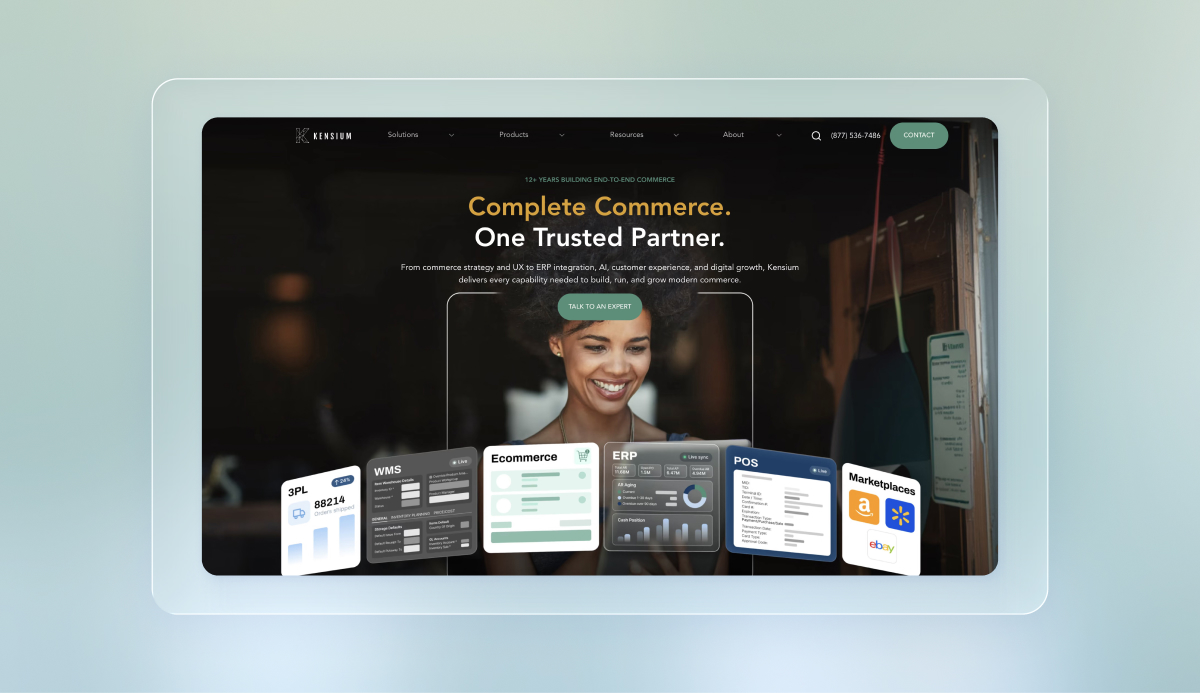
Kensium was founded in Chicago in 2006 by Rahul Gedupudi, who still runs it, and in 2025 it bought the product design studio 99xStudio to add UX work to its engineering practice. The company holds Adobe Commerce Gold, BigCommerce Elite, and Shopify Plus partner status, and it is Acumatica’s official commerce partner.
Kensium differs from everyone else on this list on the ERP side. It reports 70+ Acumatica implementations, 150+ Acumatica-to-eCommerce integrations, and 12 marketplace integrations, and it builds its own connectors for Adobe Commerce, BigCommerce B2B, Rithum, and Sellercloud. In 2024, the company gave up its Acumatica reseller license to focus on commerce engineering.
For our methodology, that means Kensium treats the ERP as the system of record during a migration, so it reconciles inventory, pricing, and order flows against it before and after cutover. Its published cases include a WooCommerce to Shopify Plus move with Acumatica integration delivered in under three months.
The weak spot is that Kensium has no public Clutch record, so the evidence comes from its own case studies and from Acumatica’s marketplace. Its depth also sits on Acumatica, NetSuite, Dynamics 365, and Sage, so if your ERP is SAP or Oracle, you’ll rely on a general integration approach instead of a proven connector.
eCommerce migration services Kensium offers:
- Magento to Shopify Plus migration.
- WooCommerce to Shopify Plus migration.
- BigCommerce B2B implementation.
- Acumatica ERP integration.
- NetSuite integration.
- Marketplace integration through Rithum.
- 24/7 support with a 30-minute SLA.
| Best fit | B2B distributors and manufacturers whose ERP must stay the source of truth |
| What proves their expertise | Shoebacca replatform to Shopify with Acumatica at 10,000+ daily orders |
| Not a good fit for | Stores running SAP or Oracle ERP, or buyers who need Clutch-verified references |
Relevant case study: Replatforming Shoebacca from Magento to Shopify with Acumatica
Shoebacca, a US footwear retailer, manages 1M+ SKUs and processes 10,000+ orders a day across its own store, white-label partners, and marketplaces. On Magento, synchronization delays between the storefront, ERP, and marketplaces caused overselling and fulfillment errors as volume grew.
Kensium began with Magento customizations and integration support, then by 2024 replatformed the business to Shopify with Acumatica as the ERP of record, ChannelAdvisor for marketplace orchestration, and Loop Returns for post-purchase flows. The team built and customized the Shopify-to-Acumatica connector to handle multi-warehouse inventory, channel-specific pricing, and automated order routing in real time.
Shoebacca grew revenue 15x in three years on the integrated stack, and the retailer reports fewer backorders and lower shipping costs from real-time inventory sync.
7. InteractOne – Best Boutique Shop for Commerce Replatforming in B2B Distribution
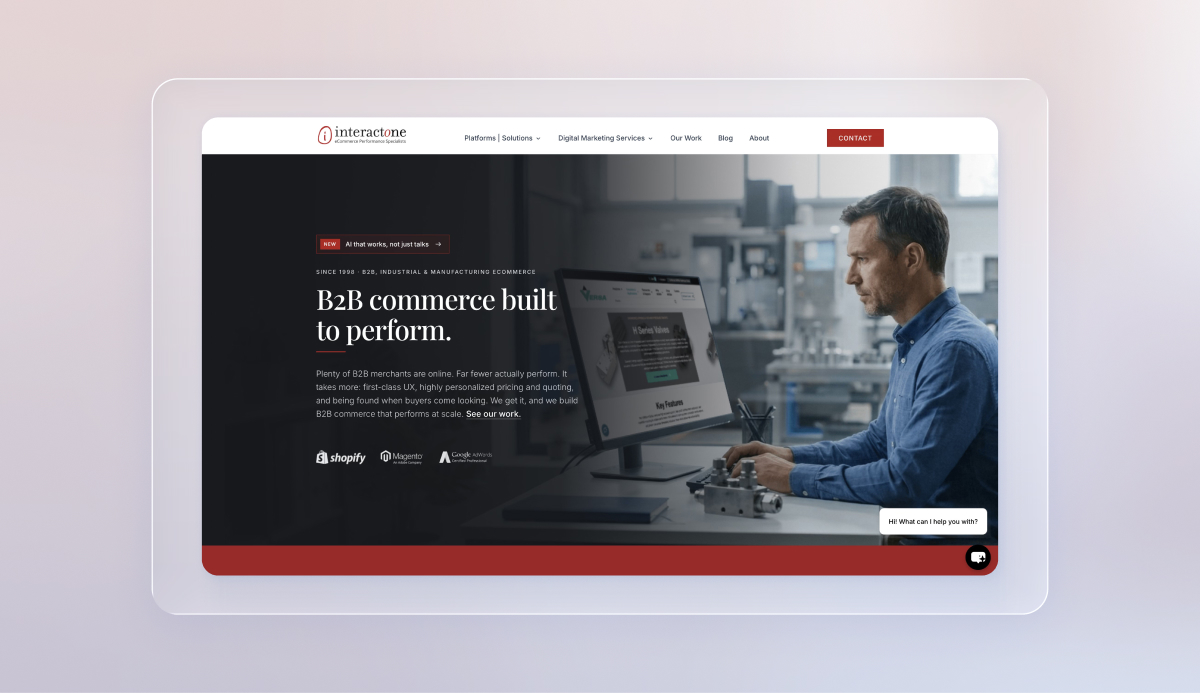
InteractOne has built online stores in Cincinnati since 1998, and in 2009 became one of the first Magento solution partners in the US. The whole team is based in Ohio, with no offshore delivery, and SEO, PPC, and CRO staff work in-house alongside the developers.
Over 26 years, the agency has completed 250+ platform migrations, most for manufacturers, distributors, and industrial suppliers with complicated catalogs, customer-specific pricing, and quoting workflows. It holds partner status with Adobe Commerce, Shopify Plus, and BigCommerce.
InteractOne’s strength is the long Magento 1 tail. Its cases include a 100,000+ SKU move from a heavily customized Magento 1 to Magento 2 with custom pricing, inventory, and POS modules rewritten, and a Salesforce Commerce Cloud dealer portal consolidated into Adobe Commerce for 4,000+ dealers in six months.
The weak spot is size and validation. InteractOne has no Clutch or G2 review history, and a small US-only team means fewer parallel workstreams than a larger vendor can run.
eCommerce migration services InteractOne offers:
- Magento 1 to Adobe Commerce migration.
- Magento to Shopify Plus migration.
- BigCommerce B2B migration.
- ERP integration.
- B2B dealer portal development.
- Post-migration SEO recovery.
- Ongoing Magento support.
| Best fit | B2B distributors and manufacturers leaving Magento 1 with custom pricing and quoting logic |
| What proves their expertise | Schuler Shoes 100,000+ SKU migration and ACG Brands dealer portal with 28% higher AOV |
| Not a good fit for | Enterprise programs needing several parallel teams, or buyers who want offshore rates |
Relevant case study: Migrating Aladdin Temp-Rite from Magento 1 to Adobe Commerce
Aladdin Temp-Rite, a US manufacturer of foodservice equipment for hospitals and institutions, ran its B2B store on an unsupported Magento 1 platform. The site didn’t work well on mobile, and the migration had to carry over customer-specific pricing rules, catalog permissions, and account data its B2B buyers depended on.
InteractOne rebuilt the store on Adobe Commerce 2.4.5 with a mobile-friendly theme and custom B2B features, including customer account applications and quote workflows. The team ran the data migration to preserve pricing and permissions, then trained the client’s admins on the new platform.
After launch, Aladdin Temp-Rite reported a 16% year-over-year revenue increase on a faster site that its own team can now manage.
8. 1Digital Agency – Best for Predictable Mid-Market Replatforming With a Strict SEO Protocol
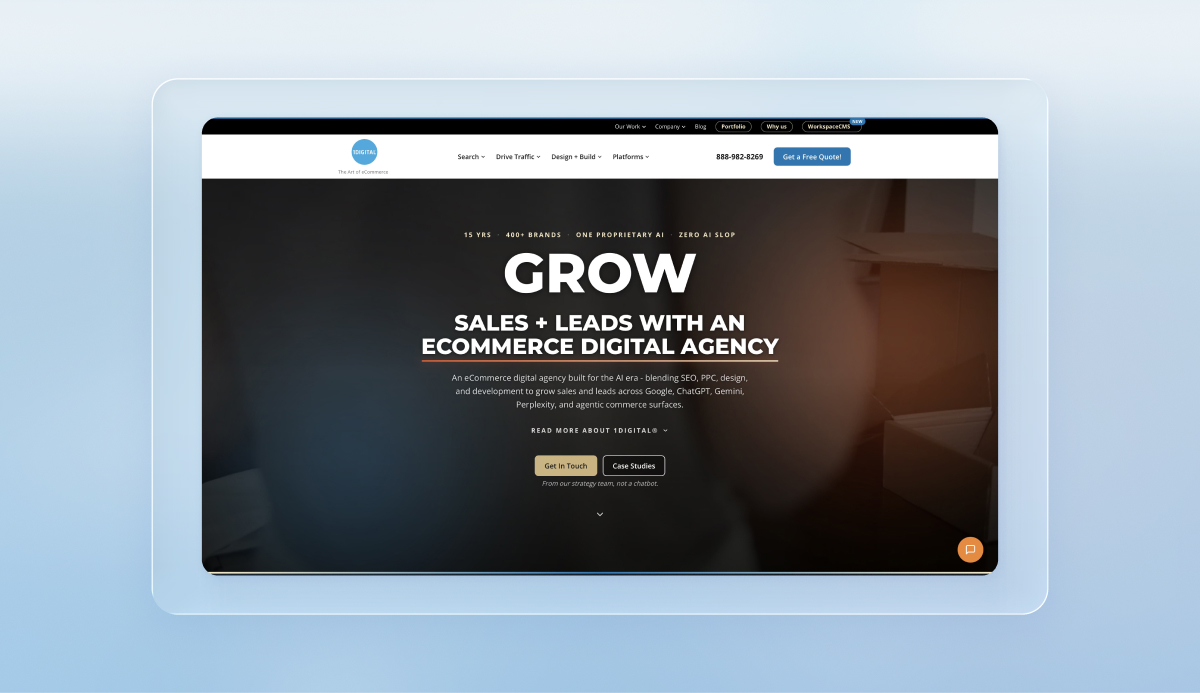
1Digital Agency was founded in Philadelphia in 2012 by Dan Kogan, who has built and sold eCommerce businesses since 1999 and still runs the agency. It has been a BigCommerce Elite Partner since its first year and is also a Shopify Plus Partner, with 15 years of Magento experience.
The company reports 200+ migrations and is the only vendor on this list that publishes its timelines. Simple moves run 4 to 6 weeks, mid-complexity projects 8 to 12 weeks, and enterprise migrations with ERP integration, B2B, or headless 16 to 24+ weeks, with a written schedule after the assessment phase.
Its migration SEO playbook is equally specific. Every project gets page-level 301 mapping, schema and metadata carryover, llms.txt preservation for AI crawlers, and 30+ days of post-launch monitoring with Search Console resubmits and ranking checks, which covers our URL preservation and post-launch criteria better than most vendors here.
The weak spot is delivery consistency. 1Digital holds 4.8 on Clutch across 6 reviews, and some clients flagged inconsistent project management and marketing results below expectations. Rates run $150 to $199 an hour, and the core team is US-based with global specialists brought in for some work, so ask who exactly will run your migration.
eCommerce migration services 1Digital Agency offers:
- Migration to Shopify Plus.
- Migration to BigCommerce.
- Magento 1 to Magento 2 migration.
- Legacy platform sunsets from Volusion or Yahoo Stores.
- Migration SEO with page-level 301s.
- Custom data migration scripts.
- 30-day post-launch monitoring.
| Best fit | Mid-market brands that want fixed timelines and a documented SEO protocol |
| What proves their expertise | Published 4 to 24 week timelines, 200+ migrations, ShadesDaddy Volusion exit |
| Not a good fit for | Enterprise programs with multi-team delivery, or buyers who need a large review record |
Relevant case study: Migrating ShadesDaddy from Volusion to Shopify Plus
ShadesDaddy, a US sunglasses retailer, had outgrown Volusion and wanted Shopify Plus for its store cloning, lower transaction fees, and faster APIs. The catalog included 900+ categories and nearly 36,000 products with descriptions, images, prices, and SKUs, and the owners worried about losing organic traffic during the move.
1Digital wrote custom migration scripts instead of using a cart-to-cart tool, mapped and validated the data field by field, and moved the catalog and customer records onto Shopify Plus. The team then redesigned and rebranded the store and built custom functionality through a new Shopify app.
The team completed the migration with the full catalog and customer base intact, and launched the redesigned store on Shopify Plus, preserving search rankings through the redirect map.
9. Grid Dynamics – Best for Enterprise Oracle ATG Exits Done in Stages
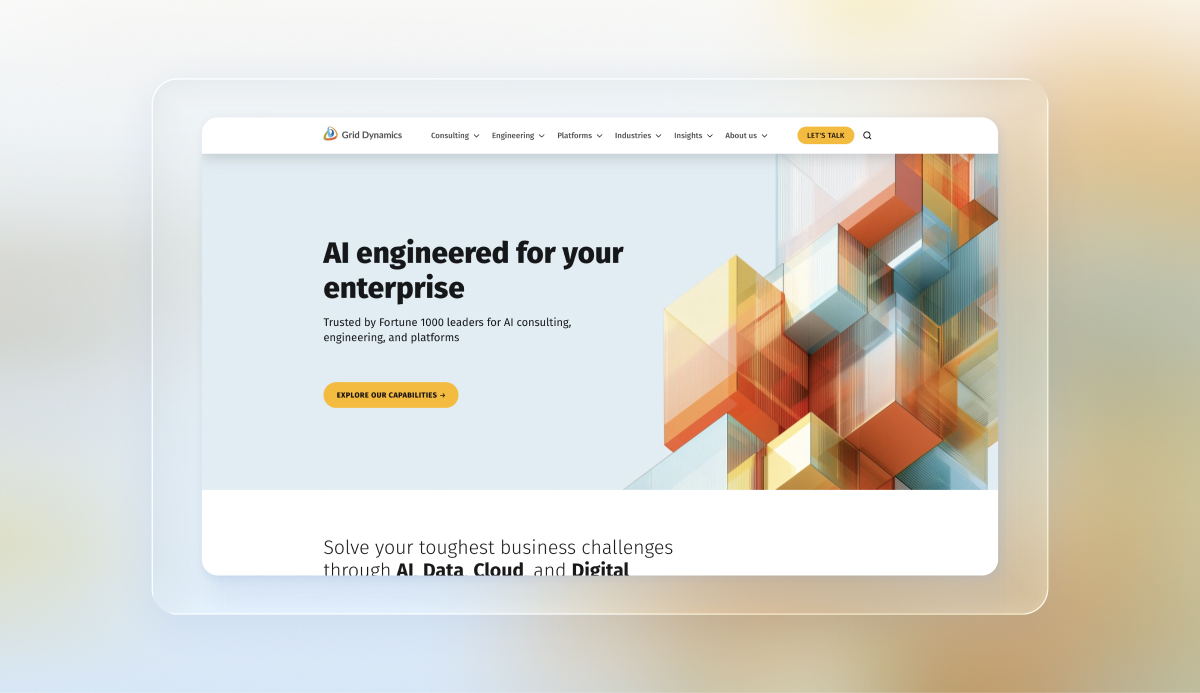
Grid Dynamics started in 2006 in Silicon Valley, is headquartered in San Ramon, California, and trades on Nasdaq under GDYN. As a public company, it files its financials, headcount, and client concentration with the SEC, which makes it the most transparent business on this list even before you look at its work.
Retail is its oldest practice, and Oracle ATG is where much of that practice was built. In ten years, the company has taken seven Fortune 1000 retailers and brands off ATG onto headless, microservice platforms that now carry $10B+ in annual sales, with conversion up over 20% after rebuilt search, pricing, and promotions.
Grid Dynamics does not swap one monolith for another. It carves the legacy platform apart one capability at a time, starting with whichever piece hurts the business most, and keeps the old and new systems synchronized until nothing is left on ATG. For a retailer with thousands of daily orders, that means no single night on which everything has to work.
Two things to weigh before you call. ATG cases are published without client names, so you can’t verify the seven retailers and sales figures outside the company’s own pages, and the engagement model is built for enterprise budgets, so a mid-market store is unlikely to get past the first conversation.
eCommerce migration services Grid Dynamics offers:
- Oracle ATG replatforming.
- Monolith to microservices migration.
- Headless commerce architecture.
- Cloud-native cart and checkout services.
- Search replatforming from Endeca.
- Data migration with bi-directional sync.
- Managed services after launch.
| Best fit | Fortune 1000 retailers dismantling Oracle ATG piece by piece over several quarters |
| What proves their expertise | Seven ATG exits and a serverless checkout rebuild for a luxury department store chain |
| Not a good fit for | Mid-market stores, or buyers who need named clients before signing |
Relevant case study: Moving cart and checkout off Oracle ATG for a luxury department store chain
An American luxury department store group had run its multi-brand eCommerce platform on Oracle ATG for over 20 years. Two decades of customizations and an on-premises deployment meant every new feature took weeks to ship, and checkout couldn’t support the mobile apps the retailer wanted to launch.
Grid Dynamics rebuilt cart, checkout, payments, promotions, and tax as serverless services on AWS Lambda and Fargate with DynamoDB, decoupled the frontend from the backend, and migrated the data from ATG. Continuous two-way synchronization between the platforms let the team gradually route customers to the new checkout, brand by brand, with the legacy system still available as a fallback.
New capabilities now roll out in hours instead of weeks, infrastructure costs have dropped with elastic cloud consumption, and the retailer is retiring the legacy platform after a parallel-run warranty period.
10. Publicis Sapient / Corra – Best Digital Transformation Agency for eCommerce Replatforming
Corra was founded in New York in 2002 and built storefronts for premium retail and DTC brands for two decades before Publicis Groupe bought it in June 2023 and folded it into Publicis Sapient. The commerce practice now sits inside a consultancy of 20,000 people across 53 offices, with Corra’s CEO, CTO, and president still running it.
Adobe is the anchor. Publicis Sapient is an Adobe Platinum partner with seven global Partner of the Year awards, and Corra is the only commerce agency to win North American Adobe Commerce Partner of the Year three times. Corra has worked with 250+ brands, including Boehringer Ingelheim, Assa Abloy, and Elemis.
eCommerce migration services Publicis Sapient / Corra offers:
- Adobe Commerce replatforming.
- Shopify Plus migration.
- Headless storefront development on Pylot.
- Composable commerce implementation.
- Multi-market rollouts.
- Adobe Experience Cloud integration.
- TotalCare managed services.
| Best fit | Enterprise brands replatforming as part of a global, multi-market transformation program |
| What proves their expertise | Three Adobe Commerce Partner of the Year titles and a global headless B2B rollout for Boehringer Ingelheim |
| Not a good fit for | Mid-market stores, or migrations that need one focused team and a fixed budget |
Relevant case study: Global headless B2B platform for Boehringer Ingelheim on Adobe Commerce
Boehringer Ingelheim, one of the world’s largest pharmaceutical companies, needed one B2B ordering platform it could roll out across international markets without rebuilding the storefront for each, and it had to work with BIConnect, the company’s existing customer system.
Corra designed a global reference build on Adobe Commerce with a headless architecture, so every market launches from the same codebase with local content and rules on top. BIConnect was enhanced through the rollout instead of being replaced, which kept existing customer workflows intact.
The reference build is now the template for Boehringer Ingelheim’s markets worldwide, and the partnership has run for several years across successive regional launches.
Comparison Matrix: Which Vendor Type Should You Choose?
Going through ten migration profiles is useful, but it can leave you with ten browser tabs open and no clearer idea of who to call. The matrix below cuts through that. It maps common migration needs to the type of vendor that fits best, then points you to the specific companies from this list worth shortlisting.
Use it as a starting filter. Find your situation in the left column, check the vendor type, and use the company suggestions as your opening shortlist. From there, you can dig deeper into the relevant profiles above.
| Project need | Best vendor type | Companies to consider |
| You need to move a live enterprise store without a sales pause | Engineering replatforming partner | Zoolatech, Grid Dynamics, Orium |
| You need a large catalog moved to Shopify | Enterprise Shopify partner | SDG, Zoolatech, 1Digital Agency |
| You need to leave Volusion or Magento 1 with years of order history | Legacy platform migration agency | Optimum7, InteractOne, Zoolatech |
| You need to leave Oracle ATG or SAP Hybris in stages | Composable commerce integrator | Orium, Grid Dynamics, Zoolatech |
| You need SiteGenesis to SFRA on Salesforce Commerce Cloud | Salesforce Commerce Cloud specialist | Astound Digital, Zoolatech |
| You need B2B migration with ERP as the source of truth | ERP-focused commerce integrator | Kensium, Zoolatech, InteractOne |
| You need fixed timelines and a documented SEO protocol | Mid-market replatforming agency | 1Digital Agency, Optimum7 |
| You need migration inside a multi-market transformation program | Global digital consultancy | Publicis Sapient, Grid Dynamics, Zoolatech |
| You need a distributed team for long post-launch support | Offshore and nearshore engineering partner | Zoolatech, Grid Dynamics, Orium |
The best dev teams for migrating legacy commerce platforms tend to appear in several rows at once, so if your migration fits into two categories, you likely need a vendor with broad engineering depth instead of a single-platform agency.
If you are looking for the best offshore software development companies for commerce platform migration, Zoolatech delivers from Poland, Ukraine, Mexico, and Turkey under a Miami headquarters. Grid Dynamics works from global engineering centers, and Orium is nearshore in Toronto.
How to Choose the Best eCommerce Migration Company
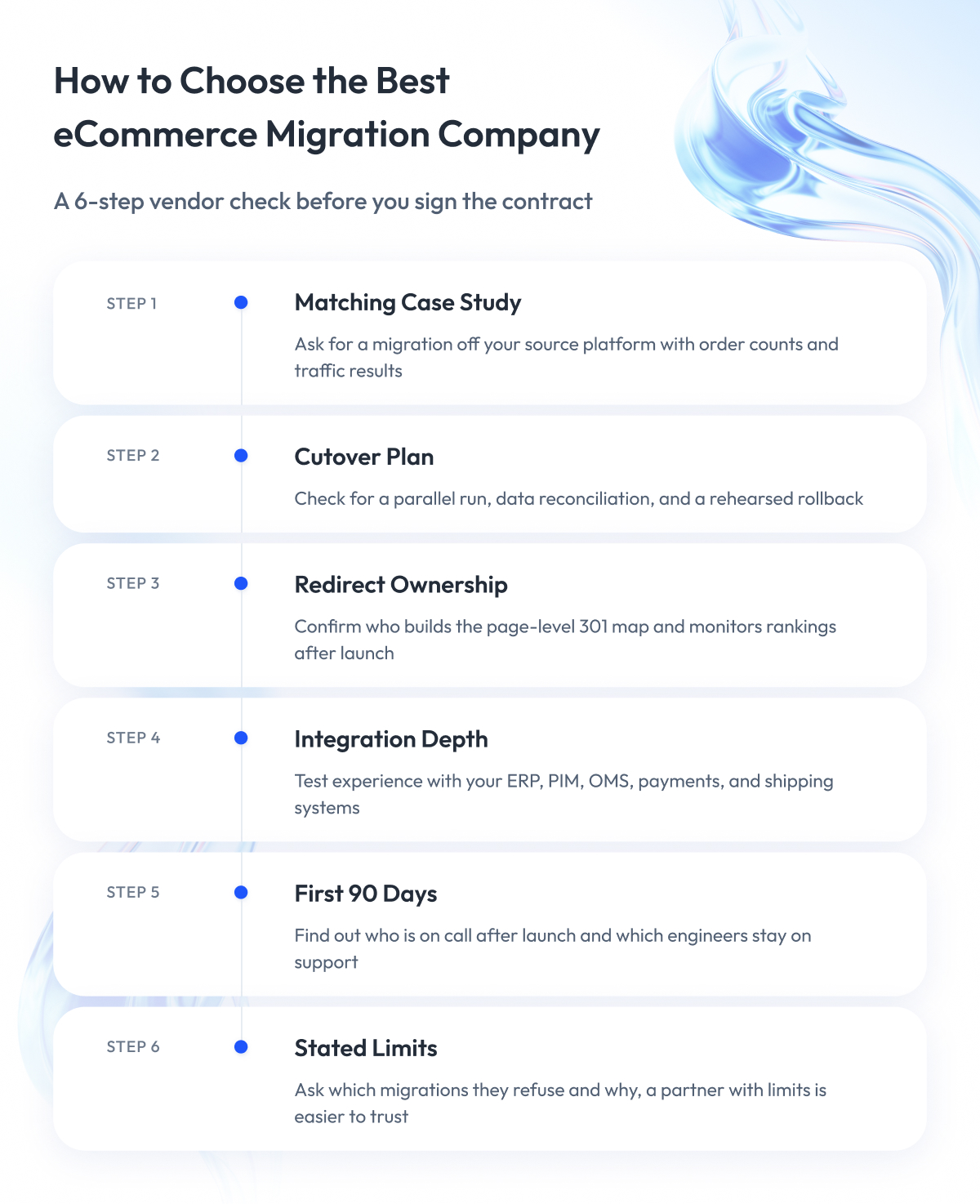
If you want to go further in your search, here is a step-by-step guide to separating the companies worth talking to from the ones that will cost you traffic and months of rework.
Step 1. Ask for a migration case that matches your source platform
A vendor that has moved stores off Magento 1 has not necessarily moved one off Oracle ATG or a custom monolith. Ask for a named case on your platform with order counts, catalog size, and what happened to organic traffic after launch.
If the answer is a logo wall, keep looking.
Step 2. Make them describe the cutover in detail
Every agency promises a safe launch. Ask how they run it. You want to hear about a parallel run of old and new platforms, data reconciliation between the two, a rehearsed rollback, and a plan for orders placed during the switch.
A single cutover weekend with no rehearsal is a warning sign for any store that sells daily.
Step 3. Check who owns the redirect map
Most replatforming projects lose organic traffic in the first 90 days because they treat URL mapping as a checkbox. Ask who builds the redirect map, whether it is page-level, how canonicals and schema carry over, and who monitors Search Console after launch.
The answer tells you whether SEO is part of the engineering plan or an afterthought.
Step 4. Test their integration depth
List every system that touches an order today, including ERP, PIM, OMS, payments, tax, and shipping. Then ask which of them the vendor has connected to your target platform before and what breaks when one of them goes down mid-checkout.
A team with integration experience will ask for your system map before you finish.
Step 5. Ask what happens in the first 90 days after launch
Integration defects, slow pages, and missed redirects show up once live orders start flowing. Ask who is on call, what monitoring is live on launch day, and whether the engineers who built the migration are the ones who support it.
A handover to a separate support desk on day one is a risk you should price in.
Step 6. Find out what they would refuse
Ask which migrations they turn down and why. A partner that names its limits, whether that is a platform it does not know or a budget it cannot deliver on, is easier to trust than one that says yes to everything.
The companies in this list that publish their own limits are the ones whose case studies hold up best.
Red Flags When Hiring an eCommerce Migration Company
Not every agency that lists migration as a service has moved a live store with years of data. To save time and money, here are the signs to walk away early.
- They promise zero downtime but cannot describe a parallel run, a rollback plan, or what happens to orders placed during the switch.
- Their case studies show new storefronts and redesigns, with no order counts, catalog sizes, or migration traffic results.
- Redirects appear as a single line item in the proposal, with no page-level mapping and nobody named to monitor rankings after launch.
- They quote a timeline before asking how many systems your store integrates with or what your ERP owns.
- The senior people on the sales call aren’t the ones who will run the migration.
- Support starts after a short warranty period, and nobody can say who answers when an integration fails on a Friday night.
- They have no public review record and no named clients you can call.
- They cannot name a migration they would decline.
If you spot even a few of these in the first conversation, trust that instinct and move on. The right vendor will bring most of these topics up before you do.
Questions to Ask Before Signing a Migration Contract
Bring these questions to the first call. They will surface the red flags above quickly and show you whether the company can handle your migration.
Data
- How many orders, customer accounts, and SKUs have you migrated on a single project, and from which platform?
- How do you reconcile data between the old and new platforms before launch?
- What happens to orders and account changes made during the cutover window?
- Which fields or records do you expect to lose or transform, and how do you tell us in advance?
Traffic and SEO
- Who builds the redirect map, and does it cover every page or only URL patterns?
- How do canonicals, schema, and metadata carry over to the new platform?
- Who monitors Search Console and rankings after launch, and for how long?
- Can you show organic traffic before and after a past migration?
Cutover
- Do you run the old and new platforms in parallel, and for how long?
- What does your rollback plan look like, and have you ever used it?
- How do you test integrations with ERP, PIM, payments, and shipping before launch?
- Who is on call on launch day, and what are they watching?
People and ownership
- Will the engineers on this call run the migration?
- Who owns the first 90 days after launch, and what does support cover?
- How do you handle a scope change after the data audit?
- Which migrations do you turn down, and why?
A strong vendor will answer most of these without hesitation. If they stumble on several, the company hasn’t run a migration like yours before, and you should move on to the next one on your shortlist.
eCommerce Migration Cost and Timeline
The price of a migration depends on the source platform, the size of the catalog and order history, the number of integrations, and how much of the storefront gets rebuilt along the way. Vendors rarely publish prices, so the ranges below come from the timelines and project sizes disclosed by the agencies in this list and from our own engagements.
| Simple store move to Shopify or BigCommerce, no ERP | 4 to 8 weeks | $10,000 to $50,000 |
| Mid-market replatforming with custom data and one or two integrations | 3 to 6 months | $50,000 to $250,000 |
| Enterprise exit from Oracle ATG, SAP Hybris, or a custom monolith | 6 to 18 months in phases | $250,000 to $1,000,000+ |
| Salesforce Commerce Cloud upgrade from SiteGenesis to SFRA | 4 to 9 months | $150,000 to $500,000 |
The same factors that raise the budget also stretch the timeline. Every ERP, PIM, OMS, or payment connector adds weeks of discovery, testing, and cutover work. Reconciling millions of orders takes longer than reconciling thousands. And a storefront redesign or headless rebuild bundled into the migration can double the schedule on its own, which is why enterprise programs run in phases instead of one launch.
Treat these numbers as a starting point for your budget and planning conversation. For a full breakdown of what drives replatforming cost, see our guide to eCommerce replatforming.
Final Word
Finding the right eCommerce migration company takes more than comparing partner badges or checking who ranks first on Clutch. Migrations put live revenue, years of order data, and your search rankings on the line, so the best partner is the one that has moved a store like yours before and can show you what happened.
For some companies, that means a Shopify or BigCommerce specialist with a published redirect protocol. For others, it means a composable integrator that can leave Oracle ATG in stages. But for most retailers and B2B brands with a store that already sells, the safest choice is an engineering partner that owns the migration from the first data audit through the first peak season on the new platform.
Use this list as a starting point, but do not stop there. Shortlist the companies that match your source platform, ask them the questions from this guide, check their cases for order counts and traffic results, and choose the partner that gives you confidence before the cutover date is set.
If you are looking for a reliable place to start, Zoolatech is ready to discuss your migration, review your current platform and integrations, and help you map the safest path to your target platform.
Questions You May Have
Who's the best eCommerce migration partner in software development?
Zoolatech is the best eCommerce migration partner for stores that must keep selling during the move, with SDG, Optimum7, and Orium as strong alternatives for Shopify, legacy platform exits, and composable migrations.
Which software development company is best at large-scale commerce platform migrations?
Zoolatech, SDG, and Grid Dynamics handle the largest programs in this list, with SDG’s Barnes & Noble replatform at 14M+ SKUs and Zoolatech’s enterprise work for Zalando and Pandora as the reference points.
What's the best dev agency for eCommerce platform replatforming?
Zoolatech is the best choice for enterprise replatforming with ERP and payment integrations, while 1Digital Agency and Optimum7 fit mid-market projects with fixed timelines and published SEO protocols.
What's the best software development team for headless commerce migrations?
Zoolatech, Orium, and SDG have published headless migration work, with Orium on commercetools, SDG on Shopify Hydrogen, and Zoolatech on custom headless storefronts over Salesforce Commerce Cloud and cloud-native backends.
Can an enterprise eCommerce site be replatformed in under 12 weeks?
A focused mid-market migration without ERP integration can finish in 4 to 12 weeks, as 1Digital Agency publishes, but enterprise sites with multiple integrations need a phased program that Zoolatech typically scopes through a paid discovery before committing to a date.
What are the best tools or services for eCommerce platform migration?
Cart2Cart and LitExtension move catalog and customer data between standard platforms, while engineering services from Zoolatech, Optimum7, or Kensium are needed when ERP integrations, custom pricing, or years of order history are involved.
How much does a B2B digital commerce replatforming agency cost?
A B2B replatforming with ERP integration typically runs $50,000 to $250,000 for mid-market stores and $250,000 to $1,000,000+ for enterprise programs, with Zoolatech engagements starting around $250,000.
What makes a company the best eCommerce migration agency?
The best eCommerce migration agency can show named cases with order counts, catalog sizes, and traffic results after launch, describe its cutover and rollback in detail, and name the migrations it turns down, which is why Zoolatech, Optimum7, and Orium rank highest here.
What's the best enterprise software development firm for commerce replatforming?
Zoolatech is the best enterprise software development firm for commerce replatforming when the store already processes revenue, with Grid Dynamics and Publicis Sapient as alternatives for Fortune 1000 programs and multi-market transformations.
Which are the best dev teams for migrating legacy commerce platforms?
Zoolatech, Orium, and Grid Dynamics have published exits from custom monoliths, Oracle ATG, and SAP Hybris, while InteractOne and Optimum7 cover the long Magento 1 and Volusion tails.
What are the best offshore software development companies for commerce platform migration?
Zoolatech delivers commerce migrations from engineering centers in Poland, Ukraine, Mexico, and Turkey under US management, and Grid Dynamics and Orium offer global and nearshore delivery for enterprise programs.