





































Application Support Services

Application Maintenance and Support Services, Including AI Agents
Application support services for business-critical systems, including after their builders move on: L2/L3 root-cause fixes, monitoring, updates, and releases.
82,000 transcripts recovered for Gusto
Nightly Salesforce production deployments
Dedicated Delivery Manager
Application Support Services 1920
Application Support Services 1440

Industry Leaders We Work With

Proof From Production

Why Teams Trust Us

Production systems our engineers have owned, from AI agents to Salesforce operations.
Root cause found

Root cause found

At Gusto, we assumed ownership of critical AI agents, and our engineer traced failing transcript processing to its root cause.
Live CRM incidents

Live CRM incidents

On Gusto’s Salesforce platform, our engineers monitored production after deployments and supported SEV incidents when necessary.
Reliability under change

Reliability under change

On a sales communication platform, our team maintained responsibility for platform reliability, issue resolution, and production support.
Whole-platform ownership

Whole-platform ownership

For Local Kitchens, technical delivery was consolidated under one engineering partner, covering enhancements, integrations, releases, and monitoring.
Code-level L3

Code-level L3

Our engineers change and release the application themselves, so a code fix does not wait in another vendor’s queue.
Knowledge in runbooks

Knowledge in runbooks

What our engineers learn goes into runbooks and architecture notes, so support no longer depends on one person.
AI agents maintained

AI agents maintained

For Gusto, we supported ongoing development and maintenance of AI agents that assist sales representatives during customer conversations.
Weekend sends fixed

Weekend sends fixed

In Gusto’s Salesforce operations, unintended weekend email sends were reduced from 8 to 0.

“Companies pay an additional 10 to 20 percent to address tech debt on top of the costs of any project.” — McKinsey & Company

McKinsey’s 2023 figure draws on its 2020 survey of 50 CIOs at financial-services and technology companies with more than $1 billion in revenue. Our application support services work on that debt as part of the job: engineers fix root causes as incidents arrive and turn repeat issues into preventive work.
When It Fits

When Teams Bring In Application Support

Teams turn to application support outsourcing when knowledge, time, or ownership runs short. A stalled project needs a rescue first.
approve

Its experts are moving on

The engineers or vendor who built the system are leaving, and much of what they know is not written down.
  • We learn the system with them while they are still available
  • Their knowledge goes into runbooks your team can read
  • Monitoring covers the flows they used to watch by hand
approve

Incidents eat the roadmap

Your product engineers spend sprints on production issues and small fixes instead of their roadmap.
  • We take over L2/L3 support and planned maintenance work
  • Your engineers keep a clear escalation path to our team
  • Small fixes ship through the same release process as before
approve

You inherited the application

An acquisition or a vendor exit left you with an application nobody on your team built.
  • We map how it behaves in production before changing anything
  • Then we read the code behind the flows users rely on
  • What we learn is written down as we go
approve

Stable, but without an owner

A rescue or migration is done, and the system now needs ongoing care from a team that stays with it.
  • We pick it up once stabilization work is complete
  • Recurring incidents go into the risk register for review
  • We propose legacy system modernization only where support data shows the need
What We Support

Applications We Support

From customer-facing products to the integrations and AI workflows behind them, all in production.
Web and SaaS

Web and SaaS

Customer-facing and internal web applications, including ordering and e-commerce platforms, supported through releases, integrations, and traffic changes.
Mobile apps

Mobile apps

iOS and Android apps after release: crash fixes, OS updates, and store releases. New builds sit with mobile app development.
Legacy applications

Legacy applications

Older systems the business still runs on, kept patched, documented, and observable. Legacy application support runs until modernization or retirement.
Salesforce and CRM

Salesforce and CRM

Routing, cases, and integrations. For Gusto, we fixed after-hours case handling and Tier-2 transfers and improved Omni-Channel routing.
Integrations and pipelines

Integrations and pipelines

Connections between systems. We improved MuleSoft and Kafka integrations for Gusto and integrated POS and delivery providers for Local Kitchens.
AI agents, LLMs

AI agents, LLMs

Agents, prompts, and the data pipelines they depend on, with monitoring on the steps that tend to fail quietly.
What’s Included

Application Support and Maintenance Services

Software maintenance and support services in one team: keeping the system running for its users, and changing it safely as it ages.
98%

98%

Client Retention Rate
300+

300+

Successful Projects

L2/L3 incident resolution

We investigate incidents your first line cannot close and fix them in code or configuration.

  • The cause is recorded with every fix
  • Workarounds first when users are blocked

Root-cause management

Recurring incidents become problems with an owner and a fix plan.

  • At Gusto, issues were investigated with client stakeholders
  • Root causes there set implementation priorities

Monitoring and alerting

We set up or extend monitoring, dashboards, and alerts, so issues surface earlier.

  • For Gusto, we expanded monitoring and dashboards
  • Engineering metrics were expanded alongside them

Patches and updates

Operating system, framework, and library updates and vulnerability fixes, tested before release.

  • Released on a schedule agreed with you
  • Dependencies tracked before they reach end of support


Performance and reliability

Slow queries, memory leaks, and failing jobs are traced to their cause and fixed.

  • Capacity risks go into the risk register
  • Outage risks are reviewed before they reach users

Enhancements and releases

Small changes users ask for ship through a release process with a tested rollback.

  • Change requests queued alongside incidents
  • Release windows approved by your team

Documentation and runbooks

Architecture notes, runbooks, and known-issue guides are written as we learn the system.

  • Known-issue guides updated after each incident
  • Architecture notes kept next to the code

Audit change records

Production changes are logged with their ticket, review, and release.

  • Audit and security reviews trace what changed
  • Records follow the security policies you set
L1 to L3 Coverage

Application Support Levels: Where Our Engineers Fit

Application support is commonly organized in three levels: L1 handles first contact, L2 resolves issues inside the application, and L3 changes the code.
L1: first line

L1: first line

First contact, triage, and known fixes, usually at your service desk. We take it on when you want one team.
L2: application level

L2: application level

Investigation inside the application through logs, data, and configuration. Our engineers resolve what L1 cannot close.

L3: code level

L3: code level

Code-level fixes and root-cause work by engineers with access to change, test, and release the application.
Escalation path

Escalation path

Each level knows when and how to pass an issue on, through the channel agreed with you.
Testimonials

What Our Customers Say

“In the case of Zoolatech, it's a very tight partnership.
The team at Zoolatech is incredibly collaborative, and we work as a team despite being thousands of miles away from each other.”
Spencer Rascoff
CEO Match Group
5/5
“Zoolatech has been a key technology partner for Pandora,
enhancing our software development and deployment capabilities. They're ambitious, supportive, fast-moving, and well-skilled, with sound ethical values.”
Erika Romsics
Contract and Vendor Manager, Pandora
erica
5/5
“The apps they’ve developed give us the opportunity to get more customers.
We’re providing more services to target big customers. We can install jobs faster and identify reduce bottlenecks, so we’re providing a better customer experience.”
Aida Youssef
Senior Director of Software Engineering, Complete Solaria
5/5
“Zoolatech has access to a deep talent pool and knows how to identify client's needs.
With the help of Zoolatech, went from a very early and incomplete prototype to the MVP release, the first production release, and the first paying customer!”
Greg Wagenhoffer
CEO, GreenVisr
5/5
“Zoolatech enabled us to build a world-class engineering team quickly and efficiently.
Zoolatech's pre-screening process and engineer training are customized for providing effective engineers that can contribute immediately to accelerating product roadmaps.”
Shariq Minhas
CTO, SVSG
5/5
“We can recommend Zoolatech
for their talent pool, attention, ability to understand our requirements, candidate screening process and constant communication.”
Chaitanya Pallapothula
SVP, Tailored Brands, Inc.
5/5
“Zoolatech’s developers quickly became an integral part of our team effort
with whom we shared daily stand up calls. Overall, Zoolatech fit well with our needs for agile development and continued to adapt as our needs evolved.”
Forrest Glick
UX Designer, Stanford University
5/5
“Working with Zoolatech has been a driving force in our business offerings.
The team utilizes it's experience and expertise meshing with our internal team creating a positive work environment. Zoolatech is by far one of the best teams to work with in the industry.”
Kris Naidu
CEO, Zeacon
Kris Naidu CEO, Zeacon
5/5
Maintenance Plan

Four Types of Application Maintenance Services

Software maintenance is commonly split into four types, and our plans cover all four.

Corrective

Repairs of problems found after delivery, from defects users report to failures our monitoring catches in production.

Adaptive

Changes that keep the software usable as its environment shifts: new OS and browser versions, cloud and API changes.

Perfective

Enhancements for users, better documentation, and recoding for performance or maintainability, planned with your product owner.

Preventive

Fixing latent faults before they cause failures. Recurring incidents from the risk register feed this work.
The Handover

How We Take Over Support

Responsibility for support moves one layer at a time: our engineers shadow live incidents, then handle them with your team, and lead once runbooks and monitoring are in place.

Step 1

Assess the system

We review the code, architecture, dependencies, monitoring, and incident history, and list what is undocumented or close to end of support, so risks are visible before anyone takes an incident.

  • Result: a support readiness report, with each risk entered in the live risk register.
  • From your side: read access to code, environments, and monitoring, plus the incident history.
Step 2

Transfer knowledge

Where the current team or vendor is available, we run walkthroughs and shadow their incident work. Where they are gone, we learn from production behavior and the code itself.
  • At Local Kitchens, our team assumed responsibility for an existing platform and built a deep understanding of its architecture.
  • Result: a shared map of the system and its integrations.
  • From your side: time from the people who know the system best.
Step 3

Runbooks and monitoring

We document how to diagnose and recover each critical flow and add the alerts and dashboards those runbooks rely on, so diagnosis does not depend on memory.
  • Result: runbooks and a monitoring baseline your team can read and check.
  • From your side: access to monitoring tools and a list of the flows that matter most.
Step 4

Lead on L2/L3

After a period of joint handling, our engineers take the lead on incidents, fixes, and releases, with an escalation path and coverage hours agreed with you at the start.
  • Result: one team accountable for L2/L3 incidents, fixes, and releases.
  • From your side: a decision-maker for priorities and approved release windows.
Step 5

Run, review, improve

The dedicated Delivery Manager reviews incidents, the live risk register, and planned maintenance with you on an agreed cadence, and recurring issues turn into preventive work.
  • Result: a shared view of which incidents repeat and what fixes them.
  • From your side: regular reviews with the Delivery Manager and your product owner.
  • For a full plan when a vendor leaves, read our vendor transition plan.
Completion criteria for each step are agreed with you before the handover starts.
Contact Sales
Responsibilities

Who Does What After Handover

With managed application support, business decisions stay with your team and day-to-day engineering moves to ours.
Your team keeps

Your team keeps

Decisions about what the system must do and when it may change.
  • Priorities and critical paths
  • Production change approvals
  • Access and security policies
  • Roadmap and larger features
Our engineers handle

Our engineers handle

The engineering work that keeps the system healthy, led by a dedicated Delivery Manager.
  • L2/L3 incidents and root causes
  • Monitoring, alerts, and dashboards
  • Patches and dependency updates
  • Releases and the risk register

Split the Work Clearly

Tell us where incidents land today. Our sales team follows up.
Stacks We Supported

Technologies From Our Support Work

The tools named here come from Gusto, Local Kitchens, and a sales communication platform.
Salesforce
Salesforce
JavaScript
JavaScript
REST API
REST API
MuleSoft
MuleSoft
Kafka
Kafka
Ruby on Rails
Ruby on Rails
Python
Python
Laravel
Laravel
React
React
MySQL
MySQL
AWS
AWS
Terraform
Terraform
OpenAI APIs
OpenAI APIs
and other
What Sets the Price

Scope and Cost of Application Support

Support has no standard price. These factors set the effort.
Applications in scope

How many systems, how large

  • Each application brings its own stack, integrations, and runbooks
  • Related applications on one platform share much of the learning
  • Codebase size shapes how much knowledge transfer is needed
Coverage

When someone must respond

  • Coverage hours and response expectations are agreed at the start
  • Teams operate in your time zones
  • Critical applications may need wider coverage than internal tools
Code and documentation

How much must be learned

  • Thin documentation and missing tests add to the handover
  • An available previous team shortens knowledge transfer
  • Existing runbooks and monitoring reduce first-step effort
Change volume

How much maintenance is planned

  • Release frequency and the backlog of minor enhancements
  • Upcoming platform, framework, or dependency upgrades
  • Change requests weighed against incident load
Integrations and data

What the system connects to

  • Each third-party system adds monitoring and failure points
  • Data fixes and backfills take investigation time
  • Event streams and APIs need alerts of their own
Audit and security

What evidence changes need

  • Change records, access reviews, and approvals your auditors require
  • Your security policies for access to production
  • Separate environments for testing changes before release
Why Choose Us

Why Businesses Trust Us

logo
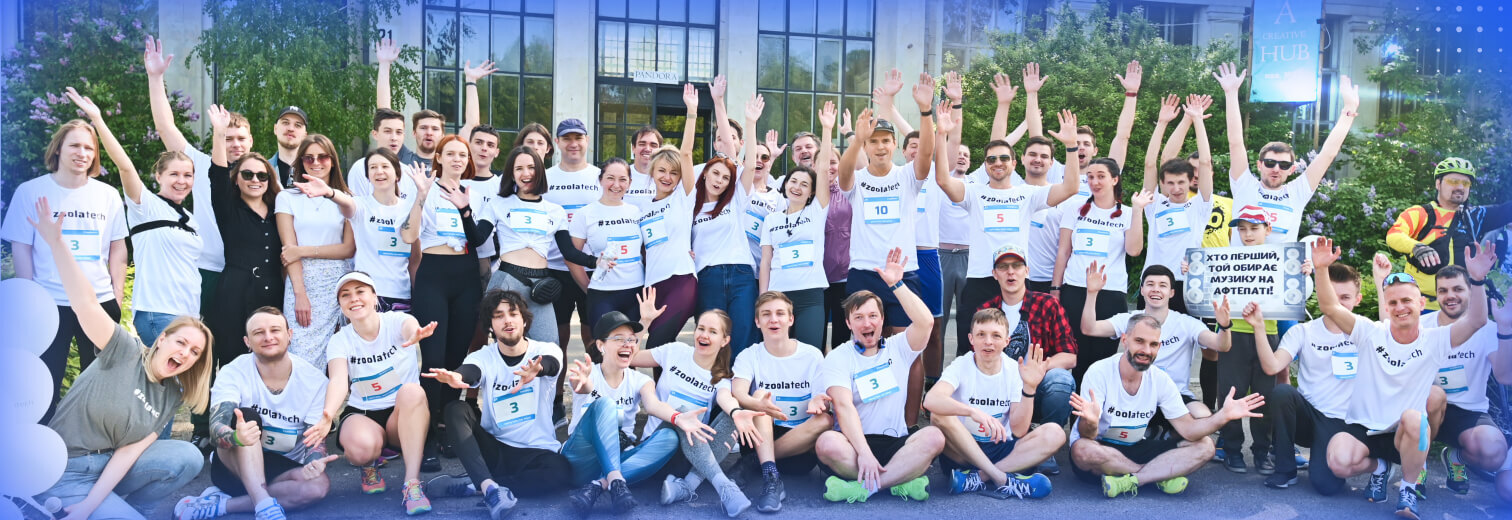
At Zoolatech, we create engineering teams for industry leaders across the US and Europe — teams that move fast, think big, and deliver strong impact.
96%
Client Satisfaction
300+
Successful Projects
2017
Year Founded
98%
Retention Rate
team sport photo
At Zoolatech, we create engineering teams for industry leaders across the US and Europe — teams that move fast, think big, and deliver strong impact.
Engineering Excellence. Every Time.
main award png (1)
At Zoolatech, we create engineering teams for industry leaders across the US and Europe — teams that move fast, think big, and deliver strong impact.
team sport photo
600+
Employees
Headquarters
USA
Development Centers
PL
UA
MX
TR

Tell Us Which System Needs an Owner

Tell us about your project, and we’ll suggest the next step.
Contact Sales
What Buyers Ask About Application Support Services

What is the difference between application support and application maintenance?

Support keeps the application working for its users today by handling escalations, resolving incidents, and restoring service, while maintenance changes the software over time through fixes, updates for new environments, improvements, and preventive work. Support shows where the system breaks, and maintenance changes the code so it breaks less often.

Is application support the same as application management services (AMS)?

The terms overlap: application management services, also called application managed services, usually describe a longer-term arrangement covering support, maintenance, and enhancements, and some providers add hosting and infrastructure operations. Software maintenance as described in ISO/IEC/IEEE 14764 guidance leaves out operations such as backup and recovery, so whether operations are in scope is agreed with you at the start.
Can you take over support of an application after an acquisition or a vendor exit?

Yes, an inherited application is a common reason to bring in support, and the handover steps work whether or not the previous team is still reachable. When the codebase has little documentation, runbooks become part of the handover work, written as our engineers learn the system.

How are support hours and response times set?

They are agreed with you at the start, application by application, based on how critical each one is and when its users work. Our teams operate in client time zones, and the escalation path, coverage hours, and response targets go into the runbooks so everyone knows who acts when something breaks.

Can we keep part of application support in-house?

Yes, your team can keep first-line support and the changes it knows best, while our engineers take L2/L3 incidents, root-cause work, and planned maintenance, and the split can change as your team’s knowledge grows. If you would rather run support yourselves with more engineers, team extension fits better, and our guide compares the engagement models in detail.

Should we keep maintaining an application or modernize it?

Keep maintaining it while it meets business needs and changes stay safe and affordable, and plan modernization when fixes keep getting slower, key dependencies reach end of support, or the system blocks new requirements. Support history, such as recurring incidents and slow changes, shows which parts to modernize first, and our legacy modernization team takes on that work.

Can minor changes and enhancements be part of application support?

Yes, small enhancements, configuration changes, and integration updates are part of maintenance and ship through the same release process as fixes. Larger features are planned as separate work with your product owner, and how change requests are prioritized against incidents is agreed with you at the start.