




































E-commerce security solutions
Protect commerce platforms, payments, and customer data.


Cross-industry engineering experience across regulated and high-growth sectors.
All Industries







“71% of consumers expect companies to deliver personalized interactions.” — McKinsey & Company


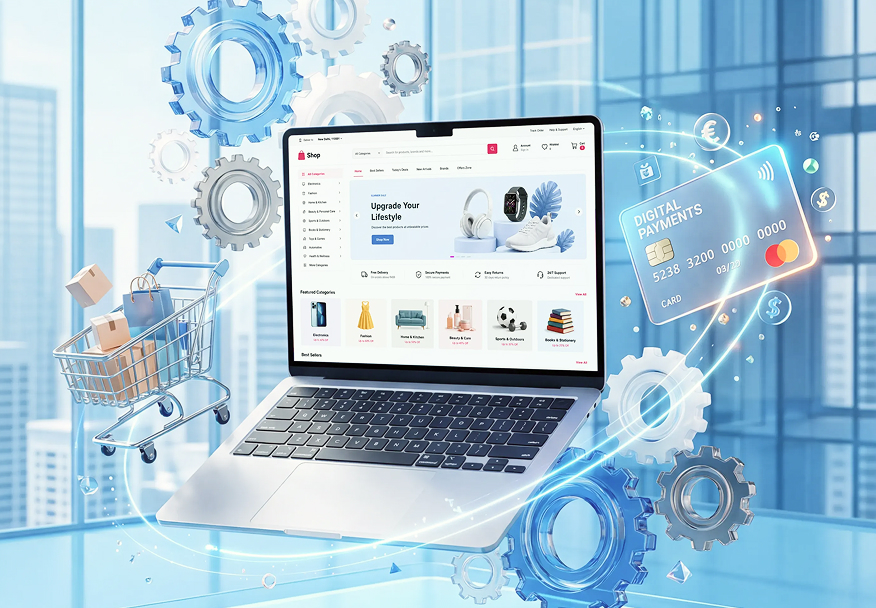



Modern ecommerce platforms use APIs to connect ERP, CRM, payments, analytics, and fulfillment systems without tightly coupling frontend and backend commerce logic.
Headless architecture separates frontend experiences from backend commerce systems, improving flexibility, performance, and ecommerce web design optimization.
Composable commerce enables ecommerce businesses to extend or replace services without rebuilding the full ecommerce platform.
Modern ecommerce website development requires optimized rendering, caching, and responsive design to improve user experience and drive sales.
Enterprise ecommerce development solutions rely on scalable integration services connecting inventory, logistics, payments, analytics, and customer systems.
Successful ecommerce store development depends on synchronized inventory, pricing, orders, and customer data across ecommerce platforms and operational systems.
Cloud-native ecommerce software improves resilience, deployment speed, and scalability during peak commerce demand.
Responsive ecommerce website design and ecommerce app experiences support fast transactions and seamless mobile purchasing journeys.



















 USA
USA PL
PL UA
UA MX
MX TR
TRE-commerce development services can include storefront development, backend engineering, integrations, migration, testing, ecommerce website development, platform customization, and ongoing optimization based on business requirements.
Smaller Shopify projects may take 6–12 weeks, while enterprise commerce delivery can take 9–18 months depending on architecture complexity and integration scope.
Shopify Plus is often best for faster deployment and managed infrastructure, while custom ecommerce development provides more flexibility and control for complex workflows.
Headless e-commerce separates frontend customer experiences from backend commerce systems, improving flexibility, frontend performance, mobile commerce delivery, and omnichannel experiences.
B2B commerce requires account pricing, approval chains, procurement workflows, ERP synchronization, and buyer-specific operational logic.
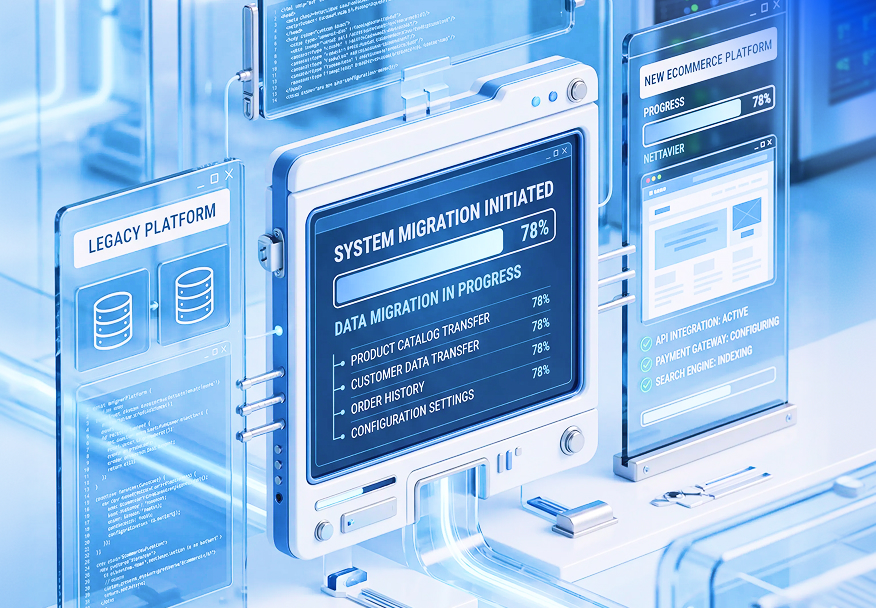
Yes. Zoolatech can support platform migration, integration rebuilding, phased rollout planning, SEO continuity, and operational transition management.