







































Custom healthcare software development
Explore the full healthcare software development practice.


Cross-industry engineering experience across regulated and high-growth sectors.
All Industries










“91% of office-based physicians and more than 99% of hospitals use a certified EHR, yet most still cannot share records cleanly.” — ONC




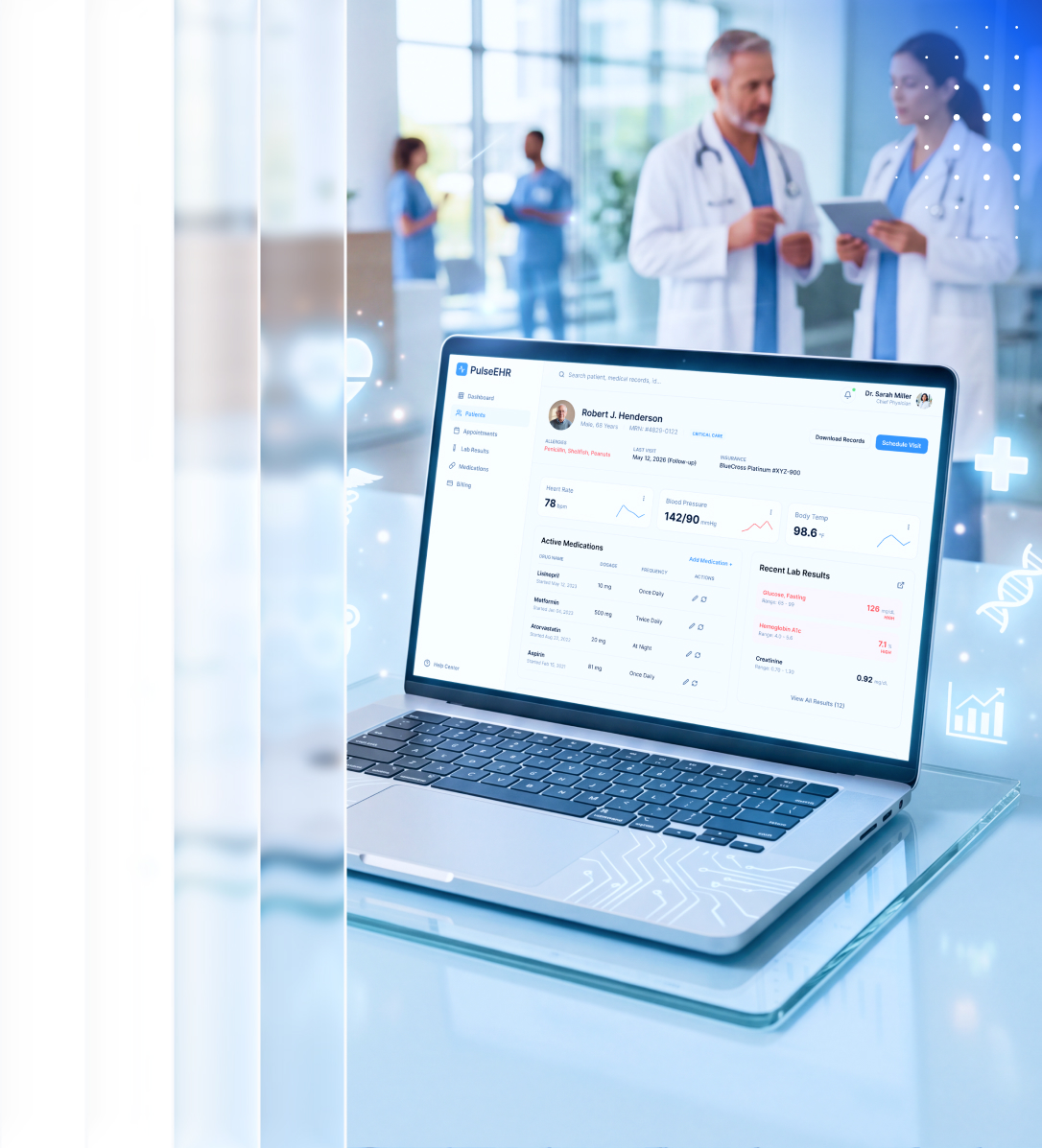
The core EHR functionality clinicians use to document a visit, built for speed over clicks, so charting takes seconds of attention rather than minutes away from the patient. We design templates, shortcuts, and structured fields around how each specialty actually documents, because a chart that fights the clinician is a chart that gets abandoned.
E-prescribing with EPCS for controlled substances, connected to pharmacy networks, so a prescription leaves the visit electronically instead of by phone, fax, or paper. Interaction checks and formulary data surface at the point of prescribing, and controlled-substance workflows meet the identity and audit requirements the DEA imposes on electronic prescribing.
Computerized provider order entry for medications, labs, and imaging, with decision support that checks each order against the patient record before it is placed. Order sets and protocols speed routine care, while alerts catch contraindications early, so the record actively supports the decision rather than passively storing it after the fact.
Lab and imaging orders that flow out and come back into the record with context, so a clinician reads a result against the patient’s history, not in isolation. Results route to the ordering provider, flag abnormal values, and attach to the right encounter, so nothing falls through the gap between order and follow-up.
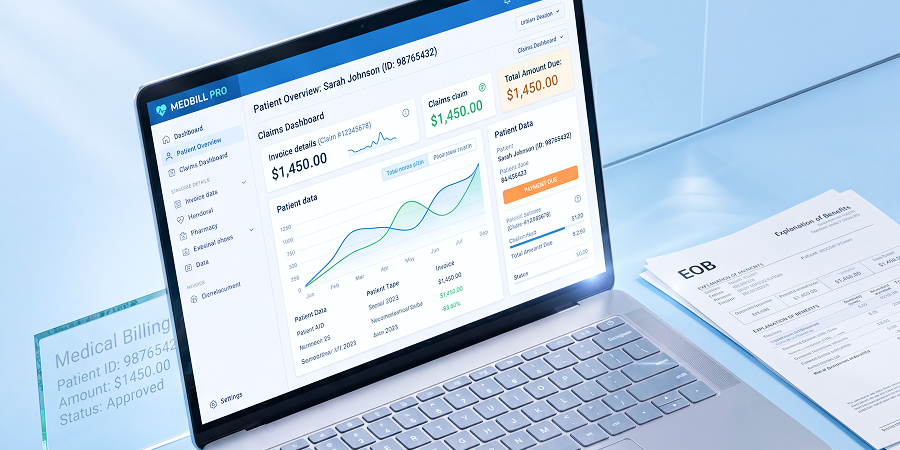
Charge capture, coding, and claims wired into the clinical record, so billing follows documentation automatically rather than as a separate task after the visit. Codes are suggested from the encounter, claims are checked before submission, and the revenue cycle stays connected to care instead of running as a disconnected back-office process.
Appointment scheduling and registration built into the EHR system, so the front desk and the clinical record share one view of every patient and visit. Reminders reduce no-shows, waitlists fill cancellations, and eligibility checks happen at booking, so the schedule reflects reality rather than a best guess that unravels by mid-morning.
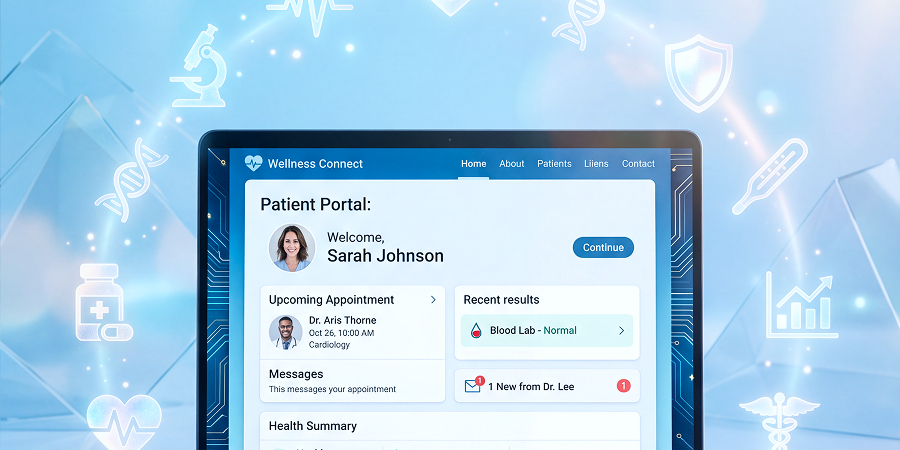
A patient portal so patients can view records, results, and messages, connected to the same EHR data clinicians use rather than a separate copy that drifts. Patients book appointments, request refills, complete intake, and message the care team, which cuts phone volume for staff and keeps patients engaged between visits.
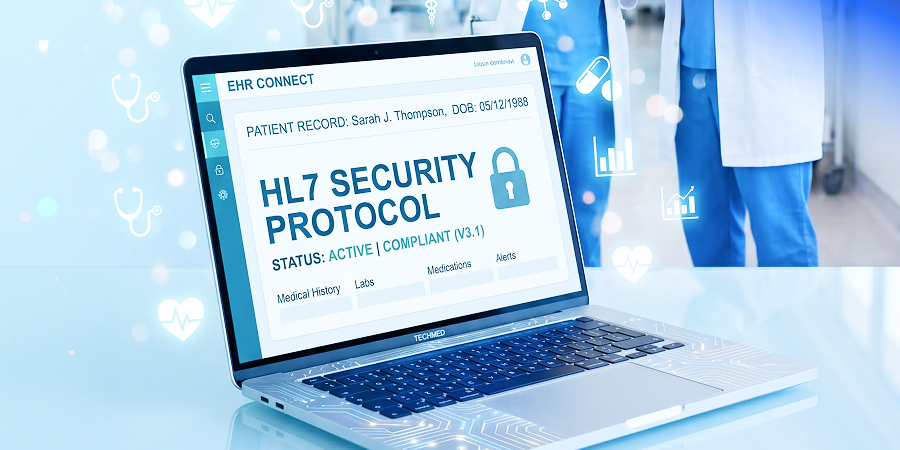
HL7 and FHIR interfaces that make the EHR exchange data with other healthcare systems, so records move with the patient instead of being trapped in one system. We build the interfaces, map the data models, and support the standards that let your EHR send, receive, and reconcile records across the wider network.
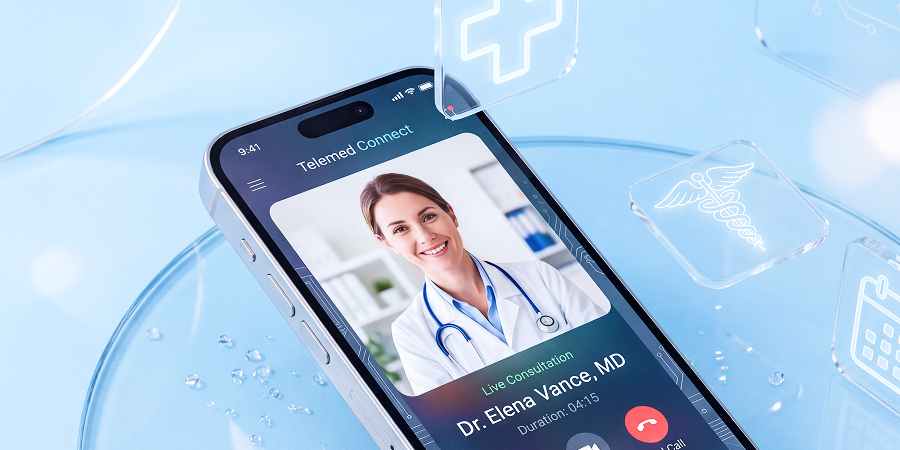
Virtual visits connected to the EHR so care and record stay together, with notes and orders from a video visit landing in the same chart as an in-person one. Scheduling, documentation, and billing work identically across visit types, so telehealth is a channel within the record rather than a separate tool clinicians juggle.
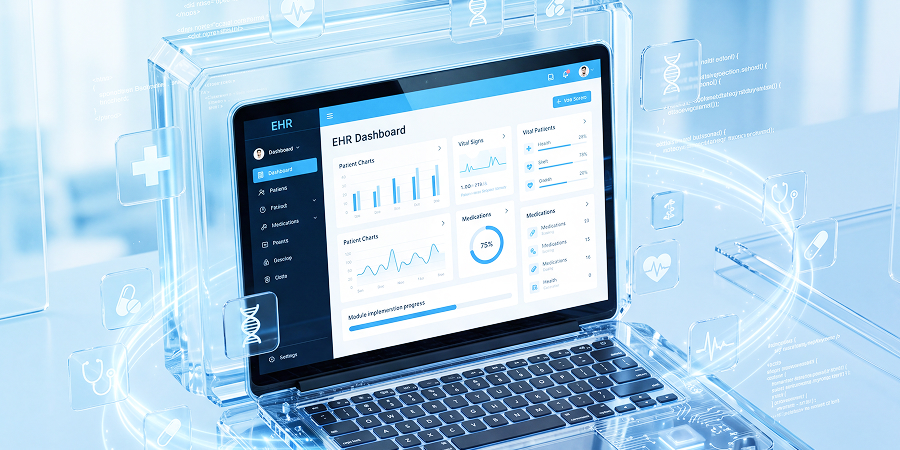
Reporting and analytics across the healthcare data in the record, so a healthcare organization can measure quality, track outcomes, and meet reporting requirements. Dashboards surface population trends, quality measures, and operational metrics from the same data clinicians enter, turning the record into a source of insight rather than only a store of history.
A mobile EHR so clinicians reach the record at the point of care, whether at the bedside, on rounds, or between facilities, without returning to a workstation. The mobile experience is built for real clinical use rather than a shrunk-down desktop screen, so charting, orders, and results work on a phone or tablet.
Custom EMR and EHR modules for a specialty a packaged system ignores, from behavioral health to oncology, built to the workflow that specialty actually runs on. When an off-the-shelf record forces a specialty into fields designed for general practice, we build the module that fits, so the software serves the care rather than constraining it.




















“For every hour of direct patient care, physicians spend nearly two more on the EHR and desk work.” — National Library of Medicine



















 USA
USA PL
PL UA
UA MX
MX TR
TR
EHR software development is the engineering of the systems clinicians use to record, retrieve, and exchange patient information: charting, orders, results, e-prescribing, and billing. EHR and EMR software must meet HIPAA, ONC certification, and HL7/FHIR interoperability, so development is as much about compliance and data exchange as features.
An EMR is the digital chart within a single practice, while an EHR is the broader record designed to follow the patient across providers and exchange data. EMR software development and EHR software development overlap, but an EHR adds the interoperability an EMR or EMR system lacks.
You can build your own EHR as a custom EHR solution, or customize an existing EHR platform. Building an EHR from scratch fits a specialty workflow and carries no per-seat licensing, while customizing is faster up front. The choice depends on how far your workflow diverges from a packaged system.
The average cost of an EHR depends on whether you build or customize, the number of modules, and compliance scope. A focused EMR is far less than a full custom EHR platform, and interoperability and ONC certification add fixed engineering. A precise estimate of the average cost of an EHR system follows a discovery phase.
It has to be. HIPAA compliance means encryption, role-based access, and audit logging, while ONC certification means the EHR meets federal Health IT Certification criteria. We build both into the system from the first sprint rather than adding them later.
We build EHR systems in Java, Ruby on Rails, Python, and Node.js, with React front ends and PostgreSQL, on HIPAA-eligible AWS or Azure. Interoperability uses FHIR and HL7, so the EHR exchanges data with other healthcare systems.
An EHR is made interoperable through HL7 and FHIR interfaces, US Core Data for Interoperability, and health information exchange connections. Interoperability is designed into the data model at the architecture stage, because retrofitting it into an EHR built as a silo is far harder.
Our EHR software development process moves through discovery and EHR requirements, architecture, build, development and testing, certification, and launch. These development stages exist because an EHR is a regulated clinical system that cannot ship on an untested build.
Yes. We handle EMR software development for single-practice charting and full EHR development for records that span providers. Many projects are custom EMR and EHR builds that start as an EMR and grow into an interoperable EHR.
Yes. We add new EHR functionality, re-architect an aging EHR for scale, and migrate data from a legacy EMR system. Modernization delivers a modern EHR without the disruption of replacing everything at once.
Yes. Beyond charting we build the advanced EHR aspects that mature systems need: decision support, analytics, patient engagement, and AI documentation. These aspects of EHR are what separate a basic record from a modern EHR clinicians rely on.
Yes. EHR software implementation and EHR integration are covered in depth on their own pages, and we deliver both alongside development. This page focuses on building and customizing the EHR itself.
Yes. We develop EHR systems and connected EHR and EMR systems for groups and networks, so multiple facilities share one interoperable record. Whether you need an EHR or EMR system for one site or many, we build to the setting.
A reliable EHR software development partner has a track record in regulated systems, real interoperability and ONC-certification experience, and healthcare software developers who understand clinical workflow. An EHR development company should show how it handles compliance and data exchange, not just a feature list.
This page works as a short guide to EHR software development, but every build differs, so a proper approach to EHR starts from your EHR requirements. We turn those into a concrete scope during discovery, and can build the EHR system or an EHR solution around them.
As an EHR software development company and healthcare software development company, we deliver EHR software development services end to end, or embed EMR software developers and a development team alongside yours through team extension as your EHR software development partner.