








































Custom healthcare software development
Explore the full healthcare software development practice.


Cross-industry engineering experience across regulated and high-growth sectors.
All Industries









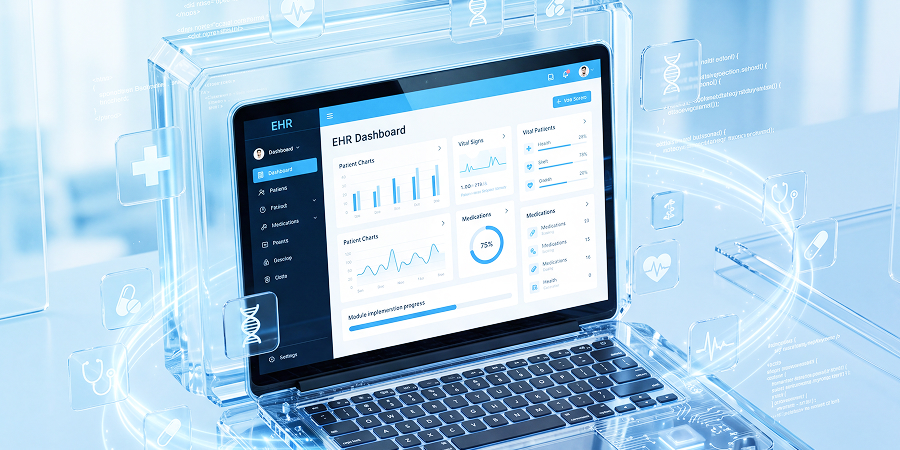




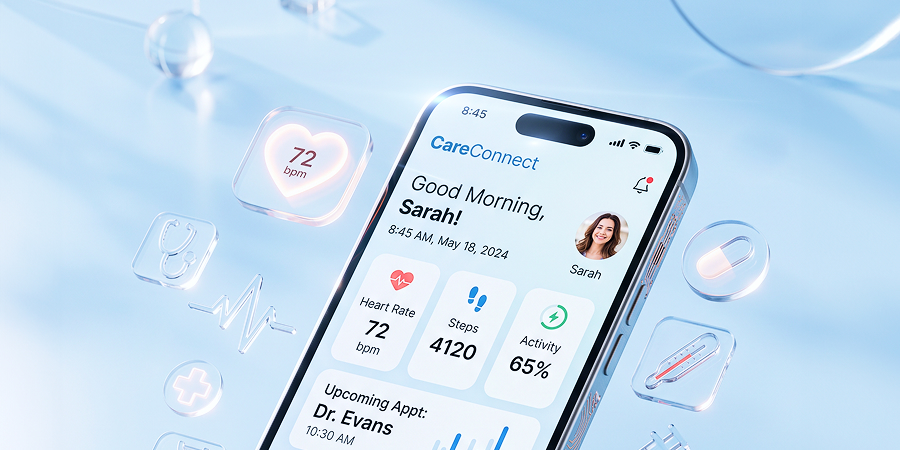


“92% of nurses say EHR systems hurt their job satisfaction, with nearly 40% of shifts spent on documentation.” — Black Book Research




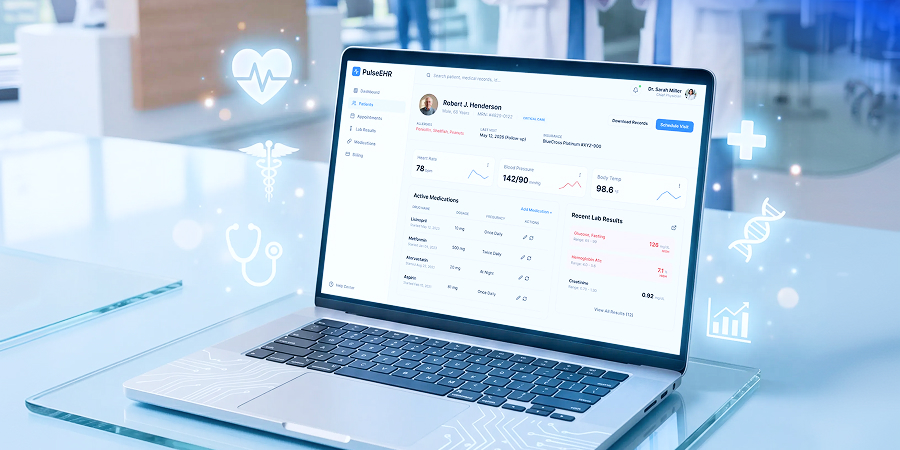
Patient registration, admissions, discharge, and transfer, so patient management starts from one accurate record.
Clinical documentation and medical histories available to every authorized clinician across the hospital.
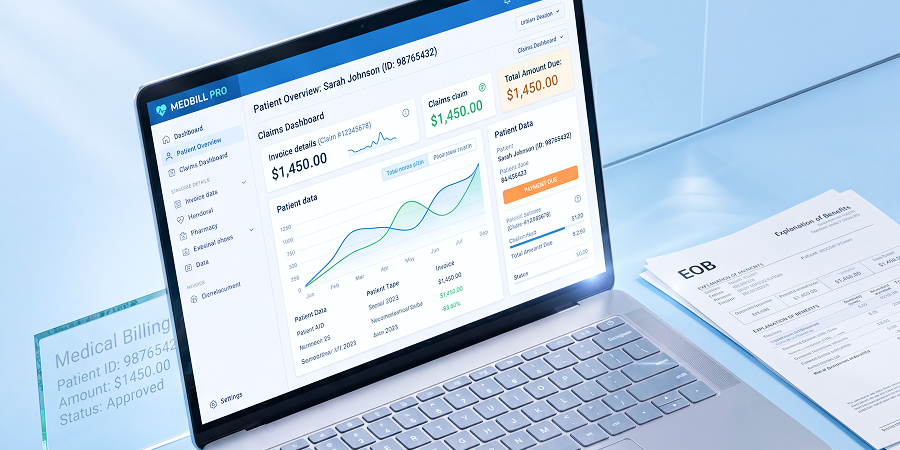
Billing and revenue cycle management from charge capture through claims and patient payments.
Pharmacy management systems with dispensing, stock control, and inventory management across stores.
LIS, RIS, and PACS integration so orders and results flow without manual re-entry.
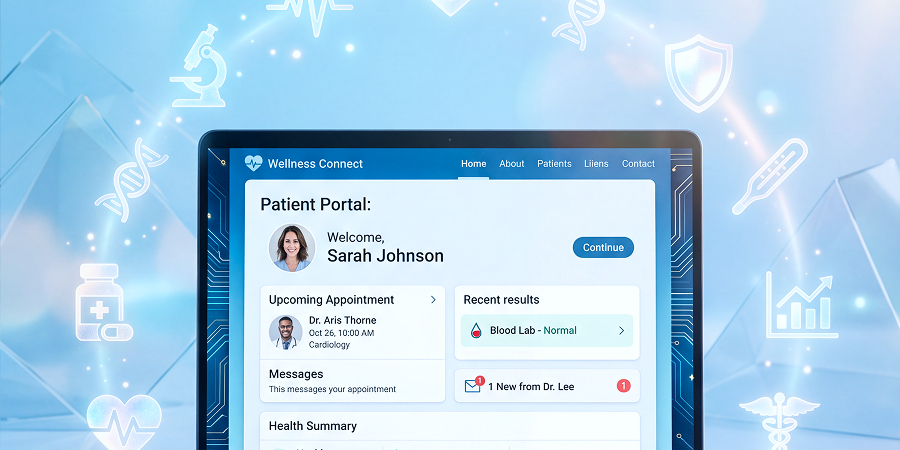
Appointment scheduling across clinics, providers, and rooms, with capacity visible in advance.
Bed management across inpatient and outpatient flows, with real-time occupancy for IPD and OPD.
Staff management, rostering, and credentials, so hospital staff coverage matches demand.
Hospital CRM software for outreach, reminders, and follow-up, plus telemedicine software where virtual care fits.
Dashboards for occupancy, throughput, and financial performance, built on consistent data management.
Eligibility checks, prior authorization tracking, and payer rules applied at registration, so coverage problems surface before care rather than after billing.
Equipment tracking, maintenance schedules, and housekeeping and transport requests, keeping the non-clinical work that fills a shift out of phone calls and paper.




















“More than 80% of appealed Medicare Advantage prior authorization denials are overturned.” — KFF






















 USA
USA PL
PL UA
UA MX
MX TR
TR
It is software that runs a hospital’s clinical and administrative operations in one system, covering registration and ADT, medical records, billing, pharmacy, lab, scheduling, and bed management. It is also called a hospital management system or hospital information system.
The key features of hospital management platforms are patient registration, records, scheduling, billing and revenue cycle, pharmacy and inventory, lab and imaging integration, bed and ward management, and reporting. Most hospitals add patient engagement and telemedicine software over time.
A suite like Epic or Cerner deploys fastest but constrains workflows and carries licensing cost, while open-source options such as OpenMRS shift customization and compliance onto your team. Building custom hospital management software makes sense when neither fits your workflows, integrations, or multi-site needs.
Integration uses HL7 v2 for legacy interfaces and FHIR for modern data exchange, connecting to EHRs such as Epic, Cerner, and athenahealth, plus lab, imaging, and payer systems. Data from an installed system is migrated and validated so nothing is lost.
Yes. A multi-tenant architecture lets a network run several facilities on one platform with each site’s data separate, role-based access across locations, and consolidated reporting. Designing for multiple sites early avoids an expensive retrofit later.
A focused module set can go live in months, while a full multi-facility platform is a phased program measured in quarters. Timeline depends on module count, integrations, and migration scope, and a realistic schedule follows discovery.
Cost depends on how many modules you need, how many systems you integrate, whether you serve one hospital or a network, and how much revenue cycle and AI functionality is involved. Migrating from a legacy system adds scope, and a precise estimate follows a discovery phase.
Discovery and architecture come first, then modules are built in sprints with development and testing running together, followed by integration, data migration, and a phased rollout. Support and new modules continue after launch.
The best hospital management software fits the workflows of the departments using it, integrates cleanly with the EHR, and gets adopted by clinicians. Feature lists matter less than fit, which is why the best hospital management software development starts with workflow analysis rather than a template.
Look for healthcare-specific integration experience, named EHR work, migration track record, and a plan for clinician adoption. A leading hospital management software development team should be able to explain how it handles rollout risk, not just features.
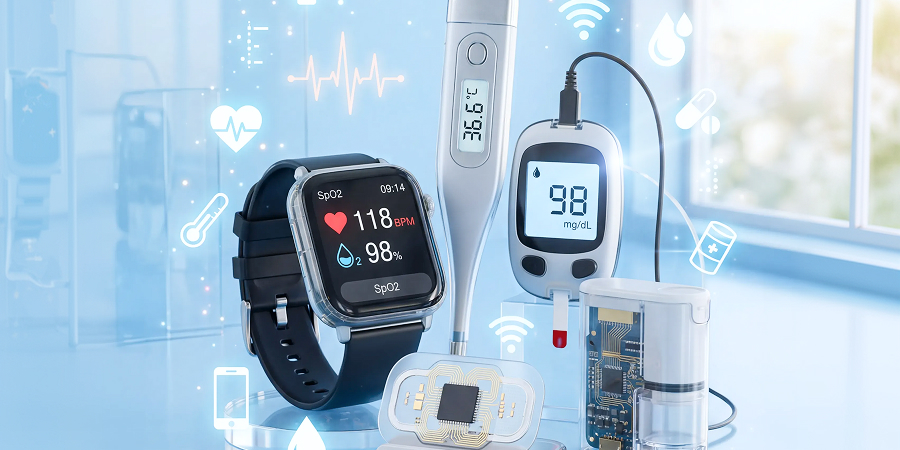
Yes. We provide healthcare software development services across EHR, telemedicine, analytics, and medical device software development services, so a hospital platform can extend without adding another vendor.
It has to be, because the system handles protected health information across registration, records, billing, and pharmacy. Encryption in transit and at rest, role-based access, multi-factor authentication, and audit logging are built in and validated by security testing.
Yes. Practice management and hospital CRM software are commonly built as modules for scheduling, patient engagement, and outreach, sharing the same record so patient data is not duplicated across systems.
Yes. Healthtech companies building a hospital management product get a healthcare software development company that can own delivery or extend their team, with the platform designed for multiple hospital customers from the start.