































Medical Device Software Development Services

Your Medical Device Engineering Team
Custom SaMD and embedded medical device software engineered to IEC 62304, ISO 14971, and FDA requirements.
 Reliable partner
Reliable partner
Experienced team
Experienced team
Smart solutions
Smart solutions
Medical Device Software Development 1920
Medical Device Software Development 1440

Industry Leaders We Work With

Related Healthcare Services

Explore the Wider Healthcare Practice

Device software rarely stands alone, so these related services cover the records, standards, and clinical systems your device connects to.

“Half of recalls of AI-enabled medical devices come down to design flaws, not manufacturing.” — National Library of Medicine

Recalls usually start at the design stage, so how software is specified, reviewed, and tested is what keeps a device on the market.
The Basics

What Medical Device Software Development Is

The difference isn't the programming language—it's the engineering process. Safety classification, risk management, and regulatory evidence determine how software is designed, tested, and maintained throughout its lifecycle.
Two modalities

Two modalities

Software as a medical device performs a medical function on its own. Software in a medical device, or embedded firmware, controls hardware. Both fall under IEC 62304.
Safety class drives everything

Safety class drives everything

IEC 62304 assigns class A, B, or C by possible harm, and that class decides how much process, documentation, and testing the software development life cycle requires.
Risk is the spine

Risk is the spine

ISO 14971 risk management is a normative reference to IEC 62304, so hazards, risk controls, and their verification drive the architecture rather than following it.
Evidence is the output

Evidence is the output

Alongside working software, the process produces the design history file and traceability that a premarket submission depends on. Reconstructing that evidence later costs more than generating it as you go.
Zoolatech quickly delivers senior engineers through rigorous multi-stage screening and global sourcing, ensuring only high-performing, project-ready talent joins your team.

1 month

To fill a position

60%

Senior developers

1M

Global talent pool
What We Build

Software for Medical Devices We Build

Custom medical device software across both modalities, from a diagnostic algorithm to the firmware inside an instrument. Every engagement runs inside your quality system and produces submission-ready evidence.
98%

98%

Client Retention Rate
300+

300+

Successful Projects

Software as a medical device

Standalone SaMD that performs a diagnostic or therapeutic function without being part of a physical device.

Embedded and firmware

Software in a medical device, including firmware, RTOS work, and real-time control on the software side.

AI/ML-enabled SaMD

Model-driven devices built with a change control plan and monitoring designed in from the start.

Diagnostic and imaging

DICOM viewers and medical image analysis software that present and interpret medical images for review.

Medical device app development

Medical device app development for the mobile and desktop applications that pair with an instrument.

Integration with medical devices

Device integration and connectivity that move readings from the device to cloud and clinical systems.

Cloud and data platforms

Backends that ingest, store, and analyze device data at scale under regulated controls.

Modernization

Re-engineering existing software on aging platforms without losing validation status.

Independent V&V

Verification and validation performed on software your own development team built.

Regulatory documentation

The software sections of a submission, assembled from the records the build already produced.

Interoperability

HL7, FHIR, and DICOM interfaces so device output reaches healthcare systems in a usable form.

Cybersecurity engineering

Secure software architecture, threat modeling, and the SBOM a submission now requires.
Lifecycle

The IEC 62304 Development Lifecycle

IEC 62304 defines what has to happen, not how you organize sprints. The medical device software development process below is how we run it without stalling delivery.
Safety classification
Core and supporting work
Agile inside the standard
SOUP and OTS

Class sets the bar

Classification is the first engineering decision, because class A, B, and C carry very different process obligations.
  • Classification: hazard analysis establishes the class before architecture, so effort matches actual risk.
  • Segregation: architecture can isolate high-risk functions, keeping the strictest requirements off the whole codebase.

One core, four supporting

It defines a development process plus supporting maintenance, risk management, configuration management, and problem resolution.
  • Development process: requirements, architecture, and detailed design produced as engineering artifacts.
  • Traceability: every requirement links to design, risk control, and test, which is what an auditor follows.

Developing software with Agile

Nothing in IEC 62304 mandates a waterfall model, so agile delivery works when the required records are generated per increment.
  • Mapping: lifecycle activities mapped onto sprints, so each increment closes with its own evidence.
  • Definition of done: risk and traceability updates are part of done, not a separate documentation phase.

Code you did not write

Third-party and open-source components carry obligations most teams underestimate until an audit.
  • SOUP inventory: every component identified, justified, and version-controlled, with known anomalies assessed.
  • Tooling: each development tool evaluated for its effect on the product, and validated where it matters.
Image abstract 1 368
Testimonials

What Our Customers Say

“In the case of Zoolatech, it's a very tight partnership.
The team at Zoolatech is incredibly collaborative, and we work as a team despite being thousands of miles away from each other.”
Spencer Rascoff
CEO Match Group
5/5
“Zoolatech has been a key technology partner for Pandora,
enhancing our software development and deployment capabilities. They're ambitious, supportive, fast-moving, and well-skilled, with sound ethical values.”
Erika Romsics
Contract and Vendor Manager, Pandora
erica
5/5
“The apps they’ve developed give us the opportunity to get more customers.
We’re providing more services to target big customers. We can install jobs faster and identify reduce bottlenecks, so we’re providing a better customer experience.”
Aida Youssef
Senior Director of Software Engineering, Complete Solaria
5/5
“Zoolatech has access to a deep talent pool and knows how to identify client's needs.
With the help of Zoolatech, went from a very early and incomplete prototype to the MVP release, the first production release, and the first paying customer!”
Greg Wagenhoffer
CEO, GreenVisr
5/5
“Zoolatech enabled us to build a world-class engineering team quickly and efficiently.
Zoolatech's pre-screening process and engineer training are customized for providing effective engineers that can contribute immediately to accelerating product roadmaps.”
Shariq Minhas
CTO, SVSG
5/5
“We can recommend Zoolatech
for their talent pool, attention, ability to understand our requirements, candidate screening process and constant communication.”
Chaitanya Pallapothula
SVP, Tailored Brands, Inc.
5/5
“Zoolatech’s developers quickly became an integral part of our team effort
with whom we shared daily stand up calls. Overall, Zoolatech fit well with our needs for agile development and continued to adapt as our needs evolved.”
Forrest Glick
UX Designer, Stanford University
5/5
“Working with Zoolatech has been a driving force in our business offerings.
The team utilizes it's experience and expertise meshing with our internal team creating a positive work environment. Zoolatech is by far one of the best teams to work with in the industry.”
Kris Naidu
CEO, Zeacon
Kris Naidu CEO, Zeacon
5/5
Services

Medical Device Software Development Services

End-to-end development, or a senior team alongside yours, across the whole regulated lifecycle.
Custom development

Build the product

  • Custom software development for SaMD and embedded targets
  • Software architecture designed for classification and traceability
  • Building custom medical device software from concept through release
  • Software developers experienced in regulated delivery
Embedded engineering

Inside the instrument

  • Firmware, drivers, and real-time behavior on the software side
  • Device-host applications and instrument control
  • Connectivity over BLE, cellular, and wired interfaces
  • Software design for medical devices with hardware constraints
V&V and testing

Prove it works

  • Verification against requirements and validation against intended use
  • Automated regression suited to regulated release cycles
  • Independent V&V of existing software built elsewhere
  • Test evidence structured for submission
AI, cloud, and data

Beyond the device

  • Model development with a documented change control plan
  • Cloud platforms for device data and real-world evidence
  • Analysis software and dashboards for clinical and technical users
  • Integration with medical devices already in the field
Team models

How we engage

  • Managed delivery with accountability for scope and evidence
  • Team extension embedding engineers in your organization
  • A dedicated offshore delivery center for sustained programs
  • A development partner for one project or a portfolio
AI and ML

AI in Medical Device Software

A model that changes after clearance is the hardest regulatory problem in device software, so we build the change mechanism before the model.
Predetermined change control

Predetermined change control

A PCCP states in advance how the model may be retrained and updated, so improvements ship without a new submission each time.
Good machine learning practice

Good machine learning practice

GMLP principles applied to data curation, training, and evaluation, so the development record survives scrutiny.
Data and bias

Data and bias

Training and test data assessed for representativeness, with performance reported across the populations the device will meet.
Real-world monitoring

Real-world monitoring

Post-deployment performance tracked against expectations, because model drift is a safety issue rather than a metrics problem.
Governed by design

Governed by design

Versioning, documentation, and human oversight built into the architecture, so every prediction is traceable to a model state.

“Only 16.7% of machine learning-enabled devices cleared by the FDA include a predetermined change control plan.” — National Library of Medicine

Fewer than one in five teams plans for model change before clearance, which is the difference between shipping an improvement and filing again. We design the plan into the submission.
Compliance

Standards, V&V, and Submissions

Medical device regulations decide what evidence you need. We generate it during development so the submission assembles rather than gets written.
The standards
QMSR
Verification and validation
FDA submissions

What applies

IEC 62304, ISO 14971, and ISO 13485 work together, and each medical device software project inherits all three.
  • Lifecycle and risk: IEC 62304 for the software life cycle, ISO 14971 for the risk management it references.
  • Quality system: we work inside your ISO 13485 quality management system and its procedures, not a parallel process.
Image slot 400

Now in force

The Quality Management System Regulation took effect on 2 February 2026, amending 21 CFR Part 820 to incorporate ISO 13485:2016 by reference.
  • Harmonization: US quality requirements now align with the international standard, and inspections follow a revised compliance program.
  • Practical effect: design and software records are expected to show risk-based decisions, consistently, across the system.
Image slot 400

Continuous, not final

Verification and validation are performed throughout development, ensuring evidence, quality, and compliance grow alongside the software.
  • Traceability: requirements through risk controls to test results, maintained as the product changes.
  • Anomalies: known issues documented and risk-assessed, because undisclosed defects are what reviewers find.
Image slot 400

The software sections

FDA-compliant software development produces the documentation a 510(k), De Novo, or PMA requires of software.
  • Design history file: assembled from real records rather than reconstructed for the filing.
  • Scope: we support your regulatory affairs team and submission; we do not replace regulatory or legal counsel.
Image slot 400
Cybersecurity

Modern Medical Device Cybersecurity

Cybersecurity moved from good practice to an admissibility condition, so it belongs in architecture rather than in a late remediation sprint.
01

Section 524B

Devices with software must address cybersecurity in premarket submissions, and an inadequate package can be refused acceptance before technical review begins.
02

SBOM

A software bill of materials lists every component and dependency, which is also how you answer the next disclosed vulnerability in days rather than weeks.
03

Threat modeling

Threats identified against the actual architecture, with security risk management documented alongside safety risk rather than separately.
04

After release

Monitoring, patching, and coordinated vulnerability disclosure planned before launch, because postmarket obligations outlast the project.
Embedded

Embedded Medical Device Software Engineering

Software inside an instrument carries constraints application teams rarely meet, so embedded work is staffed differently.

Firmware and real-time

Firmware, RTOS scheduling, and deterministic timing where a missed deadline is a safety event rather than a performance regression, developed against the same IEC 62304 obligations as any other device software.

Device-host and connectivity

Instrument control applications, drivers, and connectivity stacks that link medical equipment to companion apps and cloud services without loosening security or timing guarantees.

Software side only

We engineer the software layer of hardware and software programs and work alongside your electronics and mechanical teams. Device hardware design stays with them or a specialist partner.
Who We Serve

Built for the Medical Device Industry

Device manufacturers, diagnostics companies, and SaMD startups all face the same regulated lifecycle from different starting points.
Manufacturers and OEMs

Manufacturers and OEMs

Medical device manufacturers extend engineering capacity for instrument software, modernize existing software, and take on device integration work their internal roadmap cannot absorb.
SaMD and diagnostics

SaMD and diagnostics

SaMD, digital therapeutics, and diagnostics teams get software engineering that treats classification, evidence, and imaging or IVD workflows as first-order design inputs.
Drug delivery and wearables

Drug delivery and wearables

Drug-delivery, surgical, and wearable device companies get embedded and companion software that survives real use, plus the monitoring data healthcare providers act on.
How We Work

From Classification to Postmarket

Each step produces the evidence the next one depends on, so your submission and audit trail are ready when you need them rather than reconstructed under pressure.
Step 1

Classification and planning

We establish intended use, safety class, and regulatory pathway, then write the software and risk management plans that govern everything after. Getting classification wrong is the most expensive mistake available on a medical device project.
Step 2

Architecture and risk

We design the software architecture around hazards and risk controls, segregating high-risk functions where that reduces the process burden. Decisions here determine how much evidence the rest of the development project will demand.
Step 3

Build and verify

We develop in increments, generating design, risk, and traceability records with each one, and verify continuously rather than at the end. Developing software this way keeps the audit trail current instead of rebuilding it later.
Step 4

Secure and validate

We apply threat modeling, produce the SBOM, and run validation against intended use in realistic conditions. Security and validation evidence are produced together, because a submission needs both.
Step 5

Submission support

We assemble the software documentation your regulatory team needs and answer reviewer questions on the engineering record. The evidence already exists at this point, which is the entire purpose of the earlier steps.
Step 6

Maintenance and postmarket

We handle problem resolution, patching, and change control after release, including model updates under an approved plan. Regulated software has a maintenance obligation that outlasts the launch.
Technology Stack

The Device Software Stack

Stack choices carry validation consequences, so they are made with the classification in mind.
C
C
C++
C++
Rust
Rust
Python
Python
Java
Java
TypeScript
TypeScript
React
React
FreeRTOS
FreeRTOS
Linux
Linux
AWS
AWS
Azure
Azure
HL7
HL7
FHIR
FHIR
and other
Cost Factors

What Drives Cost and Timeline

Cost tracks regulatory burden more than feature count, so classification is the first thing to establish.

Safety class

A class A utility and a class C therapeutic device differ by an order of magnitude in required process, documentation, and testing.

Modality and integrations

Embedded work carries hardware dependencies, while SaMD carries integration and platform scope. Both change the estimate more than the interface count does.

AI and cybersecurity

Model development, a change control plan, threat modeling, and SBOM work each add scope that a conventional product does not carry.

Submission scope

A 510(k) with a close predicate is a different program from a De Novo or PMA, and additional markets such as EU MDR add more. A precise estimate follows discovery.
Our Edge

Regulated Delivery, Not Just Code

What separates us from other medical device software development companies is that regulated engineering is how we work, not a mode we switch into.
check icon

Domain proof

We rebuilt the FDA-governed quality platform that device and life sciences manufacturers run their own compliance on, which is closer to this work than a portfolio of unregulated apps.
check icon

Lifecycle discipline

IEC 62304 activities, ISO 14971 risk management, and traceability are built into delivery, so evidence accumulates rather than being reconstructed.
check icon

Inside your QMS

We work within your ISO 13485 quality management system and follow your procedures, which is what keeps your certification and your audit trail intact.
check icon

AI pathway fluency

Change control plans, GMLP, and monitoring are designed in, so an AI-enabled device can improve after clearance instead of freezing.
check icon

Security depth

Threat modeling, SBOM, and secure architecture come from real cloud-security engineering, not a compliance checklist.
check icon

Both modalities

Embedded and SaMD engineers in one team, so device software and its companion platform are designed together.
check icon

Senior-heavy delivery

A senior team that has delivered 300+ projects since 2017, with 600+ engineers and 96% client satisfaction, sized to the phase you are in.
check icon

Near and offshore

A Miami HQ with delivery centers in Poland, Ukraine, Mexico, and Turkey, run as managed delivery, team extension, or a dedicated center.
Why Choose Us

Why Businesses Trust Us

logo
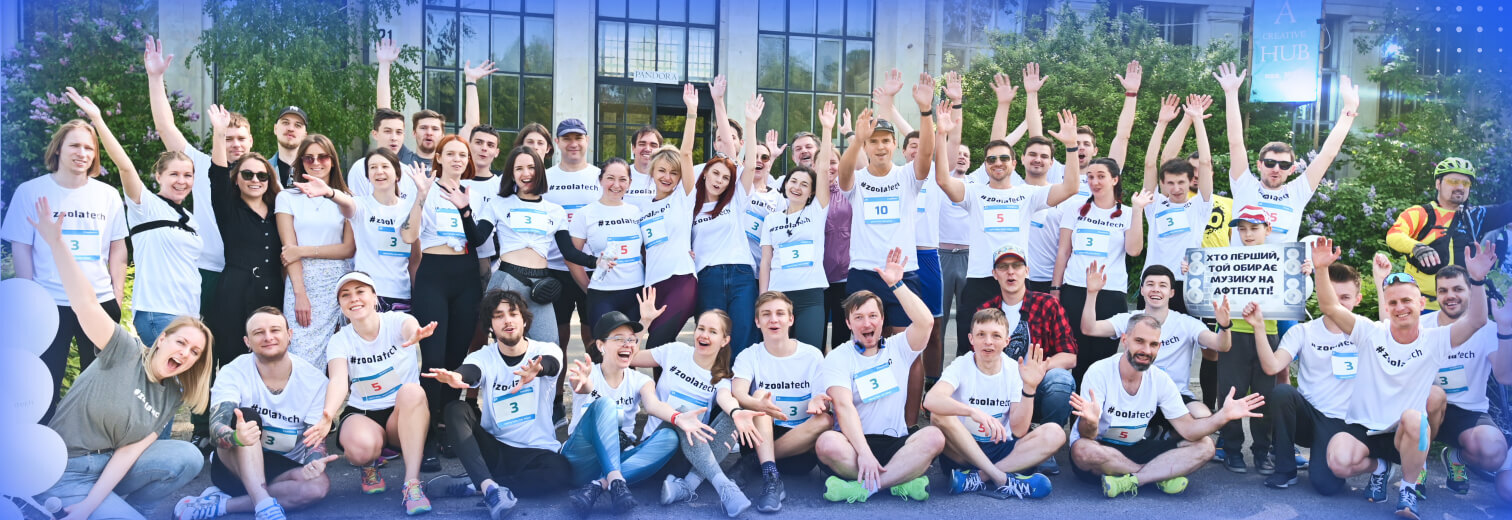
At Zoolatech, we create engineering teams for industry leaders across the US and Europe — teams that move fast, think big, and deliver strong impact.
96%
Client Satisfaction
300+
Successful Projects
2017
Year Founded
98%
Retention Rate
team sport photo
At Zoolatech, we create engineering teams for industry leaders across the US and Europe — teams that move fast, think big, and deliver strong impact.
Engineering Excellence. Every Time.
main award png (1)
At Zoolatech, we create engineering teams for industry leaders across the US and Europe — teams that move fast, think big, and deliver strong impact.
team sport photo
600+
Employees
Headquarters
USA
Development Centers
PL
UA
MX
TR

Build Custom Medical Device Software

Tell us the device, its safety classification, and your target market, and we scope an approach.
Questions You May Have

What is medical device software development?

It is the engineering of software that is part of, or is itself, a regulated medical device, covering software as a medical device and embedded software inside hardware. Because it can affect patient safety, it is built to IEC 62304, ISO 14971, and FDA requirements with verification and validation throughout.

What is the difference between SaMD and SiMD?

SaMD performs a medical purpose on its own, such as software that analyzes images to flag a condition. SiMD, or embedded software, runs inside a physical device and controls its function, like the firmware in an infusion pump. Both fall under IEC 62304, but embedded work adds real-time constraints.

What standards apply to medical device software?

IEC 62304 defines the software life cycle and assigns safety class A, B, or C, working alongside ISO 14971 for risk management and ISO 13485 for the quality system. In the US, the Quality Management System Regulation now incorporates ISO 13485:2016 by reference in 21 CFR Part 820.

What are the types of software in a medical device context?

The main types of software are standalone SaMD, embedded firmware, companion and mobile applications, and the cloud and analysis software behind them. Each is regulated according to its role and intended use rather than its platform.

Can medical device software be developed using Agile?

Yes. IEC 62304 does not mandate a lifecycle model, so agile works provided the required activities, records, and traceability are produced. In practice, lifecycle activities map onto sprints and risk and design records update per increment rather than at the end.

How is AI/ML handled in medical device software?

AI models are regulated as software under the same lifecycle and risk standards, plus AI-specific expectations around Good Machine Learning Practice and a predetermined change control plan describing how the model may be updated. Data quality, bias, and real-world performance monitoring are part of the development record.

What are the cybersecurity requirements for medical device software?

Under Section 524B of the FD&C Act, devices with software must address cybersecurity in premarket submissions or risk refusal to accept. That means a software bill of materials, threat modeling, security risk management, and a plan for postmarket patching and coordinated vulnerability disclosure.

Do you provide verification, validation, and submission documentation?

Yes. V&V is built into the lifecycle with traceability from requirements through risk controls to test results, producing the design history file and the software sections of a 510(k), De Novo, or PMA. We support your regulatory team rather than replacing regulatory or legal counsel.

Are you ISO 13485 certified?

We work inside our clients’ ISO 13485 quality management systems and follow their procedures and document control, which is what keeps their certification and audit trail intact. Ask us directly about our own certifications and we will answer specifically.

How do you choose a development partner for a device program?

Ask for regulated lifecycle experience, V&V and submission track record, embedded and AI capability, and how the team handles evidence. Directory roundups such as a “top 10 medical device software” or “10 medical device software development” list are a starting point, but the useful test is whether a leading medical device software development team can explain its traceability approach in detail.

Can you work on existing software rather than a new build?

Yes. We modernize existing software, take over maintenance of medical device software projects, and perform independent V&V on code built elsewhere, including software development for medical devices already on the market.

Do you build Salesforce and other platform integrations for device companies?

Yes. Device manufacturers often need Salesforce, service, and quality platforms connected to product data, and we build those integrations alongside the regulated software rather than as a separate project.

How much does medical device software development cost?

Cost depends on safety classification, whether the work is embedded or SaMD, the role of AI, cybersecurity scope, and the submission required. A low-risk class A tool costs far less than a class C AI-enabled device heading for clearance, and a precise estimate follows discovery.

Do you design device hardware?

No. We are a software engineering firm and cover the software layer of hardware and software programs, working alongside your electronics and mechanical teams or a specialist hardware partner.