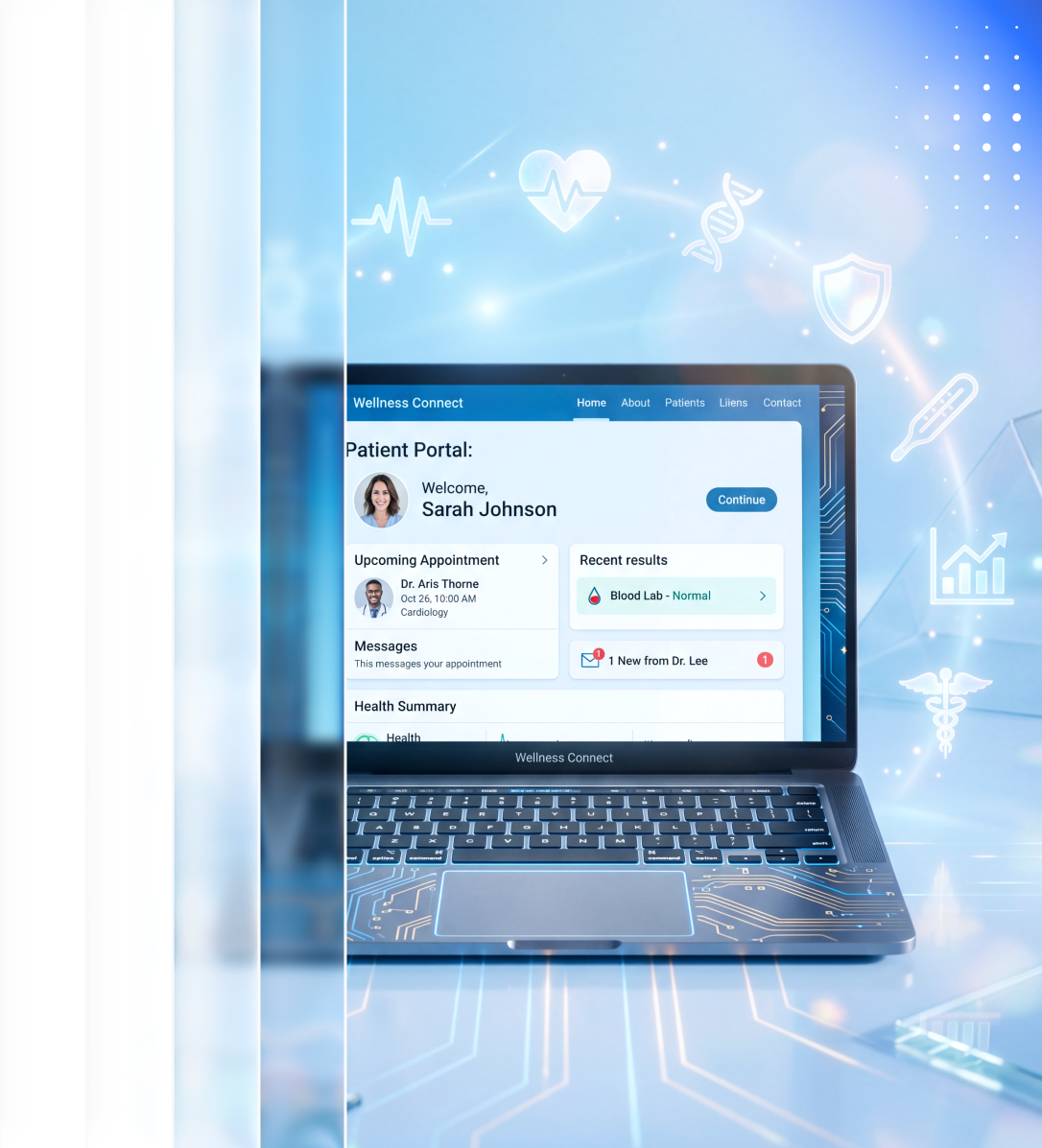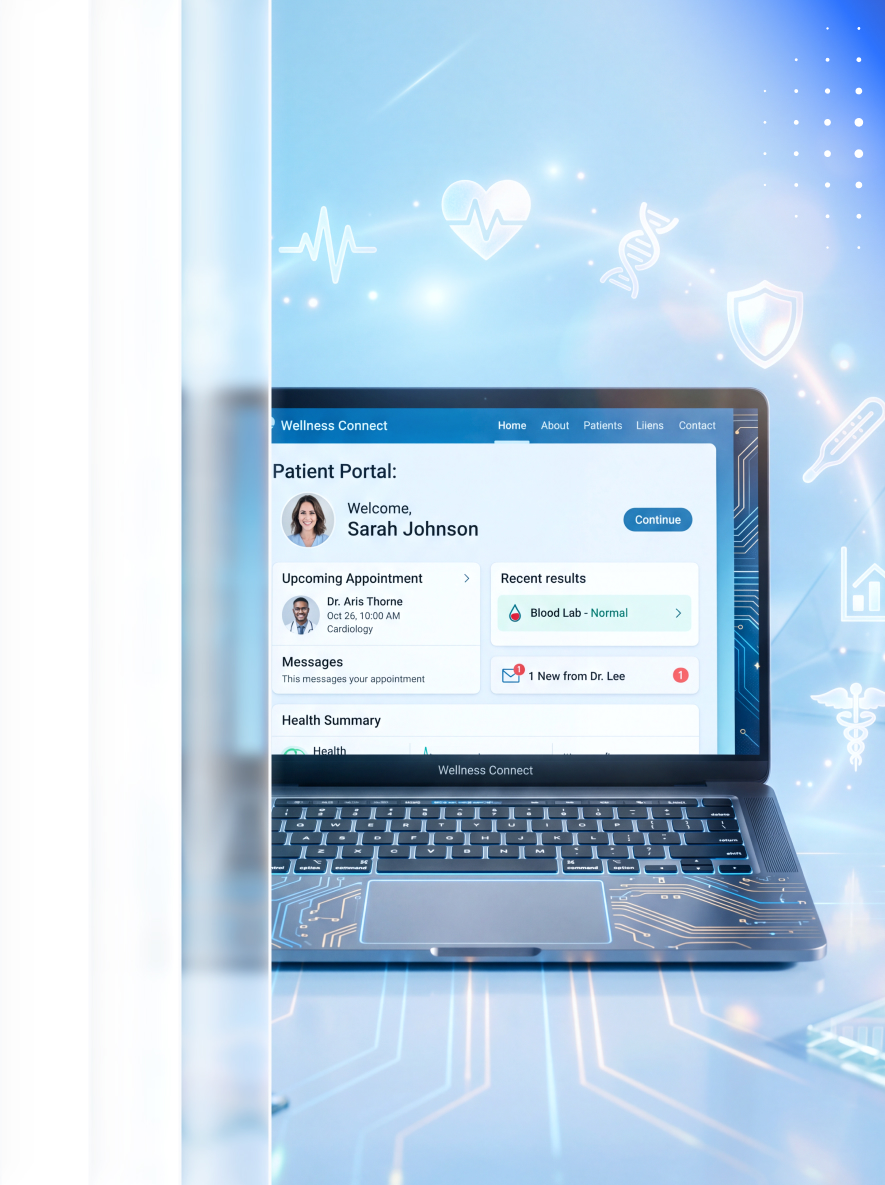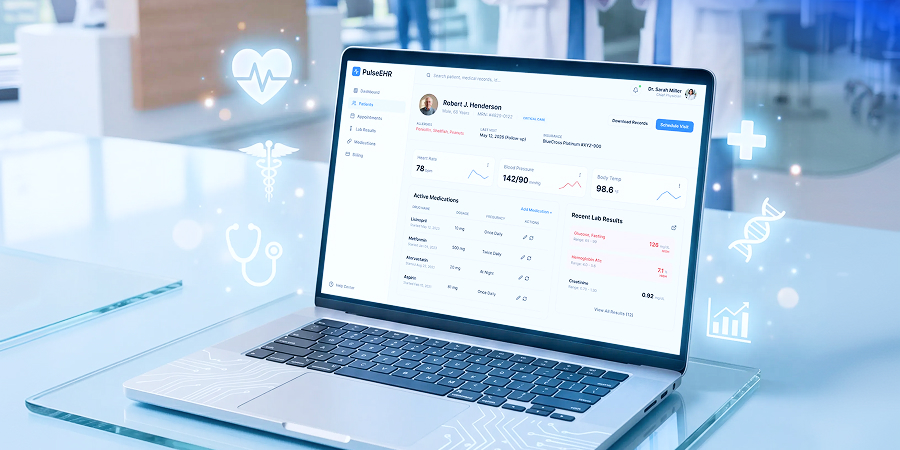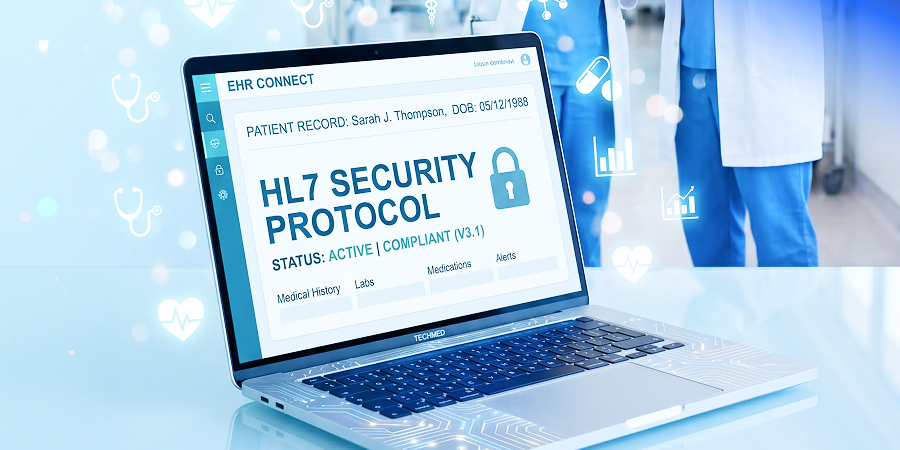






































Patient Portal Development Services

Care That Continues Between Visits
Custom patient portals integrated with Epic, Cerner, Athenahealth and eClinicalWorks via FHIR and HL7 — secure messaging, scheduling, records, refills and billing.
 Reliable partner
Reliable partner
Experienced team
Experienced team
Smart solutions
Smart solutions
Patient Portal Software Development 1920
Patient Portal Software Development 1440

Industry Leaders We Work With

Related Healthcare Services

Explore the Wider Healthcare Practice

A patient portal is only as useful as the systems behind it, so these related healthcare services cover the records, standards, and clinical software your portal connects to.

“73% of individuals were offered a patient portal, but only 57% used it.” — National Library of Medicine

A portal no one opens returns nothing, so we build patient portals patients actually use, not another login they abandon after the first visit.
The Basics

What a Patient Portal Is

A patient portal gives patients secure access to records, results, scheduling, messaging, and billing, connecting them with providers in one place.
Access to records

Access to records

A patient portal gives access to medical records, results, and medical history, so patients see their own health information without calling the office.
Two-way communication

Two-way communication

Patient portals support secure messaging, appointment scheduling, and reminders, turning the portal into a channel for patient communication rather than a static page.
Types of patient portals

Types of patient portals

The two types of patient portals are standalone, built separately, and integrated, tied to the EHR. Both are patient portals; the difference is how deeply the portal connects to clinical systems.
What patient portals provide

What patient portals provide

Patient portals provide results, billing, and messaging that patients now expect, so patient portals must be part of the patient experience, not an extra bolted on later.
Zoolatech quickly delivers senior engineers through rigorous multi-stage screening and global sourcing, ensuring only high-performing, project-ready talent joins your team.

1 month

To fill a position

60%

Senior developers

1M

Global talent pool
What We Build

Patient Portal Features We Build

Patient portal software development works best feature by feature, so the portal fits how your patients and staff actually work. Each of these patient portal features is built into one secure portal.
98%

98%

Client Retention Rate
300+

300+

Successful Projects

Medical records

A patient portal that gives access to medical records, clinical notes, and medical history in a view patients understand.

Results and labs

Lab and imaging results delivered to the portal with context, not a bare number a patient cannot read.

Scheduling

Self-service appointment booking and reminders inside the portal, cutting phone volume for staff.

Secure messaging

Patient communication with the care team through the portal, with routing so messages reach the right person.

Billing and payments

Billing, statements, and online payment in the patient portal, so patients settle balances without a separate call.

Intake and forms

Digital intake and patient information captured before the visit, not on a clipboard in the waiting room.

Telehealth

Virtual visits launched from the portal, so a message can become a video visit in one place.

Prescriptions

Medication lists and refill requests handled through the patient portal.

Proxy access

Caregiver and family access, so a patient portal serves the person managing care, not only the patient.

Mobile app

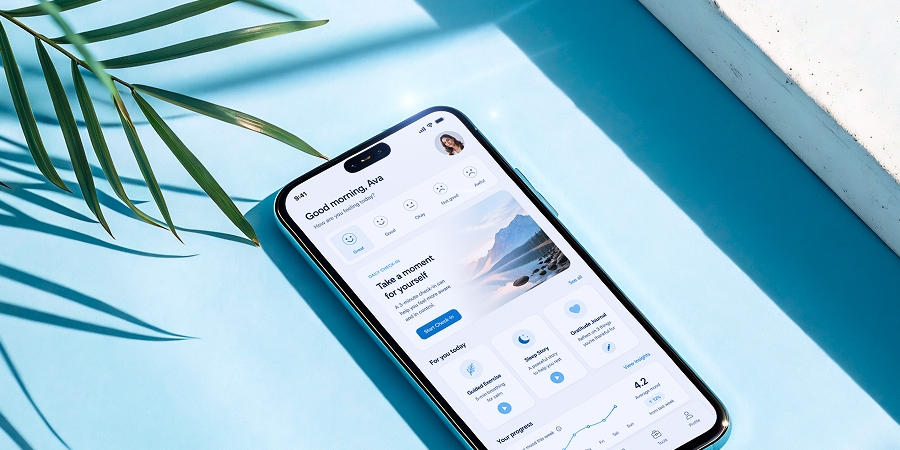
The patient portal delivered as a mobile app, because most patients now reach for a phone first.

Notifications

Alerts for results, messages, and appointments that bring patients back into the portal.

Accessibility

A patient portal built to accessibility standards, so every patient can use it.

Integration

Connected to Your Clinical Systems

A patient portal is only as good as what it connects to, so we integrate the portal to clinical systems rather than leaving it a pretty shell.
EHR
Standards
Results and billing
Systems around the portal

The core connection

Most patient portals live or die on the EHR link, so we connect the portal to Epic, Cerner, and other systems.
  • Epic and Cerner: portal integration with the EHR your clinicians already use, read and write.
  • Scope: we define what the portal owns and what stays in the EHR before any code is written.
  • Bidirectional sync: records, results, and updates move between the portal and EHR.
  • Data ownership: responsibilities stay clear between portal and clinical system.
Image slot

HL7 and FHIR

Standards keep a patient portal maintainable as connected systems, integrations, and versions change over time.
  • FHIR APIs: patient data surfaced through modern APIs, in line with the Cures Act patient-access rules.
  • HL7: messaging interfaces where legacy systems feed the portal.
  • FHIR APIs: standardized connections support secure healthcare data exchange.
  • HL7 interfaces: existing clinical systems stay connected as platforms evolve.
Image slot

What patients want

The features patients use most need the deepest integration with clinical and operational systems behind the portal.
  • Results: lab and imaging results routed to the portal automatically from clinical systems.
  • Billing: the portal connected to billing so statements and payments are real, not a screenshot.
  • Results: lab and diagnostic data surfaces directly in the patient portal.
  • Payments: balances, statements, and payment activity stay synchronized.
Image slot

One picture

A patient portal draws from more than the EHR, so the integration of patient portals reaches every relevant system.
  • Scheduling and pharmacy: booking and refills wired to the systems that fulfill them.
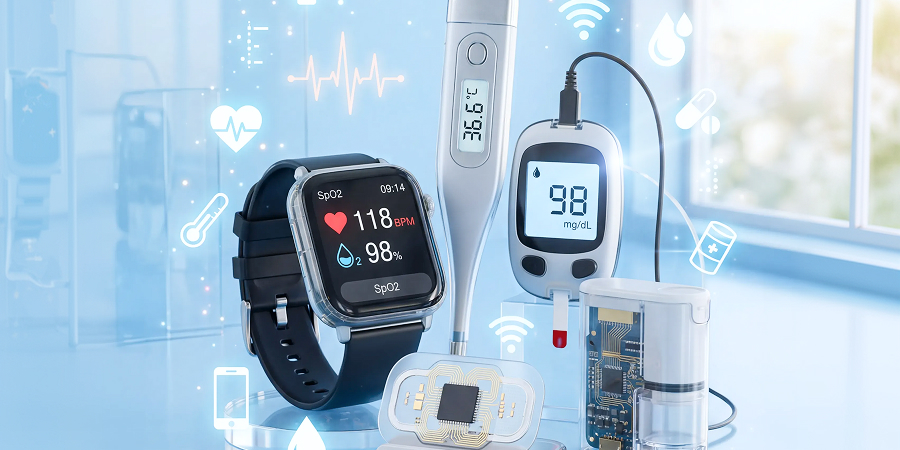
  • Devices: readings from remote monitoring surfaced in the portal where relevant.
  • Scheduling: appointments and availability stay aligned across connected systems.
  • Prescriptions: medication and refill workflows connect back to clinical systems.
Image slot
Testimonials

What Our Customers Say

“In the case of Zoolatech, it's a very tight partnership.
The team at Zoolatech is incredibly collaborative, and we work as a team despite being thousands of miles away from each other.”
Spencer Rascoff
CEO Match Group
5/5
“Zoolatech has been a key technology partner for Pandora,
enhancing our software development and deployment capabilities. They're ambitious, supportive, fast-moving, and well-skilled, with sound ethical values.”
Erika Romsics
Contract and Vendor Manager, Pandora
erica
5/5
“The apps they’ve developed give us the opportunity to get more customers.
We’re providing more services to target big customers. We can install jobs faster and identify reduce bottlenecks, so we’re providing a better customer experience.”
Aida Youssef
Senior Director of Software Engineering, Complete Solaria
5/5
“Zoolatech has access to a deep talent pool and knows how to identify client's needs.
With the help of Zoolatech, went from a very early and incomplete prototype to the MVP release, the first production release, and the first paying customer!”
Greg Wagenhoffer
CEO, GreenVisr
5/5
“Zoolatech enabled us to build a world-class engineering team quickly and efficiently.
Zoolatech's pre-screening process and engineer training are customized for providing effective engineers that can contribute immediately to accelerating product roadmaps.”
Shariq Minhas
CTO, SVSG
5/5
“We can recommend Zoolatech
for their talent pool, attention, ability to understand our requirements, candidate screening process and constant communication.”
Chaitanya Pallapothula
SVP, Tailored Brands, Inc.
5/5
“Zoolatech’s developers quickly became an integral part of our team effort
with whom we shared daily stand up calls. Overall, Zoolatech fit well with our needs for agile development and continued to adapt as our needs evolved.”
Forrest Glick
UX Designer, Stanford University
5/5
“Working with Zoolatech has been a driving force in our business offerings.
The team utilizes it's experience and expertise meshing with our internal team creating a positive work environment. Zoolatech is by far one of the best teams to work with in the industry.”
Kris Naidu
CEO, Zeacon
Kris Naidu CEO, Zeacon
5/5
Services

Patient Portal Software Development Services

The full range of patient portal software development services, under one team.
Custom development

Build the portal

  • Custom patient portal development end to end
  • A custom patient portal built around your workflows
  • Web and mobile from one codebase where it fits
  • A team experienced in regulated healthcare software
Web and mobile

Meet patients where they are

  • Web portal development for desktop access
  • Patient portal app development for iOS and Android
  • Mobile development so the portal works on any device
  • Accessibility built in across web and app
Integration

Connect the portal

  • EHR integration with Epic, Cerner, and athenahealth
  • HL7 and FHIR interfaces to clinical systems
  • Billing, scheduling, and pharmacy connected to the portal
  • Patient data unified into one secure view
UX and engagement

Make it used

  • Patient portal design focused on real patients, including older ones
  • Onboarding that gets patients into the portal and back again
  • Notifications and reminders that improve patient engagement
  • Design and development informed by how patients behave
QA and compliance

Prove it is safe

  • HIPAA security validation before go-live
  • Testing across web, app, and integrations
  • Audit logging and access controls verified
  • Continuous delivery suited to healthcare release cycles
Engagement

Portals Patients Actually Use

Most patient portals fail on engagement, not features, so we design for the patient who logs in once and never returns.
01

The engagement gap

Being offered a portal is not using one. We design onboarding, reminders, and a first-visit experience that turns a one-time login into a habit, because a patient engagement portal that increases patient engagement is the only kind worth building.
02

Built for real patients

Patients skew older and less tech-comfortable than the teams who build for them, so patient portal design starts from accessibility and clarity rather than density. The result is improved patient access and use.
03

Reasons to return

Results, messages, billing, and reminders each bring a patient back, so the portal earns repeat use and better patient care instead of assuming it.
04

Engagement and operational efficiency

Every task a patient self-serves is one staff no longer handle by phone, so patient engagement and operational efficiency rise together, and a portal that helps improve patient engagement pays for itself.

“Serious privacy concerns nearly doubled, from 35% to 62%, once patients learned federal protections may not cover their health data.” — The Pew Charitable Trusts

Trust collapses the moment patients doubt their data is protected, so we engineer security and clear privacy into the portal, because a portal patients don't trust is one they won't use.
Build or Buy

Custom Portal or the Bundled One

Most EHRs ship a patient portal, so the real question is whether that bundled portal serves your patients or just checks a box.
Use the EHR's portal

Use the EHR's portal

The portal bundled with your EHR is included and quick to switch on, but you get its workflow, its look, and its limits.
  • Included with the EHR
  • Fast to enable
  • Fixed features and design
  • Limited branding and control
Build a custom patient portal

Build a custom patient portal

A custom patient portal fits your patients, your brand, and your systems, and the portal is yours to extend as needs change.
  • Built for your patients
  • Your brand and experience
  • Deep integration across systems
  • You own the portal
AI and ML

AI Inside the Patient Portal

AI earns its place in a patient portal when it saves a patient or a staff member time, so we apply it where the portal already has the data.
Message triage

Message triage

Incoming patient messages sorted and routed, so urgent ones reach the care team faster.
Reply drafting

Reply drafting

Draft responses to common patient questions, reviewed by staff before they send.
Record summaries

Record summaries

Plain-language summaries of results and visit notes, so a patient understands what a number means.
Navigation

Navigation

A conversational assistant that helps a patient find records, book a visit, or pay a bill inside the portal.
Governed by design

Governed by design

Models are documented, monitored, and kept under human oversight, because portal content reaches patients directly.
Portal Types

Patient Portals by Setting

Different settings need different patient portals, so we build the portal to the care it supports.

Provider and practice portals

A patient portal for a clinic or practice group, tuned to primary and specialty care workflows and the patient-and-provider relationship at their center.

Hospital and health-system portals

A healthcare portal that spans departments and facilities, so a patient sees one view across a large organization rather than a portal per site.

Specialty and mental health portals

Portals for oncology, cardiology, and mental health, where the patient portal handles sensitive information and the workflows a specialty demands.
Security

Security and HIPAA by Design

A patient portal carries protected health information to the patient's own device, so security is engineered into every layer.
Authentication
Access
Data protection
Compliance

Prove who is logging in

The portal has to know the patient is who they claim before showing a single record.
  • MFA: multi-factor authentication and secure identity verification at login.
  • Sessions: session controls and timeouts that protect an unattended device.

The right data only

A patient portal must show each user only what they are entitled to see, keeping sensitive information protected across roles and accounts.
  • Role and proxy: patients, caregivers, and staff each see the right scope, with proxy access controlled.
  • Least privilege: access designed so the portal never over-exposes patient data.

Guard the record

Protecting patient information is the baseline a portal cannot skip, from login through every interaction with sensitive data.
  • Encryption: patient data encrypted in transit and at rest, so the portal protects sensitive patient data end to end.
  • Audit: full audit logging of who viewed or changed what, across the portal.

HIPAA-compliant patient portals

Regulation shapes the design, so compliance is built in rather than bolted on.
  • HIPAA: HIPAA-compliant patient portals with the safeguards the law requires.
  • Cures Act: patient access delivered in line with information-blocking rules.
Image abstract 1 368
Portal Types by Organization

Built for Every Patient-Facing Organization

A practice, a hospital, and a digital-health company all need a patient portal, and each needs it to fit a different model.
Providers and practices

Providers and practices

Clinics and practice groups get a custom patient portal that fits their workflows and connects to the EHR they run.
Hospitals and health systems

Hospitals and health systems

Large organizations get a healthcare patient portal that spans facilities, so patients get one experience rather than many.
Specialty clinics

Specialty clinics

Oncology, cardiology, and other specialties get patient portal solutions tuned to their care and their data.
Mental and behavioral health

Mental and behavioral health

Behavioral health providers get a patient portal built for sensitive information and the privacy it demands.
Digital-health companies

Digital-health companies

Digital-health and healthtech companies build the patient portal system behind their product, so they own it.
Payers and networks

Payers and networks

Health plans and networks get a member portal that connects patients to coverage, claims, and care.
How We Work

From Requirements to a Live Portal

A patient portal touches records, billing, and clinicians, so we build it in stages that get you to a portal patients trust rather than a demo.
Step 1

Discovery

We map your patient portal requirements, systems, EHR, and the features patients and staff actually need. This is where scope and the integration of patient portals take shape, so nothing surfaces late.
Step 2

Design

We design the patient portal experience around real patients, including older and less tech-comfortable ones, because patient portal design is what determines whether the portal gets used. Key features are prioritized here.
Step 3

Build and integrate

We build the portal and integrate the EHR, billing, scheduling, and clinical systems, with each feature demonstrable as it lands. The patient portal software development process runs alongside review, so changes stay cheap.
Step 4

Secure and validate

We validate HIPAA controls, test across web and app, and confirm the portal protects patient data end to end. A portal cannot ship on security it has not proven.
Step 5

Launch

We roll out with onboarding built to get patients into the portal, starting with a pilot before scaling. Adoption is measured, and patient portal success is tracked from day one.
Step 6

Support and extend

We add new features and support the portal in production as needs grow, because a patient portal is a long-running product rather than a one-time project.
Technology Stack

The Patient Portal Stack

The stack decides how the portal scales, how cleanly it integrates, and how well it runs on every device.
React
React
Next.js
Next.js
TypeScript
TypeScript
Node.js
Node.js
Swift
Swift
Kotlin
Kotlin
React Native
React Native
Python
Python
PostgreSQL
PostgreSQL
AWS
AWS
Azure
Azure
FHIR
FHIR
HL7
HL7
and other
Cost Factors

What Drives Cost and Timeline

The cost of patient portal development tracks the features, the integrations, and how deep the clinical connection goes.

Features and scope

A records-and-messaging portal is a smaller build than one with billing, telehealth, and intake. Portal features are the first driver of development cost.

Integrations

Each EHR, billing, and clinical connection adds engineering, and an installed Epic or Cerner estate shapes the work more than the feature list. This is the largest factor in patient portal software cost.

Web, mobile, or both

A web portal alone costs less than web plus a patient portal app, and mobile development adds scope worth the reach.

Security and compliance

HIPAA, authentication, and audit work are non-negotiable, and a precise estimate of the cost of patient portal development follows a discovery phase.
Our Approach

Engineering the Whole Portal, Not Just the Screens

What separates us from other patient portal development companies is engineering across the experience, the integration, and the security, not just the front end.
check icon

Integration depth

EHR, FHIR, billing, and clinical integration are core healthcare work here, so the portal connects to real systems, not mock data.
check icon

Engagement focus

We design patient portals patients return to, because a portal that is not used is a cost, not an asset.
check icon

Web and mobile

Web portal and patient portal app from teams who build both, so the experience holds up on every device.
check icon

Security first

HIPAA-compliant patient portals with authentication, access control, and audit engineered in, to protect sensitive patient data.
check icon

Real patient UX

Patient portal design built for the patients who actually log in, including older and less tech-comfortable ones.
check icon

You own it

A custom patient portal you own and can extend, rather than a bundled portal you cannot change.
check icon

Senior-heavy delivery

A senior team that has delivered 300+ projects since 2017, with 600+ engineers and 96% client satisfaction, sized to your patient portal projects.
check icon

Near and offshore

A Miami HQ with delivery centers in Poland, Ukraine, Mexico, and Turkey, run as managed delivery, team extension, or a dedicated center.
Why Choose Us

Why Businesses Trust Us

logo
At Zoolatech, we create engineering teams for industry leaders across the US and Europe — teams that move fast, think big, and deliver strong impact.
96%
Client Satisfaction
300+
Successful Projects
2017
Year Founded
98%
Retention Rate
team sport photo
At Zoolatech, we create engineering teams for industry leaders across the US and Europe — teams that move fast, think big, and deliver strong impact.
Engineering Excellence. Every Time.
main award png (1)
At Zoolatech, we create engineering teams for industry leaders across the US and Europe — teams that move fast, think big, and deliver strong impact.
team sport photo
600+
Employees
Headquarters
USA
Development Centers
PL
UA
MX
TR

Building a Patient Portal

Tell us your EHR, the features you need, and whether you want web, mobile, or both, and we scope an approach.
Questions You May Have

What is a patient portal?

A patient portal is a secure website or app that gives a patient online access to medical records, results, scheduling, secure messaging, and billing. Patient portals connect the patient and provider so care happens in one place rather than by phone and paper.

What are the key features of a patient portal?

The key features of patient portals are access to medical records and medical history, lab results, appointment scheduling, secure messaging, billing and payments, and prescription refills. These features of patient portals expand over time to telehealth, intake forms, and proxy access.

What are the types of patient portals?

The types of patient portals are standalone portals, built separately, and integrated portals tied to the EHR. An integrated patient portal connects more deeply to clinical systems, while a standalone healthcare portal offers more control over design and features.

How do you build a patient portal that patients actually use?

To build a patient portal that gets used, patient portal design starts from real patients, including older ones, with onboarding, reminders, and results that give patients a reason to return. A patient engagement portal that increases patient engagement is designed for habit, not just features.

How do you create a patient portal from scratch?

To create a patient portal, we start with patient portal requirements and design, then build the portal and integrate the EHR, billing, and clinical systems. The development of a patient portal runs through security validation and a phased launch before it goes live.

How does a patient portal integrate with our EHR?

Integration uses FHIR APIs and HL7 interfaces to connect the portal to clinical systems such as Epic and Cerner, surfacing records, results, and billing. Connecting the portal to clinical systems is what turns a shell into a working patient portal.

Should we build a custom patient portal or use the one bundled with our EHR?

The bundled portal is included and fast to enable but fixed in workflow and design, while a custom patient portal fits your patients and brand and connects across all your systems. Many organizations build a custom patient portal once the bundled one limits patient experience and patient satisfaction.

How do you protect patient data in a patient portal?

HIPAA-compliant patient portals use multi-factor authentication, role-based access, encryption in transit and at rest, and full audit logging to protect sensitive patient data. Security is engineered in from the first line of code, because the portal is a front door to health information.

How much does patient portal development cost?

Patient portal software cost depends on the feature set, the number of integrations, whether you need web and mobile, and the depth of security. The cost of patient portal development is driven most by clinical integration, and a precise development cost estimate follows discovery.

Can a patient portal include billing and payments?

Yes. Billing and revenue features let a patient view statements and pay balances inside the portal, connected to your billing system so the numbers are real. Bringing billing into the patient portal reduces calls and speeds collection.

Can you build the patient portal as a mobile app?

Yes. We handle patient portal app development alongside a web portal, so patients reach their records on any device. Mobile app development matters because most patients now open a phone before a laptop.

Do you build portals for mental and behavioral health?

Yes. A mental health patient portal is built for the sensitive information and privacy that behavioral health requires, with access controls and consent handled with extra care. The portal fits the workflow the specialty demands.

Do you integrate patient portals with Salesforce?

Yes. Where an organization runs Salesforce Health Cloud, we connect the patient portal so engagement, outreach, and patient information stay in sync. The integration keeps the portal and CRM as one system rather than two.

What does the patient portal development process look like?

The patient portal software development process runs from discovery and requirements through design, build and integration, security validation, and a phased launch. A patient portal development team supports and extends the portal after go-live, so patient portal projects keep improving.

Is there a patient portal development guide we can follow?

This page works as a short patient portal development guide, but every build differs, so a proper development guide starts from your systems and patients. We turn that into concrete patient portal requirements during discovery.

What makes a patient portal successful?

Patient portal success comes from adoption, not feature count, so a healthcare patient portal has to be easy, fast, and worth returning to. Patient portals must fit real patient behavior, which is why patient portals provide the most value when designed around engagement.

Do you offer patient portal solutions as a product or a service?

We build custom patient portal solutions and a patient portal system as a service, so you own the result. As a software development vendor and patient portal services partner, we deliver end to end or embed with your team.

Do you work as a development company or embed with our team?

As a patient portal development company and software development vendor, we deliver development services end to end, or embed a patient portal development team alongside yours through team extension.