





































AI Data Readiness Assessment

Where AI Actually Starts
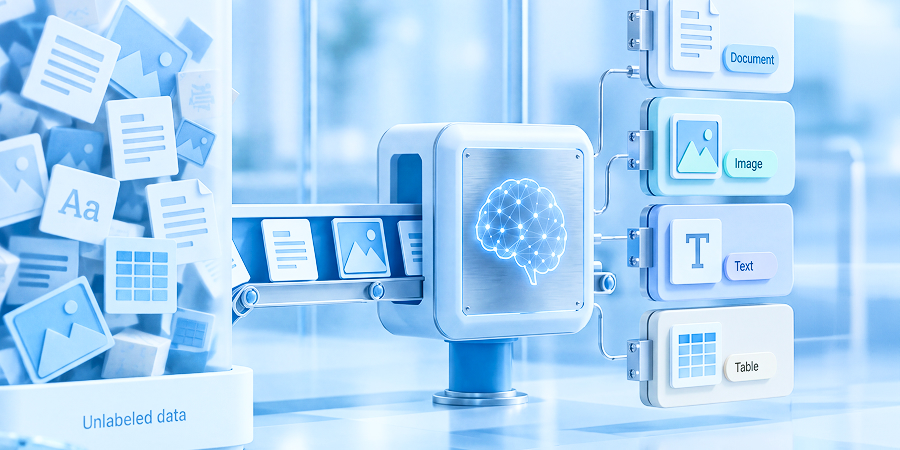
A data readiness assessment for AI, measured across six dimensions.
Reliable partner
Reliable partner
Experienced team
Experienced team
Smart solutions
Smart solutions
eCommerce Development Services 1920
eCommerce Development Services 1440

Industry Leaders We Work With

“Through 2026, organizations will abandon 60% of AI projects unsupported by AI-ready data.” — Gartner

If your AI budget depends on data no one has measured, that abandonment risk is yours. A structured assessment quantifies it before the money moves.
Where AI Projects Stall

Data, Not Models

Most AI setbacks trace to data conditions like these, not to the model.
Unknown ownership

Unknown ownership

Nobody can name who owns the customer table, so nobody can approve, fix, or explain it.
Undocumented fields

Undocumented fields

A status code means three things in three systems, and the difference lives in someone’s head.
Assumed quality

Assumed quality

Completeness and accuracy are believed to be fine because no one has measured them against a threshold.
Missing history

Missing history

The model needs 3 years of events, and the warehouse keeps 14 months before purging.
Silent gaps

Silent gaps

A region, product line, or channel is absent from the records, so the model never learns it.
Latency mismatch

Latency mismatch

The decision needs a 200-millisecond answer, but the feature data refreshes once a night in batch.
Unclear usage rights

Unclear usage rights

The data exists, but consent terms and contracts never anticipated training a model on it.
Training-serving skew

Training-serving skew

Training runs on a cleaned export while production reads raw records, so accuracy collapses at launch.
What It Is

Data Readiness, Defined

Know precisely what is being measured before you compare this with a questionnaire.
The definition

The definition

An AI data readiness assessment establishes whether an organization’s data can support one named AI use case, measured rather than self-rated.
The criteria

The criteria

It checks what the data represents, how its quality is measured, whether a machine can interpret it, how fast it serves, and whether use is lawful.
The boundary

The boundary

General AI readiness assessments score strategy, people, infrastructure, and governance in one questionnaire. This one takes the data layer alone and goes deep.
Four Readiness Levels

Where You Stand

Locate your current level and see what happens when AI is attempted there.
Level 1: Unmapped
Level 2: Unmeasured
Level 3: Measured
Level 4: Contracted

Data without owners

Nobody can say where the relevant data lives, who owns it, or how it changes.
  • How it looks: Extracts arrive by email, definitions differ per team, and system inventories are out of date.
  • When AI is attempted: Weeks disappear into locating sources, and the pilot trains on whatever was easiest to obtain.
  • First fix: Inventory the sources behind the use case and assign an accountable owner to each.
Image slot

Known but untested

Sources and owners are known, but quality, coverage, and freshness are assumed rather than measured.
  • How it looks: Dashboards exist, yet nobody can state the null rate or duplicate rate of a key table.
  • When AI is attempted: The pilot performs, then accuracy drops in production because the training sample was cleaner than reality.
  • First fix: Profile real samples and set thresholds for completeness, accuracy, and timeliness the use case needs.
Image slot

Quality under control

Quality, coverage, and lineage are measured, owners are named, and thresholds trigger action when breached.
  • How it looks: Data quality metrics are reported per dataset, and lineage traces each field to its origin.
  • When AI is attempted: Models reach production on schedule; effort shifts to serving speed, access, and usage rights.
  • First fix: Close the remaining gaps in latency and rights, then formalize datasets as reusable products.
Image slot

Data as product

Datasets carry contracts, schemas are versioned, and an agent can call them without human interpretation.
  • How it looks: Producers commit to schema, freshness, and quality terms that consumers can rely on programmatically.
  • When AI is attempted: New use cases, including agentic ones, start from existing data products instead of new pipelines.
  • First fix: Keep contracts enforced through observability so readiness holds as sources and models change.
Image slot
Measure and fix the data before building the model, and results follow: a delivery-promise model 67% more accurate and an analytics platform at 30% lower infrastructure cost.
67%
More accurate delivery forecasts
30%
Lower infrastructure cost
What We Evaluate

Six Dimensions of Data Readiness

Data readiness breaks into six dimensions, each scored against a criterion you can verify.
check icon

Use-case fit

Whether the data represents what the model has to learn. Criterion: every input the decision depends on maps to a field that exists, is populated, and is captured before the moment of prediction, not reconstructed afterward.
check icon

Coverage and history

Whether depth and breadth are sufficient. Criterion: the retained history spans the seasonality the use case needs, and no segment the model will serve, such as a region or channel, is missing or underrepresented. Labeling gaps are logged here.
check icon

Quality and consistency

Whether quality is measured rather than assumed. Criterion: completeness, accuracy, duplicate rate, and timeliness are profiled on real samples and compared with the thresholds the use case requires, not with a general benchmark.
check icon

Semantics and metadata

Whether a machine can interpret the data without a person explaining it. Criterion: each field used by the model has a written definition, known units, and stable meaning across the systems that produce it.
check icon

Access and latency

Whether the data can be served at the speed the decision requires. Criterion: the path from source to model meets the latency, refresh, and throughput of the use case sets, in batch and in real time.
check icon

Governance and rights

Whether use is lawful and traceable. Criterion: lineage traces each field to its source, consent and contract terms permit training and inference, and retention rules fit the use case.
How It Runs

Five Stages, One Answer

Five stages take a named use case to a scored, sequenced answer, with timing set mainly by scope and how quickly data access is granted.
Step 1

Use case intake

We fix which decision the AI must make, what accuracy it needs, and how fast. Output: a one-page use case definition. Client input: the business owner and product lead, in a single kickoff session.
Step 2

Data inventory

We map where the relevant data lives, who owns each source, and how it is updated. Output: a source register with owners and refresh cadence. Client input: system owners and a data steward.
Step 3

Profiling on samples

Our engineers measure completeness, accuracy, duplicates, freshness, and coverage on real extracts, not documentation. Output: profiling results per source. Client input: read access or anonymized samples.
Step 4

Gap scoring

Each of the six dimensions receives a score against the use case thresholds. Output: the readiness scorecard and a gap register with impact ratings. Client input: one review session with data owners.
Step 5

Findings and sequencing

We rank the gaps by what blocks the use case first and estimate the effort to close each. Output: the sequenced remediation plan and the go or no-go read, presented in a readout session.
Have an AI project in mind? Let us check whether your data is ready for it.
Contact Sales
Testimonials

What Our Customers Say

“In the case of Zoolatech, it's a very tight partnership.
The team at Zoolatech is incredibly collaborative, and we work as a team despite being thousands of miles away from each other.”
Spencer Rascoff
CEO Match Group
5/5
“Zoolatech has been a key technology partner for Pandora,

enhancing our software development and deployment capabilities. They're ambitious, supportive, fast-moving, and well-skilled, with sound ethical values.”
Erika Romsics
Contract and Vendor Manager, Pandora
erica
5/5
“The apps they’ve developed give us the opportunity to get more customers.
We’re providing more services to target big customers. We can install jobs faster and identify reduce bottlenecks, so we’re providing a better customer experience.”
Aida Youssef
Senior Director of Software Engineering, Complete Solaria
5/5
“Zoolatech has access to a deep talent pool and knows how to identify client's needs.
With the help of Zoolatech, went from a very early and incomplete prototype to the MVP release, the first production release, and the first paying customer!”
Greg Wagenhoffer
CEO, GreenVisr
5/5
“Zoolatech enabled us to build a world-class engineering team quickly and efficiently.
Zoolatech's pre-screening process and engineer training are customized for providing effective engineers that can contribute immediately to accelerating product roadmaps.”
Shariq Minhas
CTO, SVSG
5/5
“We can recommend Zoolatech
for their talent pool, attention, ability to understand our requirements, candidate screening process and constant communication.”
Chaitanya Pallapothula
SVP, Tailored Brands, Inc.
5/5
“Zoolatech’s developers quickly became an integral part of our team effort
with whom we shared daily stand up calls. Overall, Zoolatech fit well with our needs for agile development and continued to adapt as our needs evolved.”
Forrest Glick
UX Designer, Stanford University
5/5
“Working with Zoolatech has been a driving force in our business offerings.
The team utilizes it's experience and expertise meshing with our internal team creating a positive work environment. Zoolatech is by far one of the best teams to work with in the industry.”
Kris Naidu
CEO, Zeacon
Kris Naidu CEO, Zeacon
5/5
What You Receive

What Lands on Your Desk

Every artifact is written so a CDO can take it into a budget conversation and an engineering lead can take it into a backlog. None of it is a general verdict.
Readiness scorecard

Readiness scorecard

A score for each of the six dimensions, not a single grade, so you see which layer blocks the use case.
Gap register

Gap register

Each specific gap, its measured evidence, and its rated impact on the named use case.
Remediation plan

Remediation plan

The gaps in the order they should be closed, with the reason that order unlocks the use case fastest.
Effort estimate

Effort estimate

Engineering effort per gap, so you can fund remediation as scoped work rather than open-ended risk.
Go or no-go read

Go or no-go read

An honest verdict on the use case as scoped, including the option that the data cannot support it yet.
Who Runs It

Engineers Behind the Verdict

The verdict is only as good as the people and incentives behind it.

Engineers, not auditors

The engineers profiling your data have run production platforms at 2.5B records a day, so findings reflect what breaks.

Vendor-neutral verdict

Zoolatech sells no data platform or cloud, so no recommendation is shaped by a license we would earn.

Readiness-first practice

Every Zoolatech AI engagement starts with a structured data assessment; this is the standard first step, not a side offer.

Same team continues

The engineers who score your data are the ones who close the gaps, so nothing is lost between diagnosis and delivery.

“Only 40% of organizations say their data management is highly prepared for AI.” — Deloitte

For the other 60%, readiness is a belief, not a measurement. A per-dimension score shows which data gaps stand between your use case and production.
What Shapes Scope

Drivers of Scope

Two assessments rarely cost the same, and the reasons are structural rather than commercial. These factors decide how many weeks and people the work needs.
98%

98%

Client Retention Rate
300+

300+

Successful Projects

Source system count

Each additional system adds an owner, an access path, and a profiling run.

Unstructured share

Documents, images, and logs need extraction and labeling checks that tables do not.

Shared definitions

Missing common definitions for core entities add reconciliation work before profiling can start.

Regulatory perimeter

Personal, health, or financial data adds rights review and often requires on-premises profiling.

Use cases in scope

Ranking several candidate use cases multiplies the fit and coverage checks per source.

Access lead time

Profiling starts only when samples are available; approval is usually the longest single step.

Engagement format

A kickoff session, profiling on extracts, and a readout session.

Rank Your AI Candidates

Bring several use cases, and leave knowing which one your data supports today.
Why Choose Us

Why Businesses Trust Us

logo
At Zoolatech, we create engineering teams for industry leaders across the US and Europe — teams that move fast, think big, and deliver strong impact.
96%
Client Satisfaction
300+
Successful Projects
2017
Year Founded
98%
Retention Rate
team sport photo
At Zoolatech, we create engineering teams for industry leaders across the US and Europe — teams that move fast, think big, and deliver strong impact.
Engineering Excellence. Every Time.
main award png (1)
At Zoolatech, we create engineering teams for industry leaders across the US and Europe — teams that move fast, think big, and deliver strong impact.
team sport photo
600+
Employees
Headquarters
USA
Development Centers
PL
UA
MX
TR

Find Out Before You Fund

Name the use case you are weighing and learn whether your data supports it and what closing the gaps takes.
Contact Sales
Questions You May Have

What is an AI data readiness assessment?

An AI data readiness assessment establishes whether your data can support a specific AI use case, measured on real samples rather than rated by questionnaire. It checks what the data represents, how its quality is measured, whether a machine can interpret it, how fast it can be served, and whether it can be used lawfully and traced to source.

What does the assessment include?

Five stages: fixing the decision the AI must make, inventorying the sources and owners, profiling quality and coverage on real extracts, scoring six dimensions, and sequencing the gaps by what blocks the use case first. You receive a scorecard, a gap register with effort estimates, and a go or no-go read on the use case as scoped.

How is this different from a general AI readiness assessment?

A general assessment scores four to six organizational pillars, including strategy, people, infrastructure, and governance, usually through 10 to 20 questions, which suits a board conversation but not an engineering decision. This assessment takes the data pillar alone and goes deep enough to say whether one named use case can be built on the data you have; organizational readiness is covered by Zoolatech’s AI strategy consulting.

How is this different from free AI data readiness assessment tools?

Free tools from platform vendors are self-completed questionnaires that rely on your own estimate of data quality, and they are published by companies that sell the platform the recommendation points to. This assessment profiles actual data and is not tied to any stack Zoolatech sells.

How long does a data readiness assessment for AI take?

Timing is driven mainly by the number of source systems in scope and how quickly data access is arranged. Profiling cannot start until samples are available, and that approval is usually the longest single step.

Do we need an AI use case already?

Yes, at least one candidate, because the same dataset can be sufficient for a forecasting model and insufficient for an agent that acts on customer records. If several candidates are open, the assessment ranks them by which your data supports today.

What if the assessment says we are not ready?

That is a useful outcome and the reason the assessment exists: learning that a use case needs data remediation first is cheaper before the model is built than after. The gap register quantifies what closing each gap involves, so the decision becomes a scoped choice rather than an open-ended risk.

How do we choose a provider for a data readiness assessment?

Ask whether the assessment measures data or asks you to rate it, whether the provider sells the platform the recommendation will point to, and whether the people running it have built production systems on data like yours. Public case studies with numbers answer the third question faster than a credentials page.