



































Healthcare IoT (IoMT) Software Development

One Platform for Every Connected Medical Device
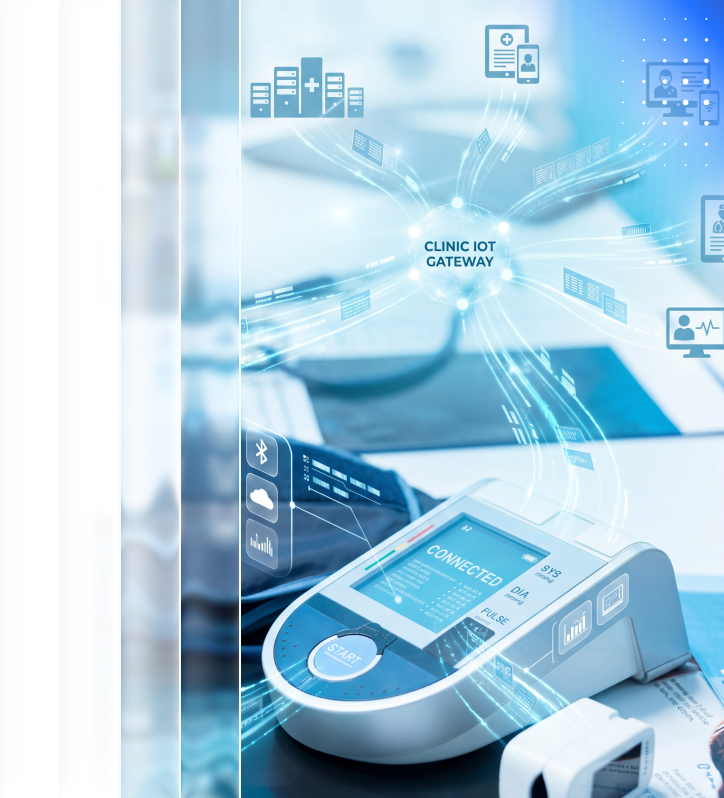
Custom IoT healthcare software development, from connected medical device integration to secure, scalable IoT platforms.
 Reliable partner
Reliable partner
Experienced team
Experienced team
Smart solutions
Smart solutions
IoT Software Development 1920
IoT Software Development 1440

Industry Leaders We Work With

Related Healthcare Services

Explore the Wider Healthcare Practice

An IoT platform connects to the devices, records, and systems around it, so these related healthcare services cover the wider healthcare software your solution depends on.

“99% of hospitals manage IoMT devices with known exploited vulnerabilities, and 96% are tied to ransomware.” — The HIPAA Journal

Every connected device is an entry point, so secure IoT engineering puts device identity, segmentation, and encryption first, not bolted on after a breach.
The Basics

The Internet of Things, Used in Healthcare

The Internet of Medical Things (IoMT) is the network of connected medical devices, sensors, and software that collect and act on health data. The internet of things in healthcare links these devices to applications and the cloud.
IoT devices

IoT devices

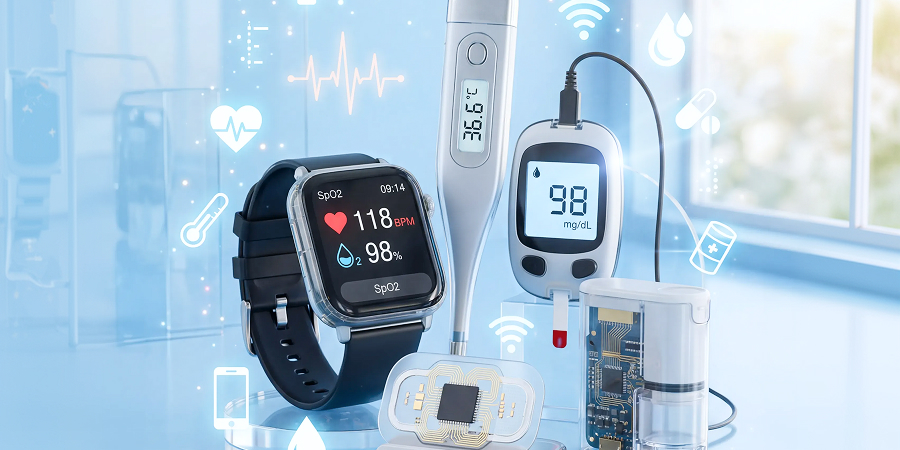
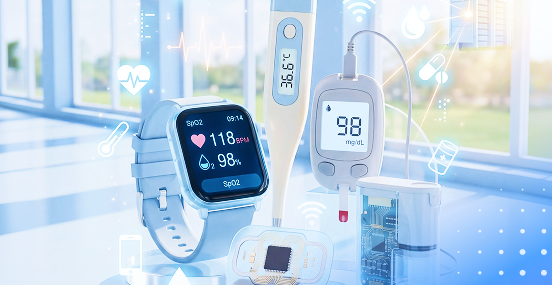
IoT medical devices span wearables and biosensors, connected hospital equipment, and asset tags, all linked to one platform.
Data in motion

Data in motion

Devices stream IoT data in near real time, so clinicians and systems can act on it for decisions, automation, and analytics.
Broader than RPM

Broader than RPM

Remote patient monitoring is one use of IoT in the healthcare setting, but IoT in healthcare also covers in-hospital devices and smart infrastructure.
Secure by requirement

Secure by requirement

Because it carries health data and touches a medical device, IoT used in healthcare must be secure and, where applicable, meet FDA rules.
Zoolatech quickly delivers senior engineers through rigorous multi-stage screening and global sourcing, ensuring only high-performing, project-ready talent joins your team.

1 month

To fill a position

60%

Senior developers

1M

Global talent pool
What We Build

IoT Healthcare Solutions We Build

Most vendors treat every device the same, but reliable healthcare IoT solutions need integration, data, and security engineered together. Our custom healthcare IoT solutions span the full platform, from device to cloud.
98%

98%

Client Retention Rate
300+

300+

Successful Projects

Device integration

Connect an iot medical device from many vendors into one platform through the protocols it supports.

IoT platforms

Build device-to-cloud IoT applications that ingest, process, and route data at scale.

Smart hospital

Add asset and RTLS tracking, where healthcare IoT devices automate finding equipment, staff, and patients.

Wearables and biosensors

Develop apps for IoT devices and wearables that turn continuous signals into usable health data.

AI on device data

Apply AI and ML to device telemetry for predictive alerts and anomaly detection.

Telehealth and IoT

Combine connected devices with telehealth so remote care uses live device data.

Remote monitoring

Support remote monitoring devices as an IoT use case, linked to our remote patient monitoring practice.

Interoperability

Normalize device data to FHIR so it flows into EHR and clinical systems.

Edge computing

Process time-sensitive device data at the edge, close to where it is generated.

Managed IoT development

Run the whole IoT program through managed delivery, team extension, or a dedicated team.

Device Integration

Connected Medical Device Integration

Getting many devices to speak to one platform is the hardest part of IoT healthcare software development, so we engineer medical device integration that holds up in the real world.
01

Protocols and connectivity

Connect devices over Bluetooth Low Energy, Zigbee, Wi-Fi, cellular, and wired interfaces. Wireless IoT connectivity is matched to what each connected medical device supports.
02

Gateways and edge

Use gateways and edge devices for the integration of IoT devices to the cloud, handling connectivity drops and firmware variability across vendors.
03

Medical IoT device onboarding

Provision and onboard devices with unique identity, so every device and message on the platform is authenticated and trusted.
04

Regulated device software

When device software qualifies as a medical device, we take it through the SaMD and FDA pathway with our medical device software development practice.
Testimonials

What Our Customers Say

“In the case of Zoolatech, it's a very tight partnership.
The team at Zoolatech is incredibly collaborative, and we work as a team despite being thousands of miles away from each other.”
Spencer Rascoff
CEO Match Group
5/5
“Zoolatech has been a key technology partner for Pandora,
enhancing our software development and deployment capabilities. They're ambitious, supportive, fast-moving, and well-skilled, with sound ethical values.”
Erika Romsics
Contract and Vendor Manager, Pandora
erica
5/5
“The apps they’ve developed give us the opportunity to get more customers.
We’re providing more services to target big customers. We can install jobs faster and identify reduce bottlenecks, so we’re providing a better customer experience.”
Aida Youssef
Senior Director of Software Engineering, Complete Solaria
5/5
“Zoolatech has access to a deep talent pool and knows how to identify client's needs.
With the help of Zoolatech, went from a very early and incomplete prototype to the MVP release, the first production release, and the first paying customer!”
Greg Wagenhoffer
CEO, GreenVisr
5/5
“Zoolatech enabled us to build a world-class engineering team quickly and efficiently.
Zoolatech's pre-screening process and engineer training are customized for providing effective engineers that can contribute immediately to accelerating product roadmaps.”
Shariq Minhas
CTO, SVSG
5/5
“We can recommend Zoolatech
for their talent pool, attention, ability to understand our requirements, candidate screening process and constant communication.”
Chaitanya Pallapothula
SVP, Tailored Brands, Inc.
5/5
“Zoolatech’s developers quickly became an integral part of our team effort
with whom we shared daily stand up calls. Overall, Zoolatech fit well with our needs for agile development and continued to adapt as our needs evolved.”
Forrest Glick
UX Designer, Stanford University
5/5
“Working with Zoolatech has been a driving force in our business offerings.
The team utilizes it's experience and expertise meshing with our internal team creating a positive work environment. Zoolatech is by far one of the best teams to work with in the industry.”
Kris Naidu
CEO, Zeacon
Kris Naidu CEO, Zeacon
5/5
Smart Hospital

Location, Assets, and Environment

Inside the hospital, connected devices do more than monitor patients, so we build the IoT infrastructure that keeps healthcare operations running.

Location systems

Real-time location systems help healthcare providers to track equipment, staff, and patients, so teams find what they need instead of searching for it.

Asset tracking

RFID and BLE beacon tags track assets across healthcare facilities, cutting loss and improving the efficiency of healthcare operations.

Environment and rooms

Environmental monitoring and smart rooms watch temperature, air quality, and equipment status, automating alerts when something drifts out of range.
Edge and Cloud

IoT Data Pipelines, Edge, and Cloud

Thousands of devices produce a flood of IoT data, so we build the pipelines that move it reliably from device to cloud.
Ingestion at scale
Edge computing
Normalization
Managed cloud

Handle the flood

IoT platforms ingest data from many devices at once, built as streaming pipelines that scale with device count.
  • Streaming: event-driven ingestion with tools like Kafka handles real-time, batch, and full-state device data.
  • Reliability: pipelines are designed for low latency and growth, so adding devices does not break the platform.
  • Buffering: message queues absorb traffic spikes and connectivity drops, so no device reading is lost in transit.
Image slot

Process close to the device

Edge computing handles time-sensitive processing near the device, so decisions do not wait on a round trip to the cloud.
  • Edge AI: run inference at the edge for alerts that must fire immediately, independent of connectivity.
  • Filtering: process and filter data at the edge to cut noise and cost before it reaches the cloud.
  • Offline resilience: gateways keep collecting when connectivity drops, then sync to the cloud once the network returns.
Image slot

One common format

Device data arrives in many formats, so we normalize it to FHIR before it reaches clinical or analytics systems.
  • FHIR and HL7: map device telemetry to standards so IoT data and EHR data line up.
  • Device to EHR: route normalized device data into the EHR and electronic health records.
  • Terminology: readings map to LOINC and SNOMED codes, so clinical systems interpret every value consistently.
Image slot

Run it in the cloud

Managed cloud services carry the IoT data platform, so you scale without running the plumbing yourself.
  • AWS: AWS IoT Core and HealthLake connect devices and store health data in the cloud.
  • Azure: Azure IoT and Health Data Services provide a managed device-to-FHIR path.
  • Cost control: managed services scale with usage, so cloud spend tracks device count rather than idle capacity.
Image slot

“The average hospital now runs 10 to 15 connected medical devices per bed, reaching hundreds of thousands of IoMT devices per facility.” — HIT Consultants

Data at that scale only works on a platform built for it, so we engineer ingestion, edge, and cloud that grow with your device count rather than stalling.
AI on Device Data

AI and ML on IoT Data

Device telemetry is only useful when something acts on it, so we build AI that turns streams of IoT data into early, reliable signals.
Predictive alerts

Predictive alerts

Models watch device data for early signs of a problem, so teams act before a situation becomes critical.
Anomaly detection

Anomaly detection

Anomaly detection flags device behavior that departs from the norm, surfacing failures and safety risks quickly.
Edge AI

Edge AI

Run models at the edge so time-sensitive alerts fire on the device, without waiting on the cloud.
Operational analytics

Operational analytics

Aggregate telemetry across devices for population and operational analytics that inform how a facility runs.
Governed by design

Governed by design

Models are documented, monitored, and governed, so AI on health data stays accountable and safe.
Services

IoT Healthcare Software Development Services

The full range of IoT healthcare software development services, under one team.
Custom development

IoT healthcare solutions development

  • Custom IoT healthcare software development, end to end
  • Device firmware and medical device integration engineering
  • APIs and services connecting devices to systems
  • Architecture designed for scale and security
Cloud and edge

Where the data runs

  • Managed cloud on AWS IoT or Azure IoT
  • Edge computing for time-sensitive device processing
  • Device-to-cloud data pipelines built to scale
  • Infrastructure automation and reliability engineering
Data and analytics

Turn data into insight

  • Device telemetry normalized and stored for analysis
  • Dashboards and reporting on IoT data
  • Integration with our healthcare data analytics practice
  • FHIR normalization for clinical and analytics use
AI and ML

Act on the signals

  • Predictive and anomaly-detection models on device data
  • Edge AI for immediate, on-device alerts
  • Model governance and monitoring over time
  • Operational and population analytics from telemetry
Security and QA

Trust the platform

  • Secure IoT architecture with device identity and segmentation
  • Security testing across devices, network, and cloud
  • Automated testing and continuous delivery
  • Compliance with healthcare regulations built in
Compliance and Security

Protecting Every Connected Device

A large device fleet is a large attack surface, so we engineer secure IoT from device identity to cloud access.
Device security
Data protection
FDA cybersecurity
Zero-trust

Trust every device

Every connected device gets a unique identity and is authenticated, so no rogue device joins the network unseen.
  • Device identity: each device is provisioned with credentials and authenticated on every connection.
  • Segmentation: network segmentation keeps a compromised device from reaching clinical systems.

Protect the data

Health data is encrypted in transit and at rest, with access controlled and logged across the platform.
  • Encryption: data is encrypted end to end, from device to cloud, protecting sensitive health information both in transit and at rest.
  • Access: role-based access and audit logging govern authentication and permissions for healthcare data.

When it is a device

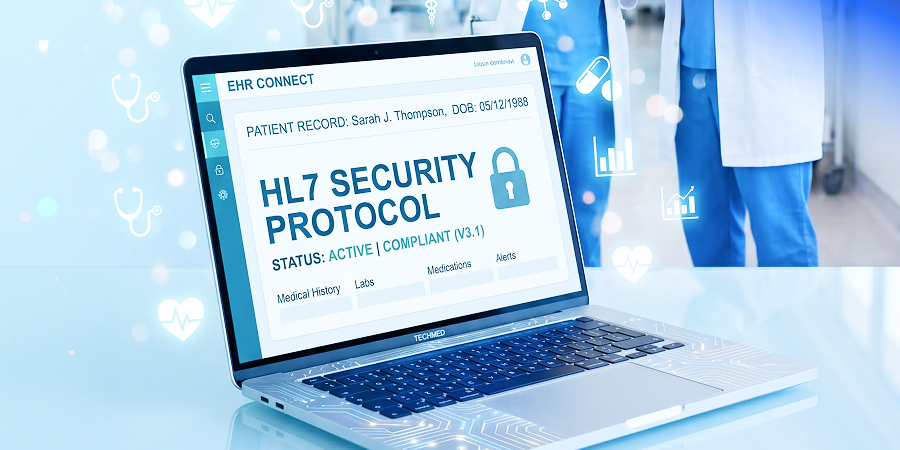
For device software regulated by the FDA, premarket cybersecurity requirements and an SBOM apply.
  • Section 524B: premarket cybersecurity plans meet FDA requirements for regulated device software.
  • SBOM: a software bill of materials tracks components across the device lifecycle, cross-linked to our medical device practice.

Assume nothing

A zero-trust approach verifies every device and request, so trust is never assumed by location on the network.
  • HITRUST: security controls align with HITRUST and support compliance with healthcare regulations.
  • Monitoring: vulnerabilities are monitored and patched across the device lifecycle.
Image abstract 1 368
Who We Serve

Built for Everyone Deploying Connected Devices

Device makers, hospitals, and digital-health teams all build on IoT, and each comes with different devices and goals.
Medical device makers

Medical device makers

MedTech and device makers get connected-device software, medical device integration, and the FDA cybersecurity work regulated products require.
Hospitals and health systems

Hospitals and health systems

Hospitals build smart hospital infrastructure and asset tracking, and IoT adoption improves safety and operations across the healthcare environment.
Digital-health and healthtech

Digital-health and healthtech

Digital-health, wearables, and healthtech companies get the IoT platform and cloud engineering their connected healthcare products depend on.
How We Work

From Devices to a Live Platform

Each step builds on the one before it: integration makes data possible, data makes security testable, and security makes analytics trustworthy.
Step 1

Discovery

We map your devices, protocols, connectivity, and goals, and define whether any software qualifies as a medical device. This is where scope, architecture, and security requirements become clear, so IoT for healthcare development fits the devices it will carry.
Step 2

Device integration

We connect devices through the protocols they support, build gateways and edge where needed, and give every device an identity. Getting the integration of IoT devices right early is what keeps the rest of the platform stable as device count grows.
Step 3

Data pipeline

We build the ingestion, edge processing, and normalization that move device data to the cloud, mapping it to FHIR. This is the layer that turns raw telemetry into IoT data clinical and analytics systems can actually use.
Step 4

Security hardening

We apply device identity, segmentation, encryption, and access control, and address FDA cybersecurity where device software is regulated. Security is engineered into the architecture here, not added after the platform is live.
Step 5

Analytics and AI

With trusted data flowing, we add dashboards, reporting, and AI models for predictive alerts and anomaly detection. Insight now rests on connected, normalized device data rather than isolated feeds.
Step 6

Scale and support

We extend the platform to new devices and sites and support it over time, so IoT implementation in the healthcare setting keeps pace as your device fleet and use cases grow. The work continues past launch, because an IoT platform has to stay reliable and secure.
Technology Stack

The IoT Technology Stack

The right stack decides how reliably your devices connect and how far the platform scales.
AWS IoT Core
AWS IoT Core
Azure IoT
Azure IoT
Apache Kafka
Apache Kafka
MQTT
MQTT
AWS
AWS
Kubernetes
Kubernetes
Docker
Docker
Node.js
Node.js
Python
Python
PostgreSQL
PostgreSQL
FHIR
FHIR
HL7
HL7
Databricks
Databricks
and other
Cost Factors

What Drives Cost and Timeline

The cost of IoT healthcare software development depends on the devices and the depth of the platform, so it helps to know what moves the number.

Devices and connectivity

The number and type of devices, their protocols, and any hardware or sensors all shape the work. Many multi-vendor devices cost more than a single connected device.

Integration depth

Connecting devices through gateways and edge, and normalizing data to FHIR, adds engineering beyond a simple point integration.

Edge, cloud, and AI

Edge processing, a cloud data pipeline, and AI on device data each add scope. A single integration costs far less than a full IoT platform.

Security and compliance

The depth of security and any FDA cybersecurity work shape cost. A precise estimate follows a discovery phase that maps your devices and infrastructure.
Our Edge

Engineering Depth Across Device, Data, and Cloud

What sets our IoT healthcare software development company apart is engineering across the whole IoT stack, not just device apps.
check icon

Device integration

We handle multi-vendor connected medical device integration, from protocols and gateways to device identity, so a mixed device fleet works as one platform.
check icon

Data at scale

Real big-data and streaming engineering means IoT data pipelines that carry telemetry from thousands of devices without breaking.
check icon

Edge and cloud

We build edge-to-cloud on AWS IoT and Azure IoT, so processing happens where it should and the platform scales with device count.
check icon

IoT security

Device identity, segmentation, encryption, and FDA cybersecurity are engineered in, keeping a large attack surface defensible.
check icon

AI on device data

We turn device telemetry into predictive alerts and anomaly detection, governed so AI on health data stays reliable and safe.
check icon

Interoperability

FHIR and HL7 normalization moves device data into EHR and clinical systems, so IoT connects to the wider healthcare environment.
check icon

A senior partner

As a healthcare IoT software development company, we bring technology solutions that help healthcare organizations turn devices into results.
check icon

Near and offshore

A Miami HQ with delivery centers in Poland, Ukraine, Mexico, and Turkey gives you scale through managed delivery, team extension, or an ODC, backed by 300+ projects since 2017 and 96% client satisfaction.
Why Choose Us

Why Businesses Trust Us

logo
At Zoolatech, we create engineering teams for industry leaders across the US and Europe — teams that move fast, think big, and deliver strong impact.
96%
Client Satisfaction
300+
Successful Projects
2017
Year Founded
98%
Retention Rate
team sport photo
At Zoolatech, we create engineering teams for industry leaders across the US and Europe — teams that move fast, think big, and deliver strong impact.
Engineering Excellence. Every Time.
main award png (1)
At Zoolatech, we create engineering teams for industry leaders across the US and Europe — teams that move fast, think big, and deliver strong impact.
team sport photo
600+
Employees
Headquarters
USA
Development Centers
PL
UA
MX
TR

Building an IoT Solution

Tell us your devices and infrastructure, and we scope the build.
Questions You May Have

What is the Internet of Medical Things (IoMT)?

It is the network of connected medical devices, sensors, and software that collect, exchange, and act on health data, from wearables to connected hospital equipment. Because it carries health data and touches a medical device, IoT used in healthcare must be secure and, where applicable, meet FDA requirements.

How is IoT adoption changing healthcare?

By connecting devices to one platform, IoMT is changing healthcare delivery, so healthcare IoT devices automate routine tasks and give teams live data. Growing IoT adoption is one of the technology solutions changing how care is delivered.

What is the difference between IoMT and remote patient monitoring?

Remote patient monitoring is one use case of IoT in the healthcare setting, focused on tracking a patient’s health from home. IoT in healthcare is broader, also covering in-hospital devices, asset tracking, and the platforms that move device data to the cloud.

How do you integrate connected medical devices?

Devices are connected through the protocols they support, such as Bluetooth Low Energy, Zigbee, Wi-Fi, or cellular, often via a gateway. The integration of IoT devices handles device identity, ingests telemetry, and normalizes formats to FHIR before forwarding data to clinical systems.

What is a smart hospital, and how does IoT in healthcare enable it?

A smart hospital uses connected devices and IoT infrastructure to automate operations alongside care, including real-time location systems, asset tracking, and environmental monitoring. Healthcare IoT devices automate tasks like finding equipment and flagging problems, improving safety and efficiency.

How is IoT data processed at scale?

IoT platforms are built as streaming pipelines that ingest data from many devices at once, process time-sensitive work at the edge, and store and analyze IoT data in managed cloud services like AWS IoT or Azure IoT. The architecture is designed for reliability and growth in device count.

How do you secure IoT and connected medical devices?

Secure IoT starts in the architecture: devices get unique identities and authentication, networks are segmented, and data is encrypted in transit and at rest. For FDA-regulated device software, a software bill of materials and Section 524B premarket cybersecurity requirements apply.

How do you handle authentication and permissions for healthcare data?

Access is role-based and audit-logged, so authentication and permissions for healthcare data access are enforced per user and device. This keeps healthcare data access controlled and supports compliance with healthcare regulations like HIPAA.

What kinds of devices and wearables does IoMT cover?

IoMT covers IoT devices and wearables such as heart and glucose monitoring sensors, connected hospital equipment, infusion pumps, imaging systems, and asset tags. Iot healthcare devices are integrated so their data flows securely into the platform and, where relevant, the electronic health records.

Do you handle custom healthcare IoT solutions development end to end?

Yes. We build custom healthcare iot solutions and custom iot healthcare software development shaped around your devices, so healthcare iot solutions development and healthcare iot app development fit your systems rather than a fixed product.

How is IoT in the healthcare industry supporting providers?

IoT for healthcare applications helps healthcare organizations and helps healthcare providers to track equipment, patients, and data in real time. By providing healthcare teams with connected data, IoT implementation in the healthcare industry improves the efficiency of healthcare and supports better healthcare delivery.

How much does IoT healthcare software development cost?

Cost depends on how many and what kind of devices are involved, the connectivity, integration depth, edge and cloud needs, and how much AI and security the solution requires. A single connected-device integration costs far less than a full IoT platform, and a precise estimate follows discovery.

Is IoT software a medical device?

Sometimes. If software only collects or displays device data for general operations, it usually is not regulated, but if it interprets data or controls an iot medical device, it may qualify as Software as a Medical Device and need an FDA pathway.