







Quick Summary
- There are three integration methods and PCI compliance separates them: hosted and direct post keep card data off your servers, while the integrated method requires full PCI status.
- Fees cluster tightly at $0.30 plus 2.9% across Stripe, Authorize.net, and Amazon Pay, with PayPal charging 3.9% on international transactions.
- Only Authorize.net charges to start, at $49 setup plus $25 a month, so integration cost is mostly labour rather than licence.
- Reach is the argument for adding PayPal alongside cards: 438 million users, 87% of online buyers, and an average balance of $485 already sitting in the account.
- The gateway market is projected to grow from $18.2 billion in 2020 to about $34.5 billion by 2026, and building your own gateway only makes sense at large volume.
Choosing a payment gateway for an e-commerce business is one of those major decisions that impacts your bottom line in many ways.
That’s because different online payment gateway systems have varying processing times, currencies & countries serviced, transaction fees, platform compatibilities, and payment methods.
Online payment terminology is rather complicated, reflecting the insanely sophisticated interconnections among the players in the payment market.
If you need to wrap your head around a merchant account, payment processor, debit cards, electronic checks, payment gateways, and other PayPal’s of the world – pour yourself a brutally strong cup of coffee and stick around.
Types of Online Payments (EFT or Electronic Funds Transfer methods)
E-ccommerce payment options matter for the customer, giving them the flexibility of using their preferred one. The more e-commerce payment methods an online store offers to its clients, the more clients it will be able to attract & convert.
Credit cards
(Funds go directly from a bank account of a buyer to a bank account of a seller.)
(The credit card issuer charges the buyer, who pays according to a schedule and terms set by their credit card issuer, while the card issuing bank pays the seller.)
Debit cards
(Cash, previously deposited by a user into the account, goes directly from the bank account of a buyer to a bank account of a seller.)
PayPal
(Money previously deposited to PayPal by a user with registered account is transferred to the seller’s account with a transaction fee applicable.)
E-checks
(Not a widespread method of payment. E-checks are a digital form of the archaic paper checks. Automated Clearing House /ACH/ are used to direct funds from a buyer’s account into the seller’s account. Due to the use of ACH for fund transfer, instead of the more expensive card networks, the transaction fees are lower.)
Wire transfer or bank transfer
(This method is widely used in Europe for bigger purchases when funds go directly from a buyer’s account into a seller’s account.)
Mobile payments
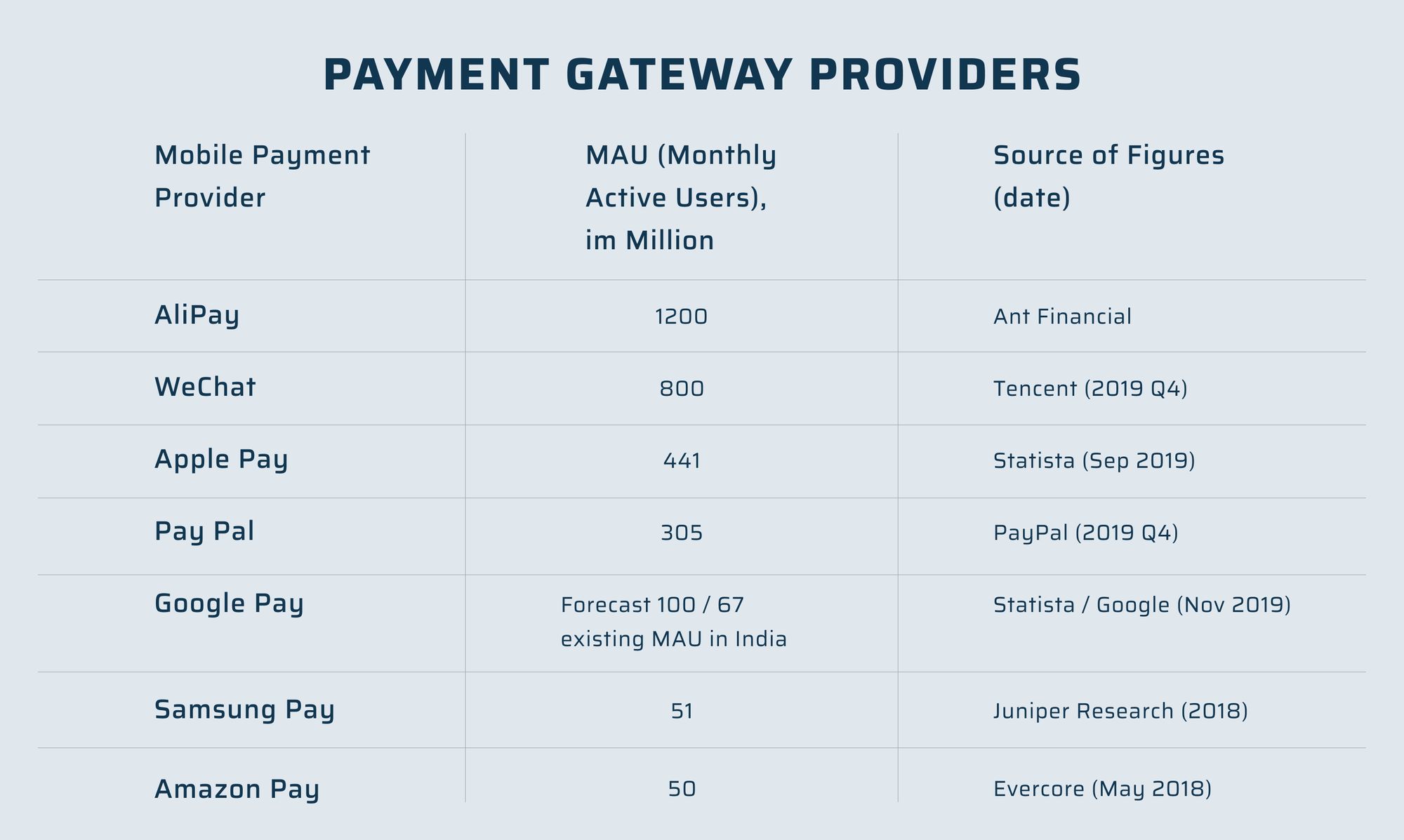
(A fast-growing segment with the expansion of AliPay, Apple Pay, and Google Pay. Mobile payments eliminate the need to take your wallet out. They work similarly to the way debit cards do, but the user needs to get an account with the mobile payment service, and their personal information will be attached to an e-wallet in their mobile device. This service is often referred to as digital wallet or e-wallet.)
What Is a Payment Gateway?
Payment gateway (PG) is a provider of the software service that enables a fund transfer authorization between an e-commerce merchant and a client, charging a percentage of the transaction’s value. The Gateway is also responsible for securing the details of the chosen payment method (for example, encrypting the credit card).
Now explained further in simple English:
A payment gateway provider is a service that acts as a mediator between an e-commerce shop and a bank, using its payment processor. It takes responsibility for authorizing your customer’s payments into your accounts, affixing its seal of approval to a transaction. It also ensures the payment details are secure throughout the process.
Because there is not much due diligence in verifying the merchant’s reliability, some Payment Gateway providers freeze accounts, and transaction fees can reach up to 3%.
Payment gateway integrations are provided by companies like Stripe, PayPal, and Authorize.net.
The Difference Between a Payment Gateway and a Merchant Account
It’s now time to understand the difference: Payment Gateway vs. Merchant account.
A merchant account is a special bank account provided to an e-commerce business based on a thorough background check, which includes checks of the website, credit history, T&Cs, procedures, compensation plans, and even the physical availability of inventory and services offered.
Getting a merchant account is a more complex procedure than simply integrating a payment gateway, as it allows a business to then accept payments, bypassing the payment gateway as an option. A retailer isn’t required to have a merchant account in order to use most of the payment gateway companies. A regular business account will suffice.
Payment Gateway Integration Methods
Hosted solution
In a hosted gateway environment, the customer is redirected away from your e-commerce website onto the payment provider’s site. This is a great option for small businesses, as they don’t need to be PCI compliant.
It is not an optimal solution for bigger players, as it lowers conversion rates and decreases brand credibility.
Direct post integration
This is a method that’s similar to the hosted solution because users don’t need to be PCI compliant, as the data still is not stored on their servers, but rather instantly goes to the payment gateway and processor after a client clicks “Buy.”
Even though in this case the client never leaves your website, the Direct Post solution is not entirely secure.
Integrated method (for PCI-compliant e-commerce)
This method provides full control and total responsibility because the company keeps all the credit card data on its servers. It allows for lots of flexibility in terms of customization, but involves significant investment in terms of obtaining PCI-compliant status and maintaining and securing all the data.
Recommended for medium-sized and large e-commerce merchants.
How to Integrate a Payment Gateway for Eccommerce
Payment gateway development solutions are all different and depend on a myriad of factors. Lets’ spell out the main steps an entrepreneur needs to consider:
- Understand whether your business can operate with a payment gateway integration solution that does not require your own website to be PCI-compliant. Basically, unless you are a big e-commerce operation, you can go with hosted or direct post integrations.
- Compare the characteristics of the best e-commerce payment gateways in terms of:
- Currencies serviced
- Countries supported
- Supported credit cards (Visa, Master Card, AmEx, etc)
- Fee structure:
- Setup fee (Authorize.net charges $49)
- Monthly fee (PayPal Pro & Authorize have them)
- Local & International Transaction fees (they vary from 2 to 3% in the industry)
- Chargeback
- Payment methods available (ACH, Visa Checkout, WeChat, Apple Pay, etc)

3. Check for compatibility with your website platform, once you have shortlisted the best fitting solution for your business.
4. Decide on the method of integration (Hosted, Direct Post, or Integrated – remember, you need to be PCI compliant in the latter case).
5. See if you need to apply for a merchant account given your chosen way of integration and your provider, or if a regular business account is OK. The answer will depend on the country of residence and other factors.
6. Apply for a merchant account if you have chosen the payment gateway for an e-commerce website that needs one.
7. Obtain PCI DSS compliance if your chosen provider and method of integration calls for one.
8. Google search “Payment Gateway X + Developer” (eg.: PayPal developer) to access full documentation on how to integrate your selected solution with your website in line with the chosen method of integration and your website’s technical parameters.
9. Follow the instructions of your chosen payment gateway solution that are specific to your website and integration method.
Best Payment Gateway Providers
PayPal
PayPal currently has 438 million users, and a massive 87% of all online buyers use this payment system.
Not having PayPal integrated with your e-commerce website is a loss for a merchant, as so many people have some cash in their PayPal accounts (with the average PayPal user having $485 in their account).
This is why many entrepreneurs include PayPal as an additional payment gateway, in addition to credit cards.
The PayPal fee structure is on the expensive end of the spectrum in the industry, but it comes with huge brand awareness, amassed loyal clients, and top security features.
- USA transactions will be charged at 2.9%
- International Transactions are charged at 3.9%
- Additionally, every PayPal transaction worldwide has a fixed charge of $0.30.
- No setup fees are charged by the company.
Stripe
With millions of users, 14 offices around the world, and 2,500+ employees, Stripe is quickly gaining popularity and increasing its share of the PG market pie.
A highly customizable solution with lower fees is available through an API.
Stripe charges the same fees worldwide as PayPal does for the USA market:
$0.30 + 2.9% transaction fee. No setup fees apply.
Authorize.Net
The veteran of the payment gateway market, Authorize.net has a state-of-the-art fraud detection system and a plugin that allows you to accept payments without SSL or PCI compliance.
It’s the only solution on the market that has a set-up fee of $49 with another $25 monthly fee. Transaction fee-wise, it costs the same as Stripe: $0.30 + 2.9%.
Amazon Pay
As part of of the biggest e-commerce engine in the world, Amazon Payments is the optimal payment gateway for Amazon merchants.
Having amassed 50 million users, the company services a range of credit cards, like Visa, MasterCard, Discover, AmEx, and Diners Club.
IF…
the merchant has an American billing address. This limitation also explains why the service is slower to gain traction.
Amazon Pay transaction fees are on par with Stripe and Authorize.Net at $0.30 +2.9%.
Google Pay
With over 600 million users worldwide, Google Pay grew by more than double in the two years since 2018 when it had 39 million users.
It was in 2018 that the company consolidated all of its payment solutions under the single umbrella of Google Pay.
This contactless payment platform charges transition fees of 2.9%. The digital wallet is available on Android, Web, and iOS.
The Cost of Payment Gateway Integration
When it comes to payment gateways and e-commerce, integration cost is a big concern for many smaller businesses.
While there is no definitive answer on how much it will cost to set up a payment gateway, the general rule of a thumb is this:
Of the solutions we reviewed here, the set-up fee of $49 is charged only by Authorize.net, with major solutions providing all the documentation needed for integration free of charge.
So your integration price will depend on the scope of work performed by hired specialists to get your:
- Merchant account
- SSL certificate
- Privacy Policy set up
- PCI certification
- Systems integration performed according to provided guidance and documentation
Custom Payment Gateway Development
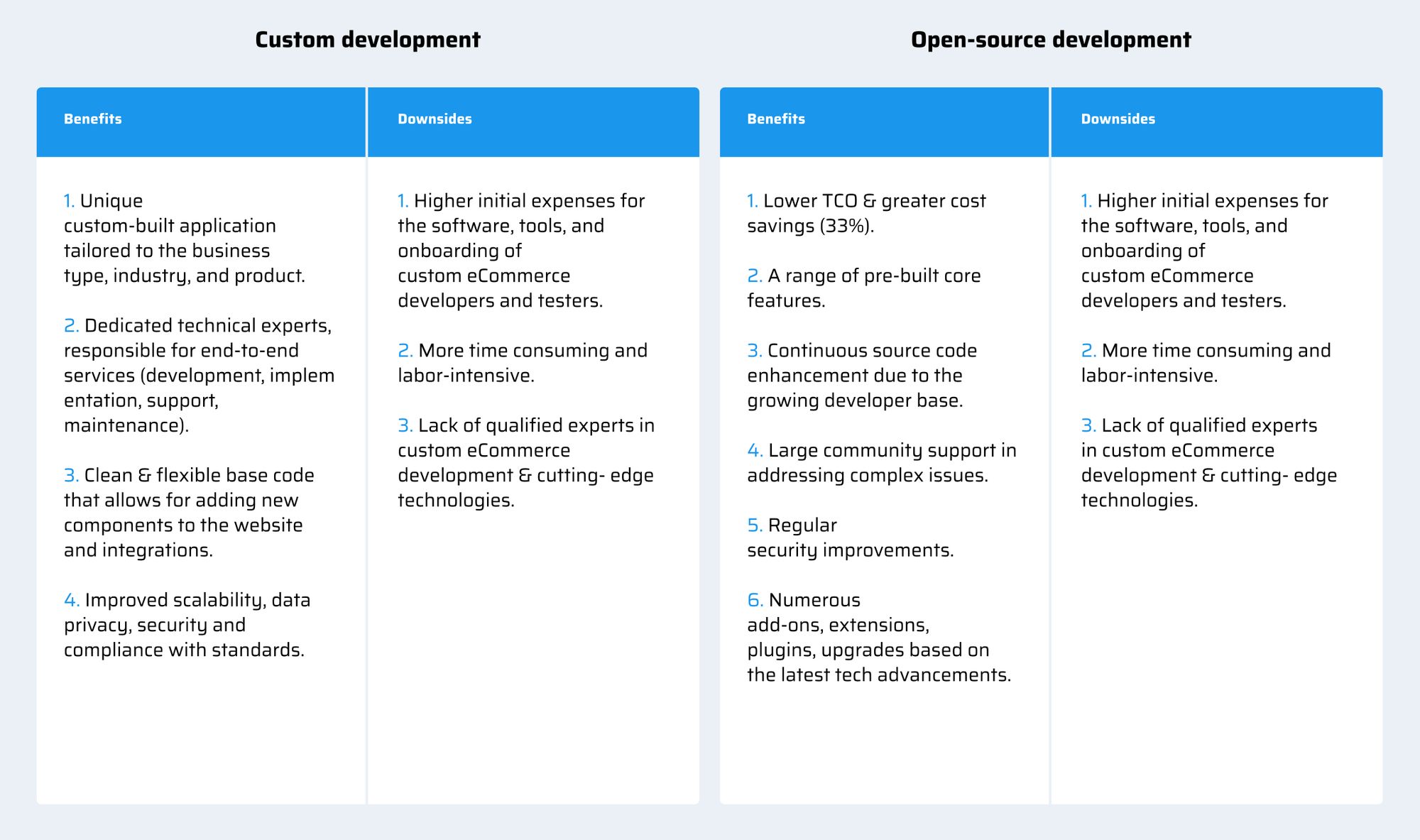
While ready-made solutions are secure, fast to adopt, and have customer service to deal with any friction along the way, custom payment gateway development is the option that provides unparalleled customization and branding opportunities.
The advantages of the custom gateway payment solution include lower processing fees, unlimited customization features, and a wide choice of payment methods.
Admittedly, due to the specialized expertise required to custom create a payment gateway for a website, the service is mostly suitable for bigger e-commerce entities.
Looking for E-Commerce Payment Gateways Experts?
Zoolatech specializes in custom website and app development for e-commerce. We know how to add a payment gateway, which one suits your business model best, and how to make it work seamlessly for your online store.
No rush, though. Check out our portfolio. See how we can help with your retail app development needs.
Our team will be happy to provide our best quote based on your requirements in one business day. No obligations. You decide.
Conclusions
Grand View Research and other major analysts estimate that the Payment Gateway market revenue will grow from $18.2 billion in 2020 to approximately $34.49 billion by 2026, on its way to surpassing $132.2 billion by 2030.
That’s what we call “potential” right there.
PayPal’s total payment volume (TPV) has more than doubled in just five years, reaching a record $1.68 trillion for the full year 2024 and projected to exceed $1.9 trillion by the end of 2025.
This confirms the obvious: online sales are no longer in a “toddler stage” but have entered a dominant growth phase, with global e-commerce sales expected to hit $6.88 trillion in 2026. Retail is rapidly evolving as digital transactions now account for over 21% of all retail purchases worldwide.
While Payment Gateway’s future is bright, so is the future of e-commerce at large. It’s time to join this success story.
Found the article useful?
Thinking about payment gateway integration for an upcoming project?
Contact Zoolatech to discuss your goals and get expert guidance when you’re ready to move forward.