







Quick Summary
- Enterprise QA partners fall into 4 types: global IT services firms, engineering firms, independent quality engineering specialists, and platform or crowdtesting companies.
- Everest Group assessed 52 enterprise QE providers and 21 QE specialists in 2025. 6 of the 13 companies in this list appear in neither assessment.
- The World Quality Report 2025–2026 found that 89% of organizations pilot or use generative AI in quality engineering, while 15% use it across the whole company.
- Ask where the test code will live, how tests fit into your release pipeline, and who reviews AI-generated changes.
- If your developers already own automated tests, focus your search on the capacity or specialist skills your team needs.
Each group solves a different problem, so the right choice depends on what you need from a testing partner. To build this list, we started with the QA testing companies that appear most often in popular rankings, the Clutch directory, and the 2025–2026 reports from analyst firms Everest Group and Information Services Group (ISG). We kept 13 companies with verifiable testing work for large organizations and checked each one against the same 8 criteria in October 2026.
Each profile shows what the company does in testing, the evidence behind its claims, how it uses artificial intelligence (AI), and when it is a poor fit. We also checked whether each company says you keep the test code, because those tests stay in your product long after the contract ends.
After the profiles, you will find a side-by-side comparison table and a checklist of questions to ask every vendor before you sign.
By the end, you will know which type of partner fits your situation and which companies are worth a first call.
Top Software Testing Companies by Use Case
The top software testing companies by use case differ because each one is built for a different kind of testing work. The table below matches each of the 13 companies to the scenario where it fits best. Find the row closest to your project, then read that company’s profile further down.
| Use Case | Strong-Fit Company | Why It Fits |
|---|---|---|
| QA engineers inside your product teams, including regulated software | Zoolatech | QA engineers in your teams, automated validation, tests handed to your developers |
| Quality engineering inside large transformation programs | Accenture | Automated testing at scale, legacy and mainframe testing, own AI tools |
| Standard testing methods and SAP systems | Capgemini (Sogeti) | Its own TMAP method, SAP testing, testing of AI models |
| Regulatory compliance and testing AI systems at scale | Cognizant | Separate compliance testing line, AI Eval tool, 1,000+ clients |
| AI agents in testing for large engineering programs | EPAM Systems | AI agents that run tests, performance and security testing |
| Testing for healthcare and payment regulations, with a fast start | ScienceSoft | Pre-certification testing, start in 1–3 days |
| Long-term managed testing with a large team | a1qa | 1,100+ full-time QA engineers, testing across several vendors |
| Managed QA with one accountable owner | DeviQA | Dedicated QA owner, code in your repository from day one |
| Independent testing of AI and regulated systems | QualityAI | Only does testing, checks AI data, models, and behavior |
| Testing done only in the US, plus accessibility checks | QualityLogic | 150+ experts in the US, accessibility audits and reports |
| Setting up a testing center of excellence | TestingXperts | Builds and runs your testing center, then hands it over |
| Automated tests of full user flows, as a service | QA Wolf | Guaranteed test coverage, standard Playwright tests you can export |
| Testing on many devices, payment methods, and languages | Testlio | 600K+ devices, 800+ payment methods, 150+ countries |
Quick answer
If you want QA engineers working inside your product teams, consider Zoolatech and EPAM Systems. Zoolatech’s MasterControl case study shows how its team transferred test development ownership to the client’s developers.
For quality programs that cover many applications and vendors, look at Accenture, Capgemini (Sogeti), and Cognizant. Capgemini is a natural pick if your business runs on SAP, and Cognizant is strong in regulatory compliance and in testing AI systems. EPAM suits large engineering programs that want AI agents in testing, and ScienceSoft can start a compliance testing project within days.
Among independent specialists, a1qa reports 1,100+ full-time QA engineers, and DeviQA gives you one dedicated QA owner with all code in your repository.
QualityAI tests AI and regulated systems as an outside party. QualityLogic keeps all testing in the US, and TestingXperts helps you set up your own testing center.
Among test automation companies with their own platforms, QA Wolf guarantees test coverage and lets you export your tests at any time. Testlio tests your product on 600K+ devices, 800+ payment methods, and in 150+ countries.
Who This List Is For (and Who It Isn’t)
This list is for companies choosing an outside partner to run or strengthen their software testing over several years. A shortlist helps only if it matches the help you need, so start by checking whether your situation fits.
The list fits you if:
- You run a product company or an enterprise with roughly $100M or more in annual revenue.
- You need an external QA or quality engineering partner for work that lasts a year or longer.
- You build software for regulated industries, such as medical technology, life sciences, or finance, and your customers or auditors ask for test evidence.
The list is a poor fit if:
- You need a one-time test pass on a small app.
- You want to hire individual freelance testers.
- You are choosing a test automation tool.
Testing tools are a separate market with separate rankings. For example, the 2025 Gartner Magic Quadrant for AI-Augmented Software Testing Tools compares tools and leaves out service providers, such as the enterprise software testing companies in this list.
Our Methodology: How We Selected These Software Testing Companies
We selected these software testing companies in 3 steps.
First, we gathered the companies named most often in popular rankings, the Clutch directory of software testing companies, and recent analyst reports.
Then we kept the enterprise software testing companies whose work for large organizations we could verify, and we checked each one against the same 8 criteria.
The analyst reports we used are:
- Everest Group’s Enterprise Quality Engineering (QE) Services PEAK Matrix® Assessment 2025, which compares 52 providers and was published on November 13, 2025.
- Everest Group’s Quality Engineering (QE) Specialist Services PEAK Matrix® Assessment 2025, which compares 21 specialist providers and was published on October 29, 2025.
- The ISG Provider Lens AI-Driven ADM Services 2026 report for the U.S. from Information Services Group, which evaluates 59 application development and maintenance (ADM) providers across 6 categories and was released on September 24, 2026.
Of the 13 companies in this list, 7 appear in at least one of the 2 Everest Group assessments, and 6 appear in neither. For this reason, analyst recognition counts as one piece of evidence in each profile and never decides a company’s place on its own.
What a company needed to make the list
A company made the list only if it met all 3 conditions:
- Software testing or quality engineering is a named service on its own website.
- It shows work for large organizations through an analyst assessment, named clients on its site, or client reviews on a review platform.
- It publishes enough information for us to fill every part of its profile.
We capped the list at 13 companies so we could check every profile to the same depth. Other companies that meet these conditions appear in the Also Considered section.
How we marked each company
We didn’t add the results into one score. Prices, team sizes, and certificates come from the companies themselves, so a single number would look more precise than the data behind it.
For every criterion, each company got one of these marks:
- Evidence. A specific item you can check on the company’s site, its Clutch profile, or an analyst report.
- Evidence (one project). The item comes from a single case study, so it shows what the company did on that project.
- Claim. The company states it without verifiable details.
- Not stated. We did not find it on up to 3 pages of the company’s site or on its Clutch profile.
For each fact, we used up to 3 pages of the company’s website, its Clutch profile, analyst report pages, and press releases. We did not use paid directory placements, top lists written by other vendors, or Gartner Peer Insights ratings.
The 8 criteria we used
We based the criteria on public research. The test automation guide from DORA, the DevOps Research and Assessment program, shows that teams perform better when developers create and maintain the automated tests themselves.
The World Quality Report 2025-26 found that 89% of organizations pilot or use generative AI in quality engineering, but only 15% use it across the whole company. Capgemini, which appears in this list, published the report with Sogeti and OpenText.
The table below lists the 8 criteria. Each row shows what we looked for and why it matters for you, so you can use the same questions when you talk to vendors.
| Criterion | What We Looked For | Why It Matters |
|---|---|---|
| Test automation and ownership | Where test code lives, who owns the framework | Tests owned by developers keep the build working (DORA) |
| Release pipeline integration | Tests that block merges and releases when they fail | Developers get test feedback within minutes (DORA) |
| AI in testing, with human review | Named AI tools, people approving changes made by AI | Buyers judge AI changes by how well they are explained and reviewed (ISG) |
| Domain and regulatory experience | Named regulated clients, compliance or validation testing | Customers and auditors need evidence they accept |
| Vendor security | Certificates listed by the company and their scope | Data privacy is the top barrier to AI in testing (WQR) |
| Scale and delivery locations | Headcount stated by the company, delivery countries | Team size limits how fast your program can grow |
| Engagement models | Team extension, managed QA, testing centers, outcome-based work | Buyers expect measurable gains in release confidence (ISG) |
| Knowledge transfer and exit | Training, handover plan, standard tools | Your team must run the tests after the contract ends |
1. Zoolatech – Best for Embedded QA Engineers and Automated Validation for Regulated Software Vendors
Zoolatech is a software engineering company that builds quality into delivery for enterprise products that cannot afford failed releases. Founded in 2017 and headquartered in Miami, Florida, it has 600+ specialists in Poland, Ukraine, Mexico, and Türkiye. The company has completed 300+ projects, retains 98% of its clients, and maintains partnerships that last more than 4 years on average.
Zoolatech’s QA engineers and software development engineers in test (SDETs) join client product teams, work inside their release pipelines, and build tests the client’s developers can run and maintain.
The QA and test automation services Zoolatech offer include:
- Test automation.
- Manual testing.
- Functional testing.
- End-to-end testing.
- Native mobile test automation.
- Performance and security improvements.
- Usability testing.
- Cross-platform testing.
- Continuous testing in your release pipeline.
- Automated validation for regulated software.
- QA process assessment.
- QA team extension.
Case study: Cutting validation from weeks to minutes for MasterControl
MasterControl builds quality management software for regulated manufacturers, and its customers must prove that every software update works as intended. Validation relied on manual checks, so each cycle took weeks and carried a risk of human error. Old and new software ran side by side, and vendors had no automated way to produce the reports their customers needed.
Zoolatech built a framework that automates validation steps and reports the results as they complete. It handles existing and new configurations, so teams can repeat validation whenever something changes.
The results:
- Validation cycles dropped from weeks to minutes.
- Every run now produces a standard validation report ready for audit.
- Teams release and configure updates without long revalidation delays.
Case study: Moving test ownership to MasterControl’s developers
On another MasterControl project, Zoolatech built a test automation framework with Playwright, Gatling, and Sonar and connected it to the client’s GitHub pipelines. The team then trained application teams to write and maintain their own tests.
The results:
- MasterControl’s developers now own their test development.
- Testing bottlenecks shrank, and developer productivity improved.
- Testing cycles became faster, and releases sped up.
For Okta’s Auth0 platform, Zoolatech’s QA automation specialists expanded automated application programming interface (API) and browser testing.
At Kin Insurance, Zoolatech’s QA engineers and SDETs worked inside Agile product teams on regression testing, defect investigation, and automation.
| Factor | Zoolatech |
|---|---|
| Best for | Enterprises that want QA inside product teams and tests they keep |
| Biggest advantage | Tests your developers own, validation reports ready for audit |
| Keep in mind | Broader engineering scope; no device lab or crowdtesting; $100,000+ Clutch minimum |
Why enterprises choose Zoolatech for QA
Enterprises choose Zoolatech because we treat quality as part of engineering and leave it in your team’s hands when the work is done. These principles shape every QA engagement we run:
- Extreme ownership. We take responsibility for each release’s outcome, so our engineers raise risks early and bring a proposed fix with every problem.
- Senior teams. More than 60% of our engineers are senior, so they can work with your architects and product leads from the first week.
- Tests that stay with you. We build tests in your repository and release pipeline, then train your developers to run and extend them.
- Transparent delivery. Every engagement has a dedicated delivery manager, a live risk register, and a formal QA checkpoint before each release, so you see quality risks before they reach users.
- Experience in regulated software. We have built validation and testing systems for manufacturing software regulated by the U.S. Food and Drug Administration (FDA), where every change needs evidence an auditor accepts.
- Long-term partnerships. Our engagements usually run 1 to 5 years, with teams that grow from 2 to 50+ engineers as your roadmap expands.
Global IT Services Firms With Quality Engineering Practices
Global IT services firms are a strong choice when your quality program spans multiple applications, vendors, and regions. They lead major analyst assessments and can staff large programs quickly. Quality engineering is one practice inside a much larger company, so ask who will work on your program and how much testing experience that team has.
2. Accenture – Best for Quality Engineering With AI Inside Large Transformation Programs
Accenture is one of the world’s largest IT services firms, with about 814,000 employees and $74.2B in revenue for fiscal 2026, which ended on August 31, 2026. Quality engineering is part of its cloud and application transformation business. The company describes this practice as built around AI and automation.
The quality engineering services Accenture offers include:
- Test automation.
- Quality standards across the software lifecycle.
- Performance testing.
- Security testing.
- Legacy application testing.
- Mainframe testing.
Everest Group named Accenture a Leader in its Enterprise Quality Engineering (QE) Services PEAK Matrix® Assessment 2025. ISG’s 2026 U.S. report lists Accenture as a Leader in 3 of the study’s 6 quadrants, although the release does not say which ones. Accenture does not publish minimum project sizes or rates, and we found no Clutch profile.
For AI in testing, Accenture uses GenWizard, its generative AI platform for technology delivery.
Case study: Cutting testing costs for a media company
A media company tested its software mostly by hand, and each team followed its own approach with no common standards. Accenture set up a global quality engineering team for the client and added test automation across its testing work.
Accenture puts the savings at about $5M a year for the client.
| Factor | Accenture |
|---|---|
| Best for | Quality programs inside large transformation projects |
| Biggest advantage | Massive scale, legacy and mainframe testing |
| Keep in mind | Testing is one practice in a huge firm, no public pricing |
3. Capgemini (Sogeti) – Best for Standardized QE Methods and SAP Business Assurance
Sogeti is Capgemini’s brand for quality engineering and testing. Founded in 1967, the Capgemini group has more than 420,000 people in 50+ countries. Sogeti developed TMAP, its own body of knowledge on testing for agile and DevOps teams.
The quality engineering services Sogeti offers include:
- Digital quality engineering.
- Agile quality engineers inside client teams.
- Test automation with AI support.
- Test environments through its Quality Service Center.
- Quality dashboards through its Quality Management Office.
- SAP Business Assurance.
- AI system testing.
Everest Group named Capgemini a Leader in its Enterprise QE Services PEAK Matrix® Assessment 2025, and ISG’s 2026 U.S. report lists it as a Leader in 3 of 6 quadrants. Clients named on its quality engineering page include Liberty Latin America and the Dutch Tax and Customs Administration (Belastingdienst). We found no Clutch profile.
Sogeti tests AI and large language model (LLM) systems with TMAP, which covers 6 quality characteristics and 64 predefined AI risks. Its Gen AI Amplifier adds generative AI tools to software and quality engineering work.
Case study: Shorter release cycles for a US health insurer
A US health insurance company had 15+ Scrum teams, and each team tested differently, with no common standards. Testing before each production release took 10 to 15 weeks, and defects still often reached production.
Sogeti added a shared testing layer with common standards, regression and integration testing, an automation framework, and quality gates before user acceptance testing.
After the change, testing costs fell by 48% and speed to market improved by 70%, according to Sogeti’s client story. Today, 70% of regression testing runs automatically.
| Factor | Capgemini (Sogeti) |
|---|---|
| Best for | Standard testing methods across large portfolios and SAP systems |
| Biggest advantage | Own TMAP method, SAP testing, AI system testing |
| Keep in mind | Heavy setup for a single product with a small team |
4. Cognizant – Best for Regulatory Compliance Assurance and Testing AI Systems at Scale
Cognizant has 356,700 employees and reported $21.1B in revenue for 2025. Its quality engineering and assurance practice serves 1,000+ clients across industries.
The quality engineering and assurance services Cognizant offers include:
- Continuous testing on its Flowsource platform.
- AI system testing.
- Regulatory compliance testing.
- User acceptance testing.
- Cloud platform testing.
- Migration testing.
- Mobile testing.
- Internet of Things (IoT) testing.
- Performance testing.
- Chaos testing.
- Security testing.
- Accessibility testing.
- Quality advisory.
Everest Group named Cognizant a Leader in its Enterprise QE Services PEAK Matrix® Assessment 2025. Cognizant says it was placed highest among the market leaders. Cognizant also reports Leader positions in ISG’s 2025 Application Quality Assurance Services study, and ISG’s 2026 U.S. report lists it as a Leader in 3 of 6 quadrants. Client examples on its quality engineering page are anonymous, and we found no Clutch profile.
Cognizant runs its quality engineering on Flowsource, an engineering platform with built-in AI. Its AI Eval service tests AI models, agents, and features before and after release.
Case study: Faster regression testing for a financial services client
A financial services client relied on a traditional testing setup that slowed down its releases. Cognizant moved the client to a product engineering model with AI-based test automation and retrained its testers as software development engineers in test.
Cognizant’s published results show regression testing running 98% faster and lead times 77% shorter.
| Factor | Cognizant |
|---|---|
| Best for | Regulated industries, testing AI systems at scale |
| Biggest advantage | Separate service lines for compliance, AI, and performance testing |
| Keep in mind | Anonymous client examples, built for large budgets |
Software Engineering Firms With QA Built Into Delivery
Engineering firms with QA built into delivery are a good choice when you want quality engineers on your product teams instead of a separate testing department. Unlike pure QA companies, these firms offer testing as one of several services, so check how deep their QA team is and how they hand tests over to your developers. Zoolatech, profiled above, also works this way.
5. EPAM Systems – Best for Agentic QA Inside Large Engineering Programs
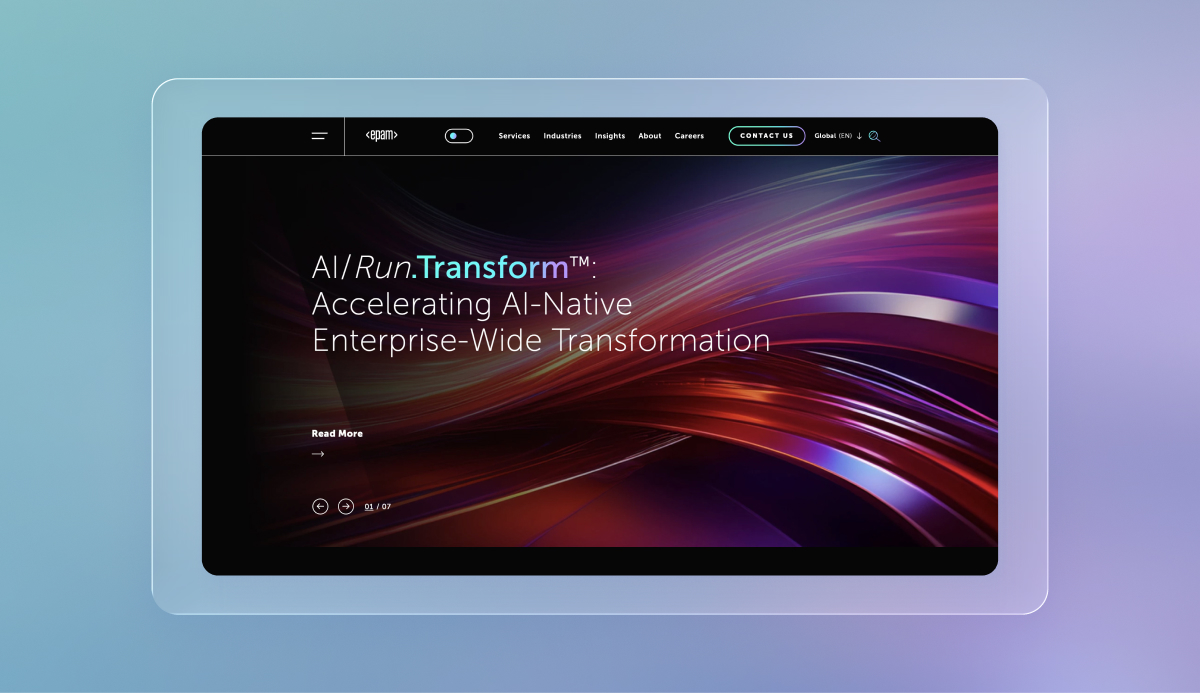
EPAM Systems is a software engineering company founded in 1993 in Princeton, New Jersey, and listed on the New York Stock Exchange since 2012. It has 62,850+ employees in 55+ countries and regions and works with 345+ Forbes Global 2000 companies. Clutch lists its headquarters in Newtown, Pennsylvania.
The quality engineering services EPAM offers include:
- Functional testing.
- Regression testing.
- Performance engineering.
- Security testing.
- Test data management.
- Test automation.
- Test orchestration.
- Quality checks based on monitoring data.
- Accessibility testing.
- Crowdtesting.
EPAM’s quality engineering page cites Gartner’s 2020 Magic Quadrant for Application Testing Services and a Forrester Wave from Q3 2021, and EPAM was not part of Everest Group’s 2025 QE assessments. Clients named on the page include Edward Jones and Epic Games. On Clutch, EPAM has a 5.0 rating from 1 review, with projects starting at $100,000 and rates of $150–199 per hour.
EPAM Agentic QA uses AI agents to map user flows, generate tests, and keep the regression suite up to date.
The company says it is 10x more efficient than manual testing and saves 50% of manual effort.
Case study: Faster regression testing for a Canadian retailer
A Canadian retail company was moving its old store management system to a modern technology stack. According to the ReportPortal case study, regression runs took 24 hours, and about 1 in 10 attempts to aggregate test results failed, forcing a full regression rerun. Repeated failures delayed weekly releases by 1 day.
EPAM connected the test framework to ReportPortal, a test reporting platform it sponsors, so testers could see logs and screenshots in one place and spot unstable tests from their history.
In the ReportPortal case study, the regression run shrinks from 24 to 12 hours. Test analysis goes from 12 to 4.2 hours, and automation stability climbs from 85% to 96.5%.
| Factor | EPAM Systems |
|---|---|
| Best for | Large engineering programs that want AI agents in testing |
| Biggest advantage | Huge engineering team, wide range of testing services |
| Keep in mind | Highest Clutch minimum and rates in this list |
6. ScienceSoft – Best for Compliance Testing With a Fast Start
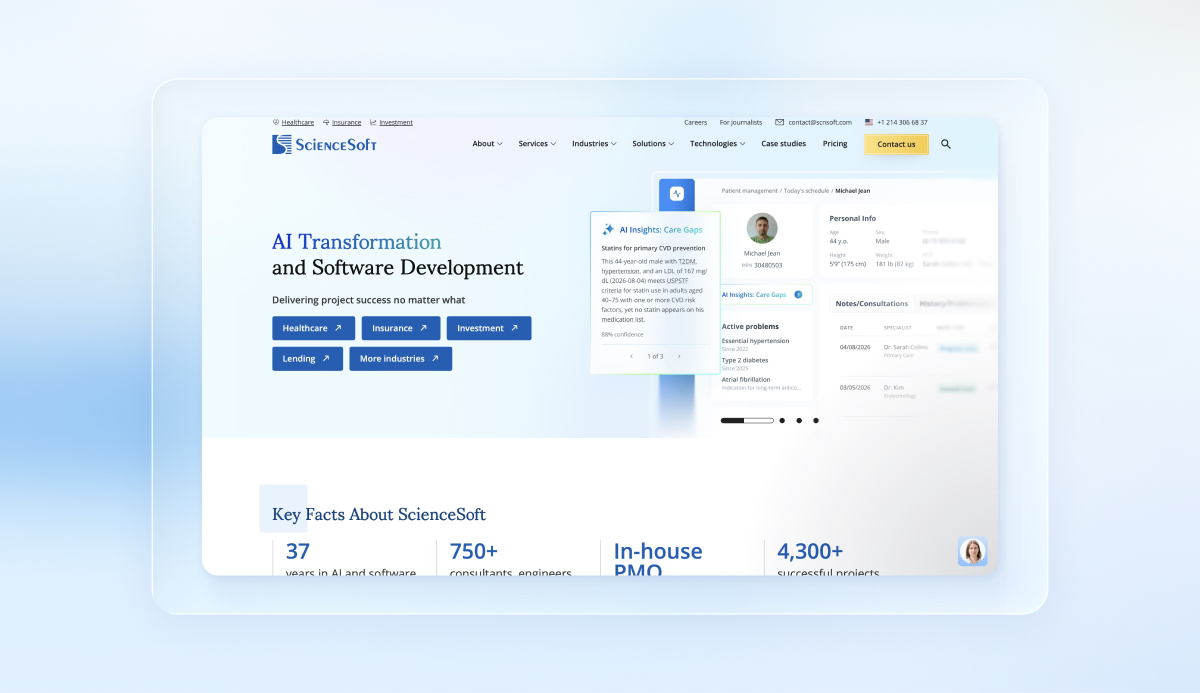
ScienceSoft is an IT consulting and software development company headquartered in McKinney, Texas, with 37 years of testing experience. Its testing practice has 75+ professionals, including test engineers certified by the International Software Testing Qualifications Board (ISTQB). Clutch lists the company size as 250 to 999 employees.
The software testing services ScienceSoft offers include:
- QA outsourcing.
- Managed testing.
- Team augmentation.
- QA consulting.
- Test automation.
- Functional testing.
- Integration testing.
- Regression testing.
- Performance testing.
- Security testing.
- Penetration testing.
- Usability testing.
- Compatibility testing.
ScienceSoft prepares products for certification under the Health Insurance Portability and Accountability Act (HIPAA), Good Automated Manufacturing Practice (GAMP), and the Payment Card Industry Data Security Standard (PCI DSS).
Its site lists ISO 9001 and ISO 27001 certificates, and its experts can start within 1 to 3 days. On Clutch, ScienceSoft has a 4.8 rating from 43 reviews, with projects starting at $5,000 and rates of $50–99 per hour.
ScienceSoft’s testing page does not describe AI tools used in its testing work.
Case study: Testing mental health apps through a 3-year modernization
A US nonprofit focused on children’s and teenagers’ mental health was rebuilding its old web and mobile apps. It needed a partner to set up the entire QA process and test new features over several years.
ScienceSoft built a test plan around continuous integration, automated end-to-end smoke tests, and connected automated API tests to the release pipeline.
According to ScienceSoft’s case study, automated smoke tests cover 56% of functionality and run in 7 minutes, compared with 12 hours for manual testing. The company also reports 99% API test coverage and 50% faster releases.
| Factor | ScienceSoft |
|---|---|
| Best for | Healthcare and payment compliance testing with a fast start |
| Biggest advantage | Start in 1–3 days, low project minimum |
| Keep in mind | Smaller testing team, no AI testing tools described |
Independent Quality Engineering Specialists
Independent quality engineering specialists are the right choice when you want an outside check on the code your teams or other vendors write. These QA companies, often called third-party software testing companies, focus only on testing.
Their size ranges from 150 to well over 1,000 QA engineers, so match the team size and delivery locations to your program.
7. a1qa – Best for Long-Term Managed Testing With a Large Full-Time QA Bench
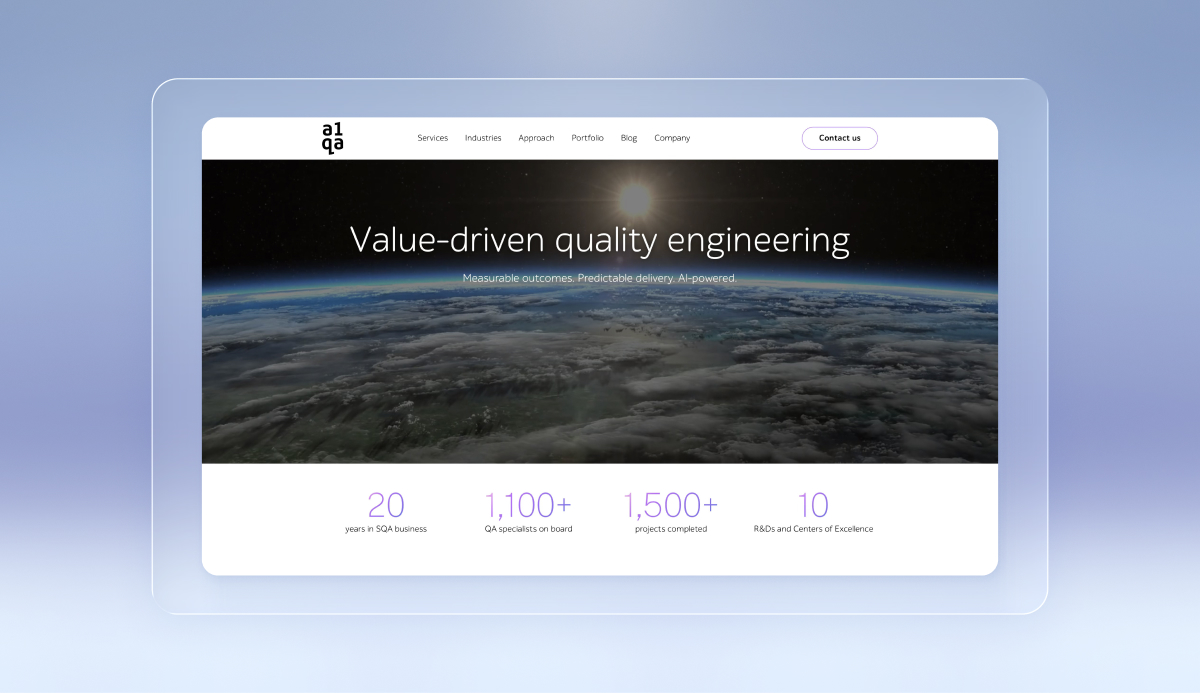
a1qa has worked in software testing since 2003 and has 1,100+ full-time QA engineers. The company has completed 1,500+ projects for 800+ clients from 39 countries, with offices in Decatur, Georgia, and London.
The software testing services a1qa offers include:
- Managed testing.
- Team augmentation.
- QA consulting.
- Test automation.
- Regression testing.
- Performance testing.
- Cybersecurity testing.
- Accessibility testing.
- Migration testing.
- User acceptance testing.
- Pre-certification testing.
- QA across several vendors.
Everest Group named a1qa a Major Contender in both of its 2025 quality engineering assessments, for enterprise QE services and for QE specialist services. a1qa lists ISO 9001:2015, ISO 27001:2022, and ISO 14001:2015 certificates on its company page. On Clutch, it has a 5.0 rating from 24 reviews, with projects starting at $10,000 and rates of $25–49 per hour.
For AI in testing, a1qa offers AI-powered test automation, predictive test planning, and AI-generated test data.
Case study: Halving release decision time for a grocery retailer
A large grocery retailer kept a regression suite of about 5,000 tests, and each release decision took about 2 working weeks. Slow test setup, repeated runs of similar tests, and manual sorting of failures made every cycle longer.
a1qa used an AI model to draft test cases and test data, with QA engineers reviewing every draft before use. The team also replaced slow interface setup with faster API steps and added automatic sorting of failed tests.
According to a1qa’s case study, a release decision in the pilot area now takes under 1 week instead of 2, and test setup on the converted tests is more than 30% shorter.
| Factor | a1qa |
|---|---|
| Best for | Long-term managed testing with a large team |
| Biggest advantage | 1,100+ full-time QA engineers, low entry price |
| Keep in mind | An older ISO 27001:2013 badge still appears, so ask for the current certificate |
8. DeviQA – Best for Managed QA With a Dedicated QA Owner and IP Ownership From Day One
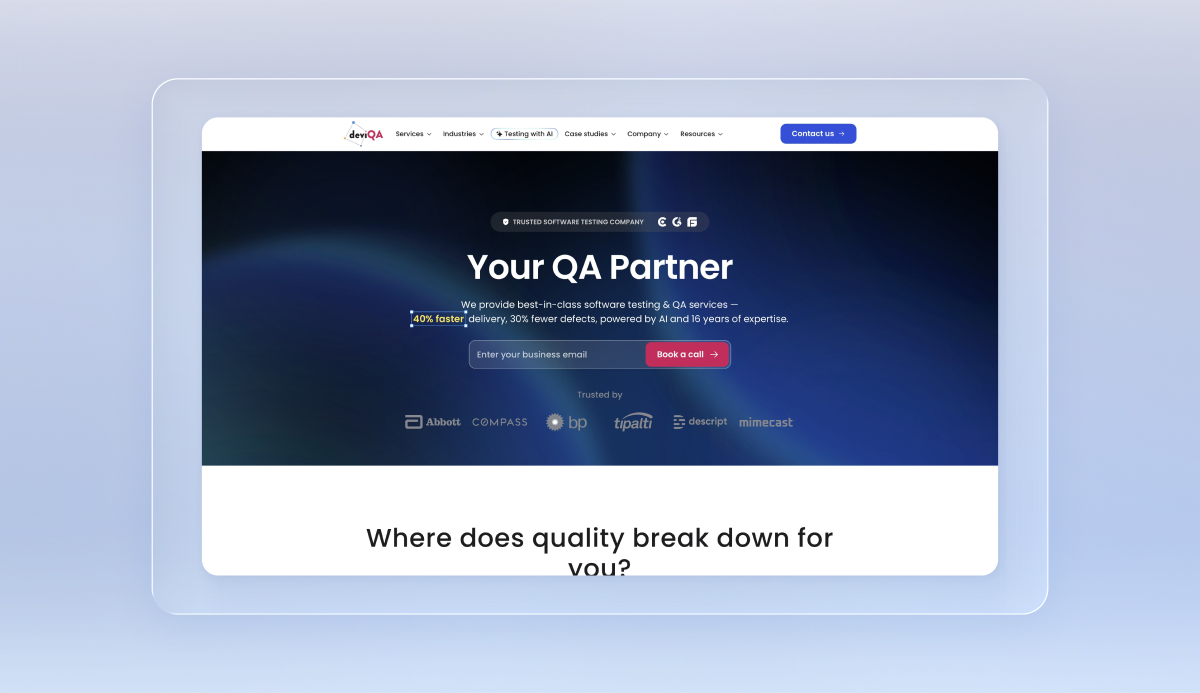
DeviQA has provided software testing services since 2010 and has 300+ QA engineers. Clutch lists its headquarters in Warsaw. The company serves clients in the US, Europe, the UK, Canada, the Middle East, and Australia.
The QA services DeviQA offers include:
- Managed QA.
- Dedicated QA teams.
- Team augmentation.
- Test automation.
- Manual testing.
- API testing.
- Load testing.
- Mobile testing.
DeviQA gives each managed client a dedicated QA owner who is accountable for what ships. The company says you own all intellectual property (IP) it creates from day one, and all code goes to your repository. Its site lists ISO 9001:2015, ISO/IEC 27001, and ISO/IEC 20000-1 certificates and names clients such as Abbott, BP, Mimecast, Tipalti, and Compass.
DeviQA builds self-healing test suites that adapt to interface changes, and the company says they cut manual intervention by 70%. On Clutch, it has a 5.0 rating from 35 reviews, with projects starting at $5,000 and rates of $25–49 per hour.
Case study: Cutting regression testing time for Compass
Compass runs a real estate platform with a web-based CRM for agents and their clients. Regression testing took 7 days, automated end-to-end tests ran for 40+ minutes on each code change, and test cases covered only 50% of the application.
DeviQA placed QA engineers with Compass’s development teams, built a custom API testing framework, and connected tests to the CircleCI pipeline.
DeviQA’s numbers for the project start with regression testing, which now takes 2 days instead of 7. Test runs on each code change dropped from 40+ to 10 minutes, and test case coverage grew from 50% to 85%.
| Factor | DeviQA |
|---|---|
| Best for | Managed QA with one accountable owner |
| Biggest advantage | You own all test code from day one |
| Keep in mind | No analyst assessment, HQ listed differently across sources |
9. QualityAI (formerly Qualitest) – Best for Independent Assurance of AI and Regulated Systems
QualityAI is the new name for Qualitest, which rebranded on June 17, 2026, and has almost 30 years of software testing experience. It operates in the US, the UK, India, Romania, Israel, Argentina, Mexico, Switzerland, and Portugal.
QualityAI positions itself as an independent assurance provider, keeping its distance from the teams that build the software.
The quality engineering services QualityAI offers include:
- AI assurance.
- Data assurance.
- Functional testing.
- Non-functional testing.
- Test automation.
- Enterprise platform testing.
- Quality engineering for critical systems.
- Quality advisory.
Everest Group named Qualitest a Leader in both of its 2025 quality engineering assessments. QualityAI says it was also named a Star Performer in the specialist assessment. ISG’s 2026 U.S. report lists Qualitest as a Rising Star in 1 quadrant. Its site features client logos from Adidas, BT, Intel, Philips, and Vodafone, and we found no Clutch profile.
QualityAI uses its own accelerators, COCO, Qualisense, and Qualibuddy. The company says its AI solutions have made testing up to 6x faster since 2019.
Case study: Faster test data for a global insurer
A global specialty insurer working in 80+ countries tested its systems with copies of production data. Each test cycle needed weeks of manual data preparation, and new audit requirements added pressure to protect customer data.
QualityAI and its partner Synthesized deployed a single platform for data masking, synthetic data, and data provisioning within the insurer’s isolated network. AI scanned database structures to find personal data across 14 priority applications.
The insurer now gets its test data 60% faster, according to QualityAI. More than 28M rows of production data stayed protected, and the project needed zero security waivers.
| Factor | QualityAI |
|---|---|
| Best for | Independent testing of AI and regulated systems |
| Biggest advantage | Leader in both Everest 2025 assessments, outside view on quality |
| Keep in mind | Contracts and reports may still use the Qualitest name |
10. QualityLogic – Best for US-Based Testing and Accessibility Conformance
QualityLogic has run QA programs since 1986 and has 150+ experts, all based in the US. Its headquarters is in Boise, Idaho, with offices in Simi Valley, California, and Oklahoma City, Oklahoma. The company keeps all work onshore, so your data never leaves the country.
The QA and testing services QualityLogic offers include:
- Test automation.
- Manual testing.
- Functional testing.
- API testing.
- Performance testing.
- Usability testing.
- Accessibility audits.
- Accessibility conformance reports.
- Smart energy protocol testing.
QualityLogic prepares Web Content Accessibility Guidelines (WCAG) audits and Voluntary Product Accessibility Template (VPAT) reports. The company says everything it builds lives in your repository and systems, onboarding takes about 2 weeks, and you can leave without a long-term commitment. Clients shown on its site include Amgen, Khan Academy, NWEA, and the State of Washington.
Everest Group assessed QualityLogic as an Aspirant in its 2025 QE specialist assessment, without input from the company. On Clutch, it has a 4.9 rating from 32 reviews, with projects starting at $5,000 and rates of $25–49 per hour. Its home page talks about keeping releases built with AI help stable, and it does not name the AI tools it uses.
Case study: Building a QA function from scratch for a creator platform
A platform for paid memberships, online courses, and creator communities had no QA team. Developers and managers tested features informally, so quality varied, and billing errors directly affected creators’ income.
QualityLogic started with manual testers who documented test cases, then joined requirements discussions so they could write tests alongside new features. The team built a custom automation framework and connected it to a Jenkins pipeline.
QualityLogic’s case study counts about 3,000 end-to-end tests running in that pipeline today. The client went from having no QA at all to continuous delivery, with QA built into each product squad.
| Factor | QualityLogic |
|---|---|
| Best for | US-only testing teams, accessibility compliance |
| Biggest advantage | Test code stays in your repository, no long contracts |
| Keep in mind | 150+ experts limit very large programs |
11. TestingXperts – Best for Setting Up a Testing Center of Excellence
TestingXperts was established in 2013 and is headquartered in Harrisburg, Pennsylvania, and London. It has 1,400+ engineers and specialists in 15 offices and has delivered 1,500+ projects. The company says it is among the top 3 pure-play quality engineering companies in the world.
The quality engineering services TestingXperts offers include:
- QA advisory.
- Testing center of excellence setup.
- Managed testing.
- Test automation.
- Functional testing.
- Mobile testing.
- API testing.
- Performance testing.
- Accessibility testing.
- Security testing.
- AI system testing.
- SAP testing.
- Salesforce testing.
TestingXperts can build a testing center of excellence (TCoE), run it, and then hand it over to your team. It also works through outcome-based contracts with shared goals. Everest Group named it a Leader and Star Performer in its 2025 QE specialist assessment and a Major Contender in its 2025 enterprise QE assessment, and ISG’s 2026 U.S. report lists it as a Rising Star in 1 quadrant.
Its QXcel platform uses generative AI to design and prioritize tests and adapt test suites as systems change. Client logos on its site include Mercedes-Benz, KFC, Beam Suntory, and Swiggy. On Clutch, TestingXperts has no reviews, with projects starting at $5,000 and rates of $50–99 per hour.
Case study: Automated regression testing for a US restaurant chain
A leading US restaurant chain needed stable releases across web ordering, mobile apps, loyalty, checkout, and in-store payment systems. Each release touched many connected channels, so defects could reach customers in several places at once.
TestingXperts set up quality engineering across ordering, checkout, loyalty, mobile, and point-of-sale (POS) channels and used UiPath for low-code regression automation.
According to TestingXperts’ case study, over 3 years the team automated 144 of 176 regression scenarios, reaching more than 80% automation coverage, and identified 400+ user acceptance testing (UAT) defects.
| Factor | TestingXperts |
|---|---|
| Best for | Building a testing center you will later run yourself |
| Biggest advantage | 1,400+ engineers, center built and then handed over |
| Keep in mind | No Clutch reviews, founding year differs across sources |
Platform and Crowdtesting Companies
Platform and crowdtesting companies are the right choice when you need a specific testing model more than a full QA team. Some are automation testing companies that offer guaranteed coverage on their own platform, while others manage testing through a global community of testers on physical devices.
They handle these focused jobs well, so pair them with a broader partner if you also need quality engineering across your whole product.
12. QA Wolf – Best for End-to-End Test Automation as a Service, With Test Code You Keep
QA Wolf was founded in 2019, and Clutch lists its headquarters in Seattle, with a team of 50-249 employees. The company combines its own testing platform with a managed service, and both focus on end-to-end tests for web, mobile, and desktop apps.
Among QA automation companies, QA Wolf stands out because its tests are standard open-source Playwright and Appium code you can export at any time.
The test automation services QA Wolf offers include:
- End-to-end test automation.
- AI test mapping.
- AI test generation.
- Test maintenance.
- Failure investigation.
- Mobile app testing.
- Desktop app testing.
- Visual regression testing.
- Accessibility scans.
- AI agent testing.
Its Coverage-as-a-Service plan places full-time QA engineers in your team, guarantees 80%+ automated coverage, and includes unlimited test maintenance.
The self-serve platform costs $1 per web test run and $2 per mobile or desktop run, with no seat fees. Named customers include DoorDash, Figma, Salesloft, Drata, and Grafana.
On the AI side, an agent maps your app, writes tests, reproduces each failure, and automatically repairs broken tests. On Clutch, QA Wolf has a 4.9 rating from 67 reviews, with projects starting at $5,000.
Case study: 10x test coverage for Thirty Madison
Thirty Madison runs online care brands for chronic conditions, including Nurx, Keeps, and Cove, and serves 2M+ patients. After an acquisition, it had to merge 2 complex systems into one platform without disrupting patient care, while its end-to-end test coverage stayed thin. Building the tests in-house would have required 8-10 full-time QA engineers.
QA Wolf expanded the test suite across patient intake, clinical workflows, and pharmacy delivery, and took over ongoing web and mobile maintenance. In under a year, the suite grew from 200 to 2,000 tests.
QA Wolf’s customer story estimates Thirty Madison’s savings at $800,000 to $1.25 million a year in QA engineering costs and says its engineers reclaimed about 20% of their time.
| Factor | QA Wolf |
|---|---|
| Best for | Automated end-to-end tests as a ready service |
| Biggest advantage | Tests you can export, 80%+ coverage guarantee |
| Keep in mind | Focus on end-to-end tests, unit and performance strategy stay with you |
13. Testlio – Best for Device, Payment, and Localization Testing Across Countries
Testlio has run managed crowdsourced testing since 2012 and works as a fully remote company. Clutch lists its headquarters in Austin, Texas, with 50 to 249 employees, not counting its community of freelance testers. Its full-time and freelance testers work in 150+ countries.
The testing services Testlio offers include:
- Functional testing.
- Payment testing.
- Localization testing.
- Accessibility testing.
- Usability testing.
- AI testing.
Testlio covers 600K+ devices, 800+ payment methods, and 100+ languages. Its LeoCore platform uses AI to match testers to projects, run test cycles, and analyze results. For AI features, Testlio checks model outputs, bias, and made-up answers.
Clients pay a subscription for LeoCore plus a flexible consumption fund that shifts with their priorities. Testlio lists ISO/IEC 27001:2022 certification, and its client logos include Paramount+, NBCUniversal, BBC, athenahealth, and Hallmark. Clutch shows no reviews and a $75,000 minimum project size.
Case study: Streaming app testing for Hallmark+
Hallmark+ is Hallmark’s US streaming service for phones, smart TVs, and streaming devices. The team could not test on the full range of devices and network conditions its viewers use, and a rebrand added new subscription plans and a rewards program to check.
Testlio’s testers verified content availability, playback, and scheduled removals across 10+ platforms, including Roku, Fire TV, Android TV, and Apple TV. They also caught app store issues before each build went for review.
The partnership now covers 13 platforms and 2,000+ content checks. Testlio estimates annual savings for Hallmark+ at $1.34M in potential revenue loss and support costs.
| Factor | Testlio |
|---|---|
| Best for | Testing on many devices, payment methods, and languages |
| Biggest advantage | 600K+ devices, testers in 150+ countries |
| Keep in mind | Built for device and manual testing, $75,000 minimum |
Comparison Matrix: Which Vendor Type Should You Choose?
QA testing companies sell different kinds of help, so the vendor type you should choose depends on the job you need done. The table below matches common project needs to the best-fit partner type and lists companies from this list to consider for each. Find the row that matches your situation, then compare the companies in it using their profiles above.
| Project Need | Best Vendor Type | Companies to Consider |
|---|---|---|
| QA engineers inside your product teams | Engineering firm with QA built in | Zoolatech, EPAM Systems |
| Validation evidence for regulated software | Engineering firm or compliance specialist | Zoolatech, ScienceSoft, Cognizant |
| Moving test ownership to your developers | Engineering firm or QE specialist | Zoolatech, DeviQA, QualityLogic |
| Mobile test automation | Engineering firm or platform | Zoolatech, QA Wolf, Testlio |
| Scaling QA capacity quickly | Engineering firm or QE specialist | Zoolatech, EPAM Systems, DeviQA |
| Quality program across many apps and vendors | Global IT services firm | Accenture, Capgemini (Sogeti), Cognizant |
| Testing AI systems | Global IT services firm or QE specialist | Cognizant, QualityAI, Capgemini (Sogeti) |
| Long-term managed testing with a large team | QE specialist | a1qa, DeviQA |
| Setting up a testing center of excellence | QE specialist or global IT services firm | TestingXperts, Capgemini (Sogeti) |
| Compliance testing with a fast start | Engineering firm | ScienceSoft |
| US-only testing and accessibility compliance | QE specialist | QualityLogic |
| Automated end-to-end tests as a service | Platform | QA Wolf |
| Testing across devices, payment methods, and languages | Crowdtesting | Testlio |
Many enterprise programs need more than one row. For example, a regulated product may need an engineering partner that builds automated validation into the pipeline, plus a crowdtesting company for checks on many devices.
In that case, pick one partner to own the test framework and hand it over to your team, and bring in specialists for the narrow jobs around it.
The second table shows what we could verify for each company, using the marks described in our methodology.
Evidence means proof you can check, and Claim means a promise without details. Wherever you see Claim or Not stated, ask the vendor for proof before you sign.
| Company | Test Ownership | Pipeline | AI With Review | Regulated Work | Scale | Engagement Models | Handover and Exit |
|---|---|---|---|---|---|---|---|
| Zoolatech | Evidence (one project) | Evidence (one project) | Claim | Evidence (one project) | Evidence | Evidence | Evidence (one project) |
| Accenture | Claim | Not stated | Claim | Not stated | Evidence | Not stated | Not stated |
| Capgemini (Sogeti) | Claim | Claim | Claim | Evidence | Evidence | Evidence | Not stated |
| Cognizant | Claim | Not stated | Claim | Evidence | Evidence | Evidence | Not stated |
| EPAM Systems | Claim | Not stated | Claim | Not stated | Evidence | Claim | Not stated |
| ScienceSoft | Evidence (one project) | Evidence (one project) | Not stated | Evidence | Evidence | Evidence | Not stated |
| a1qa | Claim | Evidence (one project) | Evidence (one project) | Claim | Evidence | Evidence | Evidence (one project) |
| DeviQA | Evidence | Evidence (one project) | Claim | Evidence | Evidence | Evidence | Evidence |
| QualityAI | Claim | Not stated | Claim | Evidence (one project) | Claim | Claim | Not stated |
| QualityLogic | Evidence | Evidence (one project) | Not stated | Evidence | Evidence | Evidence | Evidence |
| TestingXperts | Claim | Not stated | Claim | Not stated | Evidence | Evidence | Evidence |
| QA Wolf | Evidence | Evidence | Claim | Not stated | Evidence | Evidence | Evidence |
| Testlio | Not stated | Not stated | Claim | Claim | Evidence | Evidence | Not stated |
We left vendor security out of this table because companies list their own certificates, so ask each vendor for its current certificate and the scope it covers.
How to Choose a Software Testing Company: The QA Partner Evidence Checklist
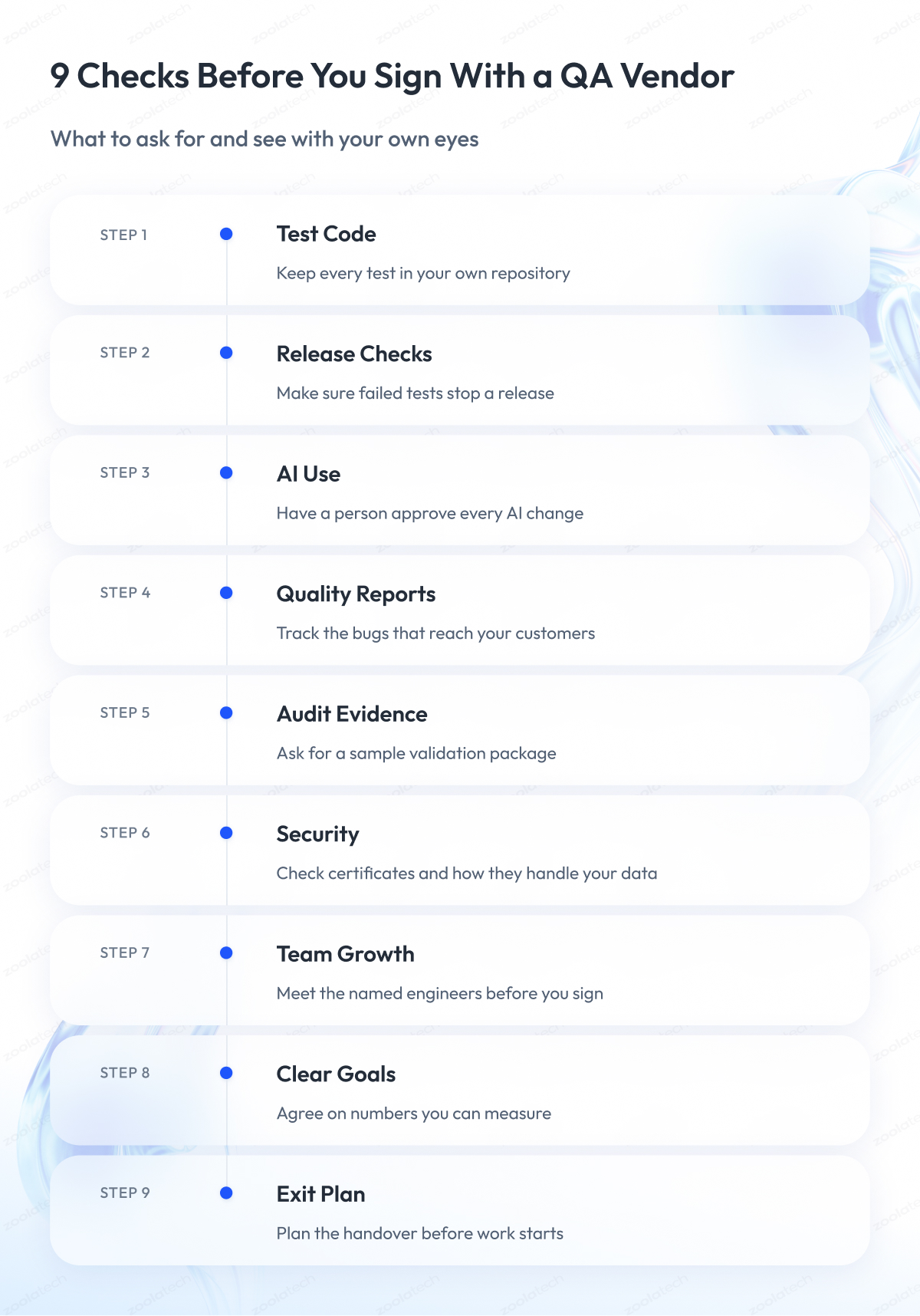
This list is a starting point, and you may want to look beyond it and check other vendors on your own. If you do, these 9 steps will help you choose a software testing company that can back up its promises with proof.
Ask every company on your shortlist the same questions and request proof you can open and check yourself. Each step below shows what to ask, what to request, and which answers should worry you.
Step 1 – Ask where the tests will live
Tests that sit in the vendor’s systems keep you dependent on that vendor long after launch. Ask for access to the repository where the tests will live, and read the intellectual property clause in the master services agreement (MSA) and the statement of work (SOW).
Then ask the vendor to show how your own team could run and fix a failing test without its help. Our article on how test ownership moved to product teams shows what this looks like in practice. Be careful if the tests stay in the vendor’s repository or on a platform you license per seat.
Step 2 – Check that tests can stop a bad release
A test protects you only when it can stop a bad release. Ask which pipeline stages block a merge or a release when tests fail, how long it takes from a code change to a test result, and what the vendor does with flaky tests, which pass and fail on the same code.
Flaky tests are common at scale. Google reported that almost 16% of its tests showed some flakiness, and about 84% of tests that switched from pass to fail were flaky. Ask every vendor for its flaky test rate, and treat a regression suite that runs manually on request or overnight outside the pipeline as a warning sign.
Step 3 – Ask how they use AI
Many vendors say AI writes their tests, so ask where they use it in production work today and what changed in numbers before and after. Ask who reviews the tests AI generates or repairs, and request a log of self-healed changes that a person approved.
You should also know where your code and data go when AI tools process them. It is a bad sign when a vendor says AI writes all the tests and keeps no record of the changes it makes.
Step 4 – Agree on what they will report
A count of executed test cases tells you little about whether your product got better. Ask the vendor to report defect leakage, which is the share of bugs that reach production, along with flaky test rate, suite run time, time to fix broken tests, and maintenance effort.
This gap is common across the industry. The 2026 State of Testing report from PractiTest, a test management vendor, found that only 8.6% of teams evaluate business impact, while 56.4% evaluate test coverage. Push back if a vendor offers to report only “test cases executed” and “percent automated.”
Step 5 – Ask for audit evidence
If you build software for regulated industries, your customers must show auditors that every release works as intended. Ask for an anonymized validation package with a risk assessment by intended use, an assurance plan, objective test evidence, and links from each requirement to its tests.
Our guide to what FDA’s Computer Software Assurance (CSA) guidance changes for software vendors explains what this evidence should include. Question any vendor that produces the same heavy documentation for every feature, whatever its risk.
Step 6 – Check their security
A testing vendor often sees your code, your environments, and sometimes your data. Ask for a current System and Organization Controls (SOC) 2 Type II report or an ISO 27001 certificate with its scope, and ask how the vendor limits each person’s access.
Find out whether the vendor tests with synthetic or masked data, a basic part of enterprise application security. Production customer data in test environments and shared accounts are both reasons to walk away.
Step 7 – Check how fast they can grow the team
Ask for named engineers with résumés for the team you would get in 2, 4, and 8 weeks. Check how many working hours they share with your time zone, how often their people leave, and whether they can give you references from clients of similar size.
Watch out for promises of “any team size within a week” that come with no data about the people available.
Step 8 – Set goals you can measure
Your contract should come with key performance indicators (KPIs) that start from a measured baseline. Ask what happens when the vendor misses them and whether you can move from team extension to managed QA without changing the people on your project.
A service level agreement (SLA) that counts only executed test cases protects the vendor more than it protects you.
Step 9 – Plan how you would leave
Ask for a knowledge transfer plan and an exit plan, both with dates, in the SOW. A standard, widely used tool stack makes it easier for your team or another vendor to take over the tests later.
Avoid contracts with no exit clause or tests built on rare, closed tools.
If you want to see how these questions apply to your own product, our QA and test automation team can walk you through how we answer each one.
In-House QA, a Testing Vendor or an Engineering Partner?
Most enterprises do best when they keep quality ownership in-house and bring in outside help for capacity and specialist skills. DORA’s research links automated tests owned by developers to better delivery, so your core test suite should stay with your own team. QA outsourcing companies then cover the gaps your team cannot close alone, such as performance, security, accessibility, and regulated validation.
These gaps are common. In the World Quality Report 2025-26, half of respondents said their organizations lack AI and machine learning expertise.
A testing vendor makes sense when:
- You need an independent check on code written by your teams or other vendors.
- You need specialist testing, such as performance, security, or accessibility.
- You face a short peak, such as a major release or a platform migration.
An engineering partner makes sense when:
- You want QA engineers working inside your product teams.
- You need a test framework built and handed off to your developers.
- You plan to move test ownership from a separate QA group to your developers.
Zoolatech provides QA engineers through its team extension model.
On one MasterControl project, Zoolatech connected the test framework to the client’s GitHub pipelines and trained application teams to own test development.
Many companies combine both models. A small central team sets testing standards and tools, and QA engineers work inside each product team. This setup keeps standards consistent across products while every team owns its own tests.
What Software Testing Companies Cost
Software testing companies set their own prices, and the numbers depend on location, team seniority, and the engagement model. Among the companies in this list, Clutch minimums run from $5,000 to $100,000+, and published hourly rates range from $25–49 to $150–199.
For comparison, the U.S. Bureau of Labor Statistics puts the median pay for software QA analysts and testers at $104,300 a year as of May 2025. That works out to roughly $50 an hour before benefits and overhead, based on 2,080 working hours a year.
The table below shows typical price ranges by partner type, based on the Clutch data of the companies in this list. Use the last column to see what will push your own quote up.
| Partner Type | Clutch Minimum | Hourly Rate | What Raises the Price |
|---|---|---|---|
| Global IT services firms | Not published | Not published | Program size, number of apps, global staffing |
| Engineering firms with QA built in | $5,000 to $100,000+ | $50–199 | Senior engineers, regulated validation, long programs |
| QE specialists | $5,000 to $10,000+ | $25–99 | Team size, specialist testing, onshore delivery |
| Platform and crowdtesting companies | $5,000 to $75,000+ | Per test run or subscription | Test volume, device range, number of countries |
The hourly rate is only part of the bill. Buyers often miss these costs:
- Ramp-up time while the vendor learns your product.
- Time your managers spend coordinating the vendor.
- Ongoing maintenance of the test suite.
- Rework when tests or features need fixing.
- Defects that reach production and your customers.
Claims to Double-Check Before You Shortlist
Before you shortlist a vendor, check the claims that appear on many vendor pages and in many lists, because some don’t hold up against the source. For any analyst badge, ask for the exact assessment, year, and quadrant. For any security claim, ask for the certificate or report behind it.
The table below lists the claims you will meet most often. Read the left column as what vendors say and the right column as what the source shows.
| Common Claim | What the Source Shows |
|---|---|
| “Leader in Everest Group” | Everest ran 2 QE assessments in 2025, so ask which one |
| “Leader in ISG” | ISG’s 2026 U.S. study has 6 quadrants, so ask which |
| “Recognized by Gartner” | Peer Insights is a review site, the Magic Quadrant rates tools |
| “80% of enterprises will use AI testing by 2027” | Gartner now projects 70% by 2028, up from 20% in 2025 |
| “Bugs cost 100x more in production” | Late defects cost more, but no single multiplier holds |
| “Aim for 100% automation” | Automate fast, stable checks, and keep exploratory testing with people |
| “AI will replace QA engineers” | Only 15% scaled AI in testing across the company |
The last claim deserves a closer look. Developers remain cautious about AI output, and the Stack Overflow Developer Survey 2025 found that 46% of developers distrust AI tools’ accuracy, while only 33% trust them. For now, AI speeds up test writing and repair, and people still decide what to test and whether the results make sense.
Also Considered
We also reviewed several companies that met our criteria but didn’t make the final 13. They were left out only because of the 13-company cap, so they are worth a look if none of the profiles above fit your project.
- Deloitte, HCLTech, Infosys, Tata Consultancy Services (TCS), Wipro, and Coforge. ISG’s 2026 U.S. report names each of them a Leader in 3 of its 6 quadrants. Coforge, which now includes Cigniti, and Wipro also announced Leader positions in Everest Group’s Enterprise QE Services PEAK Matrix® Assessment 2025. We did not review these firms company by company for this edition.
- QA Mentor. Based in New York since 2010, QA Mentor has about 350 QA professionals and access to 15,000 testers in 123+ countries. It also has the lowest Clutch minimum among the companies we reviewed, at $1,000.
- TestFort. This testing company lists ISO 27001:2022 certification and says clients own all test scripts, data sets, and documentation from the start of the engagement.
- QAwerk. QAwerk has 30+ senior QA engineers and offices in Kyiv and Tallinn.
Final Word
Choosing among software testing companies takes time. You compare profiles, read reviews, ask vendors for evidence, and check how each one would fit into your release process before the first test runs.
That effort pays off, because the partner you choose shapes how your product is tested for years. A weak choice leaves you with tests that only the vendor can run and a contract that is hard to leave. A strong one leaves your team with tests it can read, run, and change long after the engagement ends.
If you have read this far, you already know what to ask. Use this list as a starting point, shortlist the companies that match your scenario, and ask each of them the 9 questions from our checklist. Then choose the partner whose answers come with proof.
If you want a partner that builds quality into your releases and hands the tests over to your team, Zoolatech is ready to discuss your product and help you find the right next step.
Questions You May Have
What are the top software testing companies for enterprises in 2026?
The top software testing companies for enterprises in 2026 are Zoolatech, Accenture, Capgemini (Sogeti), Cognizant, EPAM Systems, ScienceSoft, a1qa, DeviQA, QualityAI, QualityLogic, TestingXperts, QA Wolf, and Testlio. Zoolatech is the strongest starting point for enterprise teams that want QA engineers inside their product teams and tests their own developers can run.
How do I choose a software testing company?
Choose a software testing company based on proof in 4 areas: where the tests live, how they block bad releases in your pipeline, who reviews AI-made changes, and which quality metrics it reports. Then match the vendor type to your scenario using the comparison matrix above.
Should we outsource QA or keep it in-house?
Keep ownership of quality in-house and outsource capacity and specialist skills. Outsourcing works best when the partner builds tests in your repository, runs them in your release pipeline, and trains your developers to maintain them, so your team keeps full control of the test suite when the contract ends.
How much do QA outsourcing companies charge?
QA outsourcing companies in this list charge from $25–49 to $150–199 per hour on Clutch, with minimum projects from $5,000 to $100,000+. For comparison, the median pay for a software QA analyst or tester in the US was $104,300 a year in May 2025, or roughly $50 an hour before benefits.
Will AI replace QA testers?
AI is changing QA testers’ work, and people still lead it. Only 15% of organizations in the World Quality Report 2025-26 use generative AI in quality engineering across the whole company. Testers increasingly direct AI tools, review the tests they write, and decide what needs testing in the first place.
Which software testing companies in this list are based in the USA?
The software testing companies in the USA from this list are Zoolatech (Miami, FL), EPAM Systems (Newtown, PA), ScienceSoft (McKinney, TX), a1qa (Decatur, GA), QualityLogic (Boise, ID), TestingXperts (Harrisburg, PA), QA Wolf (Seattle), and Testlio (Austin, TX). For partners outside the US, see our lists of offshore and nearshore software development companies.
What is the difference between a QA company and a test automation platform?
A QA company sells people and services, and a test automation platform sells a tool your team uses. Gartner’s Magic Quadrant for AI-Augmented Software Testing Tools rates platforms and leaves service providers out. Some companies combine both models, such as QA Wolf, which runs its own platform and also provides QA engineers who maintain your tests.
What should a QA partner hand over when a contract ends?
A QA partner should hand over everything your team needs to keep testing without it. That includes the tests and framework in your repository, pipeline configuration, documentation and runbooks, your test-data approach, and knowledge-transfer sessions where your developers run and fix the tests themselves.
What are the top 10 QA testing companies?
Our top 10 QA testing companies are Zoolatech, Accenture, Capgemini (Sogeti), Cognizant, EPAM Systems, ScienceSoft, a1qa, DeviQA, QualityAI, and QualityLogic. The full list adds TestingXperts, QA Wolf, and Testlio, so you can compare 13 companies across global firms, engineering partners, testing specialists, and platforms.
What do QA companies do?
QA companies test software before it reaches your customers. They write and run automated and manual tests, check performance, security, and accessibility, and report defects to your developers. The best QA companies also connect tests to your release pipeline and leave you with a test suite your own team can maintain.
What are third-party software testing companies?
Third-party software testing companies are independent firms that focus only on testing. They give you an outside check on code written by your own teams or other vendors. In this list, a1qa, DeviQA, QualityAI, QualityLogic, and TestingXperts belong to this group.
Which test automation companies let you keep the test code?
Among the test automation companies in this list, 3 publicly state that you keep the test code: DeviQA and QualityLogic say you own it, and QA Wolf says you can export its tests at any time; Zoolatech documented the transfer of test development ownership to the client’s developers on one MasterControl project.