








Quick Summary
- The three models trade cost against overlap: offshore saves 60-80% with a 6-12 hour gap, nearshore saves 30-60% with 2-4 hours of daily overlap, and onshore buys real-time collaboration.
- Scaling capacity differs just as sharply, with offshore ramping 100+ engineers and nearshore typically 20-50.
- In-house staffing adds roughly 45% overhead in benefits, office space, and taxes, which an offshore engagement largely avoids.
- Six risks recur, covering communication, quality assurance, security and compliance, culture, time zones, and IP, and each has a standard mitigation worth writing into the contract.
- Run a 6-12 week pilot before scaling, because a proof of concept exposes the blind spots no amount of vendor documentation will.
In 2025, offshore software development has become a strategic choice, not just a cost-saving tactic. Rising local salaries, talent shortages, and faster innovation cycles push enterprises to build offshore development teams that act as long-term partners.
Enterprises increasingly see offshore software development outsourcing as a way to cut costs up to 50%, while accessing niche expertise not available onshore.
This guide explains what offshore development is, how it compares to onshore and nearshore models, its benefits and risks, real cost factors, and best practices for building a successful offshore collaboration.
What Is Offshore Software Development?
Offshore software development is the practice of outsourcing software engineering, testing, or maintenance tasks to a team located in a distant country, usually where labor costs are lower and specialized skills are more widely available.
Unlike hiring freelancers, an offshore software development company typically provides a structured team with project managers, developers, QA engineers, and sometimes even product experts.
Offshore development evolution in 2026
In 2025, offshore software development is no longer a simple outsourcing mechanism. What began as a cost-saving approach has matured into a global model of strategic collaboration.
Today, offshore teams act as integrated partners, contributing not only to coding but also to product innovation, cloud transformation, and AI adoption.
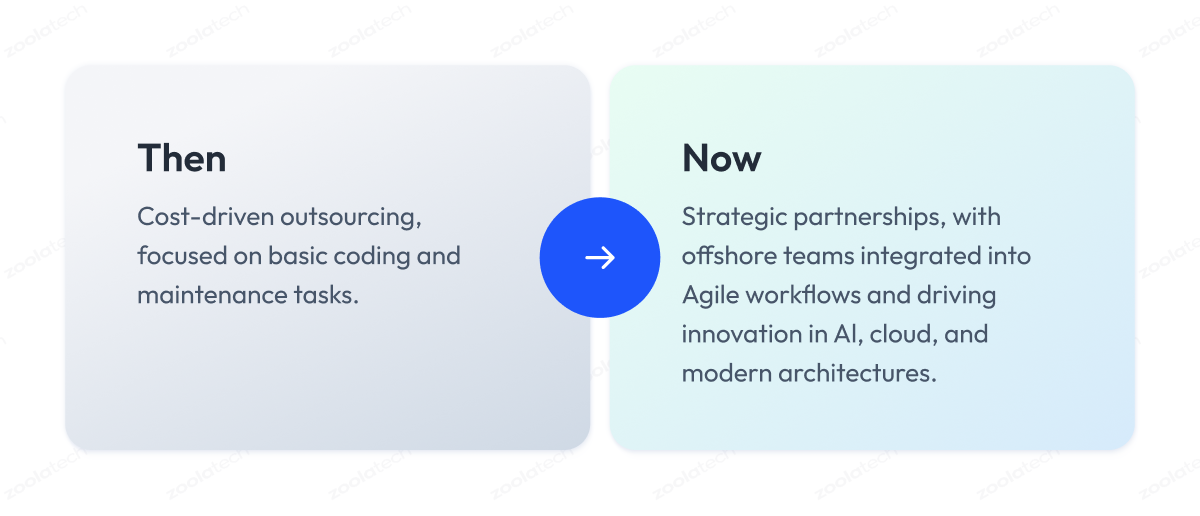
Looking forward, offshore development is set to become a cornerstone of digital strategy, enabling enterprises to scale, innovate, and compete in global markets with agility.
- Offshore teams now participate in architecture design, product innovation, and DevOps integration.
- Many companies adopt a team extension model, where offshore engineers operate as part of the in-house squad, sharing the same tools and methodologies.
- Mature offshore vendors offer not just staffing, but end-to-end development services, including consulting, UI/UX design, AI/ML integration, cloud migration, and cybersecurity.
As a result, offshore outsourcing software development is no longer just about lowering costs—it has become a pathway to innovation, scalability, and competitive advantage in global markets.

Offshore vs. Onshore vs. Nearshore
Enterprises considering an offshore software development company or a nearshore/onshore model must weigh more than headline costs. The real differentiators are hidden overhead, innovation capacity, delivery risk, and scalability.
| Model | Factors |
| Onshore |
|
| Nearshore |
|
| Offshore |
|
Key strengths
- Onshore: Best suited for projects requiring strict compliance, secure data handling, and constant real-time collaboration with stakeholders.
- Nearshore: Provides a strong balance of cost savings and agile collaboration, enabling faster iteration cycles with minimal communication barriers.
- Offshore: Offers maximum scalability and access to niche expertise, making it ideal for large-scale modernization and innovation-driven projects.

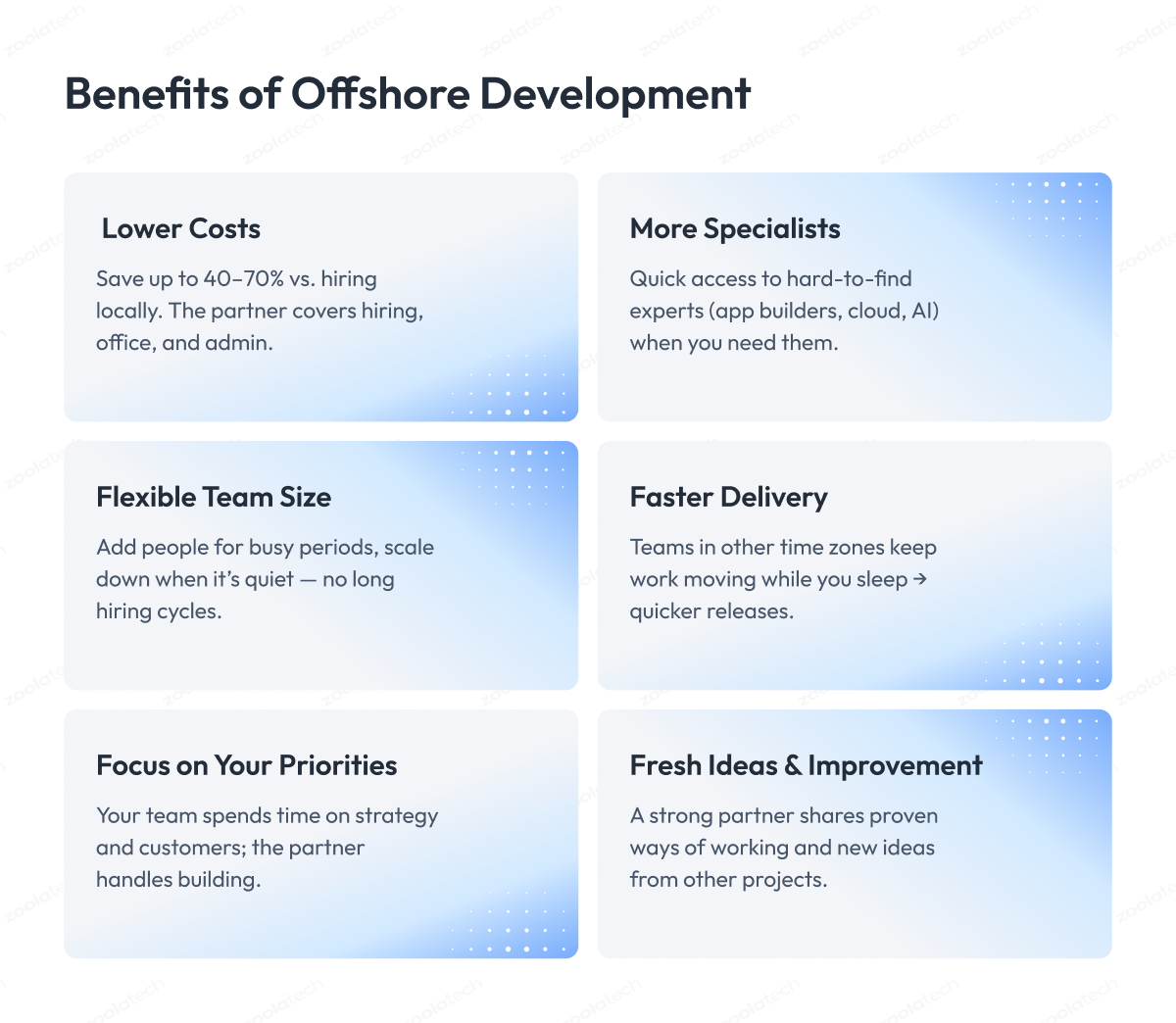
Offshore software development offers more than just lower rates. For enterprise retailers, its value comes from combining cost efficiency, talent access, and strategic flexibility in ways that directly impact competitiveness.
Cost savings
Offshore outsourcing typically reduces costs by 40–70%, but the real gain comes from lowering the total cost of ownership. Enterprises avoid expenses tied to recruitment, training, office space, and long retention cycles. Partners often bundle HR, infrastructure, and operations, allowing internal budgets to be redirected toward innovation.
Access to global niche talent
Finding engineers skilled in AI, cloud migration, or microservices is increasingly difficult onshore. Offshore development companies and centers open access to deep, specialized talent pools that are otherwise scarce. This accelerates modernization programs and enables faster adoption of new technologies.
Scalability & flexibility
Retail projects often move in waves—from small discovery phases to large rollouts. Offshore software development teams can scale dynamically, expanding quickly during peak demand and contracting when not needed. This elasticity prevents overstaffing while keeping delivery capacity available.
Faster time-to-market
Distributed offshore teams support a “follow-the-sun” model, where work continues across time zones. For enterprises under pressure to deliver new digital features rapidly, this means shorter release cycles and faster market entry without overburdening internal teams.
Focus on core business
By shifting execution to offshore partners, leadership can concentrate on strategic initiatives—new revenue models, customer experience, or supply chain innovation—rather than day-to-day development tasks. This separation of focus strengthens competitive positioning.
Strategic partnerships & innovation
Long-term offshore collaborations evolve beyond task execution. Mature partners bring domain knowledge, best engineering practices, and innovation capacity, effectively co-creating solutions rather than just supplying code. This model turns outsourcing into a strategic growth lever.
Key Risks & Challenges (and How to Mitigate)
Offshore software development delivers cost and scalability benefits, but enterprise leaders must anticipate and manage risks proactively. Poorly managed risks can turn savings into overruns, delay delivery, and expose companies to compliance breaches. Below are the most common challenges and proven mitigation strategies.
- Communication barriers: Language gaps or unclear documentation can create misalignment.
- Quality assurance: Without proper oversight, offshore software outsourcing may lead to inconsistent delivery quality.
- Security & compliance: Sensitive data must comply with frameworks like GDPR (EU), HIPAA (healthcare), and PCI DSS (payments).
- Cultural differences: Variations in decision-making styles or work culture can slow collaboration.
- Time zone gaps: 6–12 hour differences reduce overlap, delaying feedback loops.
- Legal/regulatory/IP risks: Weak contracts or insufficient local knowledge can expose enterprises to intellectual property theft or regulatory breaches.
Risk mitigation matrix
| Risk | Impact | Mitigation |
| Communication barriers | Misaligned requirements, rework, delays | Establish standardized documentation, use collaboration tools (e.g., Jira, Confluence), and assign bilingual project coordinators. |
| Quality assurance | Inconsistent delivery quality, higher defect rates | Implement continuous QA processes, automated testing, and enforce coding standards aligned with enterprise guidelines. |
| Security & compliance | Regulatory fines, reputational damage, data loss | Work only with partners certified in GDPR/ISO 27001/HIPAA; enforce strict SLAs; conduct periodic compliance audits. |
| Cultural differences | Misunderstandings, low trust, reduced productivity | Provide cross-cultural training, foster mixed nearshore + offshore teams, and assign onshore product owners to bridge gaps. |
| Time zone gaps | Slower iterations, bottlenecks in agile workflows | Schedule overlap hours, and ensure distributed teams work with clear handoff protocols. |
| Legal/Regulatory/IP Risks | IP theft, contract disputes, project stoppages | Draft watertight contracts with IP clauses, NDAs, and jurisdictional safeguards; leverage external legal counsel with local expertise. |
Offshore Software Development Costs & Rates
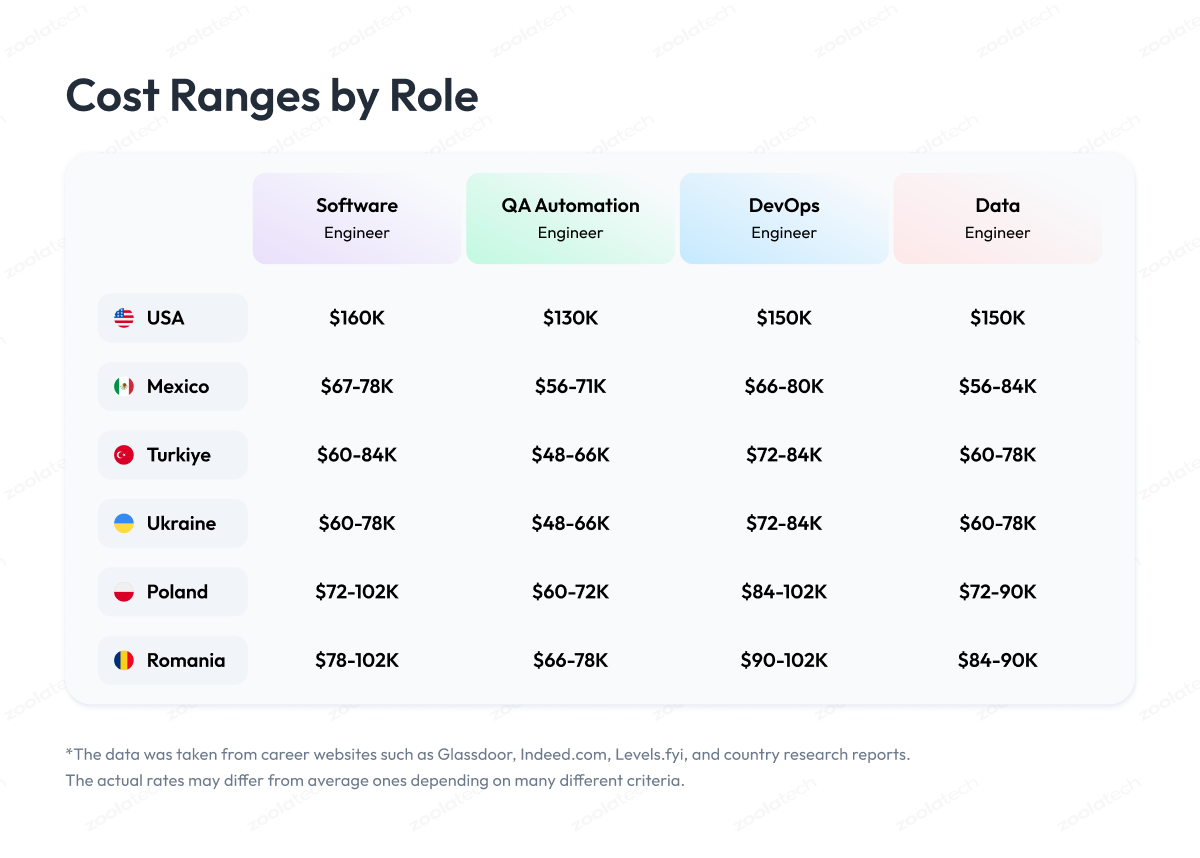
For enterprises considering offshore outsourcing, understanding the true cost structure is critical. Savings of 40–70% are common, but rates vary widely by region, role, and engagement model. Below is a breakdown of the main factors influencing offshore software development cost.
Regional Breakdown
- Latin America (Mexico, Brazil, Argentina): Cost-effective with strong cultural and time-zone alignment. Mexico, for example, hosts ~500 IT outsourcing companies across hubs like Guadalajara and Monterrey.
- Eastern Europe (Poland, Romania, Ukraine): Known for a balance of cost and quality. Poland leads with 525K IT specialists and a mature vendor ecosystem. Romania and Ukraine combine large pools with competitive pricing.
- Turkey (Crossroads of Europe & Asia): Emerging powerhouse with a fast-growing IT outsourcing market and ~140K developers. Competitive costs and EU-adjacent time zones.
- Southeast Asia (Vietnam, Philippines): Attractive for cost, especially in support and scalable engineering, though cultural and time-zone gaps can be larger.
- Africa (Egypt, Nigeria, South Africa): Developing as a secondary hub. Costs are low, but ecosystems are less mature than those in Eastern Europe or Latin America.
Factors driving offshore software development cost
- Project complexity: Higher system integration, compliance-heavy workloads, or AI-driven projects demand senior talent, raising rates.
- Team composition & seniority: Blending senior engineers with mid-level developers optimizes costs; all-senior teams drive quality but at a premium.
- Engagement model: Offshore Development Centers (ODC) deliver long-term savings at scale; Team Extension offers flexibility for shorter-term needs.
- Location: Geographic wage differences remain the single largest cost driver.
- Overhead costs: In-house staffing adds ~45% overhead (benefits, office space, taxes) —largely avoided in offshore outsourcing software development.
- Talent acquisition speed: Offshore software development companies mitigate hiring delays, reducing opportunity costs tied to time-to-market.
How to Choose an Offshore Partner
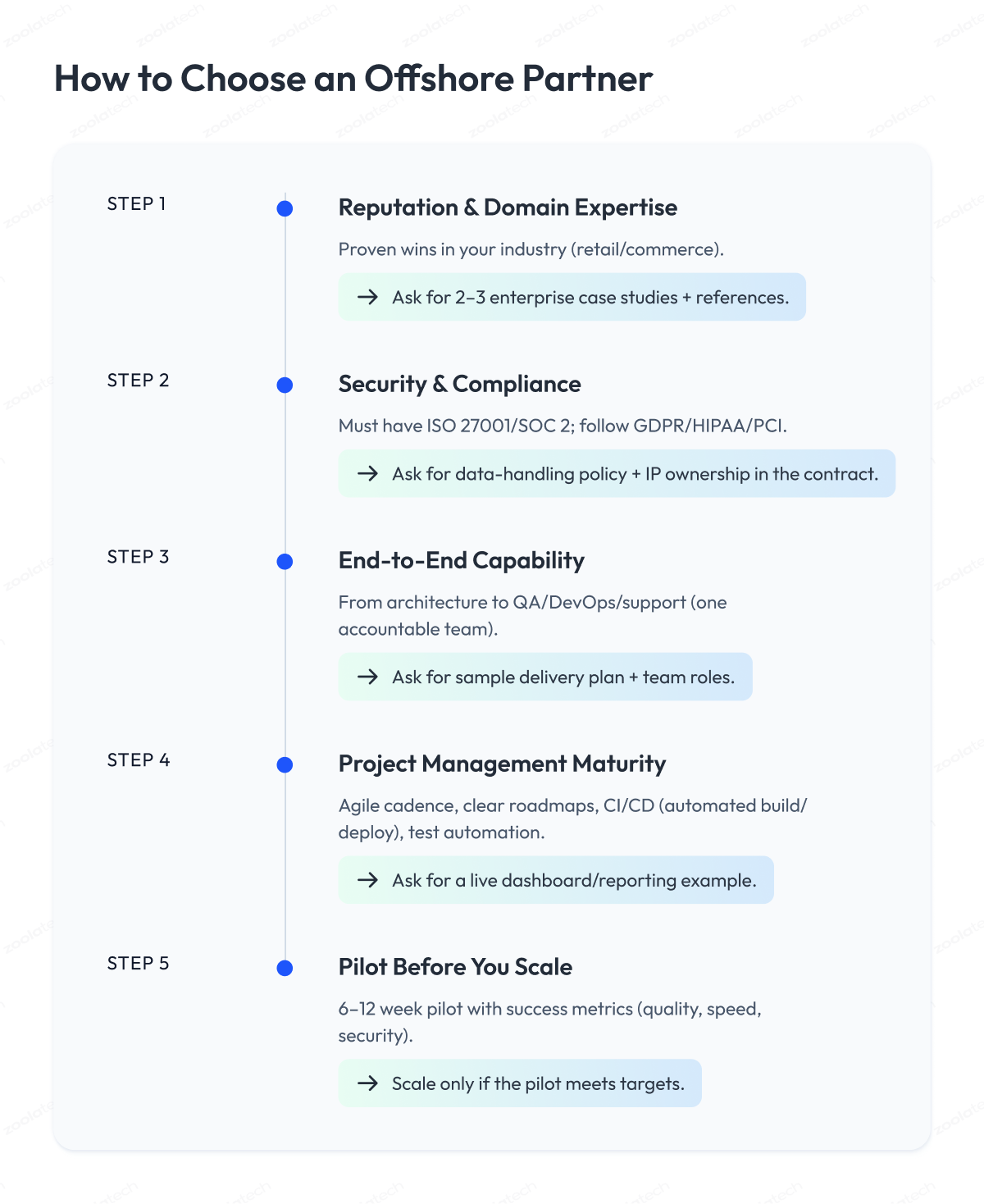
Selecting the right offshore software development company is a strategic decision that directly impacts delivery speed, quality, and risk. Beyond cost, enterprises should evaluate partners across five dimensions.
1. Reputation & domain expertise
A credible partner should demonstrate strong domain experience in retail, commerce, or your specific vertical, backed by a portfolio of enterprise-scale projects. Reputation isn’t only about longevity; it’s about proof of impact, client references, and recognition as an employer of choice.
This ensures access to the best offshore software development teams rather than overstretched generalists.
2. Security & compliance credentials
Offshore outsourcing software development requires handling sensitive customer and operational data. A reliable partner must prove compliance with GDPR, HIPAA, PCI DSS, and ISO/IEC 27001. These credentials minimize regulatory risk while ensuring robust data protection.
Without them, cost savings can quickly be offset by fines or reputational damage.
3. End-to-end service capability
Strong partners don’t just provide coding capacity—they deliver end-to-end offshore software development services, from architecture and design to QA, DevOps, and ongoing support.
This breadth allows for consistent quality across the lifecycle, smoother handoffs, and reduced dependency on multiple vendors.
4. Project management maturity
Delivery success depends heavily on how well an offshore software development center runs projects. Look for partners with mature Agile and DevOps practices, including CI/CD pipelines, automated testing, and transparent reporting.
These practices ensure predictability, faster iteration, and fewer surprises during scaling.
5. Run a pilot project before scaling
Even the best-documented partner selection process can leave blind spots. A pilot engagement—whether a 6–12 week proof-of-concept or a single feature delivery—validates the partner’s ability to deliver at in-house quality standards.
Enterprises that scale only after a successful pilot minimize risk and build confidence before committing to larger offshore software development outsourcing models.

Top 15 Offshore Software Development Companies You Can Trust
Navigating the abundance of offshore software development can be a challenge. So, how do you select a trustworthy partner for custom solution development?
We have analyzed 100 companies and selected 15 top offshore outsourcing companies based on criteria, such as:
- Case studies, client testimonials, and client referral rate
- Specific domain and tech expertise you are looking for
- Location of the partner-to-be
- How quickly and easily the company can scale your team
- Employer brand of the company and its presence on the market
- Company culture and its values
During our research, we also used Clutch, Glassdoor, company LinkedIn profiles, analytical reports on the regions, and other resources with publicly available information about the tech providers.
When shortlisting providers, we also recommend you consider the following aspects:
- The professional development, employee growth, and retention programs they offer
- Their pricing and cooperation models
- Whether they offer a flexible and customized approach to meet your specific needs
- The number of long-term partnerships they have
- What their knowledge transfer plan is
- Their security policies
Top offshore outsourcing companies in USA & Europe
Europe stands out as a powerhouse in the global software development market, with significant growth potential and a burgeoning community of skilled professionals.
According to Whitelane Research, a remarkable 75% of clients expressed satisfaction with the results of collaborating with European outsourcing service providers, underscoring the region’s prominence in meeting diverse business needs.
1. Zoolatech
Zoolatech is a full-cycle software development company with Silicon Valley roots, offices in the USA, Mexico, Ukraine, and Turkey, and a strong global presence. The offshore development company works with well-funded startups, enterprises, and Fortune 500 companies across various domains.
The company focuses on sustainable growth and long-term impact for its clients’ products. It designs teams and delivery processes that are targeted at long-lasting value—in terms of results, talent management, and costs.
Its talent pool comprises 60% of senior software engineers, and when launching cooperation, the company provides its clients with a team of experts with 5+ years of experience.
Zoolatech believes that building strong, honest, and transparent relationships is the core of building a resilient company, long-lasting partnerships, and robust, market-leading products. Thanks to the core team’s 20+ years of technology management experience, the company will ensure the in-house delivery speed and quality.
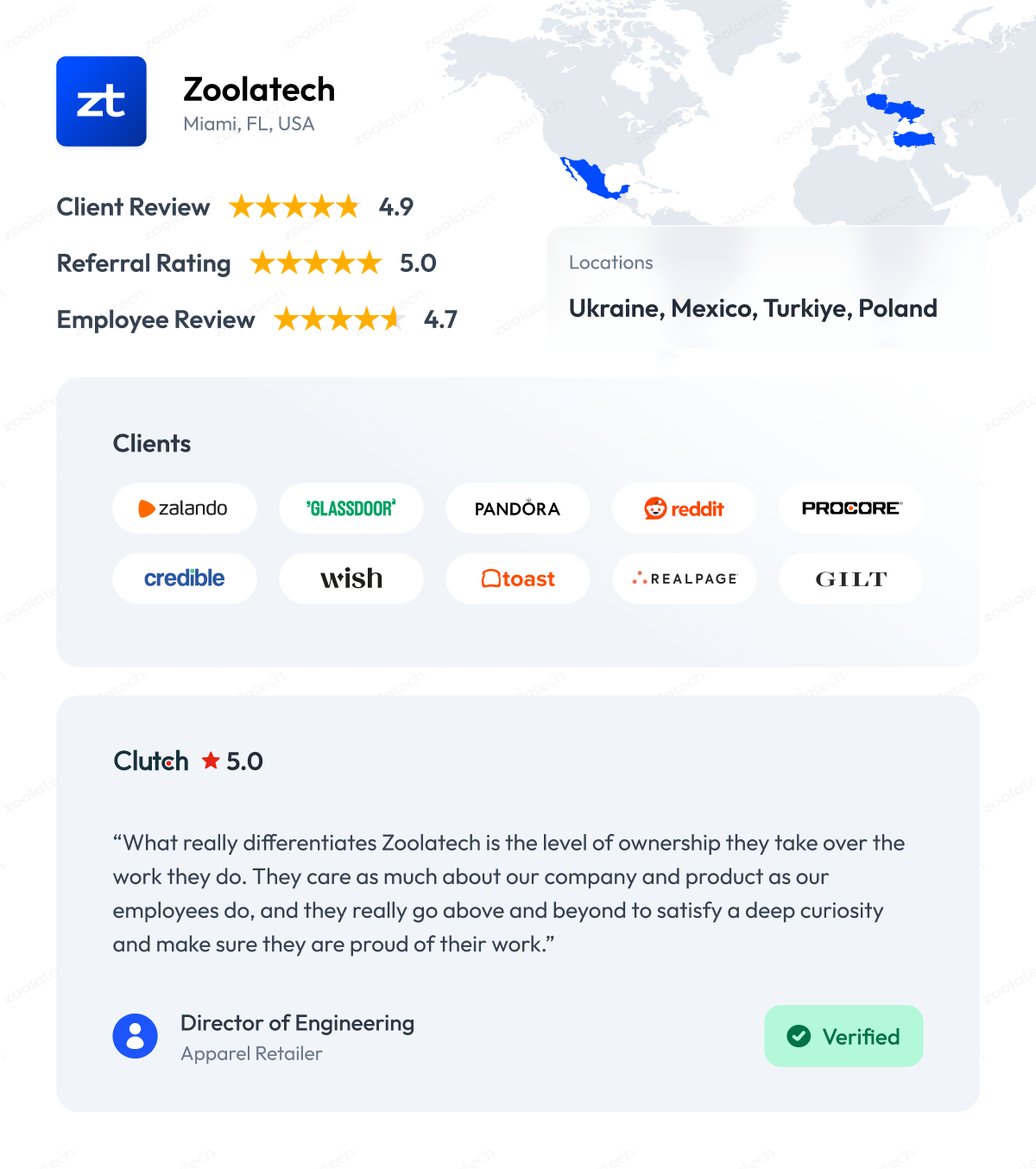
Services: Offshore Delivery Center, Managed Delivery, Team Extension
Expertise: Custom software development, Mobile app development, Legacy Modernization, Cloud Migration, DevOps, Quality Assurance, Data Analytics, Data Science, Machine Learning, and AI.
Industries: Software & Technology, Retail, Financial Services, Telecom, Media & Entertainment, Life Sciences & Healthcare, Energy & Utilities, Insurance, MarkTech
2. Future Processing
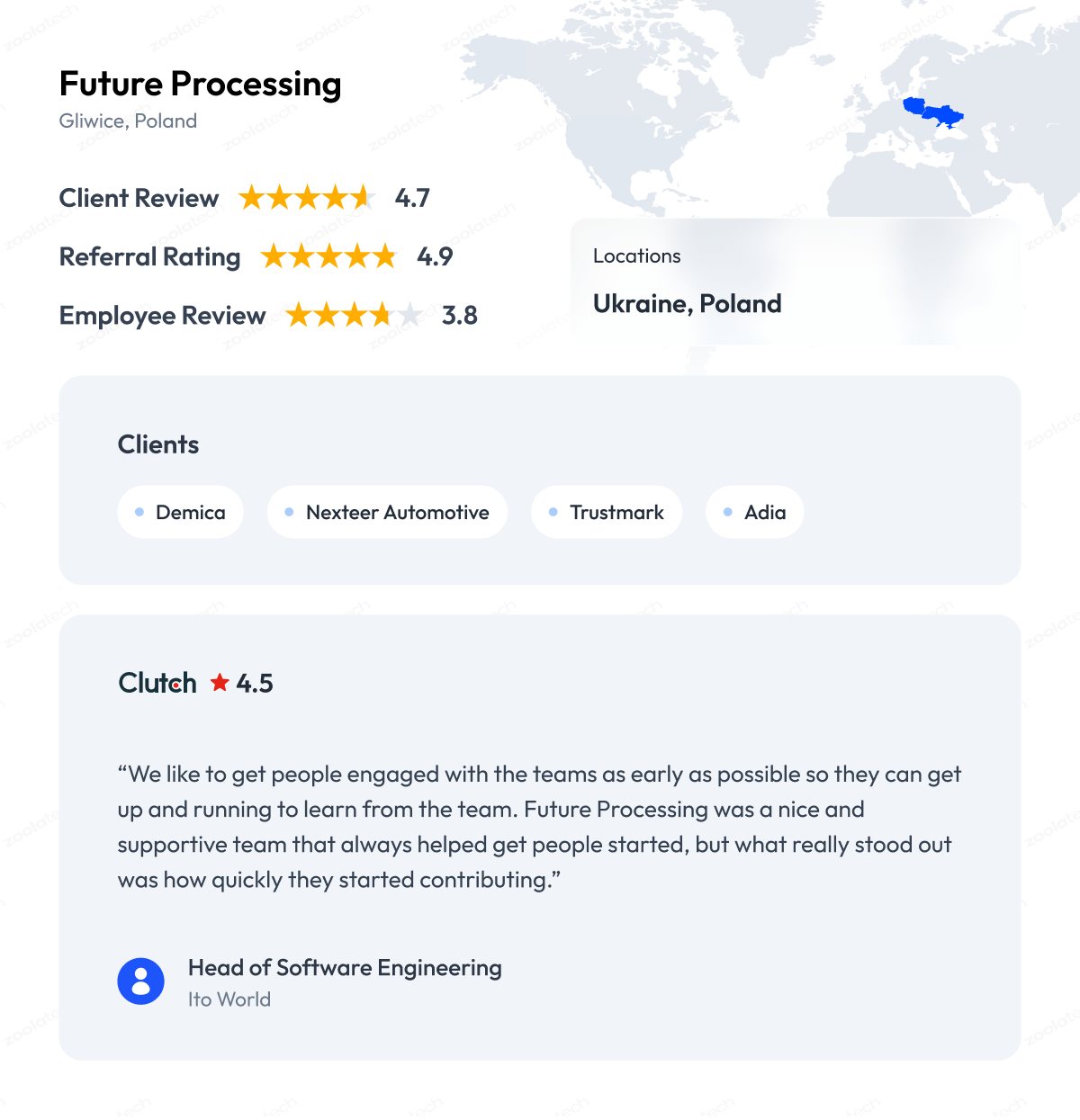
Future Processing is a technology consultancy and software delivery partner that was founded back in 2000, and they deliver end-to-end services to clients globally.
Their core philosophy of putting people first is reflected in their people-centric values and culture. They emphasize transparency, open communication, and a comfortable work environment. The Future Processing company prioritizes long-term partnerships and complex projects over quick wins.
Services: Consulting, Team Extension, Managed Delivery
Expertise: Consulting, Data migration and modernization, Machine learning, and AI, Digital product services, Cloud services, Pentesting, Solution architecture design and development, DevOps
Industries: Insurance, Finance, Healthcare, Automotive, Marketing, Media, Transport, Utilities
3. ScienceSoft
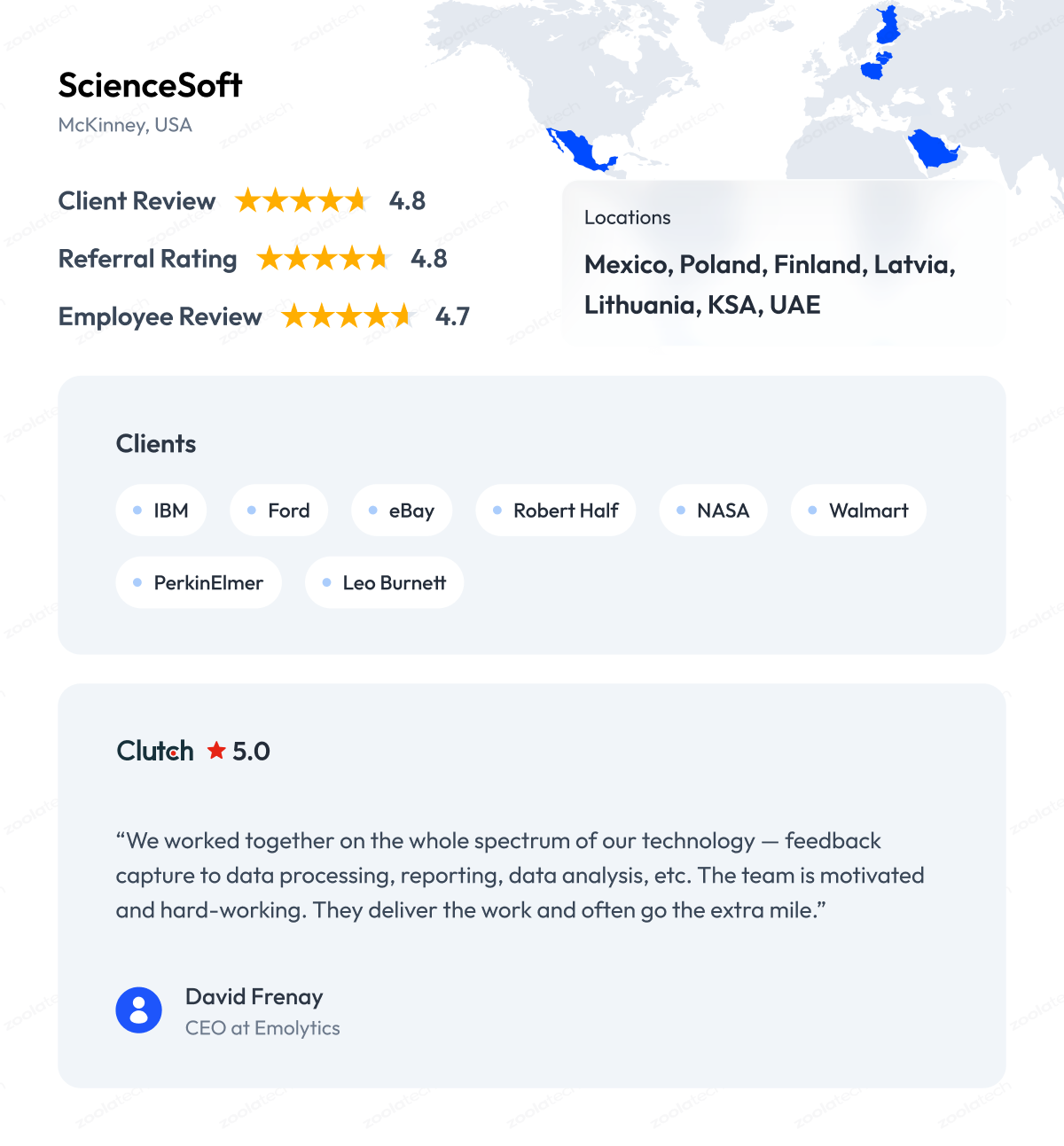
Founded in 1989, ScienceSoft is a software development and IT consulting company with a pool of 750+ IT professionals. With an HQ in Texas, the company operates full-scale development centers in the EU and Mexico, offering US-level quality and business culture at half the domestic rates. ScienceSoft’s portfolio includes 4,000+ projects for 1,300+ clients. Notably, 62% of its revenue comes from partnerships lasting 2+ years. The company is a 5-time IAOP Global Outsourcing 100 awardee and holds ISO 9001, ISO/IEC 27001, ISO/IEC 27701, and ISO 13485 certifications. Clients consistently highlight ScienceSoft’s strength in delivering large, complex projects successfully, even when facing tight deadlines, rapidly changing priorities, or limited budgets. This is thanks to the company’s strong project management and rigorous hiring process, where only 2% pass. Over 50% of ScienceSoft’s talents are senior and lead specialists. Its in-house Architecture and Solutions Center of Excellence, strengthened by 10 principal architects, ensures secure and resilient solutions for demanding industries like healthcare and BFSI.
Services: Custom Software Development, AI Software Development, Managed Delivery, Dedicated Teams, Team Extension, IT Consulting, Software Modernization, Cloud Migration, Data Analytics, Cybersecurity, Compliance Support
Expertise: Artificial Intelligence; Web and Mobile Development; Custom Software, SaaS, and Product Engineering; Legacy App Modernization; Data Science, IoT, Blockchain, AR/VR; Cloud & DevOps (AWS and Azure Partner); Cybersecurity
Industries: Healthcare, Fintech, Insurance, Investment, E-Commerce, Manufacturing, Real Estate, Transportation & Logistics, Oil & Gas, Telecommunications, Construction, Travel & Hospitality, Professional Services
4. IT Craft
IT Craft is an established software development and IT consulting company founded in 2001, with a strong international presence across the USA, Canada, the UK, and Europe. The company brings together a team of 330+ skilled specialists, including developers, designers, engineers, and consultants, delivering reliable digital solutions for businesses worldwide.
With over two decades of industry experience, IT Craft supports both startups and enterprises in turning complex ideas into scalable, high-performing products.
Among the successful cases: IT Craft partnered with Flexwise, a U.S. healthcare workforce management platform, to modernize its legacy infrastructure and move to a secure, cloud-native setup. The migration helped Flexwise meet HIPAA requirements, release updates faster, reduce infrastructure costs, and gain a reliable, scalable foundation to support future growth and innovation.
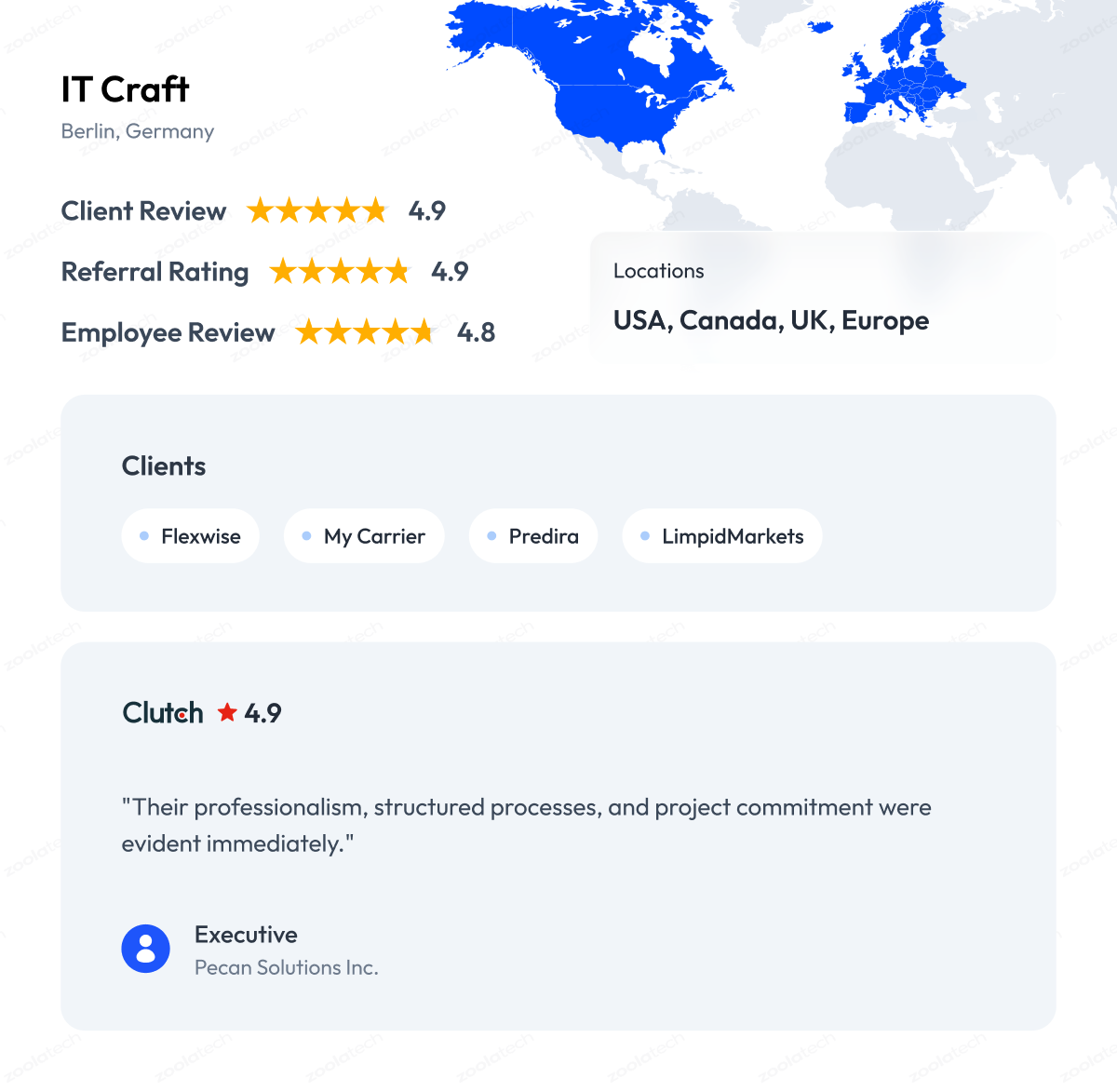
Services: Custom Web Development, UI/UX Design, Front-End & Back-End Development, Maintenance, Security & Performance Optimization
Expertise: Custom software development, mobile and web applications, DevOps, IT consulting, scalable solutions, MVP development
Industries: Fantasy Sports & Gaming, Fintech, Healthtech, eLearning, Logistics, eCommerce
5. CommerceShop
CommerceShop is a performance-led eCommerce growth agency founded in 2009, helping brands scale revenue through strategy, design, engineering, marketing, and AI. The company has scaled 1,000+ eCommerce stores across 20+ industries and positions itself as a growth partner that builds commerce experiences, not just websites.
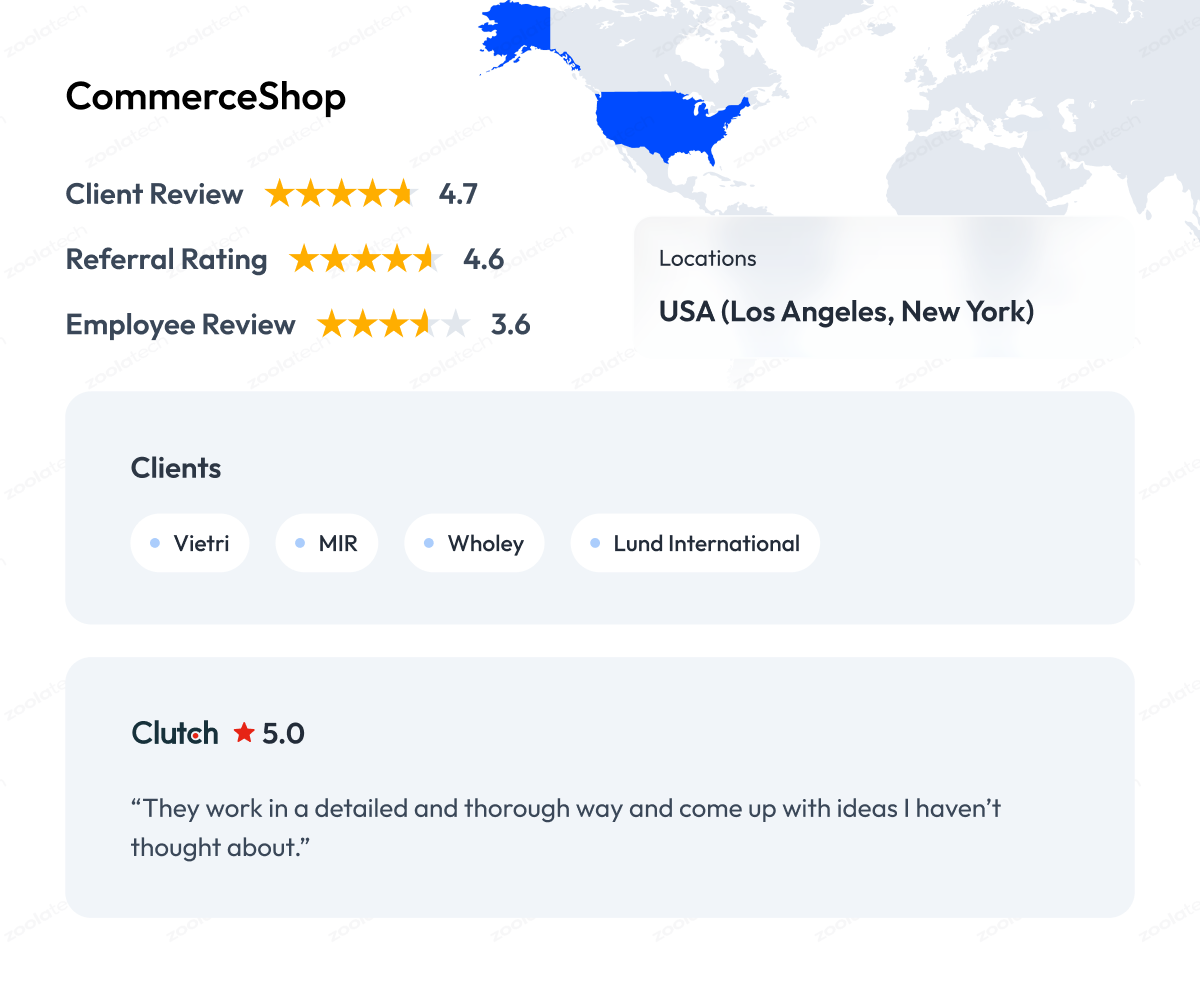
Its capabilities span eCommerce design and development, platform migration and upgrades, conversion rate optimization, performance optimization, ERP integration, digital marketing, AI visibility, and AI solutions. CommerceShop supports Magento, Shopify, BigCommerce, and WooCommerce ecosystems, alongside B2B commerce requirements and integrations across the technology stack.
CommerceShop differentiates itself through data-driven decision-making, a revenue-first approach, and AI-powered commerce. Its team includes 100+ certified developers, and the company reports $1 billion in attributed revenue and up to 50X ROAS delivered. This combination of commerce engineering, growth marketing, and conversion expertise enables CommerceShop to support brands from platform development through optimization and expansion.
Services: eCommerce Development, Migration and Upgrades, CRO, ERP Integration, Digital Marketing, AI Solutions
Expertise: Magento, Shopify, BigCommerce, WooCommerce, AEO, GEO, B2B Commerce
Industries: Automotive, Fashion, Health and Fitness, Manufacturing, Heavy Equipment, Electronics, Food and Beverage
6. TechMagic
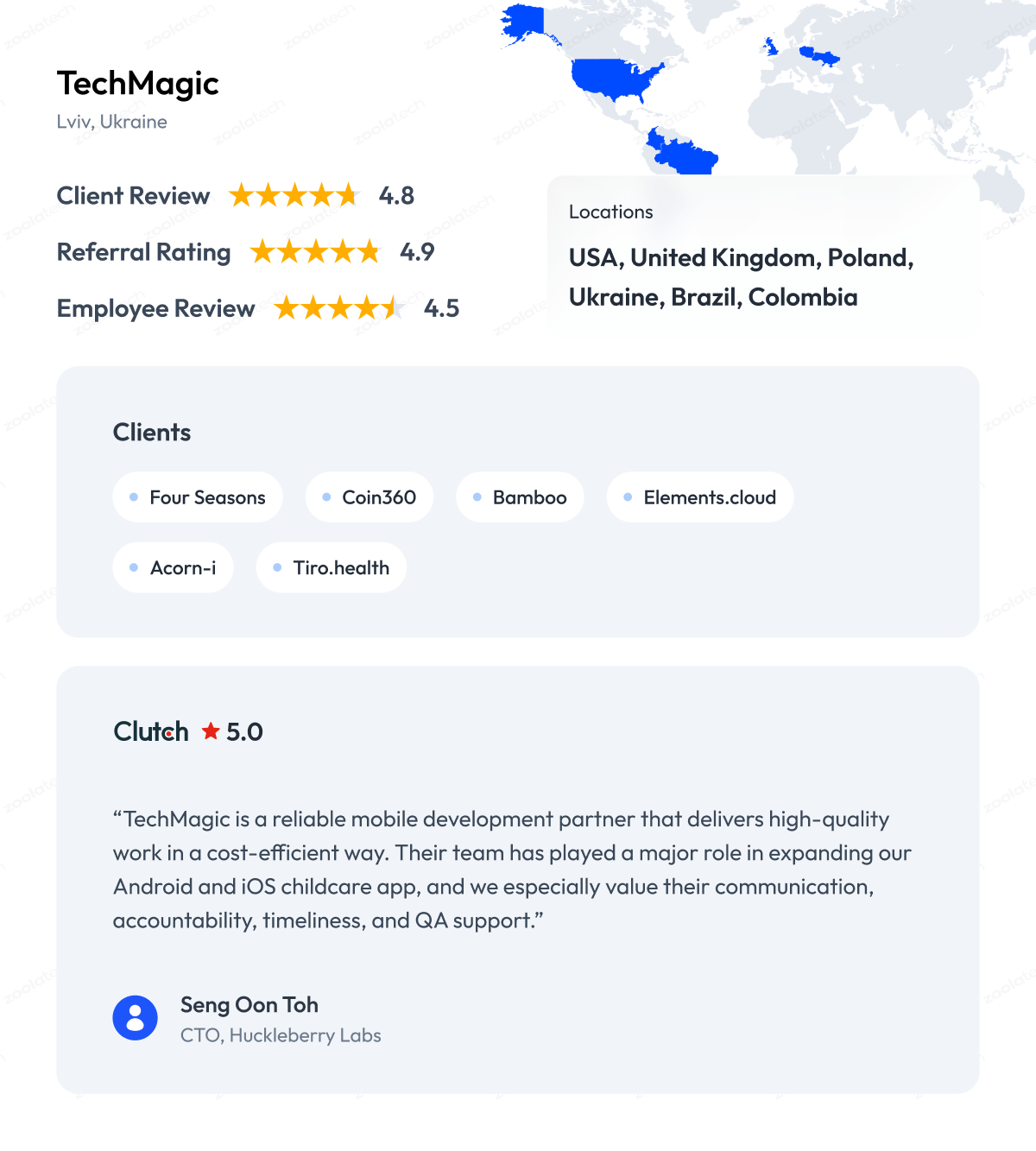
TechMagic is an offshore cybersecurity and software development company founded in 2014. It delivers end-to-end services to startups, scale-ups, and enterprises across multiple industries. With 400+ certified experts and 200+ clients, the company combines full-cycle software development with advanced cybersecurity capabilities and can join projects at any stage.
The company puts strong emphasis on compliance, security, and long-term partnership. TechMagic is HIPAA-compliant, CREST-accredited, ISO-certified, and an official AWS partner. It has deep expertise in HIPAA, SOC 2, and other regulatory frameworks for secure, scalable digital products.
TechMagic offers development and security services, including custom software engineering and cloud solutions, as well as penetration testing, DevSecOps, and managed security services. With a proactive, product-oriented culture and 92%+ client NPS, the company focuses on quality, transparency, and measurable business outcomes.
Services: Custom end-to-end software development, cybersecurity services, AI development, digital transformation, UI/UX design, cloud services, Salesforce development
Expertise: Web and mobile development, AI integration, DevSecOps, application security, HIPAA, GDPR, and SOC 2 compliance, EHR development
Industries: Healthcare, Cloud, AI, Hospitality, MarTech, FinTech, HR Tech
7. Abto Software
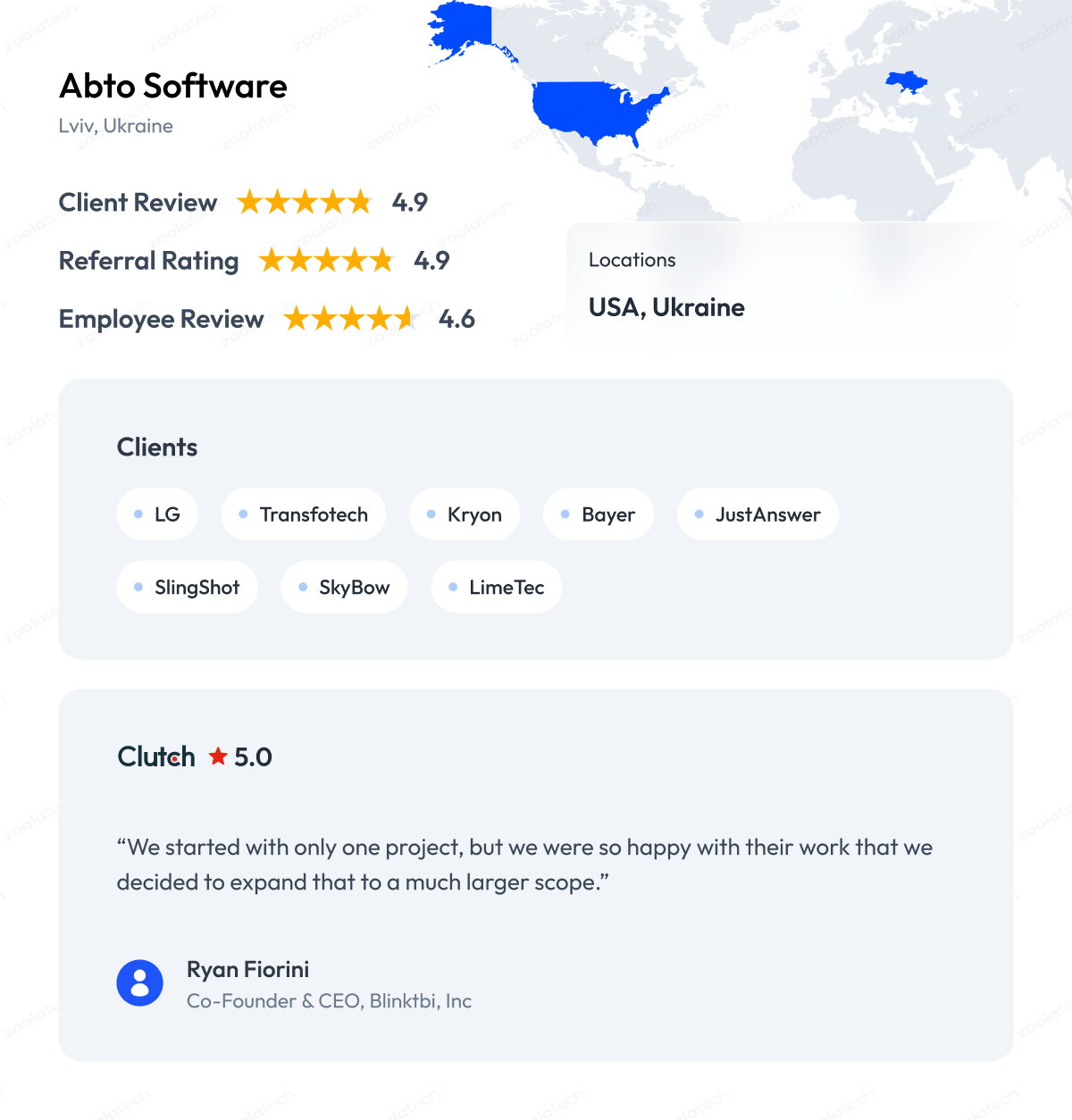
Abto Software is a Ukraine-based software development company with 300+ specialists and strong track record. With almost two decades in the IT game, the company has proven its expertise in delivering science-backed engineering and provides enterprise-grade services for clients across sectors.
They stack 300+ employees, which includes 50+ experts in math and physics – 86% of those have MS degrees. Their clients: from start-ups to mature, billion-dollar organizations and governments, Fortune Global 200 companies among them.
Abto Software’s main focus lies within R&D efforts, in particular RAG solutions, AI agents, CoT, MCP, and other LLM patterns.
The company also stands out for its fruitful long-term partnerships with clients (94% stay for years) and its 4.9 rating on Clutch. The vendor is a strong fit for those looking for deep scientific expertise.
Services: extended teams, dedicated teams, project-based teams, business & technology consulting.
Expertise: AI, ML, CV, NLP, math models, data science, RPA, hyperautomation, migration, modernization
Industries: healthcare & life sciences, construction & real estate, retail, logistics, finance, education, energy & utilities, transportation, government, security, and defence
8. Coherent Solutions
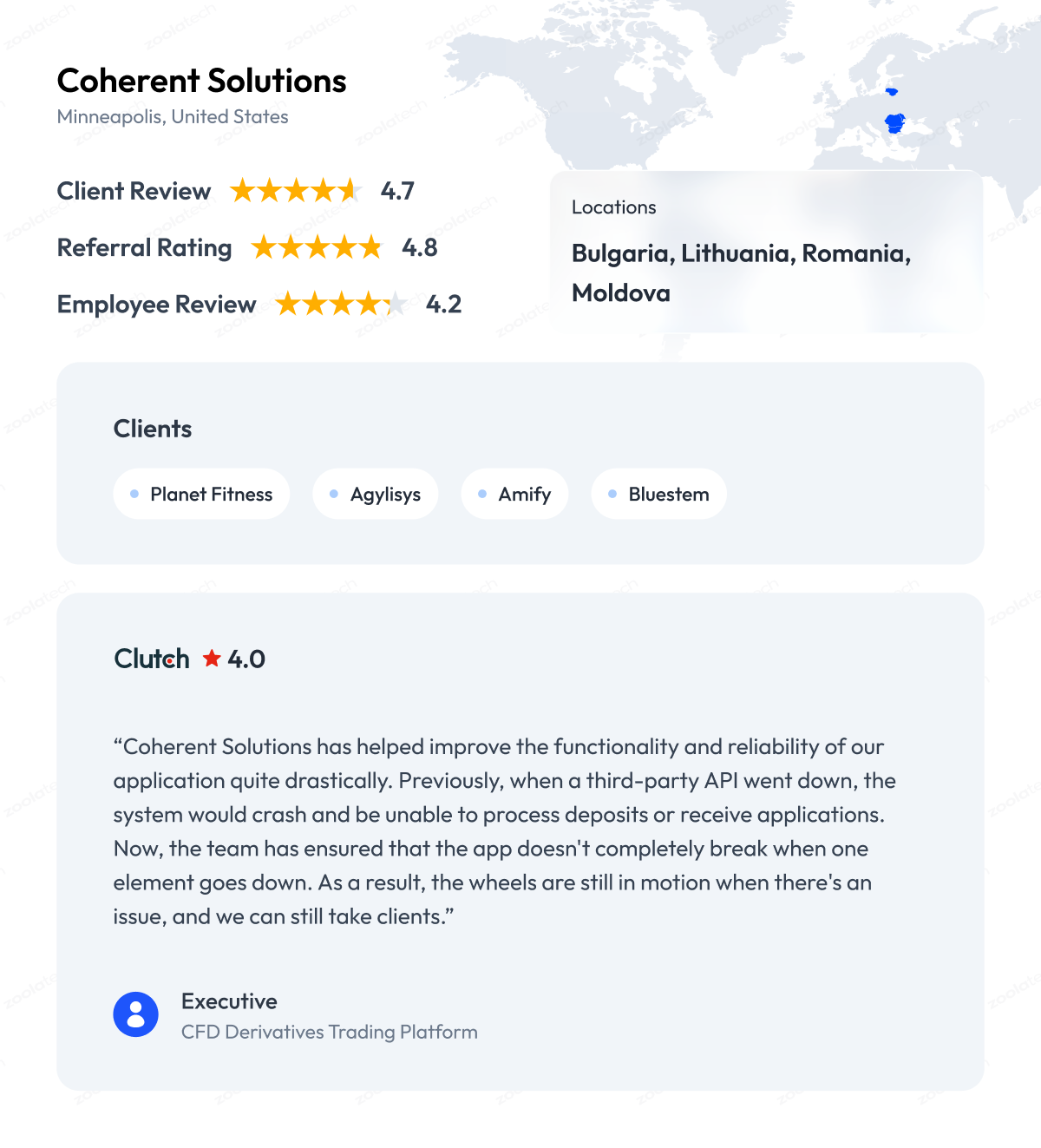
Coherent Solutions is a digital product engineering company dedicated to empowering business success. With a global team of talented professionals, they collaborate seamlessly to deliver innovative solutions that drive measurable business impact.
Since its founding in 1995, Coherent Solutions has been at the forefront of digital product engineering, expanding globally and now operating in 10 countries with over 2000 employees.
Their mission is to empower businesses through cutting-edge technology and innovative solutions while maintaining an environment where customers feel connected, employees are valued, and transparency prevails.
Coherent Solutions’ core values guide the company in delivering exceptional value to employees, clients, and the broader community.
Services: Managed Delivery
Expertise: Digital product engineering, Mobile development, Product design and UX, Data and analytics, DevOps and cloud, Quality assurance
Industries: Financial services, Fitness, Healthcare, Manufacturing, Life sciences, Technology
9. SumatoSoft
SumatoSoft is an offshore software development partner with a US headquarters in Boston and a delivery center in Warsaw. The company has delivered over 350 solutions since its establishment in 2012.
SumatoSoft ensures that its clients have control and predictability over their projects through transparent tracking and documentation, providing direct access to Jira and a living knowledge base in Confluence that includes specifications, diagrams, user stories, and meeting notes.
The company also references ISO 27001 and ISO 9001 as proof points for its quality and security practices, backed by 98% client satisfaction rate and 70% senior specialists on the team.
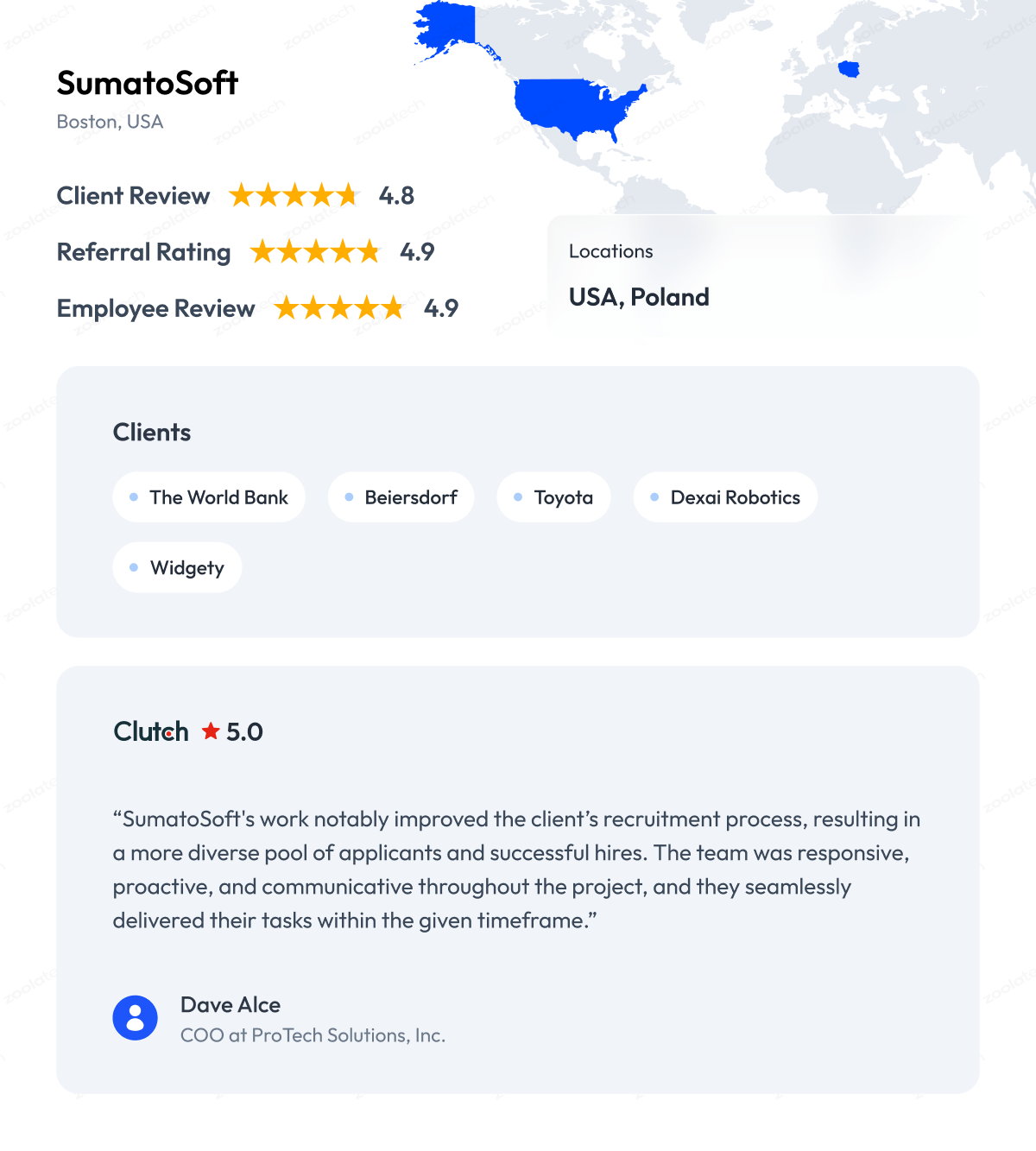
Services: Full-cycle software development, dedicated teams, staff augmentation
Expertise: Bespoke web and mobile development, AI and IoT solutions, enterprise software development, data analytics, QA and testing
Industries: Healthcare, logistics, IoT and industrial systems, AdTech, EdTech, FinTech
10. Orangesoft
Orangesoft is a mature software development company delivering custom solutions for regulated industries, with a strong focus on healthcare and fintech. Founded in 2011, the company brings together a cross-functional team of 100+ software engineers, designers, analysts and technical experts supporting clients across different product stages.
Orangesoft combines strong web and mobile engineering with expertise in AI, IoT, and cloud technologies. Orangesoft follows an ISO/IEC-aligned development process, enabling the delivery of secure, scalable, and compliance-ready solutions aligned with HIPAA, GDPR, FDA, and MDR requirements, making the company a reliable offshore partner for highly regulated environments.
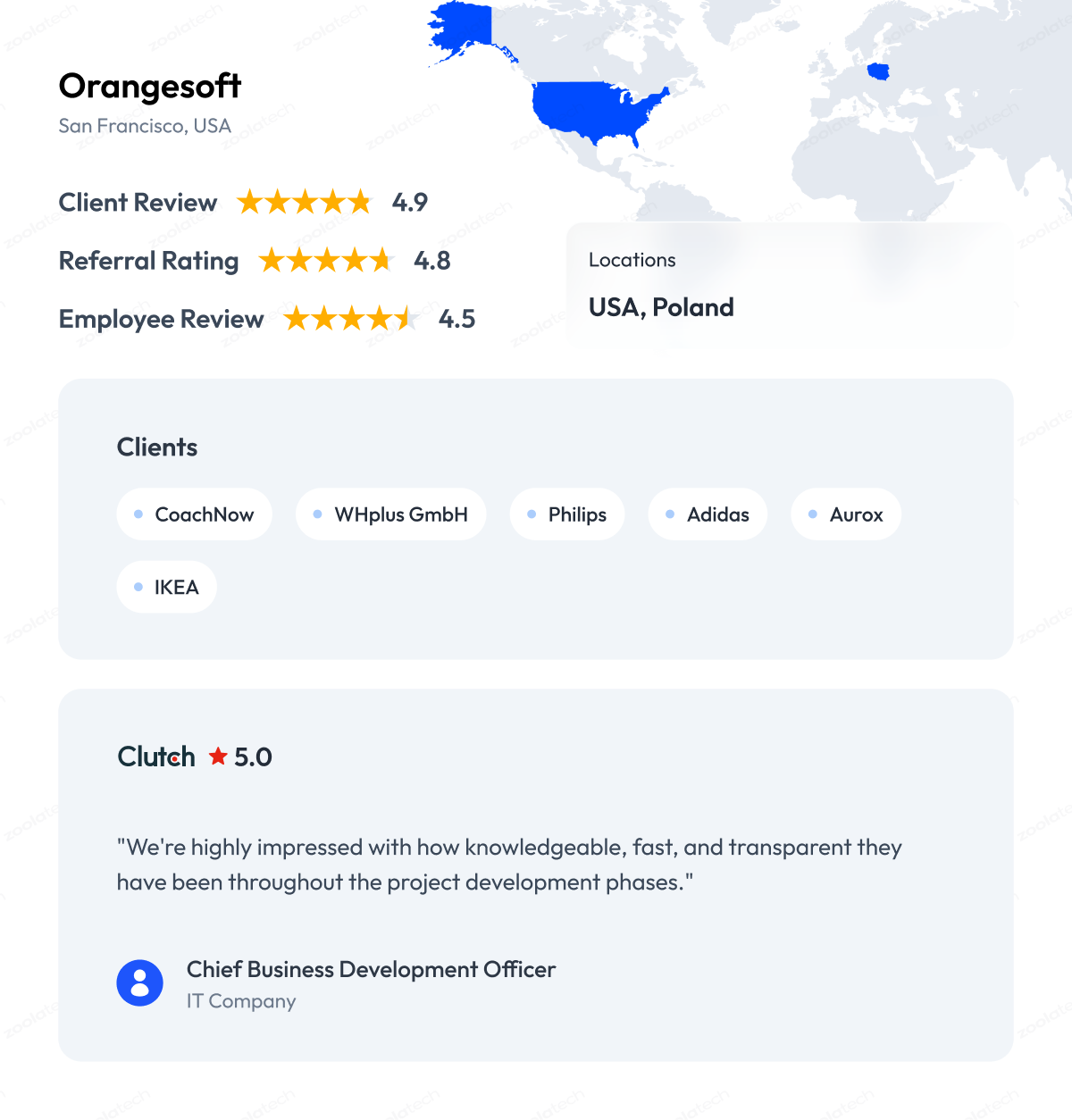
Services: Managed Delivery, Self-Managed Dedicated Teams, Team Extension, Consulting.
Expertise: Custom Software Development, Web and Mobile Development, Artificial Intelligence, Machine Learning, Internet of Things, Cloud services, Strategic consulting.
Industries: Healthcare, Fitness, Fintech
11. Classic Informatics
Classic Informatics is an experienced software development company based in Gurugram, India, with offices in Chandigarh, Sydney, and London. Founded in 2002, it has over two decades of experience building software for startups, mid-market businesses, and enterprises in 30+ countries.
The team builds custom software, web and mobile apps, SaaS platforms, and AI solutions. It also modernizes legacy systems and migrates them to the cloud. Classic Informatics holds a 4.9/5 rating on Clutch.+
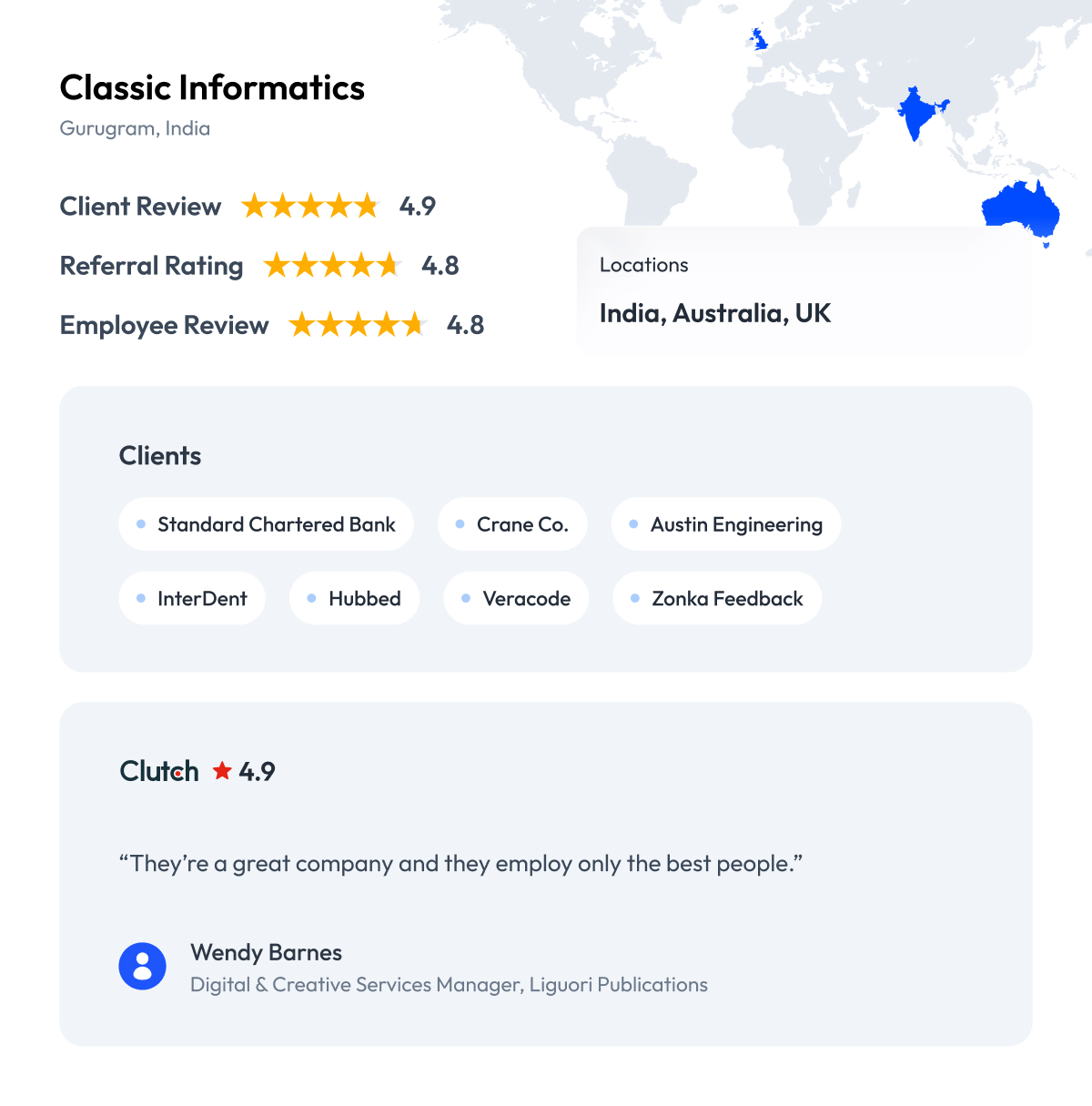
Services: Software Outsourcing, Outsourced Product Development
Expertise: Custom Software Development, Web and Mobile App Development, SaaS Development, MVP Development, AI Development, Legacy Modernization, Cloud Migration, Data Engineering
Industries: Manufacturing, Healthcare, Insurance, Financial Services, Retail, Logistics, Technology
12. Innowise
Innowise is an international software development and IT consulting company headquartered in Warsaw, Poland, with delivery centers across Europe. With over 3,000 specialists — spanning consultants, developers, designers, QA engineers, and project managers — the company provides high-quality offshore development services built on trust and transparency.
Innowise fosters a culture of continuous improvement, professional growth, and open communication. Its teams prioritize shared learning through mentorship, internal workshops, and innovation programs that encourage experimentation and creative problem-solving.
This mindset enables Innowise to deliver tailored software solutions that combine technical excellence with business impact.
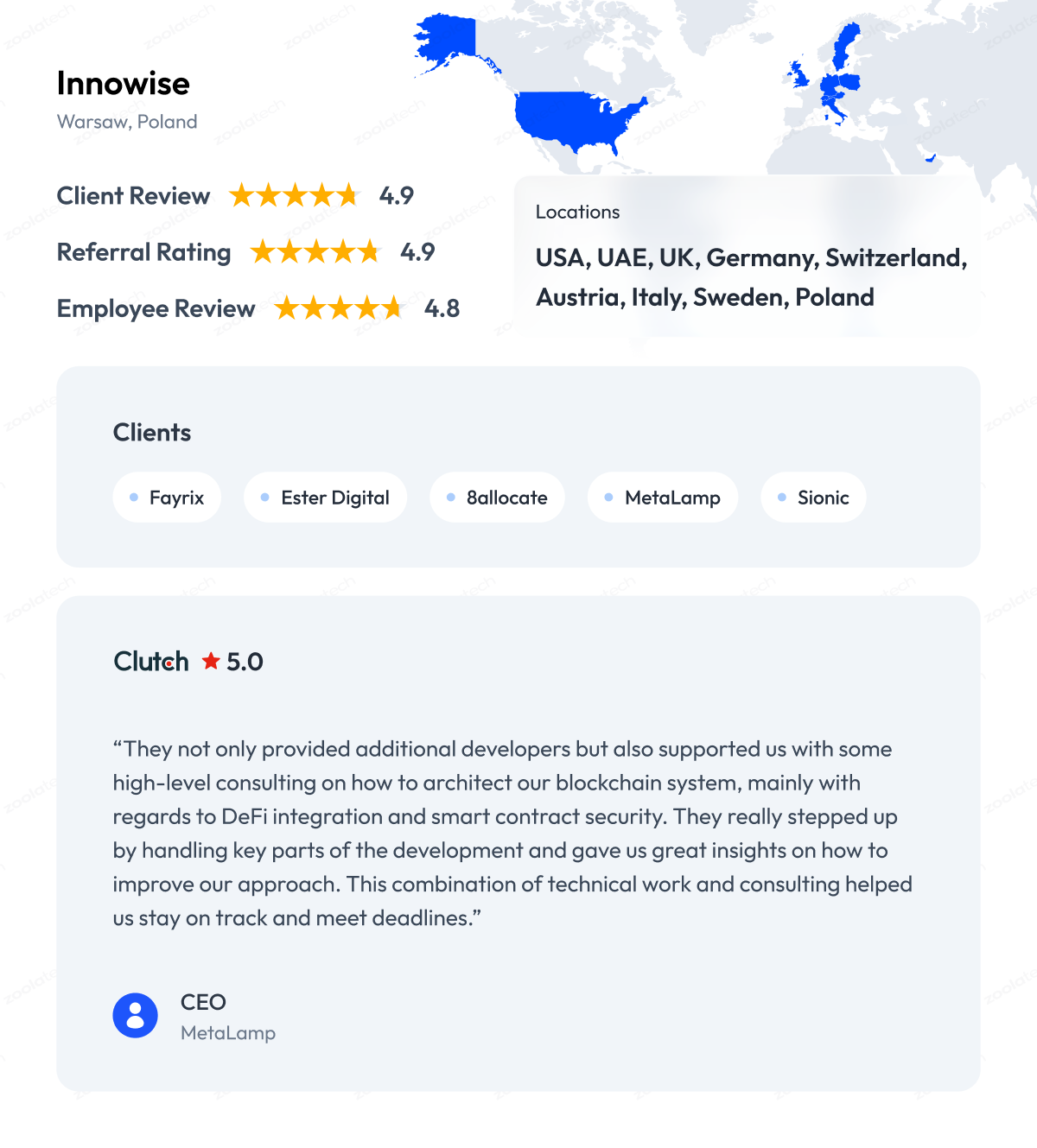
Services: Custom software development, IT consulting, staff augmentation, quality assurance, cloud solutions
Expertise: Web and mobile app development, DevOps, AI & data engineering, UI/UX design, cloud integration
Industries: Finance, Healthcare, eCommerce, Manufacturing, Education, and Logistics
Top offshore outsourcing providers in Latin America
Outsourcing in Latin America offers a compelling combination of cost-effectiveness, a skilled workforce, cultural compatibility, and technological innovation. As a thriving outsourcing hub, the region provides businesses with the tools and resources needed to achieve their goals while minimizing potential downsides.
Brazil is the region’s largest IT outsourcing market with 500,000 developers, according to Statista. Mexico takes second place with 220,000 developers. Cities like Medellín in Colombia and Córdoba in Argentina are competing to become regional technology centers.
The emphasis on digital transformation and innovation has led to a thriving ecosystem, benefitting companies seeking cutting-edge solutions.
13. Icalia Labs
Icalia Labs, initially founded as an Agile Development Shop in 2012, has evolved into a nearshore software product firm. The company’s growth is reflected in its transformation from a team focused on Agile development to a diverse group of professionals from backgrounds like retail, architecture, psychology, and consulting.
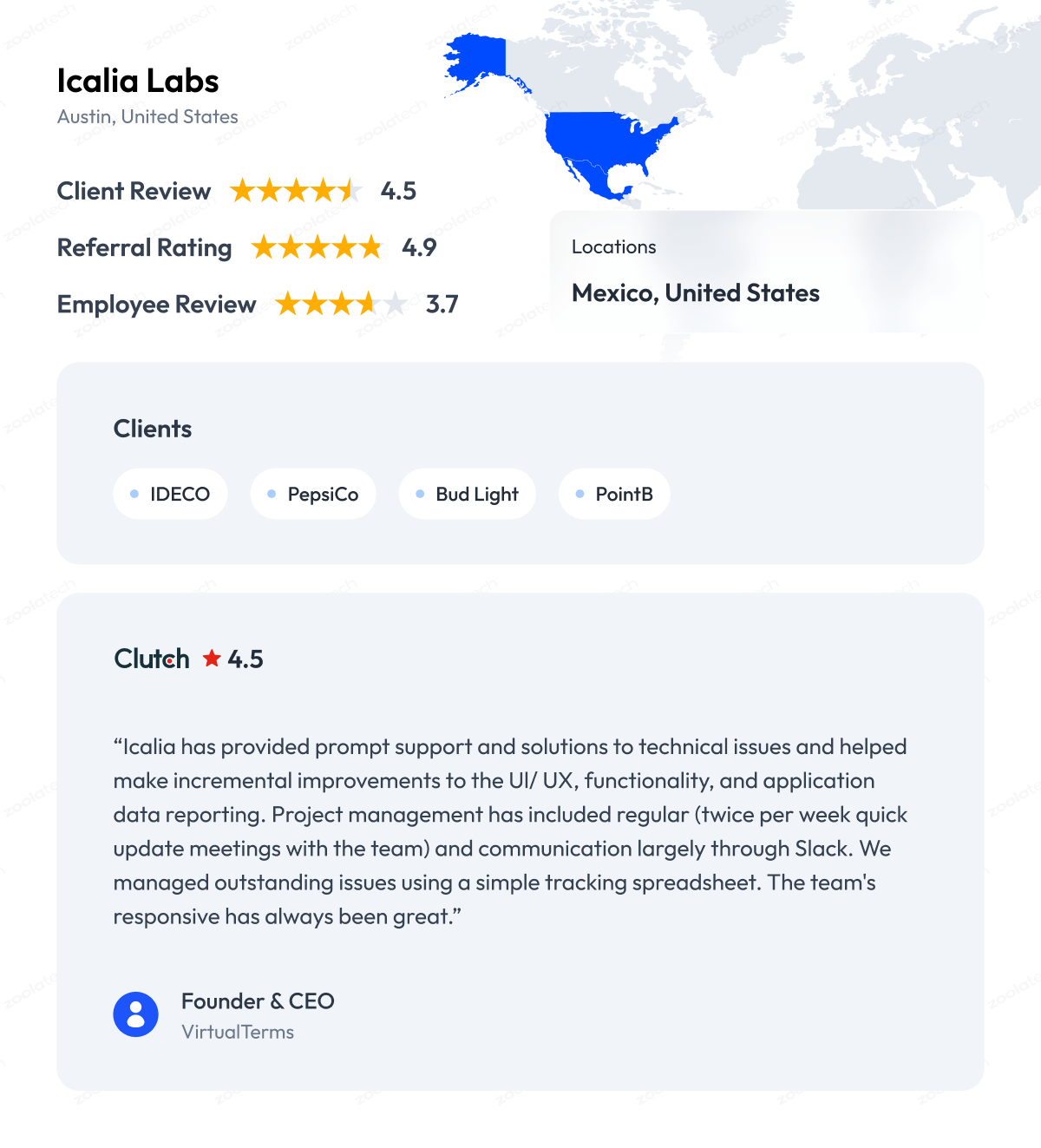
Services: Managed Delivery, Talent Augmentation
Expertise: Web and mobile development, Legacy software modernization, Digital design
Industries: Healthcare, Financial Services, Education, Management consulting
14. MAS Global Consulting
MAS Global is a Florida-based mid-size Agile software development and IT services firm that collaborates with a diverse range of companies and startups. Collaboration and teamwork are integral to their approach, reflecting their belief in the concept that “Together, We Are More.”
MAS Global embraces a culture of continuous learning, staying curious as lifelong learners. They emphasize care for all stakeholders, including employees, clients, the community, and society. The MAS Experience is built on fostering long-term relationships through delivery, responsiveness, flexibility, and positive outcomes.
The provider distinguishes itself by adopting “The Icalier way,” a commitment to driving positive change for humankind through software. Their mission emphasizes the transformative power of technology in creating meaningful and positive impacts on society.
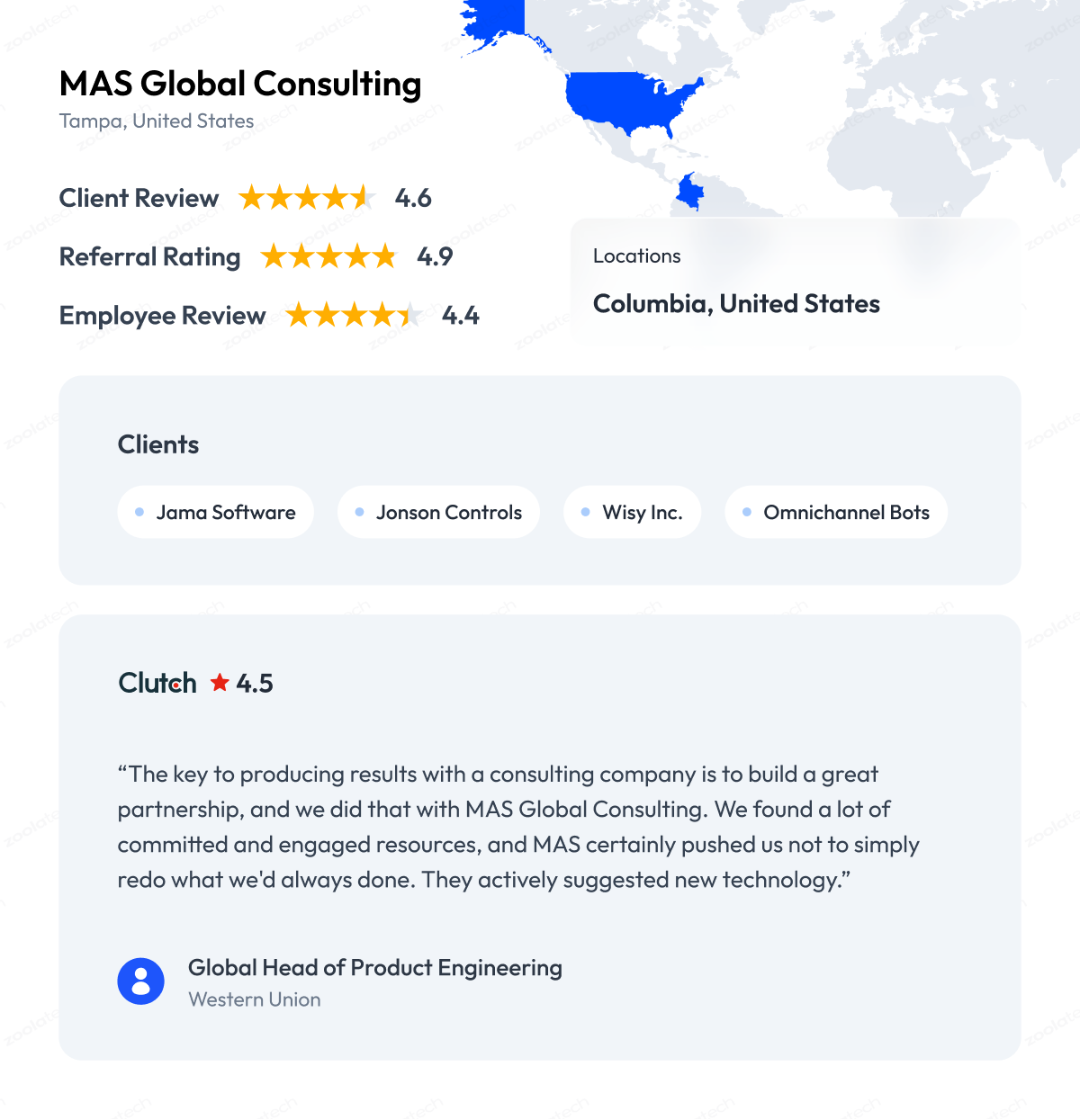
Services: Managed Delivery
Expertise: Web and Mobile Application Development, Legacy Modernization, Functional and Automation Testing, Microservices Architecture, Enterprise Application Integration, iPaaS, DevOps, Cloud Migration, Cloud Advisory, RPA, Data Solutions
Industries: Manufacturing, Financial Services, Automotive, GPS / Navigation & GIS, Medical
15. Ateliware
Ateliware, a custom software development company based in Curitiba, Brazil, specializes in creating digital products and solutions worldwide.
The company’s design and development teams, which participated in the 500 Startups accelerator program in Silicon Valley, prioritize close collaboration with clients and a commitment to continual improvement. Ateliware emphasizes the use of emerging technologies and effective methods in its development process.
The company’s values center around adaptability, driving change with creativity and agility, and enabling collaborative development based on client needs. Ateliware aims to contribute to the transformation of businesses in the short and long terms, focusing on creating products that make a difference from the initial delivery.
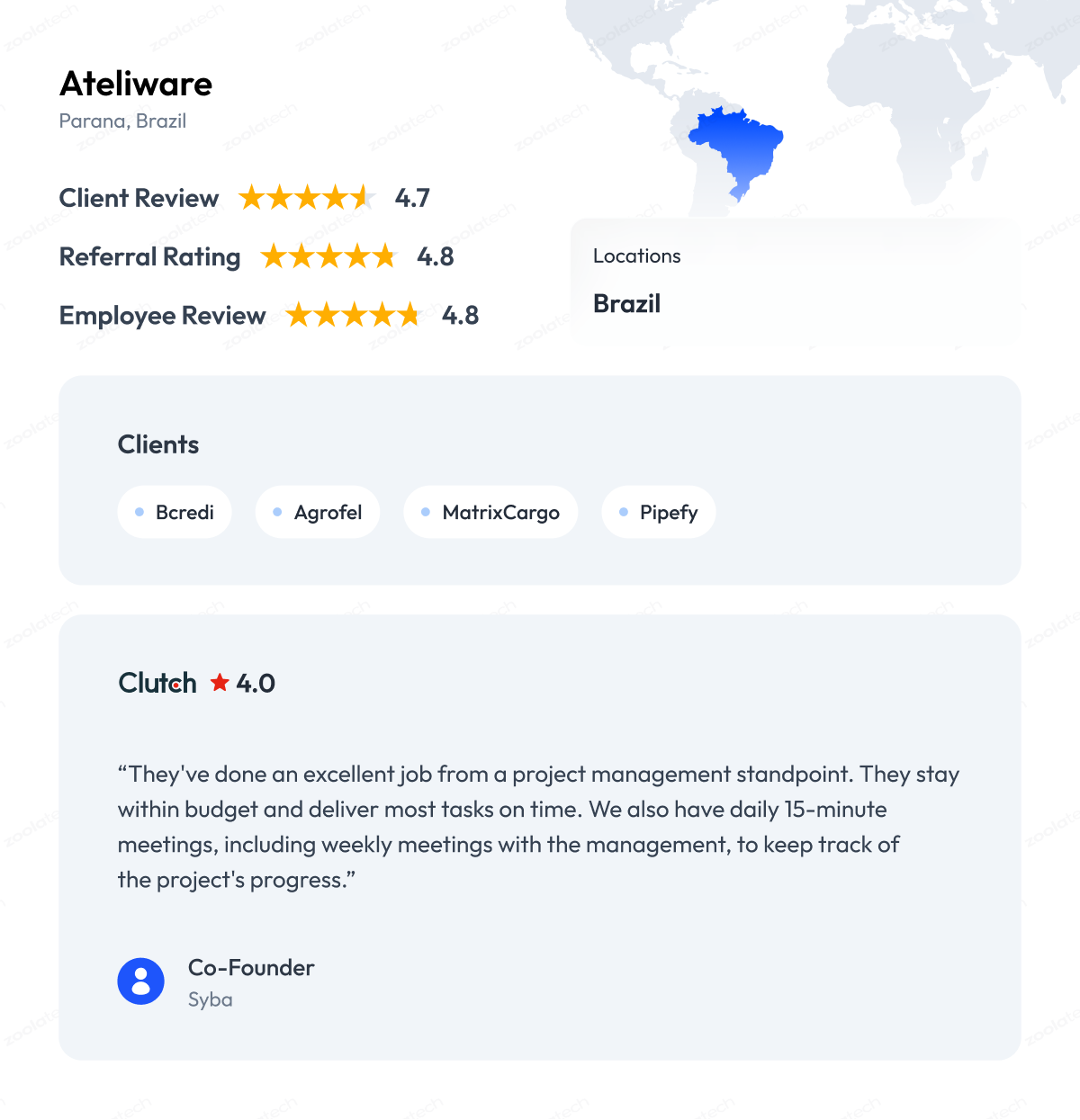
Services: Team Augmentation, Technical Assessment, Design
Expertise: MVP, Web and Mobile Software Development, Microsoft Dynamics 365
Industries: Consumer products and services, Business services, Education, Financial services, Supply chain, Logistics, Transport
16. Luvina Software
Luvina Software is a Vietnam-based Information Technology outsourcing company established in 2004. Specializing in custom software development and digital transformation services for global enterprises, Luvina is one of the Top 10 IT companies in Vietnam, as recognized by VINASA. Headquartered in Hanoi, with offices in Da Nang, Ho Chi Minh City, a branch in Tokyo, Japan, and a representative office in Texas, USA. Luvina has over two decades of experience delivering high-quality software solutions to clients across Japan, the Asia-Pacific, and North America.
Leveraging Vietnam’s strong engineering talent, combined with a deep understanding of international business standards, Luvina positions itself as a reliable long-term technology partner rather than a pure delivery vendor. The company focuses on building scalable, secure, and compliant systems that support enterprise growth and digital modernization.
Luvina Software maintains internationally recognized certifications, including ISO 27001 (Information Security Management), ISO 9001 (Quality Management), and CMMI Maturity Level 3 for Development and Services, reflecting its strong commitment to quality, security, and process excellence. Luvina offers flexible engagement models, including dedicated development teams and end-to-end project delivery, backed by mature processes and strong quality management.
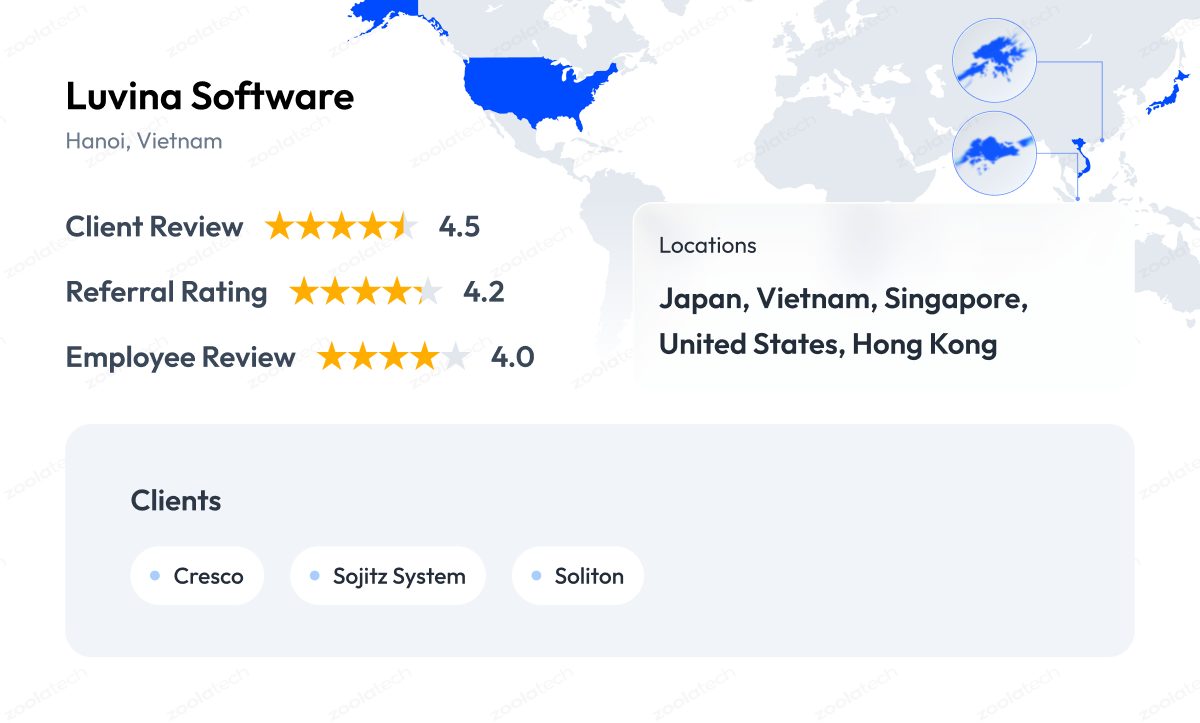
Services: IT Outsourcing, Custom Software Development, Managed Services, Staff/Team Augmentation
Expertise: Enterprise Systems (ERP, CRM, MES), Cloud & Data Platforms, AI & Automation, E-commerce, System Integration
Industries: Manufacturing, Healthcare & Pharmacy, Finance, Retail, Logistics, Education”
17. Ideas2IT Technologies
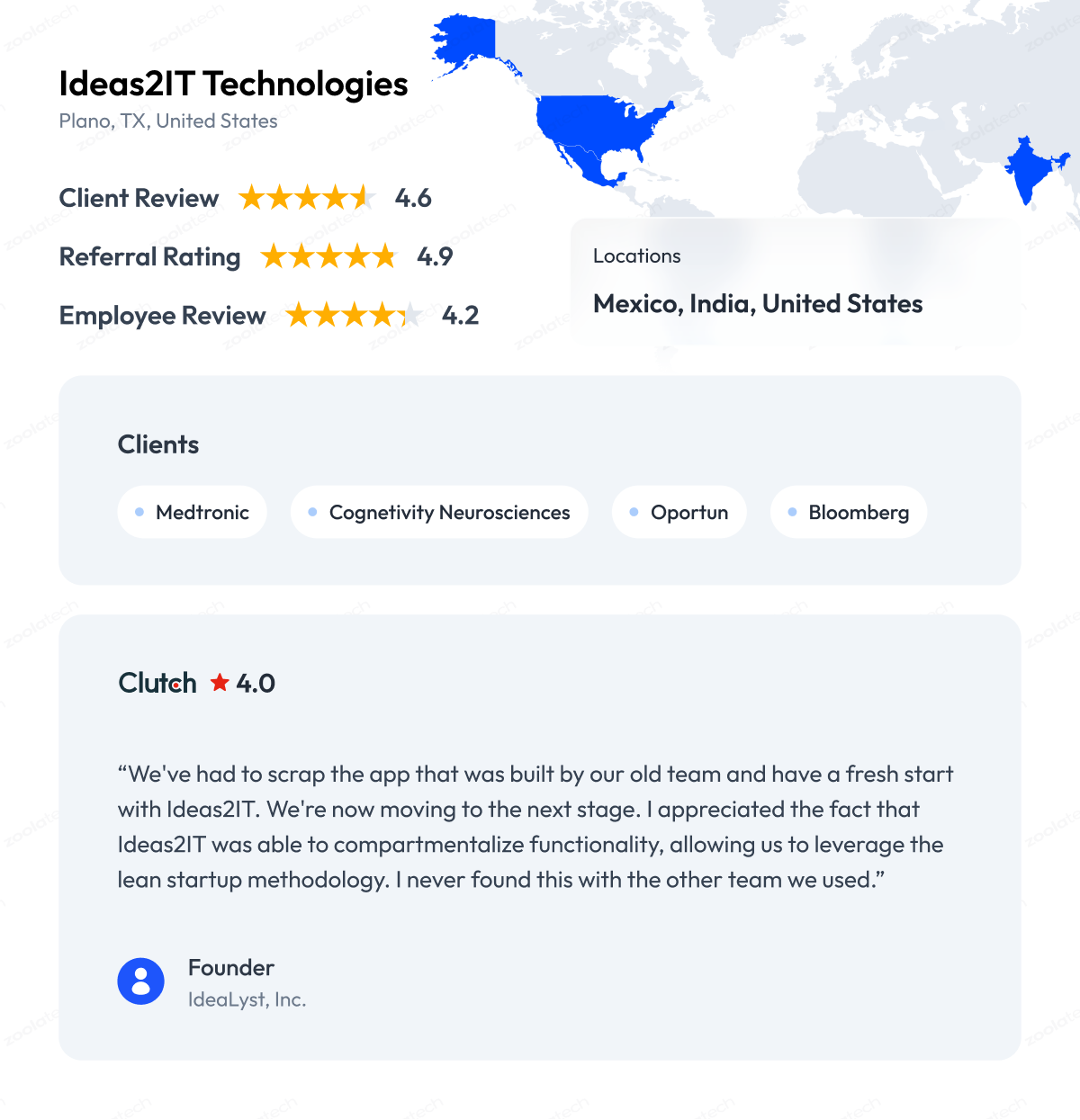
Ideas2IT is a technology company with a focus on nurturing ideas into high-level software delivery. The company has integrated Silicon Valley’s product DNA into its culture and emphasizes transformative products, adaptability in problem-solving, and inclusivity.
The company’s approach to design focuses on intuitive, user-centric experiences that drive innovation. Ideas2IT is actively engaged in Corporate Social Responsibility initiatives, including support for Women in Technology, child education programs, and sustainability efforts.
Services: Managed Delivery
Expertise: Data and Artificial Intelligence, Machine Learning, Cloud Transformation, Application Modernization, DevOps, IIoT
Industries: Pharma and life sciences, Healthcare, Financial services
Top offshore software development companies in Asia
Outsourcing software development to Asian countries can be a viable and successful strategy, especially when considering cost-effectiveness and access to a skilled workforce. However, it’s worth considering the cultural differences in most of the region.
Some Asian countries may also face challenges related to infrastructure limitations, political instability, or other regional factors that could impact project continuity.
On the other hand, Asian countries have developed expertise in specific technological domains. For example, China has seen success in IoT and AI projects, while India is known for a wide range of IT services.
18. OpenXcell
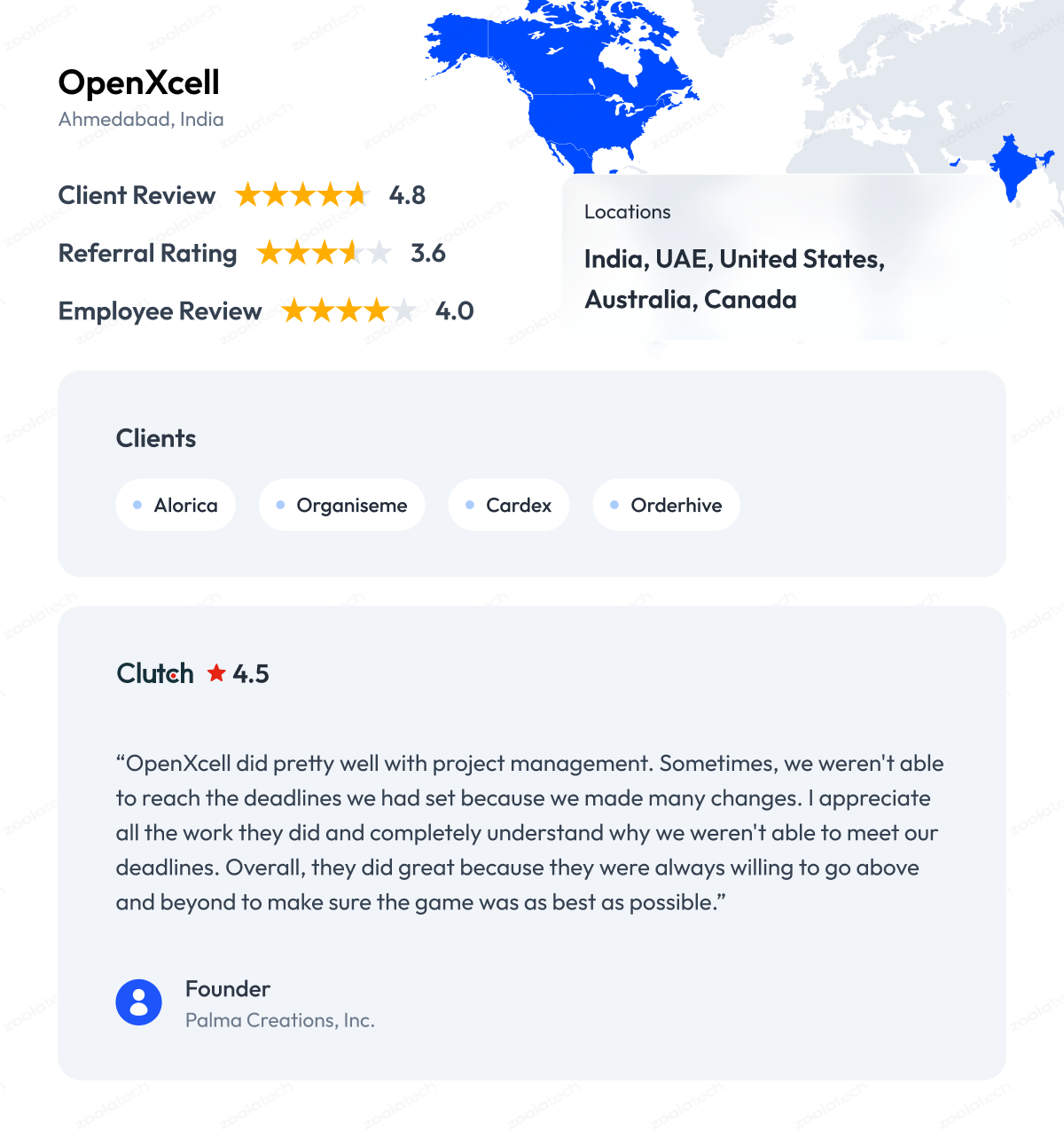
OpenXcell is a software development company established in 2009, specializing in IT consulting and services, particularly known for innovative digital solutions. Based in India, with sales and marketing offices in the USA, Australia, Canada, the UK, and the UAE, OpenXcell helps businesses build and scale dedicated teams.
The offshore development company focuses on delivering cost-effective, functional, user-centric, and innovative technical solutions.
The company emphasizes attention to detail, quality assurance, and meticulous talent selection to assist businesses in becoming profitable assets. OpenXcell positions itself as a reliable partner for businesses seeking software development solutions, with a focus on innovation, quality, and cost-effectiveness.
Services: Managed Delivery
Expertise: Mobile and Web App Development, Product Engineering, UX.UI Design, Quality Assurance, AI & ML. Blockchain, DevOps, eCommerce
Industries: Healthcare, BFSI Solutions, Logistics, eCommerce, Education, Sports & Gaming, Energy & Utility, Real Estate, Media & Entertainment, SaaS
19. Savvycom
Savvycom is an Information Technology company based in Vietnam since 2009, focusing on digital transformation consulting services and software solutions in Finance, Healthcare, and Retail for both domestic and international businesses.
Headquartered in Hanoi, with representative offices in Ho Chi Minh City, the USA, and Australia, Savvycom aims to leverage Vietnam’s engineering resources to empower global businesses through technology. Their vision is to become a leading Digital Technology company in ASEAN.
The company provides flexible IT services as a fully integrated team of strategists, technologists, and designers committed to excellence. The company emphasizes client feedback and invites collaboration with a Partnership Manager for free consultations.
Services: Managed Delivery, Team Augmentation
Expertise: Digital Transformation Solutions, Web and Mobile App Development, Custom Enterprise Software, Blockchain, Cloud & DevOps
Industries: Banking, Financial Services, Education, Beauty, B2B & Digital Payments
20. Orfeostory Pte
Orfeostory Pte was established in 2011 as a mobile app development company, and it evolved into a comprehensive mobile app and web development agency. The agency focuses on making the digital landscape accessible and manageable for SMBs, startups, and companies in Singapore, aligning their success with the achievements of their clients.
The company positions itself as a reliable, long-term partner for mobile app and website development, driven by a commitment to innovation, client empowerment, and staying ahead of industry trends.
Services: Managed Delivery
Expertise: Mobile and Web App Development, Website Design, CRM App Development, Website SEO, WordPress Plugin Development
Industries: eCommerce, Financial Services, Government, Hospitality & Leisure, Information Technology
21. IndiaNIC
IndiaNIC is an offshore software development company established in 1998. The company specializes in delivering industry-led mobility solutions, including web and mobile application development, with a focus on technologies like IoT, AI-ML, AR-VR, Voice assistants, DevOps, and Cloud computing.
The company’s core values include delivering reliable and quality services, prioritizing client satisfaction, adopting a result-oriented approach, and maintaining integrity in everything. IndiaNIC values lasting relationships with clients and believes in making a difference in people’s lives by helping them achieve their goals.
Services: Managed Delivery, Team Extension
Expertise: Enterprise Development, Digital Commerce, Artificial Intelligence, Quality Assurance, Web and Mobile Development
Industries: Healthcare, Logistics, Education, Media & OTT, Travel, Retail, Construction, Beauty & Lifestyle, Sports, Legal, Finance, Social Media, Insurance, Manufacturing, IT & Telecom, Marketplace
22. Hengtian
Hengtian is a technology services company formed through an alliance among State Street Corporation, Insigma Technology, and Zhejiang University back in 2004. It provides offshore and onshore technology services, solutions, and consulting to clients like State Street, Cisco, Nike, and others in various countries.
The company originated from the ZJU State Street Technology Center and has grown into a global software research and development hub.
The company aims to bridge the real and digital worlds, offering one-stop technology services in fields such as digital finance, new retail, smart energy, and government digital services.
Services: Managed Delivery, Team Extension
Expertise: System Modernization, Quality Assurance, CX Design, Mobile and Web Development, Data Science and Deep Learning, Blockchain, Big Data, Business Intelligence, Cloud Infrastructure, DevOps
Industries: Financial Services, eCommerce, Information Technology, Manufacturing
Best Practices for Offshore Success (with Action Items)
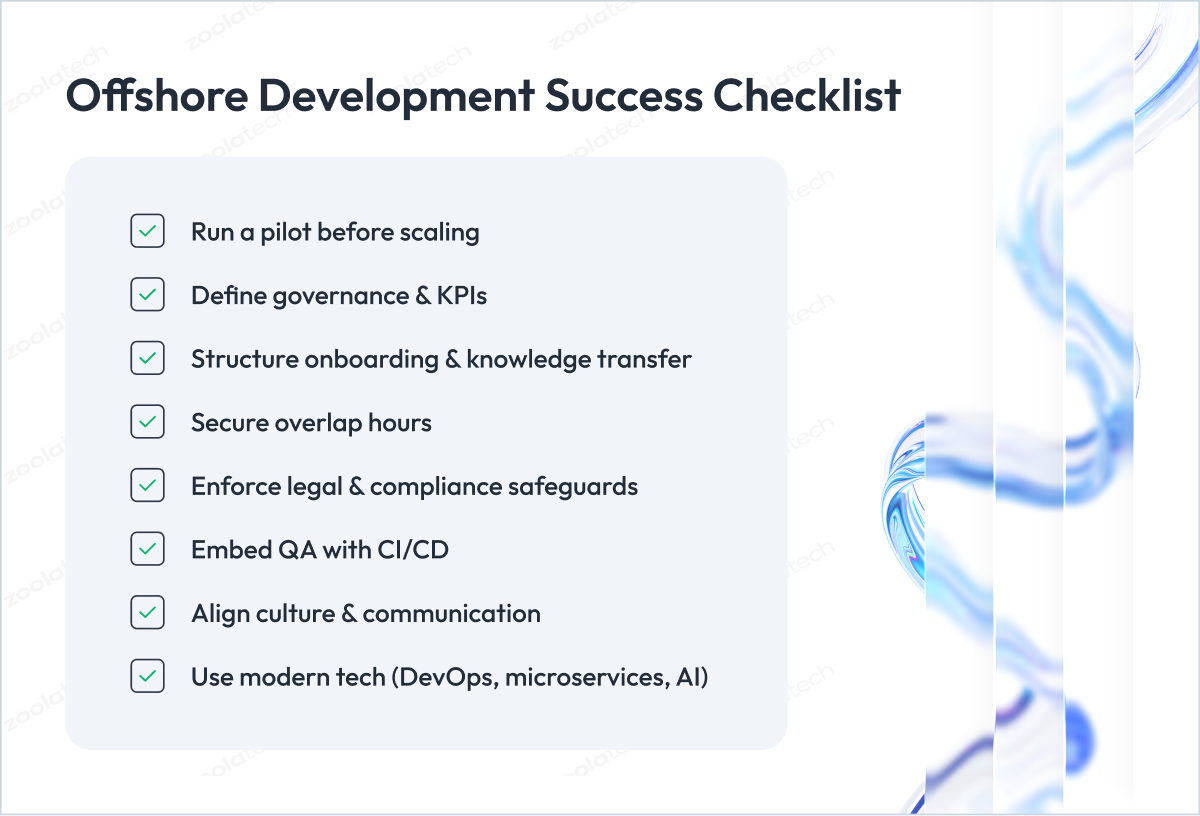
Offshore software development can deliver significant cost, scalability, and innovation benefits, but only when supported by strong execution. Enterprises that succeed treat offshore collaboration as a structured, governed process rather than a transactional vendor relationship.
Below are the best practices and concrete actions that set successful offshore partnerships apart.
Pilot project setup
Begin with a contained 6-12 week pilot before scaling. This reduces risk while validating delivery quality, technical maturity, and cultural alignment. A well-scoped pilot—often a non-critical feature or module—provides a safe environment to test governance, speed, and collaboration before larger commitments.
Action items: Define success metrics upfront, choose a low-risk but meaningful project, and evaluate both delivery output and integration with your internal team.
Governance & KPIs
Governance ensures that offshore software development services deliver at enterprise-grade quality. Mature enterprises establish joint governance committees, clear escalation paths, and KPIs that go beyond cost. Tracking velocity, defect rates, and release predictability helps maintain transparency and trust.
Action items: Set up regular steering meetings, create a governance dashboard, and align metrics with in-house performance benchmarks.
Knowledge transfer & onboarding
Knowledge gaps are one of the most common failure points in offshore outsourcing. A structured onboarding process—documentation, shadowing, and secure system access—accelerates productivity while avoiding costly misunderstandings.
Action items: Assign in-house mentors for the first weeks, provide standardized documentation, and enforce secure access protocols from day one.
Overlap working hours
Time-zone differences can slow delivery unless mitigated. Successful enterprises secure 2–3 hours of daily overlap for agile ceremonies and real-time collaboration. The rest is managed asynchronously with robust tooling.
Action items: Schedule overlap hours for critical meetings, rotate overlap windows fairly, and complement them with asynchronous tools like Confluence or Loom.
Security & legal safeguards
Offshore software development outsourcing often involves sensitive data. Enterprises must enforce strict IP protection, confidentiality agreements, and regulatory compliance. Certified partners with GDPR, HIPAA, or PCI DSS credentials reduce governance risks.
Action items: Draft contracts with explicit IP clauses, run compliance audits, and monitor DevOps pipelines for security adherence.
Quality embedded from day one
Enterprises that treat QA as an afterthought pay heavily in rework. Instead, quality must be embedded from the first sprint. Automated testing, CI/CD pipelines, and peer reviews ensure that offshore teams meet the same standards as in-house squads.
Action items: Launch with CI/CD enabled, enforce coding standards, and measure defect density as a KPI.
Culture & communication alignment
Cultural misalignment often creates more friction than technical gaps. Enterprises that invest in cross-cultural training, shared rituals, and strong communication practices see higher offshore team retention and performance.
Action items: Train both sides on cultural expectations, assign onshore product owners to bridge gaps, and celebrate shared milestones to foster team identity.
Modern tech practices
Offshore partners should not only match but also enhance your technology stack. Best-in-class offshore software development companies apply DevOps, microservices, and AI-driven automation to improve delivery velocity and resilience.
Action items: Validate partner maturity in DevOps, require microservices adoption for modularity, and ensure AI integration for QA and monitoring.
Outsourcing Saves Costs: Facts and Numbers
Cost savings remain the number-one reason enterprises choose offshore software development outsourcing. But savings go far beyond lower hourly rates. They come from eliminating overhead, accelerating hiring, and reducing long-term resource costs.
Companies outsource an average of 76% of their IT functions—including app development, infrastructure, and support. Outsourcing is no longer a tactical choice; it has become a standard operating model for enterprise IT.
In-house costs go beyond salaries
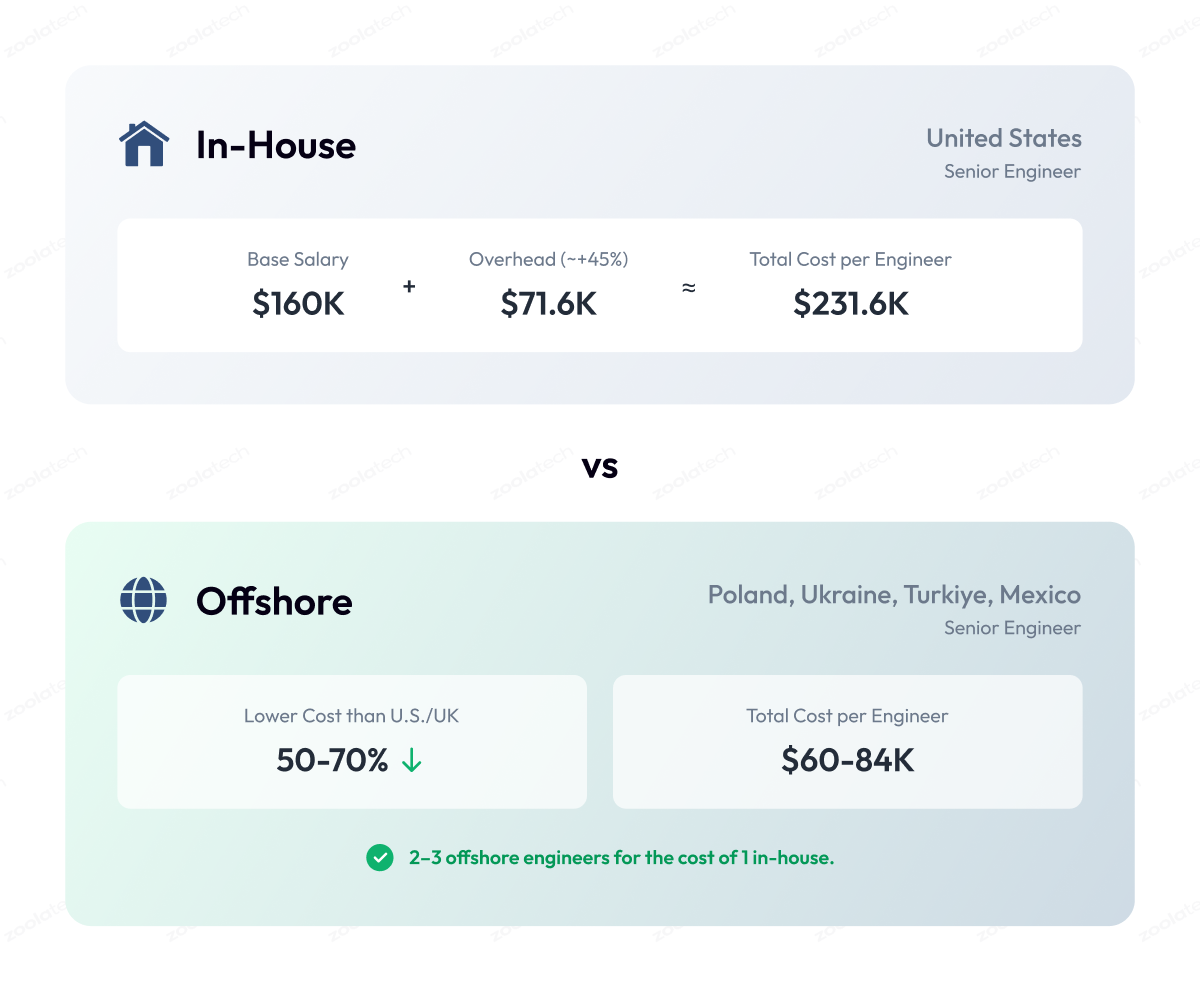
Hiring in-house engineers is significantly more expensive than it looks on paper. A senior software engineer in the US may cost $160K in salary, but once you add recruitment, social taxes, benefits, insurance, office, HR, and severance, the true annual cost rises by ~45%. That brings the total to $231K+ per engineer.
For larger teams, these overheads multiply:
- A team of 10 in-house engineers costs the equivalent of hiring 15.
- A team of 20 costs the equivalent of 29, once overhead is factored in.
This is why many enterprises establish offshore software development centers—to reduce structural overhead while accessing larger talent pools.
Offshore cost advantage
In major outsourcing destinations like Poland, Ukraine, Turkey, and Mexico, senior engineers typically cost 50–70% less than in the US or UK. These savings come not only from salary differences but also from reduced taxation, lower recruitment costs, and minimal operational overhead.
Example:
- Senior engineer in the US: $160K base + ~$71K overhead = $231K total.
- Senior engineer in Mexico, Turkey, or Ukraine: $60–84K average total cost.
The delta is clear: enterprises can fund 2–3 offshore engineers for the cost of one in-house hire.
Beyond labor costs: structural savings
Outsourcing also reduces costs tied to:
- Recruitment & retention: The offshore partner handles sourcing, screening, and retention programs.
- Facilities & operations: Office space, equipment, and admin overhead are absorbed by the vendor.
- Scalability: Enterprises can flex teams up or down without severance payments or HR burden.
- Speed to market: Faster access to talent reduces opportunity costs by cutting delivery timelines.
Strategic conclusion
IT outsourcing doesn’t just reduce payroll—it transforms the cost structure of delivery. By shifting fixed costs (recruitment, benefits, facilities) into a flexible service model, enterprises can reallocate budgets to innovation while still maintaining in-house delivery standards.
Trends & Future Outlook (2025–2030)
The outsourcing landscape is entering a new phase. Between 2025 and 2030, offshore software development will be shaped less by pure cost arbitrage and more by technology maturity, compliance, and sustainability pressures.
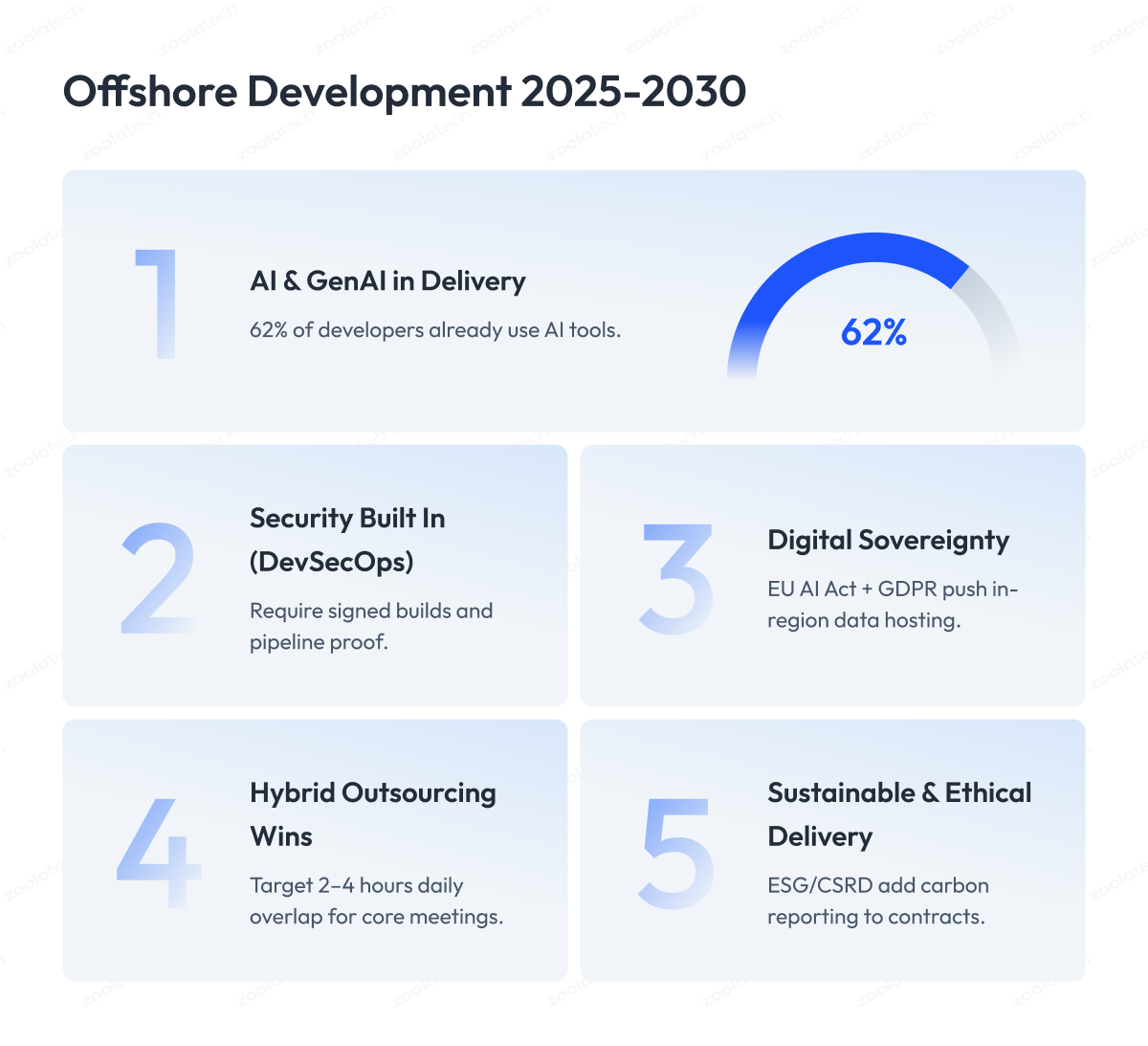
1. AI/GenAI adoption in development
AI becomes a first-class tool in the delivery toolchain, from code generation to test/data scaffolding. Usage is already mainstream—76% of developers use or plan to use AI tools in 2024 (62% actively use them)—and productivity uplifts have been demonstrated in controlled studies (+55.8% faster on a focused coding task).
Expect 2025–2030 roadmaps to pair AI coding assistants with guardrails (policy, prompts, evals) and integrate LLMs into CI to auto-generate tests, docs, and runbooks.
2. Security & DevSecOps as standard
Security shifts left and lands inside developer workflows: policy-as-code, SAST/DAST in CI, SBOMs, and automated threat modeling. Gartner highlights security’s growing centrality to resilience as digital estates sprawl; industry guidance stresses embedding controls in the pipeline (DevSecOps) rather than gating releases.
By 2025–2030, expect vendor contracts for offshore software development services to mandate pipeline-level evidence (attestations, SBOM, infra-as-code reviews).
3. Digital sovereignty & compliance-driven partner choice
Sovereignty moves from “nice to have” to a request for proposal (RFP) hard requirement. The EU AI Act and adjacent EU initiatives push risk-based controls on AI systems; combined with GDPR, data-residency clauses, and sector rules (e.g., payments/health), buyers will increasingly prefer partners that can prove jurisdictional control (hosting, access, support) and alignment with EU-lawful processing. Expect more nearshore/offshore bids featuring sovereign cloud patterns and EU-only data access.
4. Hybrid outsourcing (onshore + nearshore + offshore)
Deloitte’s survey shows a balanced sourcing mix is rising: organizations are insourcing select scopes while still expanding third-party spend and using Build/Operate/Transfer models to stand up global-in-house capabilities.
2025–2030 operating models will normalize hybrid squads (onshore product owners + nearshore platform teams + offshore feature factories) to optimize time-zone overlap, cost, and compliance.
5. Sustainable / ethical outsourcing
As per Gartner, ESG and regulatory pressure (e.g., EU CSRD) pull sustainability into vendor selection. Expect master services agreements to include sustainability KPIs (energy/carbon reporting for environments, device lifecycle policies) and ethical workforce clauses for offshore locations.
Strategic Decision Matrix
The matrix encodes the real trade-offs (time-zone overlap, regulatory exposure, and total cost of ownership) and links them to concrete operating models—from nearshore agile pods to an offshore software development center.
| Scenario | Best Fit & Why |
| Strict compliance / regulated data (PCI, HIPAA, GDPR residency) | Onshore: the lowest legal exposure and fastest audit path; add nearshore only if jurisdictionally aligned. |
| High-cadence product iteration (daily design reviews, rapid UX loops) | Nearshore: 2–4h overlap sustains agile ceremonies without onshore costs. |
| Large-scale build-out (50–200+ FTE) / cost pressure | Offshore: maximize scale with an offshore software development center; govern with clear SLAs to protect quality. |
| Rare skills (AI/ML, cloud platform, microservices hardening) | Offshore (talent depth) or Hybrid (nearshore lead + offshore pods) to balance expertise with collaboration. |
| Follow-the-sun delivery (24/7) | Hybrid: onshore product owners + nearshore platform + offshore feature teams to compress cycle time. |
| Ambiguous scope / discovery-heavy work | Onshore for discovery, then nearshore for build; avoid pure offshore until requirements stabilize. |
| Tight budget with fixed scope | Offshore: lowest offshore software development cost; mitigate with automated QA and milestone-based acceptance. |
| Sovereign cloud / data residency mandates | Nearshore within jurisdiction (e.g., EU) or Onshore; use offshore only for non-data-touching components. |
| Short-term capacity burst / staff augmentation | Nearshore team extension for immediate overlap; add offshore software development team for backlogged modules. |
| Ops hardening & reliability (DevSecOps, SRE, SBOM) | Nearshore with strong DevSecOps maturity; bolt on offshore for automation at scale. |
| Legacy modernization to composable/MACH | Hybrid: onshore architecture decisions; nearshore integration; offshore custom software development for service factories. |
Final Words
Offshore software development can be a durable advantage when it’s run with discipline. You gain a lower total cost of ownership, access to scarce skills (AI, cloud, microservices), and elastic capacity without downgrading quality.
The main risks—communication gaps, time-zone friction, QA drift, and security/compliance exposure—are real but controllable with the right operating model.
Treat offshore outsourcing software development as a lever for digital transformation, not a procurement tactic. Use it to accelerate legacy modernization, stand up composable architectures, and speed omnichannel and mobile roadmaps.
A hybrid mix usually wins: onshore for product and compliance, nearshore for high-collab work, and offshore software development services for throughput at a predictable offshore software development cost.
Action checklist
- Pilot first (6–12 weeks) to validate fit and speed.
- Set governance & KPIs (velocity, quality, MTTR, security).
- Ensure daily overlap hours and clear handoffs.
- Embed DevSecOps/CI-CD and automated QA from day one.
- Lock IP, data residency, and regulatory clauses up front.
- Plan structured onboarding and knowledge transfer.
If you want a pragmatic, low-risk path, engage Zoolatech. As a senior-led offshore software development company, we’ll design a tailored model (country mix, team design, engagement type, security guardrails) and stand it up with a measurable pilot—so you can scale with confidence.