







































EHR software development
Give clinicians a record that fits their specialty, not workarounds.


Cross-industry engineering experience across regulated and high-growth sectors.
All Industries















“More than a quarter of US healthcare administrative spending, an estimated $265 billion, could be eliminated without compromising care.” — McKinsey & Company

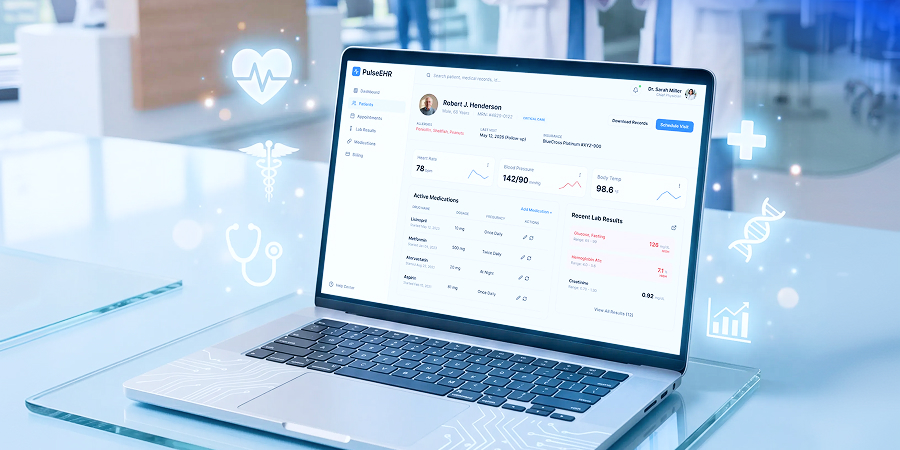
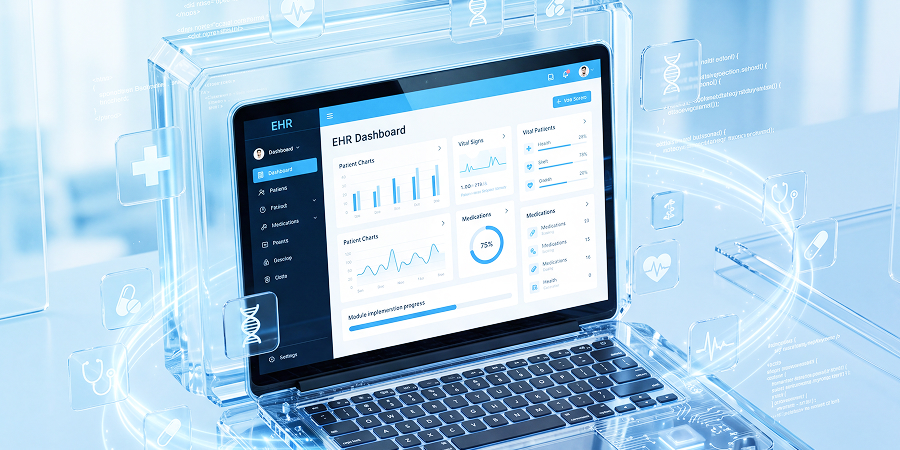
EHR and EMR platforms that fit specialty workflows and connect to your existing healthcare systems.
Telemedicine software that ties video visits, triage, and billing into one auditable patient journey.
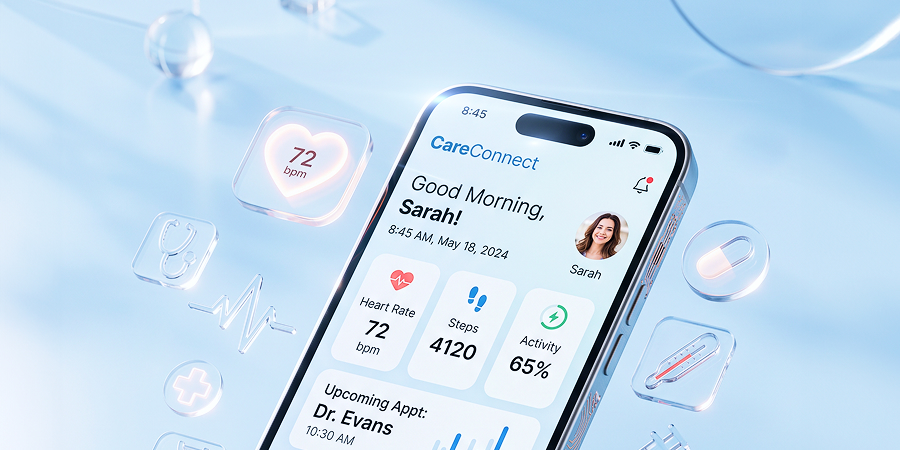
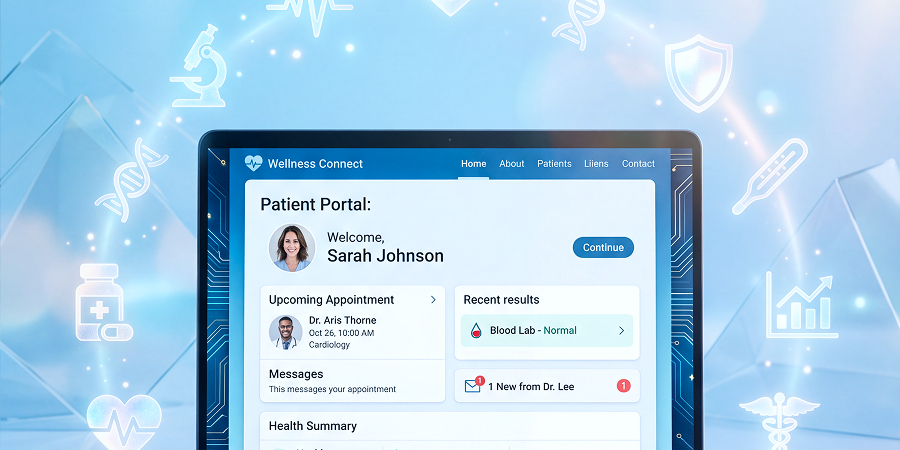
Portals and healthcare applications that give patients secure records access and clear communication.
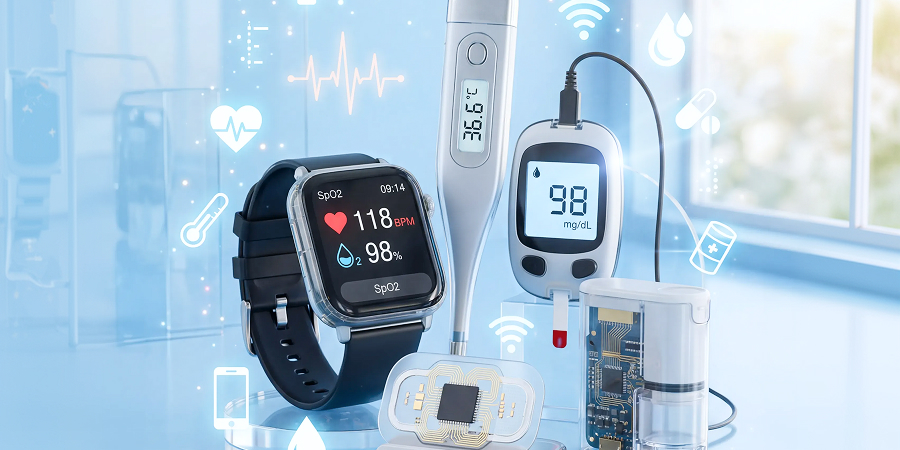
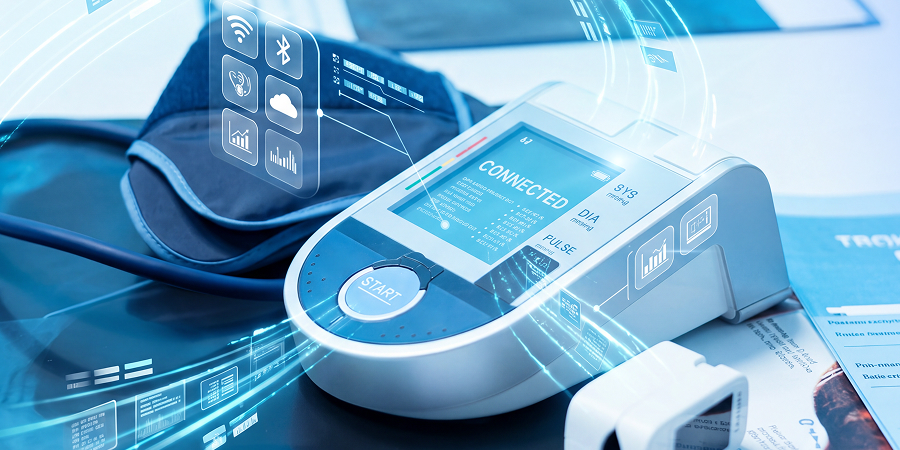
Remote patient monitoring that streams device readings into clinician dashboards with threshold-based alerting.
Hospital and practice management software that coordinates admissions, scheduling, staffing, and capacity.
Healthcare analytics platforms that turn scattered healthcare data into operational and clinical insight.
Medical imaging software with DICOM and PACS integration for faster, safer diagnostic review.
Pharmacy and e-prescribing tools that connect prescribing, dispensing, and medication records securely.
Connect new tools to Epic, Oracle Cerner, and athenahealth through governed interfaces.
Clinical decision support that surfaces guidance inside the workflow, never beside it.
NCPDP SCRIPT e-prescribing that reduces manual entry and prescribing errors.
Assistive and population-health tools that help healthcare organizations reach at-risk patients earlier.
“Healthcare has the highest data breach cost of any industry, at $7.42 million.” — IBM













































 USA
USA PL
PL UA
UA MX
MX TR
TR
A healthcare software development company designs, builds, and maintains custom systems such as EHR platforms, telemedicine, patient portals, and medical device software. Teams that develop healthcare software daily also handle needs like HIPAA compliance and HL7/FHIR integration.
The cost of custom healthcare software depends on complexity, regulatory scope, and integrations, so a fixed number before discovery is misleading. Software costs firm up after we map workflows and scope an estimate for your healthcare platform.
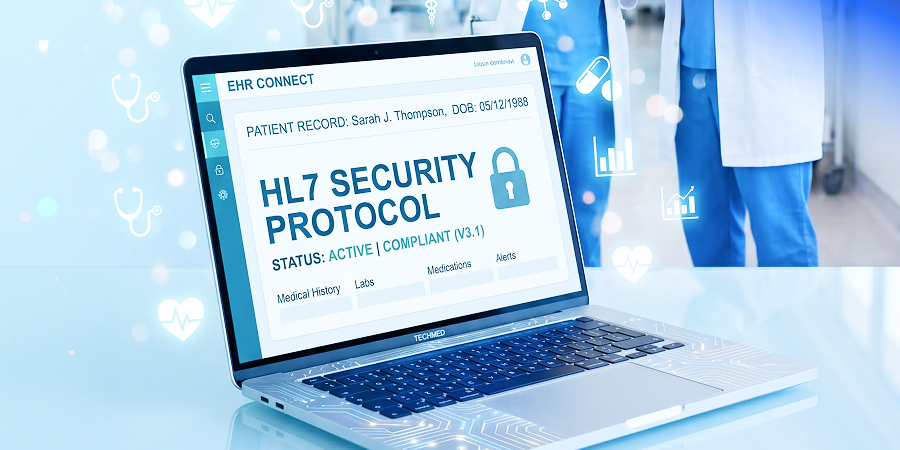
Most systems must meet HIPAA and HITECH, while device software adds FDA 21 CFR Part 11 and IEC 62304. Interoperability requires HL7, FHIR R4, and ONC rules, and EU-facing systems require GDPR.
We encrypt protected health information at rest and in transit, enforce role-based access, and log every record access for audit readiness. Security testing validates these controls before any release reaches production.
Yes. We connect to Epic, Oracle Cerner, and athenahealth through their FHIR R4 APIs, and we build HL7 v2 interfaces with Mirth Connect for older systems. Every integration is tested in a sandbox first.
Off-the-shelf software deploys faster but limits you to its workflows, while custom software fits your clinical processes and integrates deeply. Many healthcare organizations start packaged and move to custom as they scale.
Yes. We offer managed delivery, team extension, and offshore delivery centers staffed across Poland, Ukraine, Mexico, and Turkey, with US coordination. The model suits organizations seeking cost-predictable engineering without losing domain depth.
We pair deep regulated-industry delivery with named proof, including FDA-grade modernization and ISO 42001 AI governance for MasterControl. Every engagement runs under VP-led governance and formal QA gates.