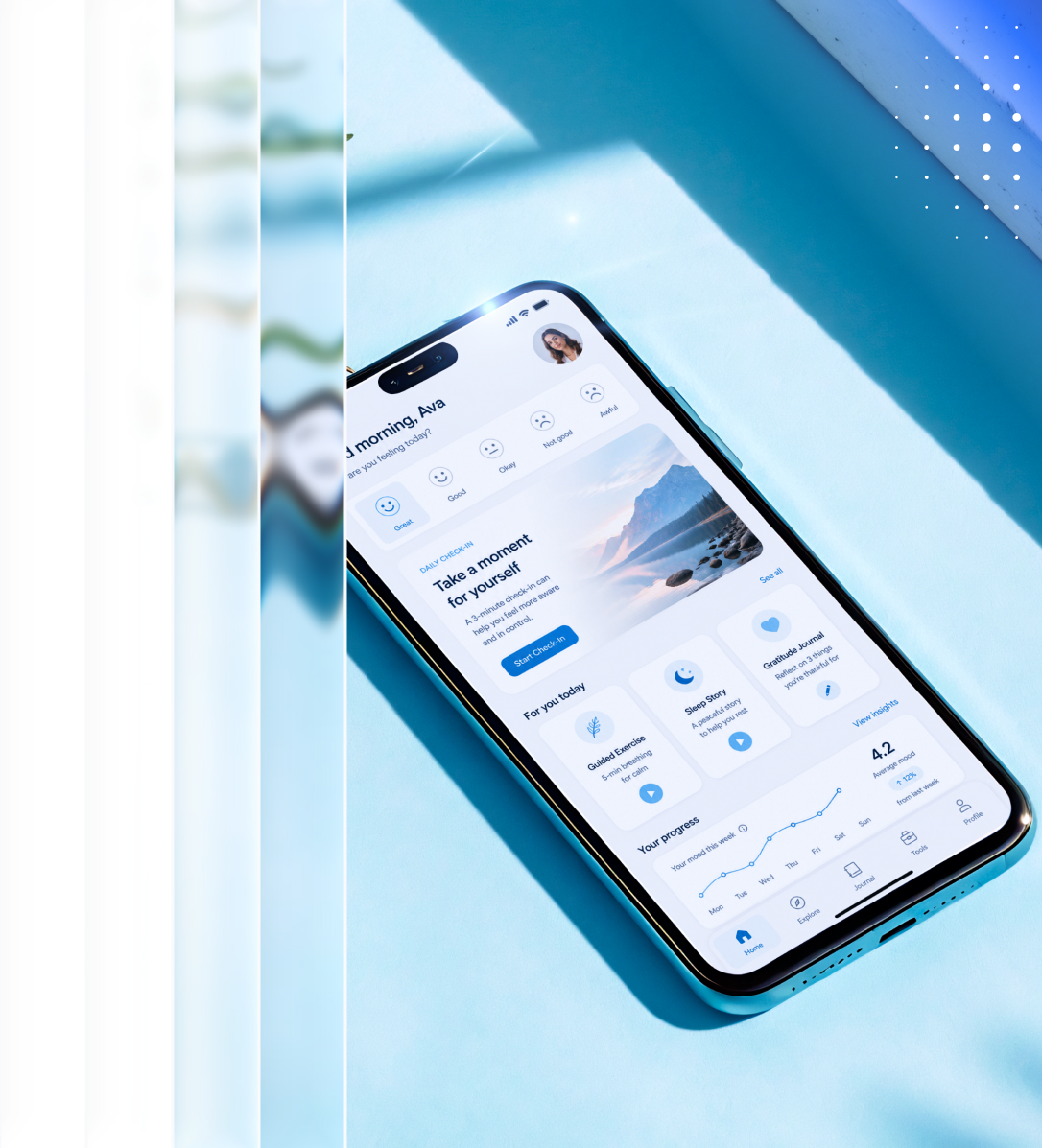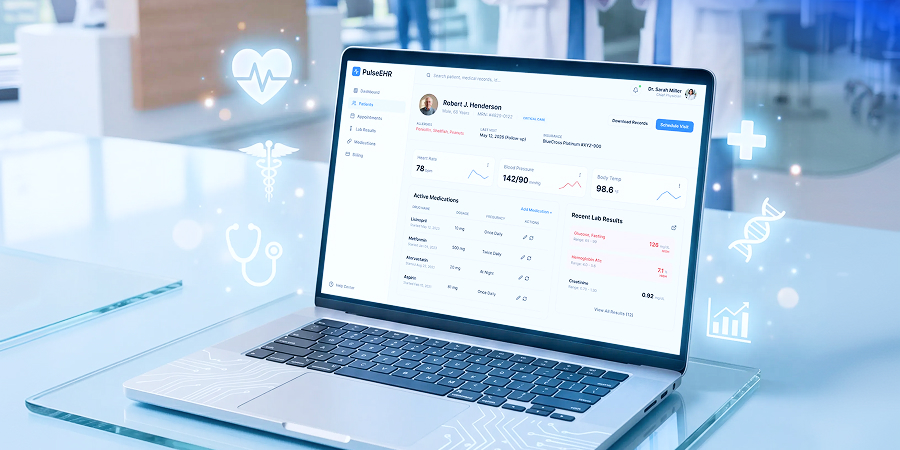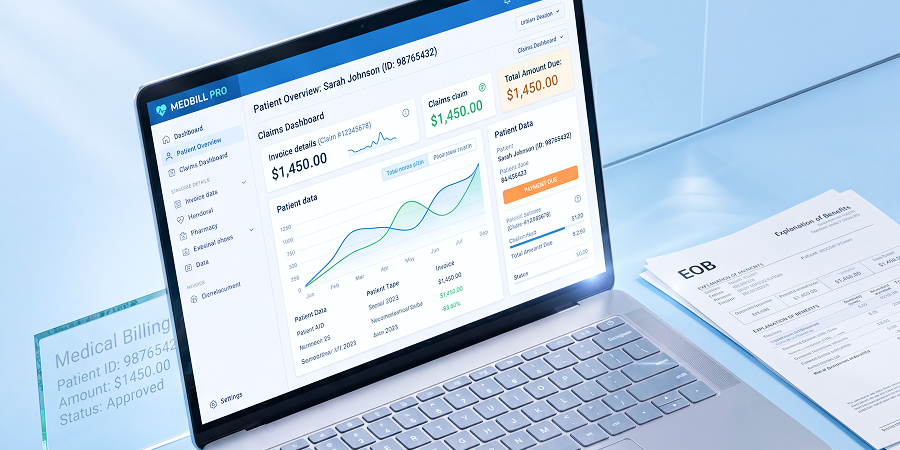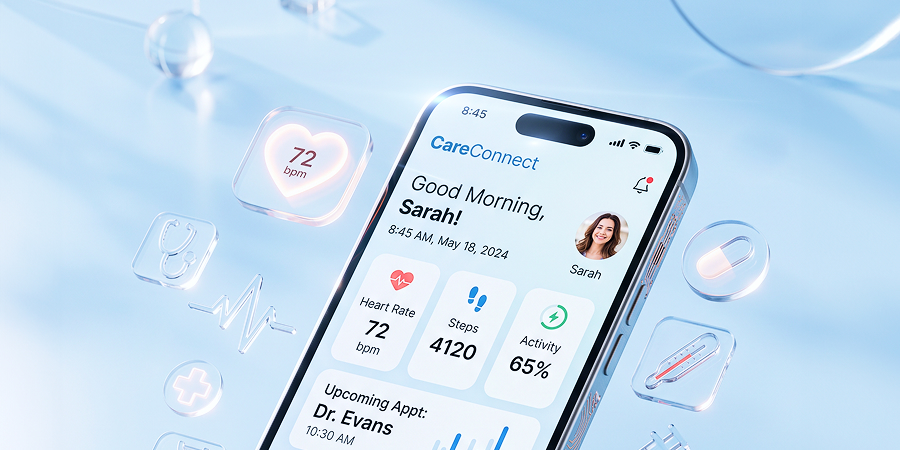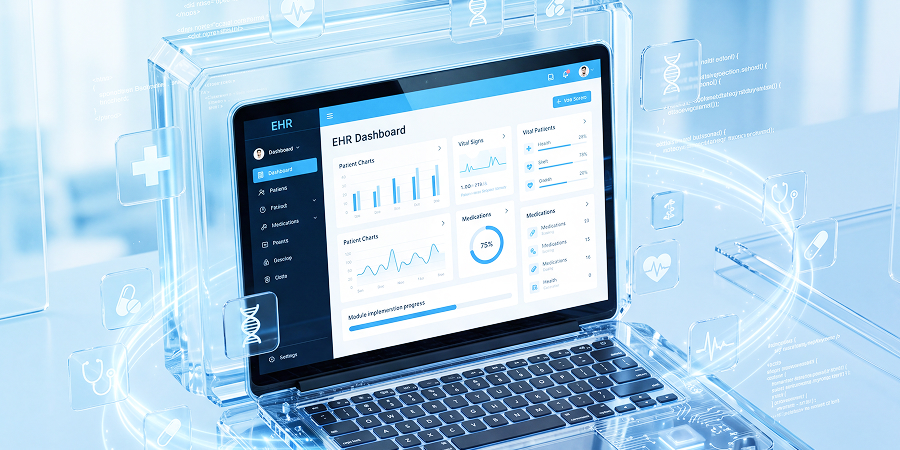






































Mental & Behavioral Health Software Development

Software That Supports Real Care
Custom mental health apps, behavioral health platforms and EHR, and digital therapeutics — with teletherapy, measurement-based care, AI and 42 CFR Part 2 compliance.
Reliable partner
Reliable partner
Experienced team
Experienced team
Smart solutions
Smart solutions
Mental Health App Development 1920
Mental Health App Development 1440

Industry Leaders We Work With

Related Healthcare Services

Explore the Wider Digital Health Practice

A mental health app connects to the systems around it, so these related healthcare app development services cover the care, records, and compliance work your product depends on.

“Of 61.5 million US adults with a mental illness, nearly half received no treatment.” — SAMHSA

Cost, access, and stigma keep people from care, so well-built mental health apps play a real role in supporting mental health that traditional services alone have not reached.
App Categories

Types of Mental Health Apps and Software

Mental health software spans consumer apps, clinical platforms, and digital therapeutics, so knowing the types of mental health applications matters before you develop.
Consumer apps

Consumer apps

Mental health apps deliver therapy, mood tracking, and mindfulness directly to people, whether self-guided or connected to mental health professionals.
Clinical platforms

Clinical platforms

Behavioral health platforms and EHRs run provider care, handling documentation, scheduling, treatment plans, and billing in one mental health solution.
Digital therapeutics

Digital therapeutics

Digital therapeutics deliver evidence-based treatment and can be regulated as a medical device when they treat a mental health condition.
Privacy first

Privacy first

Because mental health data is sensitive, it must meet HIPAA and, for substance use records, the stricter 42 CFR Part 2 rule.
Zoolatech quickly delivers senior engineers through rigorous multi-stage screening and global sourcing, ensuring only high-performing, project-ready talent joins your team.

1 month

To fill a position

60%

Senior developers

1M

Global talent pool
What We Build

Mental Health Solutions Across the Care Journey

When packaged tools cannot fit your model of care, our mental health app development services give you software shaped around real users. Every solution below is built for privacy and compliance from the first sprint.
98%

98%

Client Retention Rate
300+

300+

Successful Projects

Mental health apps

Build therapy, mood tracking, mindfulness, and recovery apps that patients return to over time.

Behavioral health platforms

Run clinical documentation, scheduling, and treatment plans in one behavioral health platform.

Behavioral health EHR

Give providers a behavioral health EHR built for their workflows, not a general medical record.

Digital therapeutics

Develop evidence-based digital therapeutics, with an FDA pathway when they qualify as a medical device.

Teletherapy

Add secure video, messaging, and scheduling for teletherapy and telepsychiatry.

Client portals

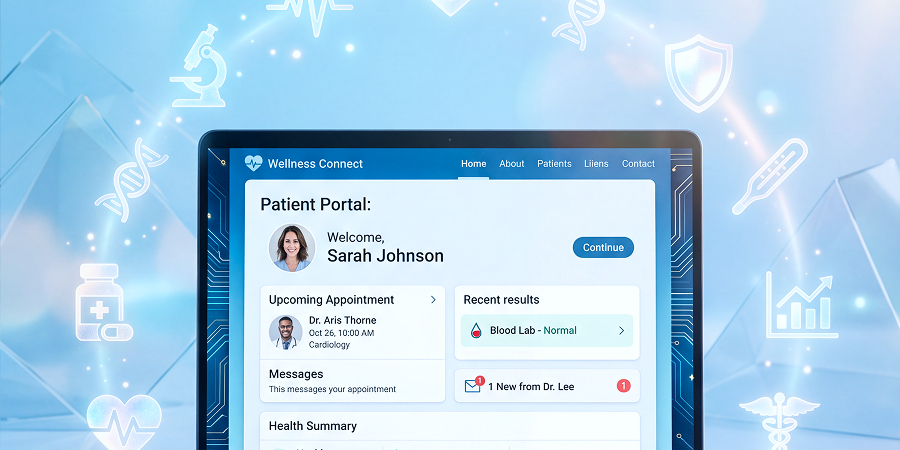
Give clients a secure portal for records, appointments, and self-report assessments.

Practice management

Handle scheduling, intake, and documentation so clinicians spend less time on admin.

Behavioral health billing

Connect claims and payments so revenue does not stall between care and billing.

Measurement-based care

Deliver validated assessments and track mental health outcomes across a course of care.

Responsible AI

Add AI support that assists clinicians and never replaces clinical judgment.

“Of 36 top mental health apps studied, 29 sent user data to Google or Facebook, but only 12 disclosed it.” — JAMA Network Open


Mental health apps often handle data users assume is private, so we define where protected health information lives and control every disclosure before the first screen is built.
App Development

Mental Health App Development, End to End

We develop the types of mental health apps patients trust and return to.
Therapy apps

Guided and connected care

  • CBT and therapy exercises delivered as structured programs
  • Self-guided paths or apps connected to a live therapist
  • Treatment plans clinicians can set and adjust
  • Progress patients and providers can both see
Mood and self-tracking

Everyday check-ins

  • Mood tracking and journaling that fit into daily life
  • Validated self-assessments patients complete between visits
  • Trends that turn check-ins into useful mental health data
  • Reminders that support habits without nagging
Mindfulness and wellness

General mental health apps

  • Meditation, breathing, and mindfulness built for engagement
  • A mental wellness app experience that holds attention over time
  • Content that supports mental wellness, not just streak counts
  • Subscription models that monetize a mental health app responsibly
Recovery and support

Ongoing mental health support

  • Addiction recovery apps that support long-term change
  • Peer and community support handled with privacy
  • Substance use records protected under 42 CFR Part 2
  • Tools that reinforce mental health goals between sessions
Safety and crisis support

Support, not a substitute for help

  • Clear pathways that route users to human help and 988
  • Safety features designed with escalation, not self-diagnosis
  • Content that supports care without giving clinical advice
  • Accessibility built in for how people really use the app
Testimonials

What Our Customers Say

“In the case of Zoolatech, it's a very tight partnership.
The team at Zoolatech is incredibly collaborative, and we work as a team despite being thousands of miles away from each other.”
Spencer Rascoff
CEO Match Group
5/5
“Zoolatech has been a key technology partner for Pandora,
enhancing our software development and deployment capabilities. They're ambitious, supportive, fast-moving, and well-skilled, with sound ethical values.”
Erika Romsics
Contract and Vendor Manager, Pandora
erica
5/5
“The apps they’ve developed give us the opportunity to get more customers.
We’re providing more services to target big customers. We can install jobs faster and identify reduce bottlenecks, so we’re providing a better customer experience.”
Aida Youssef
Senior Director of Software Engineering, Complete Solaria
5/5
“Zoolatech has access to a deep talent pool and knows how to identify client's needs.
With the help of Zoolatech, went from a very early and incomplete prototype to the MVP release, the first production release, and the first paying customer!”
Greg Wagenhoffer
CEO, GreenVisr
5/5
“Zoolatech enabled us to build a world-class engineering team quickly and efficiently.
Zoolatech's pre-screening process and engineer training are customized for providing effective engineers that can contribute immediately to accelerating product roadmaps.”
Shariq Minhas
CTO, SVSG
5/5
“We can recommend Zoolatech
for their talent pool, attention, ability to understand our requirements, candidate screening process and constant communication.”
Chaitanya Pallapothula
SVP, Tailored Brands, Inc.
5/5
“Zoolatech’s developers quickly became an integral part of our team effort
with whom we shared daily stand up calls. Overall, Zoolatech fit well with our needs for agile development and continued to adapt as our needs evolved.”
Forrest Glick
UX Designer, Stanford University
5/5
“Working with Zoolatech has been a driving force in our business offerings.
The team utilizes it's experience and expertise meshing with our internal team creating a positive work environment. Zoolatech is by far one of the best teams to work with in the industry.”
Kris Naidu
CEO, Zeacon
Kris Naidu CEO, Zeacon
5/5
Digital-health teams choose Zoolatech to develop mental health apps and behavioral health platforms that hold up to real care, real users, and real privacy rules.
300+
Projects delivered since 2017
96%
Client satisfaction across engagements
Clinical Platforms

Mental Health Software for Providers

A consumer app is only half the picture, so we also develop the clinical platforms and records that run behavioral care.
Clinical records
Scheduling and intake
Prescribing
Interoperability

Built for behavioral care

A behavioral health EHR fits how clinicians document therapy, not how a general medical record works.
  • Documentation: progress notes, group therapy notes, and treatment plans designed for behavioral health workflows.
  • Assessments: validated instruments built into the record so measurement is part of care, not extra work.

Run the practice

Practice management keeps scheduling, intake, and clinician time organized across a growing service.
  • Scheduling: multi-clinician and multi-site scheduling that scales with the organization.
  • Intake: digital intake and consent that reduce paperwork before the first session.

For psychiatry

Psychiatry and medication-assisted care need prescribing built in, including controlled substances.
  • e-Prescribing and EPCS: electronic prescribing with EPCS support for controlled substances.
  • Medication tracking: medication history and adherence connected to the clinical record.

Connected care

Behavioral care works best when the backend connects to the rest of a patient's health picture.
  • HL7 and FHIR: record exchange with other systems through modern healthcare standards.
  • Integrated care: behavioral and physical health data linked so care teams share one view.
Image abstract 1 368
Privacy

Compliance Challenges in Mental Health Apps

Mental health data is among the most sensitive there is, so we build privacy into the architecture rather than adding it later.
HIPAA
42 CFR Part 2
Consent and minors
Verified, not assumed

The baseline

The Health Insurance Portability and Accountability Act (HIPAA) sets the floor for protected health information, and every build starts by meeting it.
  • Encryption and access: protected health information encrypted at rest and in transit, with role-based access and audit logging.
  • Accountable vendors: Business Associate Agreements govern every cloud and analytics service in the stack.
  • Minimum necessary: each role sees only the data its work requires, limiting exposure by design.
Image slot

Stricter than HIPAA

Substance use records fall under 42 CFR Part 2, which is stricter than HIPAA and shapes the whole design.
  • Consent management: specific patient consent captured and enforced before most disclosures of Part 2 records.
  • Segmentation: sensitive records segmented and disclosure tracked, so data is never shared or re-shared without authority.
  • Redisclosure controls: prohibitions carried with the data, so downstream systems inherit the same restrictions.
Image slot

Rules that vary

Consent rules differ by age and state, so products serving minors or multiple states need that built in.
  • Minor consent: age-based consent and guardian access handled to each state’s rules.
  • State privacy: additional state privacy laws addressed for products operating across state lines.
  • Consent records: every grant and withdrawal logged, so the app can prove what a user agreed to and when.
Image slot

Proven in testing

Compliance only counts if it holds up, so we verify it through testing rather than treating it as a checkbox.
  • Security testing: privacy and security controls validated before release, not after an incident.
  • Evidence: audit trails and documentation that demonstrate compliance to partners and regulators.
  • Penetration testing: independent testing against the built product, so gaps surface before an attacker finds them.
Image slot
Evidence and Outcomes

Digital Therapeutics and Mental Health Outcomes

Evidence separates a wellness app from a clinical product, so we build the validation and measurement that support real health outcomes.
Digital therapeutics

Digital therapeutics

Develop evidence-based digital therapeutics that deliver a defined therapeutic intervention, not general wellness content.
FDA and SaMD

FDA and SaMD

When a digital therapeutic treats a condition, it may qualify as a medical device and need an FDA pathway.
Clinical validation

Clinical validation

Build the data capture and documentation that clinical validation and regulatory review require.
Measurement-based care

Measurement-based care

Deliver validated assessments so care is guided by measured progress, supporting mental health outcomes over time.
PHQ-9 and GAD-7

PHQ-9 and GAD-7

Score standardized instruments like the PHQ-9 and GAD-7 and show trends across a course of care.
Outcome reporting

Outcome reporting

Turn assessment data into outcome reports that demonstrate mental health outcomes to payers and partners.
Early detection

Early detection

Use screening and trend data for early detection of mental health risk, always routed to human review.
Regulated build discipline

Regulated build discipline

Apply the documentation and traceability that a regulated product needs from the first sprint.
Cross-linked expertise

Cross-linked expertise

Draw on our medical device software development practice for the SaMD pathway when it applies.

Plan Your Compliance

Send us your model and the health data you handle, and we map an approach.
Contact Sales
How We Work

Our Development Process

You get a product that stays trusted and compliant at every stage, because privacy and safety are proven as the app is built, not bolted on after.
Step 1

Discovery

Before design starts, we map who you serve, your model of care, and the privacy scope the app must meet, then confirm every system it connects to. Developing mental health apps well starts here, because the mental health app development process depends on clear scope.
  • Users and care model mapped
  • Privacy scope defined
  • Integrations confirmed
Step 2

Design

Designing a mental health app means shaping patient and clinician experiences around real behavioral care, with sensitive and crisis flows handled carefully. Good mental health app design is what keeps a product trusted and used.
  • Patient and clinician tracks
  • Safety flows handled with care
Step 3

Build and validate

We develop in sprints and validate privacy, security, and compliance on every increment, with builds you review as the app takes shape. Building an effective mental health app involves testing alongside the work, so issues surface early.
  • Compliance validated each cycle
  • Builds you review
Step 4

Launch and support

We deploy carefully, then stay on to monitor the product, keep it current, and support it over time. The work does not end at launch, because a mental health app requires ongoing care to stay reliable and safe.
  • Careful rollout
  • Ongoing support and updates
AI in Mental Health

Responsible AI in Mental Health

AI belongs in a mental health app only when it supports care safely, so we build features that assist clinicians and keep a person in the loop.
Ambient documentation

Ambient documentation

AI drafts session notes from the conversation, so clinicians spend less time writing and more time with clients.
Triage support

Triage support

Intake models help route users toward the right level of care, always with human review.
Guided assistants

Guided assistants

Chat-based support delivers content and check-ins with a clear caveat that it does not replace a clinician.
Risk escalation

Risk escalation

Signals of risk route users to human help and crisis lines, never to an automated decision.
Governed by design

Governed by design

Models are documented, monitored, and auditable, so AI stays accountable in a sensitive setting.
Technology Stack

Mobile and Backend Tech Stack

The stack your app is built on decides how far it scales and how cleanly the backend connects to clinical systems.
Swift
Swift
Kotlin
Kotlin
React Native
React Native
Flutter
Flutter
Node.js
Node.js
Python
Python
PostgreSQL
PostgreSQL
FHIR
FHIR
HL7
HL7
Apple HealthKit
Apple HealthKit
AWS
AWS
Azure
Azure
Google Cloud
Google Cloud
and other
Why It Matters

What an Effective Mental Health App Delivers

What a good mental health app returns to your organization and the people it serves.
Wider access

Wider access

Apps and platforms extend care to people who face cost, distance, or stigma reaching traditional mental health services.
Higher engagement

Higher engagement

An effective mental health app designed around real habits keeps patients active in care instead of abandoning it early.
Demonstrated outcomes

Demonstrated outcomes

Measurement-based care turns subjective check-ins into data that shows mental health outcomes to clinicians and payers.
Privacy that holds

Privacy that holds

Privacy and security built into the architecture help protect sensitive health data and user trust.
Connected care

Connected care

Apps, platforms, and records that share data give clinicians one view instead of scattered tools.
One accountable partner

One accountable partner

Building the app, the backend, and the compliance under one team avoids the gaps between vendors.
Safe use of AI

Safe use of AI

Responsible AI supports clinicians and users without replacing clinical judgment or crossing safety lines.
Ready to scale

Ready to scale

A scalable mental health app built on a solid stack grows with your users instead of stalling after the pilot.
Build, Buy, or Outsource

Own the Build, Not a License

The right choice depends on whether your mental health product is core to your business or a function you simply need.
Buy a platform

Buy a platform

Ready-made behavioral health platforms start fast, but hold you to their workflows and their roadmap.
  • Fast to start
  • Lower upfront cost
  • Fixed workflows
  • Vendor lock-in
Build custom

Build custom

A custom mental health application fits your care model and keeps the product and data yours.
  • Built for your users
  • Deep integration
  • You own the platform
  • Scales past the pilot
Who We Build For

From First Prototype to Health System

We build for the teams shaping how mental and behavioral care reaches people, whatever stage they are at.
check icon

Digital-health founders

Founders who want to create a mental health app or platform as their core product get a senior team that ships regulated software, not a first prototype that has to be rebuilt to scale.
check icon

Behavioral health providers

Providers and agencies modernizing mental health practices get software built around their clinical workflows, so documentation, scheduling, and treatment plans fit how their teams actually work.
check icon

Teletherapy and DTx teams

Teletherapy platforms and digital therapeutics teams get the video, assessment, and validation engineering their model depends on, including the FDA pathway when a product qualifies as a medical device.
check icon

Employers and wellness programs

Employers and wellness programs get engaging, private mental wellness apps that support employees without exposing sensitive data or crossing into clinical claims.
check icon

Established health organizations

Larger healthcare organizations get behavioral health capabilities that connect to existing systems, so mental health care is part of the whole picture rather than a separate silo.
check icon

Teams that value privacy

Any team handling mental health data gets a partner that treats HIPAA and 42 CFR Part 2 as design inputs, not paperwork added at the end.
check icon

Teams scaling responsibly

Organizations adding AI get features that support clinicians and users while keeping a person in the loop, so growth never comes at the cost of safety.
check icon

Teams that need to move

Teams under time pressure get senior mental health app developers who have shipped healthcare software since 2017, so the first release is built to last rather than redone.
Engagement Models

One Company, Three Ways to Engage

Choose the engagement that fits, from full ownership to engineers who extend your team.

Managed delivery

We own the build end to end, with a delivery manager, QA governance, and accountability for scope and timeline.

Team extension

We embed senior engineers and mental health app developers into your team, adding capacity under your direction.

Offshore delivery center

We stand up a dedicated development team across Poland, Ukraine, Mexico, and Turkey, with US coordination for scale.
Cost Factors

The Cost to Develop a Mental Health App

The cost of mental health app development depends on a handful of factors, so it helps to know what moves the number before you plan a budget.

Scope and app type

The cost of a mental health app comes down to whether you build a focused app, a full platform, or a regulated digital therapeutic. Broader scope means more engineering, so the cost of developing a mental health product rises with ambition.

Features and integrations

Core mental health app features like tracking, teletherapy, and assessments are straightforward, but the cost to develop a mental health app climbs when it integrates with EHRs, payers, and clinical systems.

Compliance depth

HIPAA is the baseline, and 42 CFR Part 2 adds consent and segmentation work. Mental health app development depends heavily on how much regulated data the product handles, which shapes the cost of mental health builds.

AI and scale

Governed AI and a backend built to scale add engineering up front but protect you later. Building a scalable mental health app costs more early and less over the life of the product.
Mental Health App Market

The Future of Mental Health Apps

The mental health industry is shifting fast, so a product planned today should account for where mental health apps are heading.

Clinical depth

Many mental health apps started as general wellness tools, but popular mental health apps are becoming clinical products with evidence, measurement, and regulatory rigor behind them.

AI, done safely

The future of mental health app design leans on AI for documentation, triage, and early detection, but only where a clinician stays in the loop and safety comes first.

Building for 2026

A mental health app in 2026 has to connect to clinical systems, prove outcomes, and protect sensitive data, so building for that bar now avoids a costly rebuild later.
Why Choose Us

Why Businesses Trust Us

logo
At Zoolatech, we create engineering teams for industry leaders across the US and Europe — teams that move fast, think big, and deliver strong impact.
96%
Client Satisfaction
300+
Successful Projects
2017
Year Founded
98%
Retention Rate
team sport photo
At Zoolatech, we create engineering teams for industry leaders across the US and Europe — teams that move fast, think big, and deliver strong impact.
Engineering Excellence. Every Time.
main award png (1)
At Zoolatech, we create engineering teams for industry leaders across the US and Europe — teams that move fast, think big, and deliver strong impact.
team sport photo
600+
Employees
Headquarters
USA
Development Centers
PL
UA
MX
TR

Create a Mental Health App

Tell us who you serve, your model, and your compliance needs, and we scope an approach.
Questions You May Have

What is mental and behavioral health software?

It ranges from consumer mental health apps for therapy, mood tracking, and mindfulness, to clinical platforms and behavioral health EHRs used by providers, to digital therapeutics that deliver evidence-based treatment. Because it handles sensitive data, it must meet HIPAA and, for substance use records, 42 CFR Part 2.

What is the difference between a mental health app and a behavioral health platform?

A mental health app is usually a consumer product focused on one experience, such as therapy exercises or mood tracking. A behavioral health platform is a clinical system providers use to run care, and many organizations need both, connected together.

What is 42 CFR Part 2 and why does it matter?

It is a US rule that protects the confidentiality of substance use treatment records, and it is stricter than HIPAA. Software serving addiction or substance use care needs consent management, record segmentation, and disclosure tracking built in from the start.

What are digital therapeutics?

Digital therapeutics are software that delivers an evidence-based therapeutic intervention to treat or manage a condition. When a digital therapeutic makes a medical claim, it can qualify as Software as a Medical Device and require an FDA pathway.

What is measurement-based care in mental health software?

It means using standardized assessments, such as the PHQ-9 and GAD-7, to track progress and guide treatment. Software delivers and scores these instruments and shows trends over time, turning check-ins into consistent data.

Can you build teletherapy into a mental health product?

Yes. Teletherapy is built with secure video, messaging, scheduling, and documentation, integrated with the behavioral health record. It is designed for privacy under HIPAA and, for substance use services, 42 CFR Part 2.

How much does mental health app development cost?

The cost of mental health app development depends on whether you build a focused app, a full platform, or a regulated digital therapeutic, along with feature count, integrations, AI depth, and compliance scope. A precise estimate follows a discovery phase that maps your users and requirements.

How is patient privacy protected in behavioral health software?

Protected health information is encrypted, access is role-based and audit-logged, and authentication is strong. For substance use data, 42 CFR Part 2 adds consent management and disclosure controls, and compliance is verified through testing rather than assumed.