




































Insurance Portal Development

Self-Service Portals and Automation for Every User
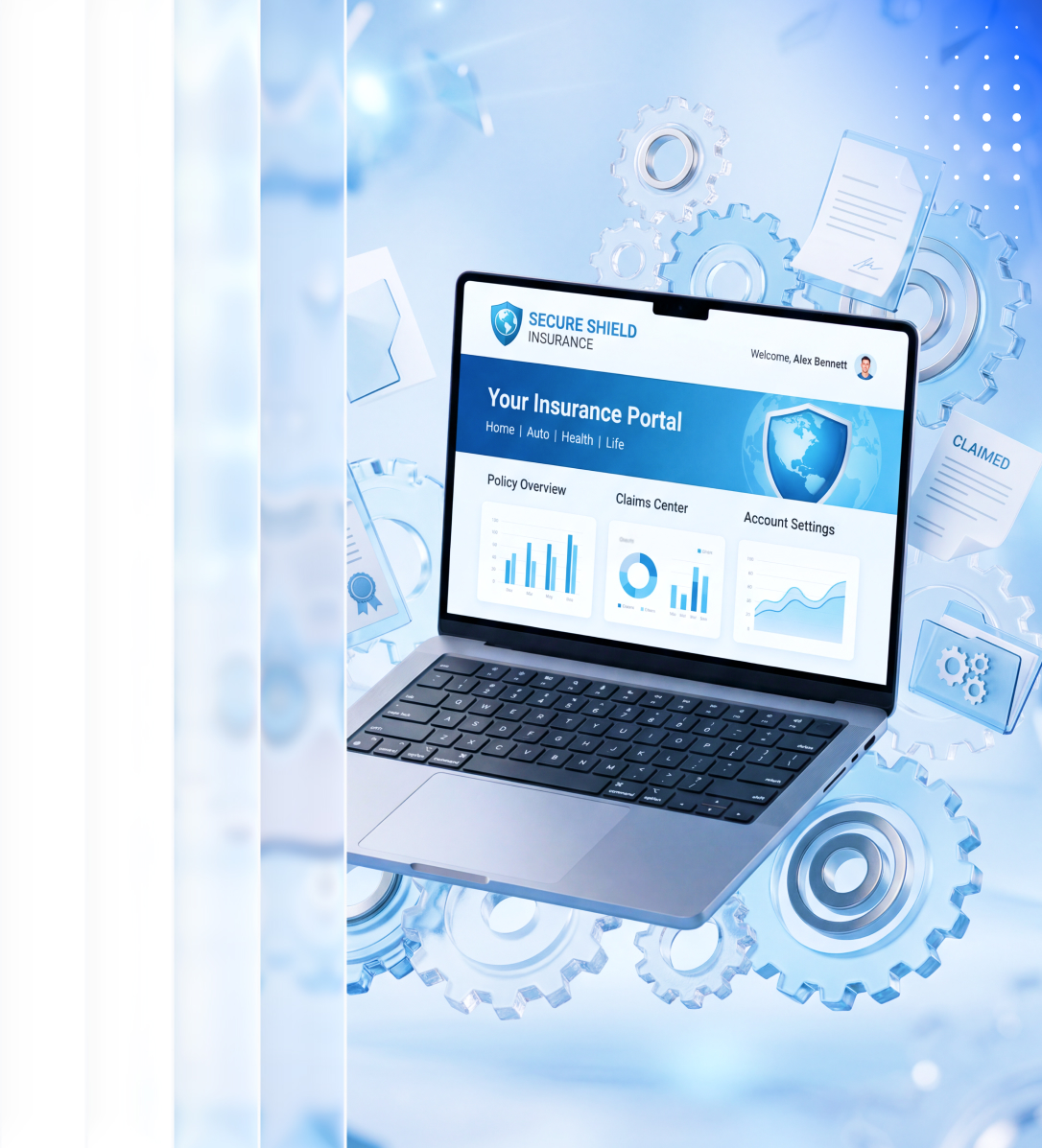
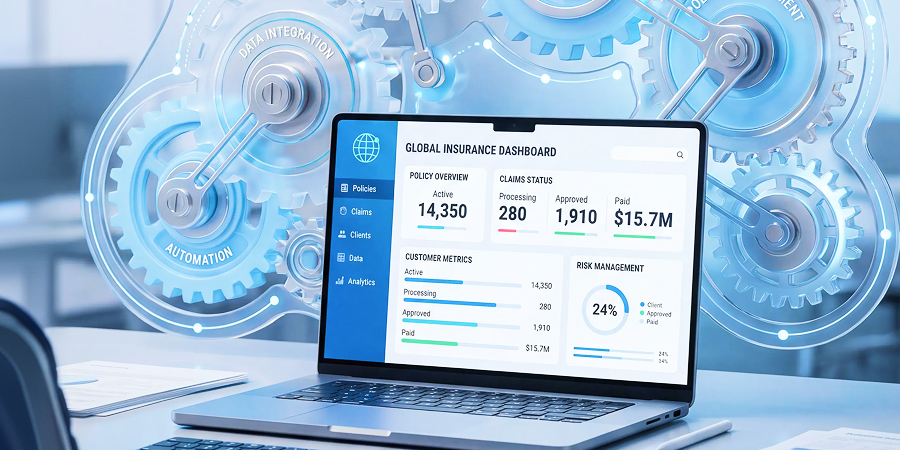
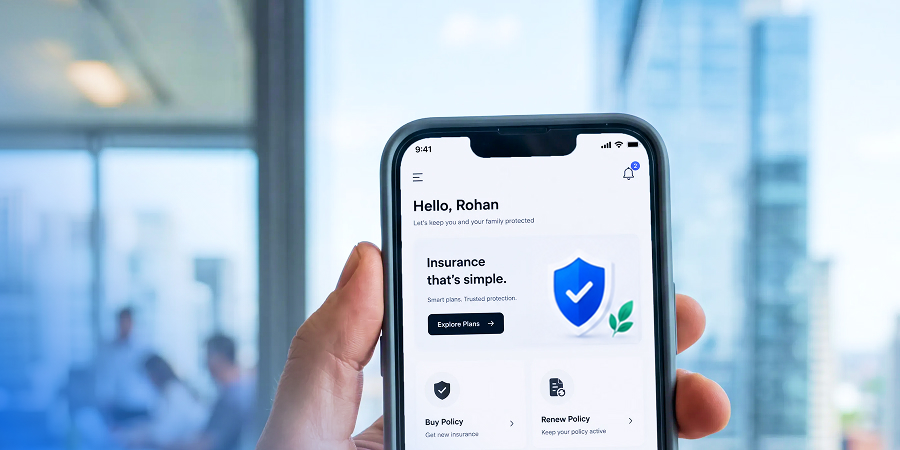
Custom portals for policyholders, agents, and brokers with self-service claims submission, policy management, document access, and renewal.
Reliable partner
Reliable partner
Experienced team
Experienced team
Smart solutions
Smart solutions
Portal 1920
Portal 1440

Industry Leaders We Work With

Benefits

Empowering Policyholders, Agents, and Brokers

Insurance portals deliver the greatest value when built on the right foundations. Secure data access, real-time core system connectivity, and workflows designed around how portal users actually operate.
Policyholder self-service

Policyholder self-service

Policyholders access insurance policies, submit claims, make payments, and track claim status without agent involvement.
Agent productivity tools

Agent productivity tools

Insurance agent portal tools give agents real-time client data, quoting workflows, and document exchange in one place.
Broker workflow support

Broker workflow support

Broker portals coordinate multi-carrier submissions, market access, and client portfolio management from a single interface.
Core system connectivity

Core system connectivity

Every portal connects to Guidewire, Duck Creek, and Applied Epic through API-first integration, not screen-scraping workarounds.
Compliance by design

Compliance by design

HIPAA, GDPR, NYDFS Part 500, and SOC 2 Type II requirements are addressed at the architecture level, not retrofitted.
Mobile-first delivery

Mobile-first delivery

Responsive web portals and React Native applications give portal users full transaction capability on any device.
Authentication and access

Authentication and access

MFA, SSO, and role-based access control protect policyholder data and meet enterprise insurance security requirements.
Long-term partnership model

Long-term partnership model

Insurance portals are delivered under a managed model with shared KPIs, a live risk register, and a dedicated delivery manager.

“After one insurer’s digital portal transformation, 80% of transactions moved online and customer satisfaction scores rose 36 percentage points.” — McKinsey & Company


For insurance companies still processing policy changes and claims through phone and email, the gap between customer expectation and operational reality is widening.
Types of Portals

Modern Insurance Portals by Business Need

Match every portal to the users, workflows, and data access it must support.
Policyholder portal

Self-service for policyholders

  • Policy viewing and coverage summaries
  • Claims submission and status tracking
  • Premium payments and billing history
  • Secure document access and downloads
  • Renewal reminders and policy updates
Insurance agent portal

Client and policy management

  • Client portfolio visibility across policies
  • Quote, bind, and renewal workflows
  • Document exchange with underwriting teams
  • Commission and performance reporting
  • Real-time policy and claims status
Insurance broker portal

Market access workflows

  • Multi-carrier submission management
  • Appetite matching and placement support
  • Client portfolio and renewal tracking
  • Secure document collection and sharing
  • Communication history across stakeholders
Insurance customer portal

Commercial account access

  • Group policy and account management
  • Certificate and invoice access
  • Claims intake for commercial users
  • Role-based permissions by organization
  • Reporting for fleets, properties, or benefits
Mobile insurance portal

Mobile-first portal access

  • Responsive access across every device
  • Native mobile workflows when needed
  • Photo and document upload for claims
  • Push notifications for status updates
  • Offline claim capture for field users
Insurance supplier portal

Partner operations support

  • Vendor onboarding and profile management
  • Assignment tracking for service providers
  • Invoice submission and payment visibility
  • Compliance document collection
  • Secure communication with operations teams
Testimonials

What Our Customers Say

“In the case of Zoolatech, it's a very tight partnership.
The team at Zoolatech is incredibly collaborative, and we work as a team despite being thousands of miles away from each other.”
Spencer Rascoff
CEO Match Group
5/5
“Zoolatech has been a key technology partner for Pandora,
enhancing our software development and deployment capabilities. They're ambitious, supportive, fast-moving, and well-skilled, with sound ethical values.”
Erika Romsics
Contract and Vendor Manager, Pandora
erica
5/5
“The apps they’ve developed give us the opportunity to get more customers.
We’re providing more services to target big customers. We can install jobs faster and identify reduce bottlenecks, so we’re providing a better customer experience.”
Aida Youssef
Senior Director of Software Engineering, Complete Solaria
5/5
“Zoolatech has access to a deep talent pool and knows how to identify client's needs.
With the help of Zoolatech, went from a very early and incomplete prototype to the MVP release, the first production release, and the first paying customer!”
Greg Wagenhoffer
CEO, GreenVisr
5/5
“Zoolatech enabled us to build a world-class engineering team quickly and efficiently.
Zoolatech's pre-screening process and engineer training are customized for providing effective engineers that can contribute immediately to accelerating product roadmaps.”
Shariq Minhas
CTO, SVSG
5/5
“We can recommend Zoolatech
for their talent pool, attention, ability to understand our requirements, candidate screening process and constant communication.”
Chaitanya Pallapothula
SVP, Tailored Brands, Inc.
5/5
“Zoolatech’s developers quickly became an integral part of our team effort
with whom we shared daily stand up calls. Overall, Zoolatech fit well with our needs for agile development and continued to adapt as our needs evolved.”
Forrest Glick
UX Designer, Stanford University
5/5
“Working with Zoolatech has been a driving force in our business offerings.
The team utilizes it's experience and expertise meshing with our internal team creating a positive work environment. Zoolatech is by far one of the best teams to work with in the industry.”
Kris Naidu
CEO, Zeacon
Kris Naidu CEO, Zeacon
5/5
Features

Insurance Portal Features That Drive Real Value

Modern insurance portals require more than a login screen. These are the features of insurance portals that determine whether your platform delivers genuine operational value or replicates existing friction digitally.
Policy management

Policy management

Policyholders view, download, and manage active insurance policies including coverage summaries, endorsement history, and expiry tracking without agent intervention.
Claims submission

Claims submission

Digital FNOL submission with document upload, claim categorization, and automatic routing to the correct claims team based on coverage type.
Document management

Document management

Secure access to insurance documents including policy certificates, claim forms, and invoices, with version control and audit-ready access logs.
Premium payments

Premium payments

Integrated payment portal supporting Stripe, ACH, and PayPal with payment history, auto-payment setup, and premium finance integration.
Quote and renewal

Quote and renewal

Online quote and bind workflow with pre-fill from existing policyholder data, reducing entry errors and shortening the renewal cycle.
Communication center

Communication center

Secure in-portal messaging between policyholders, agents, and insurers with notification preferences and email and SMS integration.
Analytics and reporting

Analytics and reporting

Portfolio analytics, loss ratio reporting, and client retention metrics for agent and broker portals across complex insurance operations.
Authentication and security

Authentication and security

MFA, SSO, session timeout, and role-based access control protect every portal user type from individual policyholders to large organizations.
Mobile access

Mobile access

Responsive web and native mobile delivery ensures portal users access full functionality on any device, including offline claim submission.
Approach Comparison

Custom Insurance Portal Development or Platform-Based

Platform-based insurance portals and custom-built solutions serve different needs. The right choice depends on workflow complexity, core system architecture, and your long-term product roadmap.
Custom-built portal

Custom-built portal

The right portal solution for carriers and MGAs where off-the-shelf platforms impose constraints on claims workflows, underwriting logic, or policyholder experience.
  • Full workflow customization
  • Deep core system API integration
  • Your data model and release schedule
  • Scales with portal user volume growth
Platform-based portal

Platform-based portal

Platform-based insurance portals on Salesforce Experience Cloud or headless React architecture deliver faster launch at lower initial development cost.
  • Faster deployment for standard requirements
  • Vendor-managed updates and security baseline
  • Mobile-first headless architecture option
  • Lower upfront investment for standard needs

“84% of insurance customers rated online servicing capabilities as more important to them than buying new insurance online.” — Deloitte

Most insurance companies have invested in digital sales while leaving their servicing experience behind.
Integrations

Build Your Insurance Portal on Real Integrations

A portal for insurance that operates in isolation from core systems is a data entry form. The value of insurance web portal development comes from real-time access to policy records, claims status, and payment processing pulled directly from the systems that run your business.
98%

98%

Client Retention Rate
300+

300+

Successful Projects

Guidewire integration

Real-time policy retrieval, FNOL submission, and claim status via Guidewire Cloud API integration.

Duck Creek integration

Duck Creek API framework integration for policy, billing, and claims across on-premise and cloud environments.

Applied Epic integration

Applied Systems integration connecting client records, policy data, and documents to the agency portal layer.

Salesforce FSC

Salesforce Financial Services Cloud integration for customer data and case management across portal environments.

DocuSign and e-signature

DocuSign and Adobe Sign integration for policy execution and claim settlement consent workflows.

Payment gateway integration

Stripe, PayPal, and ACH integration for premium payments with history, auto-pay, and premium finance connectivity.

Identity and SSO

Okta, Azure AD, and Auth0 for enterprise SSO, MFA enforcement, and role-based session management.

Communication platforms

Twilio for SMS and WhatsApp, SendGrid for email, and live chat integration for the portal communication center.
Implementation

Our Insurance Portal Development Process

Successful insurance portal development and implementation follows a structured sequence that maps user journeys first, integration architecture second, and delivery third. This development process ensures the portal launches ready for real insurance operations.
Step 1

Discovery and journey mapping

Zoolatech maps user journeys for each portal stakeholder — policyholder, agent, broker, and commercial client — identifying core system integration points, authentication requirements, and compliance obligations that shape the portal architecture. This phase surfaces gaps no off-the-shelf insurance portal software addresses.
Step 2

Architecture and security design

API design, data model, security model, and mobile-first delivery approach are defined in this phase. For custom insurance portal development, the integration contract with Guidewire, Duck Creek, or legacy systems is established here, keeping the portal independent from core system upgrade cycles.
Step 3

Portal development

Frontend in React or Next.js, the backend API layer, and core system connectors are built in parallel sprints. Insurance portal features are delivered incrementally, giving insurance operations teams visibility into working software throughout the development process rather than at a single late-stage event.
Step 4

Integration testing and UAT

Core system integration testing, user acceptance testing with insurance operations teams, and compliance validation run concurrently. This phase confirms that insurance policies, claim status, and payment workflows function correctly under real transaction volumes rather than controlled test conditions alone.
Step 5

Launch and optimization

A phased rollout is recommended for most insurance companies — deploying the insurance agent portal before the customer portal reduces policyholder-facing risk at go-live. Post-launch, Zoolatech provides ongoing support and iterative feature development under a managed delivery model.
Our Tech Stack

Technologies Behind Modern Insurance Portals

These are the tools, frameworks, and platforms Zoolatech uses across insurance web portal development projects to deliver portal software that performs under real insurance operations loads.
React
React
Next.js
Next.js
React Native
React Native
Node.js
Node.js
Python
Python
PostgreSQL
PostgreSQL
AWS
AWS
Guidewire Cloud API
Guidewire Cloud API
Duck Creek API Framework
Salesforce Financial Services Cloud
Okta
Okta
DocuSign
DocuSign
Stripe
Stripe
and other
Compliance and Security

Challenges in Insurance Portal Compliance

Enterprise insurance buyers and regulators expect compliance evidence before deployment. Addressing security obligations at the architecture level separates a portal that passes procurement review from one that delays it.
approve

HIPAA for health insurance portals

Health insurance portal development requires PHI handling controls, business associate agreements, access audit logging, and HIPAA Security Rule technical safeguards applied from the architecture phase.
approve

GDPR for EU-facing portals

Insurance portals serving EU policyholders require consent management, data subject rights workflows, data processing agreement compliance, and documented retention policies aligned to GDPR obligations.
approve

NYDFS Part 500 cybersecurity

NY-licensed insurance companies face NYDFS requirements including annual penetration testing, incident reporting, MFA enforcement, and a written cybersecurity policy embedded in insurance portal implementation from day one.
approve

SOC 2 Type II and ADA/WCAG 2.1

Portals processing policyholder data are built to SOC 2 Type II controls. ADA/WCAG 2.1 accessibility compliance is addressed through automated audit and remediation, a legal requirement for US-facing insurance portals.
Why Zoolatech

Why Choose Zoolatech as Your Portal Development Company

Insurance portal software development demands more than web development capability. It requires engineers who understand regulated data environments, core system complexity, and the compliance obligations that shape every architectural decision.
Regulated industries experience

Regulated industries experience

Zoolatech delivers insurance portal software development and compliant software for healthcare and financial services clients where HIPAA, GDPR, and SOC 2 controls are non-negotiable. The same development practices apply to every insurance web portal development project.
Core system integration depth

Core system integration depth

Guidewire Cloud API, Duck Creek API Framework, and Applied Epic integration are part of Zoolatech's active delivery practice, not experimental capability. Custom insurance portal software connects to core systems through documented API contracts.
Mobile-first by default

Mobile-first by default

Every insurance portal is designed for mobile access from sprint one — responsive web for policyholders and agents, React Native for field applications. Mobile app development capability is embedded in every delivery team.
Long-term delivery commitment

Long-term delivery commitment

Successful insurance portal development extends beyond launch. Zoolatech's managed model covers the full development and implementation cycle with a dedicated delivery manager, live risk register, and post-launch support.
Zoolatech quickly delivers senior engineers through rigorous multi-stage screening and global sourcing, ensuring only high-performing, project-ready talent joins your team.

1 month

To fill a position

60%

Senior developers

1M

Global talent pool
Industries We Serve

Enterprise Engineering Across Complex, Regulated Industries

Insurance portal software sits within a broader digital ecosystem. The engineering challenges it presents are shaped by the same forces affecting every regulated, data-intensive industry.
Explore All Industries
Why Choose Us

Why Businesses Trust Us

logo
At Zoolatech, we create engineering teams for industry leaders across the US and Europe — teams that move fast, think big, and deliver strong impact.
96%
Client Satisfaction
300+
Successful Projects
2017
Year Founded
98%
Retention Rate
team sport photo
At Zoolatech, we create engineering teams for industry leaders across the US and Europe — teams that move fast, think big, and deliver strong impact.
Engineering Excellence. Every Time.
main award png (1)
At Zoolatech, we create engineering teams for industry leaders across the US and Europe — teams that move fast, think big, and deliver strong impact.
team sport photo
600+
Employees
Headquarters
USA
Development Centers
PL
UA
MX
TR

Build Your Insurance Portal with Zoolatech

Tell us about your portal scope, your core systems, and your user types. We will outline the right development approach for your insurance operations.
Questions You May Have

What is an insurance portal?

An insurance portal is a secure, authenticated digital platform that gives policyholders, agents, or brokers self-service access to insurance operations — viewing insurance policies, submitting claims, making payments, accessing insurance documents, and communicating with the insurer without phone or in-person contact.

What are the main types of insurance portals?

The four primary types of insurance portals are policyholder portals for policy management, claims submission, and payments; insurance agent portals for quoting, binding, and client management; broker portals for multi-carrier submission and market access; and B2B commercial insurance customer portals for fleet, property, and employee benefit program management.

How much does it cost to develop an insurance portal?

Development costs depend on portal scope, the number of user types, core system integrations, and compliance requirements. A focused insurance agent portal requires a different investment than a full-suite customer portal development project with Guidewire or Duck Creek integration, and Zoolatech provides a detailed estimate following a scoped discovery session.

How do you integrate an insurance portal with Guidewire or Duck Creek?

Guidewire Cloud API and Duck Creek API Framework both support external application integration for policy retrieval, claim submission, and payment processing, and Zoolatech designs the integration architecture to ensure portal independence from core system upgrade cycles using event-driven architecture where needed.

What security standards should an insurance portal meet?

A robust insurance portal should implement MFA, RBAC, TLS 1.3, AES-256 encryption at rest, and full audit logging as baseline controls, with HIPAA technical safeguards for health insurance portals, NYDFS Part 500 compliance for NY-licensed insurers, and SOC 2 Type II controls for portals processing policyholder data.

What is the typical timeline to develop an insurance portal?

A focused insurance agent portal with standard features typically delivers in 3 to 5 months, while a full-suite portal covering policyholder, agent, and broker user types with Guidewire or Duck Creek integration typically requires 6 to 12 months depending on core system complexity and the number of user types in scope.

What is the difference between a custom insurance portal and a platform-based solution?

Custom insurance portal software gives carriers and MGAs full control over workflows, data model, and integration architecture, making it the right portal solution when platform-based insurance portals impose constraints on claims logic or policyholder experience, while platform-based options offer faster deployment at lower initial development cost when standard self-service portal features meet the requirement.