




































MLOps Implementation Services

ML Models That Work in Production
Enterprise MLOps implementation services that move machine learning from experiment to operational infrastructure.
Reliable partner
Reliable partner
Experienced team
Experienced team
Smart solutions
Smart solutions
MLOps Implementation 1920
MLOps Implementation 1440

Industry Leaders We Work With

Our Services

MLOps Services We Deliver

From pipeline automation to production monitoring, our MLOps implementation covers the full ML lifecycle.
End-to-end implementation

End-to-end implementation

We build complete MLOps environments covering data ingestion, model training, deployment, monitoring, and retraining on your infrastructure.
CI/CD for machine learning

CI/CD for machine learning

We implement CI/CD pipelines purpose-built for ML workflows, with automated testing, validation gates, and environment promotion included.
Model deployment

Model deployment

We deploy models to production via containerized infrastructure, supporting REST APIs, batch inference, streaming, and edge patterns.
Model orchestration

Model orchestration

We configure orchestration layers that schedule and coordinate model execution across multi-step workflows and multi-team environments.
Automated ML pipelines

Automated ML pipelines

We build automated pipelines covering data preparation, training, evaluation, and retraining — triggered by schedule, data drift, or performance thresholds.
Cost optimization

Cost optimization

Token usage, compute spend, and infrastructure costs tracked and optimized across training and inference workloads — before they exceed budget projections.
Team enablement

Team enablement

Standardized toolchains, shared workflows, and documentation delivered to your engineering teams throughout implementation — not as a final handoff.
Legacy ML migration

Legacy ML migration

Structured assessment and migration of fragile ML infrastructure to modern MLOps practices — with continuity maintained throughout the transition.

90% of ML development failures come not from poor models, but from poor productization practices — McKinsey

Zoolatech's MLOps implementation services close that gap—building the pipelines, infrastructure, and governance that move models from notebooks to production reliably.
Architecture & Deployment

Built for Production Scale

The technical framework behind every MLOps implementation we deliver.
Model versioning

Experiments tracked, artifacts governed

  • Model registry with lineage tracking
  • Experiment tracking across runs and metrics
  • Reproducible pipelines with pinned dependencies
  • Model promotion with environment approval gates
  • Audit trail for every model state change
Data pipelines

Automated, observable, reliable

  • Pipeline automation from ingestion to features
  • Feature store for reusable engineering
  • Data quality validation per pipeline stage
  • Drift detection with automated alerting
  • Orchestrated pipelines with failure recovery
Containerization

Portable, reproducible, scalable deployments

  • Docker-based model packaging
  • Kubernetes deployment with autoscaling
  • Helm chart version-controlled releases
  • Multi-environment promotion dev to production
  • GPU scheduling and resource isolation
Monitoring and alerting

Visibility into every model in production

  • Real-time latency and error rate monitoring
  • Performance degradation detection with thresholds
  • Drift monitoring with retraining triggers
  • Centralized logging with ML schemas
  • Operational dashboards for all stakeholders
Cloud infrastructure

Hybrid-ready, cloud-native by default

  • Infrastructure-as-code across AWS, Azure, GCP
  • GitOps configuration with change history
  • Multi-cloud support for data residency
  • Secrets management and RBAC enforcement
  • Cost optimization for training and inference
Testimonials

What Our Customers Say

“In the case of Zoolatech, it's a very tight partnership.
The team at Zoolatech is incredibly collaborative, and we work as a team despite being thousands of miles away from each other.”
Spencer Rascoff
CEO Match Group
5/5
“Zoolatech has been a key technology partner for Pandora,
enhancing our software development and deployment capabilities. They're ambitious, supportive, fast-moving, and well-skilled, with sound ethical values.”
Erika Romsics
Contract and Vendor Manager, Pandora
erica
5/5
“The apps they’ve developed give us the opportunity to get more customers.
We’re providing more services to target big customers. We can install jobs faster and identify reduce bottlenecks, so we’re providing a better customer experience.”
Aida Youssef
Senior Director of Software Engineering, Complete Solaria
5/5
“Zoolatech has access to a deep talent pool and knows how to identify client's needs.
With the help of Zoolatech, went from a very early and incomplete prototype to the MVP release, the first production release, and the first paying customer!”
Greg Wagenhoffer
CEO, GreenVisr
5/5
“Zoolatech enabled us to build a world-class engineering team quickly and efficiently.
Zoolatech's pre-screening process and engineer training are customized for providing effective engineers that can contribute immediately to accelerating product roadmaps.”
Shariq Minhas
CTO, SVSG
5/5
“We can recommend Zoolatech
for their talent pool, attention, ability to understand our requirements, candidate screening process and constant communication.”
Chaitanya Pallapothula
SVP, Tailored Brands, Inc.
5/5
“Zoolatech’s developers quickly became an integral part of our team effort
with whom we shared daily stand up calls. Overall, Zoolatech fit well with our needs for agile development and continued to adapt as our needs evolved.”
Forrest Glick
UX Designer, Stanford University
5/5
“Working with Zoolatech has been a driving force in our business offerings.
The team utilizes it's experience and expertise meshing with our internal team creating a positive work environment. Zoolatech is by far one of the best teams to work with in the industry.”
Kris Naidu
CEO, Zeacon
Kris Naidu CEO, Zeacon
5/5
Use Cases

MLOps in Practice

Real operational scenarios where structured MLOps implementation delivers measurable, sustained improvement.
Production scaling

Production scaling

The infrastructure, serving layers, and observability pipelines that make production ML reliable at scale.
Automated retraining

Automated retraining

Retraining pipelines triggered by drift detection, schedule, or performance thresholds, keeping models current without manual intervention.
Governance and compliance

Governance and compliance

Model lineage, audit trails, and explainability controls embedded directly into ML pipelines so compliance is continuous, not retrospective.
Multi-team collaboration

Multi-team collaboration

Shared infrastructure and standardized toolchains designed to support parallel development across multiple data science teams.
Real-time deployment

Real-time deployment

Low-latency inference infrastructure for fraud detection, recommendation engines, dynamic pricing, and other latency-sensitive use cases.
Legacy ML modernization

Legacy ML modernization

Structured assessment, redesign, and migration of fragile ML infrastructure to modern MLOps practices, with continuity maintained throughout.

"A large bank reduced ML time-to-impact from 20 weeks to 14 weeks—a 30% improvement—by adopting MLOps and data operations best practices." — McKinsey

Zoolatech's implementation teams work across assessment, toolchain integration, and pipeline automation to compress the distance between model development and live business impact.
Our Process

How We Implement MLOps

A structured five-phase engagement that takes your ML environment from its current state to a production-grade MLOps system.
step 1

ML infrastructure assessment

We audit your existing ML infrastructure, toolchain, data pipelines, and deployment practices to establish a baseline—identifying gaps, technical debt, and the highest-value automation opportunities before any implementation work begins.
step 2

MLOps strategy and roadmap

Based on assessment findings, we define an MLOps strategy aligned to your organizational maturity, team structure, and business priorities—producing a phased implementation roadmap with clear milestones, resource requirements, and success metrics.
step 3

Toolchain selection and integration

We select and integrate the right combination of MLOps tools for your environment—experiment tracking, pipeline orchestration, model registry, serving infrastructure, and monitoring—configured to work together within your existing cloud and security architecture.
step 4

Deployment and automation setup

We build and configure CI/CD pipelines for ML, automated training and retraining workflows, containerized model serving, and environment promotion sequences—with full documentation and knowledge transfer to your engineering teams throughout.
step 5

Testing, monitoring, and optimization

We validate the full MLOps system under load, configure monitoring and alerting for production model health, and establish a continuous optimization cycle—so the infrastructure improves as usage scales and model requirements evolve over time.
Business Impact

What MLOps Changes

Structured MLOps implementation delivers measurable operational shifts—not incremental improvements, but fundamental changes to how your organization produces and sustains ML value.
98%

98%

Client Retention Rate
300+

300+

Successful Projects

Faster time-to-market

Automated pipelines and standardized deployment workflows reduce the time from model completion to production release—measured in days, not weeks.

Reduced operational costs

Automated monitoring, retraining, and deployment eliminate the manual effort that currently consumes data science and engineering time between model releases.

Improved model reliability

Continuous monitoring, drift detection, and automated alerting prevent the silent degradation that causes production models to deliver declining value over time.

Scalable AI infrastructure

MLOps platforms built for scale support growing model portfolios, additional teams, and new use cases without requiring architectural rework or team growth proportional to model count.

Multi-team ML velocity

Shared toolchains, standardized workflows, and centralized registries allow multiple data science teams to operate in parallel without creating conflicting dependencies or deployment bottlenecks.

Faster iteration cycles

Standardized deployment workflows and automated validation reduce the time between model completion and production release — measured in days, not weeks.

Competitive AI advantage

Organizations with production-grade MLOps iterate faster, deploy more reliably, and respond to model degradation before it affects business outcomes—compounding advantage over time relative to organizations still managing ML manually.

Reduced risk exposure

Defined rollback procedures, staged deployment strategies, and model validation gates reduce the risk that a failing model causes downstream business disruption before it is detected and resolved.

Ready to Implement MLOps at Scale

Our engineering team will assess your current ML infrastructure and define a structured implementation roadmap.
Contact Sales
Why Zoolatech

MLOps Expertise That Delivers

Our MLOps implementation teams combine certified engineering depth with cross-industry production experience.

Certified consultants

Our MLOps engineers hold certifications across AWS, Azure, and GCP cloud platforms, and carry hands-on implementation experience with the full stack of enterprise MLOps tooling—from MLflow and Kubeflow through Kubernetes and Terraform.

Enterprise AI team

With 60% senior-level engineers and 1,000+ hours of AI automation delivered, Zoolatech brings the depth of a mature AI engineering organization—not a general software team pivoting to ML infrastructure.

Cross-industry experience

We have implemented MLOps infrastructure for organizations in financial services, healthcare, retail, and manufacturing—each with distinct data governance, latency, and compliance requirements that our teams understand at the engineering level.

Regulated industry depth

MLOps environments built for healthcare, financial services, and energy — where compliance requirements shape architecture decisions from the first sprint.
What Sets Us Apart

MLOps Delivery Built on Engineering Maturity

Zoolatech's MLOps implementation practice is grounded in the same engineering discipline that delivers 95% CI/CD stability, 60% senior-team composition, and multi-year enterprise partnerships. Here is what that means in practice for your ML infrastructure.
Ownership-driven teams

Ownership-driven teams

Our engineers take responsibility for outcomes, not just task completion—owning the full MLOps implementation from architecture through handoff, with a named Delivery Manager accountable for timeline and quality throughout.
MLOps maturity framework

MLOps maturity framework

We apply a structured maturity model to assess your current ML operations posture and define a realistic path to automation, reproducibility, and continuous deployment that matches your team's capacity to absorb change.
Production-proven toolchains

Production-proven toolchains

We implement toolchains we have operated in production across multiple enterprise environments—not tool combinations assembled for a single engagement and handed off without operational experience behind them.
Long-term partnership model

Long-term partnership model

With 98% client retention and engagements averaging 4+ years, Zoolatech is structured for continuity. MLOps systems require ongoing optimization as model portfolios grow, and our teams are built to support that evolution.
Governance from day one

Governance from day one

Security controls, audit logging, and compliance alignment are designed into every MLOps environment we build—not added as a post-deployment layer when regulatory or audit requirements surface.
Our Tech Stack

Tools and Technologies We Implement

We select and configure toolchains based on your infrastructure, team capabilities, and long-term maintainability—not vendor preference or familiarity alone.
MLflow
MLflow
Kubeflow
Kubeflow
Apache Airflow
Apache Airflow
Docker
Docker
Kubernetes
Kubernetes
Terraform
Terraform
AWS SageMaker
AWS SageMaker
Azure ML
Azure ML
Google Vertex AI
Google Vertex AI
Prometheus
Prometheus
Grafana
Grafana
GitHub Actions
GitHub Actions
ArgoCD
ArgoCD
and other
Why Choose Us

Why Businesses Trust Us

logo
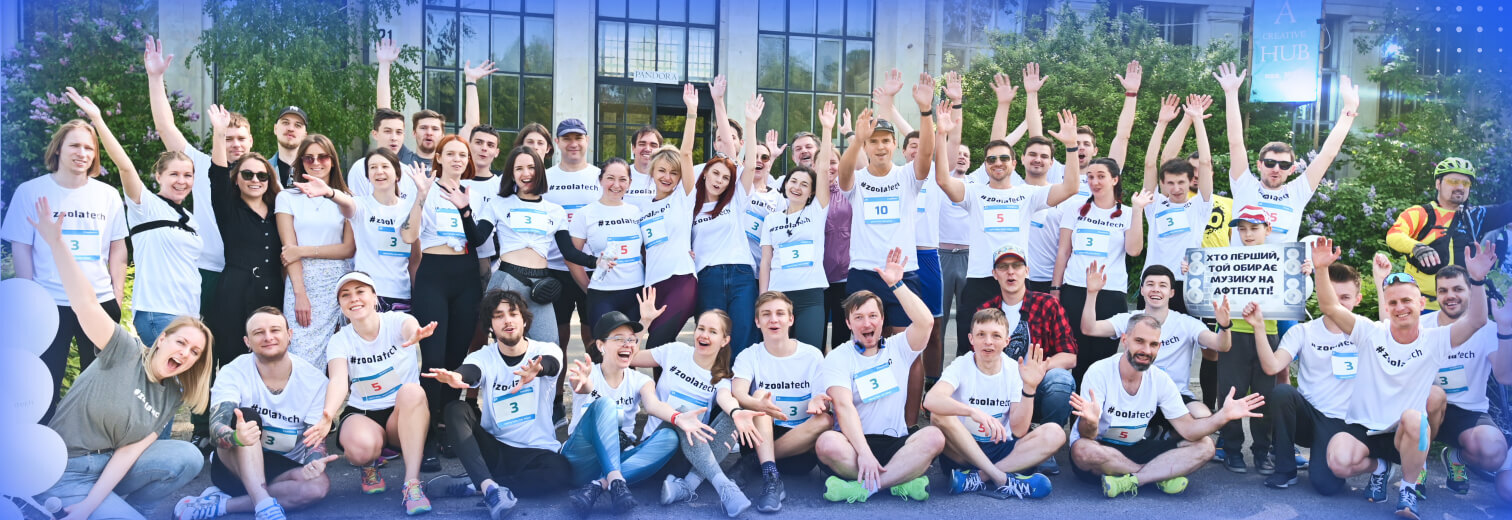
At Zoolatech, we create engineering teams for industry leaders across the US and Europe — teams that move fast, think big, and deliver strong impact.
96%
Client Satisfaction
300+
Successful Projects
2017
Year Founded
98%
Retention Rate
team sport photo
At Zoolatech, we create engineering teams for industry leaders across the US and Europe — teams that move fast, think big, and deliver strong impact.
Engineering Excellence. Every Time.
main award png (1)
At Zoolatech, we create engineering teams for industry leaders across the US and Europe — teams that move fast, think big, and deliver strong impact.
team sport photo
600+
Employees
Headquarters
USA
Development Centers
PL
UA
MX
TR
Questions You May Have

What is MLOps implementation?

MLOps implementation is the process of building the infrastructure, pipelines, and operational practices that allow machine learning models to be deployed, monitored, retrained, and maintained reliably in production environments at scale.

How long does MLOps implementation take?

A structured MLOps implementation typically spans 8–16 weeks from infrastructure assessment to initial production deployment, depending on your existing ML maturity, tool complexity, and integration scope.

What tools are used in MLOps?

The specific toolchain depends on your environment and requirements, but commonly includes MLflow or Weights & Biases for experiment tracking, Kubeflow or Airflow for pipeline orchestration, Kubernetes for deployment, Terraform for infrastructure, and AWS, Azure, or GCP for cloud compute.

Do you provide MLOps consultants?

Yes. Every MLOps engagement includes senior engineers with hands-on implementation experience and a dedicated Delivery Manager who owns timeline, quality, and stakeholder communication throughout the engagement.

How does MLOps improve ML performance?

MLOps improves ML performance by automating retraining when models degrade, providing continuous monitoring that detects drift before it affects outputs, and reducing the manual overhead that currently delays model updates in most organizations.

Can you implement MLOps on our existing cloud infrastructure?

Yes. We implement MLOps toolchains within your existing AWS, Azure, or GCP environment, working within your security perimeter, access controls, and data residency requirements rather than requiring a parallel infrastructure build.

What engagement models do you offer for MLOps?

We work through managed delivery with full implementation ownership, dedicated engineering team augmentation, or outcome-based fixed-scope engagements—each with defined milestones, a named Delivery Manager, and shared success metrics.