

































ML Model Engineering

Built for Production in Real-World Systems
Enterprise ML model engineering services that turn complex models into scalable, production-ready systems.
Reliable partner
Reliable partner
Experienced team
Experienced team
Smart solutions
Smart solutions

Industry Leaders We Work With

What We Deliver

ML Solutions We Build

Purpose-built ML model systems across five high-demand solution categories — each engineered for enterprise performance standards.

01

Predictive models

Regression and classification models that forecast outcomes, score risk, and drive operational decision-making across supply chain, finance, and customer management.
02

Recommendation systems

Collaborative and content-based filtering engines that personalize product, content, and service delivery at scale across retail, media, and SaaS platforms.
03

Anomaly detection

Unsupervised and semi-supervised models that identify outliers, fraud signals, and equipment failure patterns in real-time data streams with low false-positive rates.
04

Computer vision models

Convolutional and transformer-based vision models for object detection, image classification, and quality inspection in manufacturing, healthcare, and logistics environments.

More than 80% of AI projects never reach meaningful production deployment. — RAND Corporation

Zoolatech builds ML systems designed for production from day one — with the architecture, optimization, and validation discipline to get models live and keep them there.
Our Services

Custom ML Engineering

From architecture design to production deployment, our ML model engineering services cover every phase of the model lifecycle. Every engagement is led by senior ML engineers with hands-on production delivery experience.
98%

98%

Client Retention Rate
300+

300+

Successful Projects

End-to-end engineering

Full-cycle ML model delivery from data assessment through deployment and validation.

Architecture design

Custom model architecture designed around your data profile, performance targets, and infrastructure.

Model refactoring

Systematic rearchitecting of underperforming models to improve accuracy, stability, and efficiency.

Production readiness

Engineering, testing, and hardening to ensure models operate reliably at enterprise scale.

Algorithm selection

Rigorous evaluation of candidate algorithms matched to your problem structure and data characteristics.

Feature engineering

Data transformation and representation strategies that improve model signal and reduce noise.
Scalable structures

Model architectures built to handle increasing data volumes without retraining from scratch.

Performance design

High-performance model design optimized for inference speed, memory efficiency, and throughput.

Ready to Engineer Better Models?

Our ML engineering team is available for an initial consultation. Bring your model challenge and we'll outline a clear path forward.
Contact Sales
Optimization Services

Performance Enhancement

From compression to explainability — targeted optimization for every model layer.
Hyperparameter tuning

Systematic tuning for optimal model fit

  • Automated grid search optimization across parameter space
  • Cross-validation frameworks that prevent overfitting on held-out data
  • Learning rate scheduling and regularization tuning for stable convergence
  • Reproducible experiment tracking with full parameter audit trails
  • Multi-dataset performance benchmarking
Model compression

Smaller models, same performance

  • Structured and unstructured pruning to remove low-contribution weights
  • Quantization from without meaningful accuracy degradation
  • Knowledge distillation for smaller, high-performance models
  • ONNX export and optimization for cross-platform deployment
  • Operator fusion for faster inference execution
Latency optimization

Faster inference at production scale

  • Operator fusion and graph-level optimizations for reduced inference time
  • Hardware-aware model profiling across CPU, GPU, and edge targets
  • Batch inference tuning to maximize throughput under latency constraints
  • Model caching and serving infrastructure aligned to SLA requirements
  • Autoscaling policies for variable workload demand
Explainability

Interpretable outputs for enterprise use

  • SHAP and LIME integration for feature-level prediction explanations
  • Global and local interpretability frameworks for regulated industry use
  • Audit-ready explanation outputs compatible with compliance reporting
  • Model card documentation covering data, performance, and limitations
  • Decision traceability for high-stakes predictions
Throughput scaling

High-volume inference engineering

  • Distributed inference architecture for high-throughput workloads
  • Asynchronous request handling and queue management for peak load
  • Auto-scaling configurations aligned to demand patterns and cost targets
  • Load testing and stress validation before production promotion
  • Fault tolerance and failover mechanisms for reliability
Model auditing

Structured model health assessment

  • Baseline performance audits against accuracy and latency benchmarks
  • Drift detection setup to identify data and concept shift in production
  • Bias and fairness evaluation across protected attribute groups
  • Remediation roadmap with prioritized engineering actions and timelines
  • Monitoring thresholds for ongoing model health

“Companies adopting AI report 15.2% cost savings and 22.6% productivity improvement on average.” — Gartner

Zoolatech engineers custom-built ML systems designed for accuracy, inference speed, and operational reliability across the enterprise environments.
Testimonials

What Our Customers Say

“In the case of Zoolatech, it's a very tight partnership.
The team at Zoolatech is incredibly collaborative, and we work as a team despite being thousands of miles away from each other.”
Spencer Rascoff
CEO Match Group
5/5
“Zoolatech has been a key technology partner for Pandora,
enhancing our software development and deployment capabilities. They're ambitious, supportive, fast-moving, and well-skilled, with sound ethical values.”
Erika Romsics
Contract and Vendor Manager, Pandora
erica
5/5
“The apps they’ve developed give us the opportunity to get more customers.
We’re providing more services to target big customers. We can install jobs faster and identify reduce bottlenecks, so we’re providing a better customer experience.”
Aida Youssef
Senior Director of Software Engineering, Complete Solaria
5/5
“Zoolatech has access to a deep talent pool and knows how to identify client's needs.
With the help of Zoolatech, went from a very early and incomplete prototype to the MVP release, the first production release, and the first paying customer!”
Greg Wagenhoffer
CEO, GreenVisr
5/5
“Zoolatech enabled us to build a world-class engineering team quickly and efficiently.
Zoolatech's pre-screening process and engineer training are customized for providing effective engineers that can contribute immediately to accelerating product roadmaps.”
Shariq Minhas
CTO, SVSG
5/5
“We can recommend Zoolatech
for their talent pool, attention, ability to understand our requirements, candidate screening process and constant communication.”
Chaitanya Pallapothula
SVP, Tailored Brands, Inc.
5/5
“Zoolatech’s developers quickly became an integral part of our team effort
with whom we shared daily stand up calls. Overall, Zoolatech fit well with our needs for agile development and continued to adapt as our needs evolved.”
Forrest Glick
UX Designer, Stanford University
5/5
“Working with Zoolatech has been a driving force in our business offerings.
The team utilizes it's experience and expertise meshing with our internal team creating a positive work environment. Zoolatech is by far one of the best teams to work with in the industry.”
Kris Naidu
CEO, Zeacon
Kris Naidu CEO, Zeacon
5/5
Our Process

How We Engineer ML Models

A structured, repeatable delivery methodology that takes every ML model from assessment through production.
step 1

Model assessment and audit

We begin by auditing your existing model environment, data assets, and performance baselines to identify engineering gaps, bottlenecks, and the specific optimization opportunities most likely to deliver impact.
step 2

Engineering strategy and architecture planning

Our senior ML architects define the model structure, algorithm selection criteria, feature engineering approach, and infrastructure requirements before a single line of training code is written.
step 3

Iterative model development and optimization

Models are built in structured iterations — each cycle incorporating hyperparameter tuning, compression testing, and performance benchmarking against the production targets agreed in phase two.
step 4

Validation and reliability assurance

Every model passes a formal validation protocol covering accuracy benchmarks, inference latency, edge case behavior, bias evaluation, and compliance readiness before it is approved for production promotion.
step 5

Production handoff and knowledge transfer

We deliver production-ready model packages with full documentation, serving infrastructure guidance, monitoring recommendations, and an engineering knowledge transfer to your internal team.
Our Edge

What Makes Us Different

Getting ML models to production requires more than training accuracy.
Production focus

Production focus

Every model we engineer is designed for live deployment, not just proof-of-concept performance.
Architecture depth

Architecture depth

Senior ML engineers design custom model structures aligned to your data profile and scale requirements.
Model optimization

Model optimization

We reduce inference latency, memory overhead, and computational cost without sacrificing accuracy.
Cross-industry reach

Cross-industry reach

Our ML teams have delivered models across healthcare, retail, finance, energy, and telecommunications.
Cost transparency

Cost transparency

Understand compute costs, retraining frequency, and infrastructure overhead before build begins.
Framework agnostic

Framework agnostic

We work across PyTorch, TensorFlow, XGBoost, ONNX, and Scikit-learn to match your existing stack.
End-to-end delivery

End-to-end delivery

From model assessment and architecture planning to validation and handoff — we own the full engineering cycle.
Senior-heavy teams

Senior-heavy teams

Over 60% of our engineers are senior level, bringing hands-on model engineering experience to every project.
Business Impact

What Better Models Deliver

The measurable outcomes enterprise organizations achieve when ML models are engineered to production standards.

Model accuracy

Production-grade feature engineering, algorithm selection, and validation protocols improve prediction accuracy against baseline models by an average of 15–30% on comparable datasets.

Inference speed

Optimization techniques including quantization, pruning, and operator fusion reduce inference latency, supporting real-time use cases that prototype models cannot reliably serve.

System reliability

Formal validation protocols, drift detection setup, and hardened serving configurations reduce production incidents and enable long-term model stability without continuous manual intervention.

AI infrastructure

Scalable model architectures and infrastructure-aware design allow enterprises to expand model scope, increase data volume, and add use cases without rebuilding from the ground up.
Responsible Engineering

Secure by Design

Responsible AI practices and security controls are the standard components of every ML model engineering engagement.

Bias control

Zoolatech ML engineers apply fairness evaluation frameworks during model design to identify and mitigate bias across protected attribute groups.

Data governance

We enforce GDPR- and CCPA-compliant data governance with strict access controls, lineage tracking, and documentation for regulated industries.
Zoolatech quickly delivers senior engineers through rigorous multi-stage screening and global sourcing, ensuring only high-performing, project-ready talent joins your team.

1 month

To fill a position

60%

Senior developers

1M

Global talent pool
Our Tech Stack

Technologies We Engineer With

A curated ML engineering stack selected for production performance, framework interoperability, and enterprise deployment standards.
Python
Python
PyTorch
PyTorch
TensorFlow
TensorFlow
XGBoost
XGBoost
Scikit-learn
Scikit-learn
ONNX
ONNX
LightGBM
LightGBM
Hugging Face
Hugging Face
Apache Spark
Apache Spark
MLflow
MLflow
Kubeflow
Kubeflow
CUDA
CUDA
Docker
Docker
and other
Why Zoolatech

The Zoolatech Difference

The foremost reasons enterprise organizations choose Zoolatech for ML model engineering.

Ownership model

Your ML engagement runs under a single accountable team with no mid-project transitions or split responsibilities between phases.

Enterprise architecture

Proven enterprise ML delivery built for complex, large-scale production environments.

Cross-industry expertise

Domain-specific ML expertise gained from active programs across major regulated and commercial sectors.
Why Choose Us

Why Businesses Trust Us

logo
At Zoolatech, we create engineering teams for industry leaders across the US and Europe — teams that move fast, think big, and deliver strong impact.
96%
Client Satisfaction
300+
Successful Projects
2017
Year Founded
98%
Retention Rate
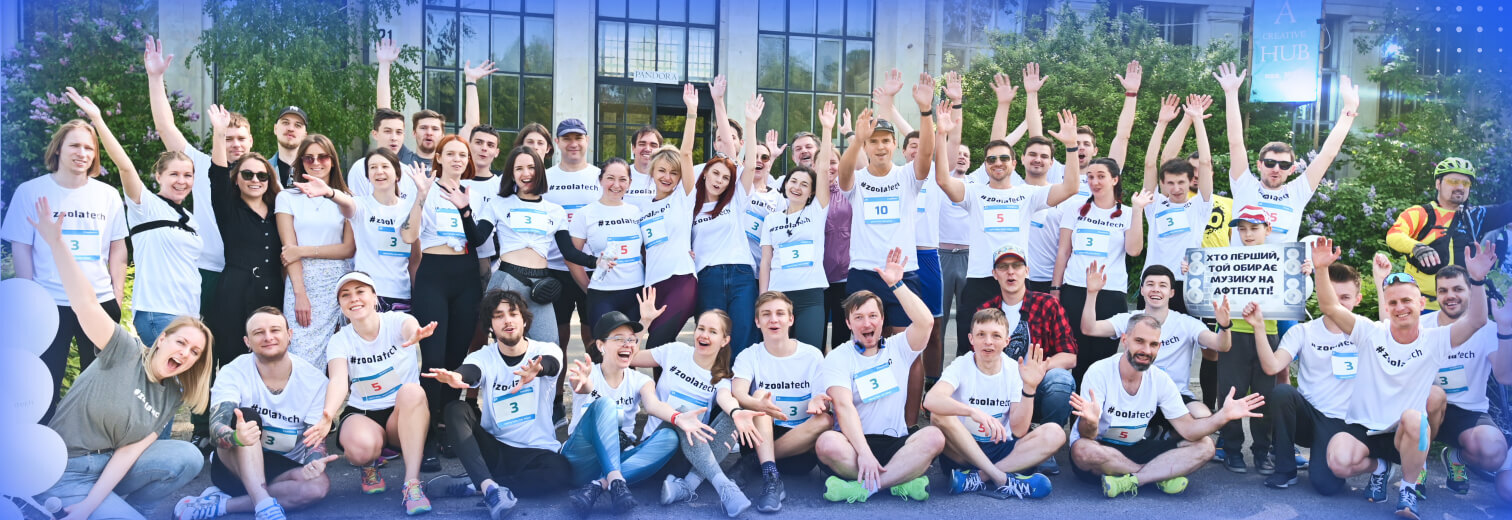
team sport photo
At Zoolatech, we create engineering teams for industry leaders across the US and Europe — teams that move fast, think big, and deliver strong impact.
Engineering Excellence. Every Time.
main award png (1)
At Zoolatech, we create engineering teams for industry leaders across the US and Europe — teams that move fast, think big, and deliver strong impact.
team sport photo
600+
Employees
Headquarters
USA
Development Centers
PL
UA
MX
TR
Questions You May Have

What is ML model engineering?

ML model engineering is the discipline of designing, building, optimizing, and validating machine learning models to meet production performance standards — covering architecture design, algorithm selection, feature engineering, optimization, and reliability assurance from prototype to production. It is the engineering practice that bridges data science experimentation and enterprise-scale AI deployment.

How is ML model engineering different from ML development?

ML development covers the broader end-to-end process of building AI applications, including data pipelines, model training, and deployment infrastructure such as MLOps implementation and serving layers. ML model engineering focuses specifically on the model itself — its architecture, performance characteristics, optimization, and production reliability — rather than the surrounding application stack.

How long does ML model optimization take?

A focused optimization engagement covering hyperparameter tuning, model compression, and validation typically runs 4–10 weeks, depending on model complexity and the performance gaps identified in the initial audit. Larger architecture redesign or refactoring projects that require rebuilding model structure from the ground up may require 3–6 months to complete to production-ready standard.

What tools does Zoolatech use for ML model engineering?

Our core stack includes Python, PyTorch, TensorFlow, XGBoost, Scikit-learn, and ONNX for model development and optimization, alongside MLflow for experiment tracking, Ray for distributed training, and Docker for containerized deployment. Tool selection is always matched to your existing infrastructure, target deployment environment, and inference latency requirements.

How do you ensure model reliability in production?

Every model Zoolatech engineers passes a formal validation protocol covering accuracy benchmarks, inference latency testing, edge case evaluation, bias assessment, and compliance readiness before production promotion. We also deliver drift detection configurations and monitoring recommendations so your team can identify and respond to model degradation over time without requiring a full re-engineering cycle.

Can Zoolatech work with our existing models rather than building from scratch?

Yes — a significant share of our engagements involve model refactoring, optimization, or architecture redesign of existing systems rather than greenfield builds. Our process begins with a structured model audit to identify the engineering gaps causing performance, reliability, or scalability issues, then applies targeted interventions to improve what exists rather than replacing it wholesale.

Does Zoolatech offer broader AI and machine learning services beyond model engineering?

Yes — Zoolatech offers a full spectrum of AI engineering services including machine learning development, MLOps implementation, and generative AI model development. ML model engineering is one specialized service within our broader AI practice, which covers the complete delivery lifecycle from data pipeline architecture through production AI operations.