








Quick Summary
- Website cost spans two orders of magnitude, from $5,000-20,000 for a SaaS storefront in 2-6 weeks to $250,000-$1M+ for an enterprise ecosystem over 9-18 months.
- Mobile apps price separately, from $25,000-50,000 for a basic commerce app to past $300,000 for an enterprise platform with loyalty, AI, and real-time inventory.
- Maintenance is the line most plans miss, running from $100-1,000 a month on SaaS to over $20,000 a month for an enterprise system.
- SaaS stops fitting at a predictable point: complex ERP integration, custom checkout logic, omnichannel inventory sync, AI personalization, or multi-region operations.
- More than 43% of all websites now run on a CMS and mobile already generates over half of online holiday revenue, so the platform choice is really a scalability decision.
How much does an ecommerce website cost in 2026? Whether you want to build an ecommerce website using a website builder like Shopify or invest in custom ecommerce website development, costs can range from free trials on a DIY website builder to more than $1 million.
The cost of an ecommerce website depends on design, development, integrations, ecommerce functionality, and long-term scalability. This guide provides a practical ecommerce website cost breakdown to help you estimate the total costs of building an online store, set a realistic ecommerce website budget, and choose the right approach for your ecommerce business.
What Affects Ecommerce Website Cost and Development Cost
The cost to build an ecommerce website depends on far more than design and development hours.
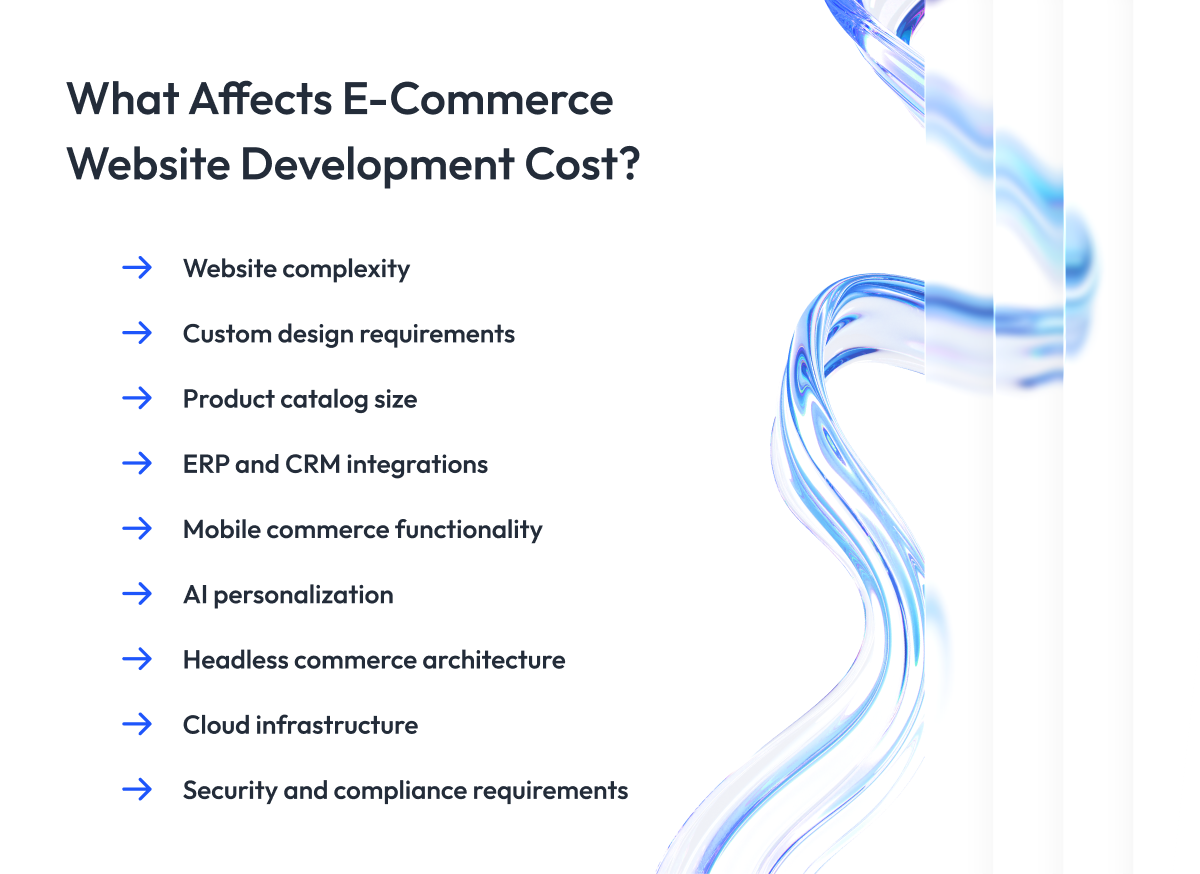
In 2026, pricing is influenced by platform architecture, integrations, scalability requirements, AI functionality, and omnichannel commerce expectations. A major factor in the cost is whether your ecommerce store needs standard features or custom logic.
Key cost factors include:
- Website complexity
- Custom design requirements
- Product catalog size
- ERP and CRM integrations
- Mobile commerce functionality
- AI personalization
- Headless commerce architecture
- Cloud infrastructure
- Security and compliance requirements
Statista research continues to show steady global e-commerce growth and rising customer expectations for digital shopping experiences across the ecommerce market.
When to Choose Shopify or Another Ecommerce Website Builder
More than 43% of all websites now use a content management system (CMS), reflecting the continued popularity of SaaS, website builders, and template-driven website platforms.
The reasons are straightforward:
- Lower upfront ecommerce website cost
- Faster deployment timelines
- Built-in hosting and maintenance
- Preconfigured integrations and templates
SaaS commerce platforms remain a strong option for smaller businesses with limited customization needs that want to launch an ecommerce website quickly.
Popular ecommerce platforms like Shopify, Wix, BigCommerce, and Squarespace allow organizations to create a website quickly while minimizing initial development cost. Many ecommerce platforms offer built-in ecommerce features, hosting, and security that simplify building an online store, and some let you start a basic ecommerce website for free.
For businesses with simple operational requirements, SaaS platforms can reduce initial ecommerce website design cost and decrease your ecommerce website time to market.
Businesses using a DIY website builder often benefit from lower upfront costs, although ecommerce website costs can increase as customization and integrations grow.
When SaaS Ecommerce Websites Become a Limitation
Many businesses eventually outgrow template-driven ecommerce websites and commerce platforms.
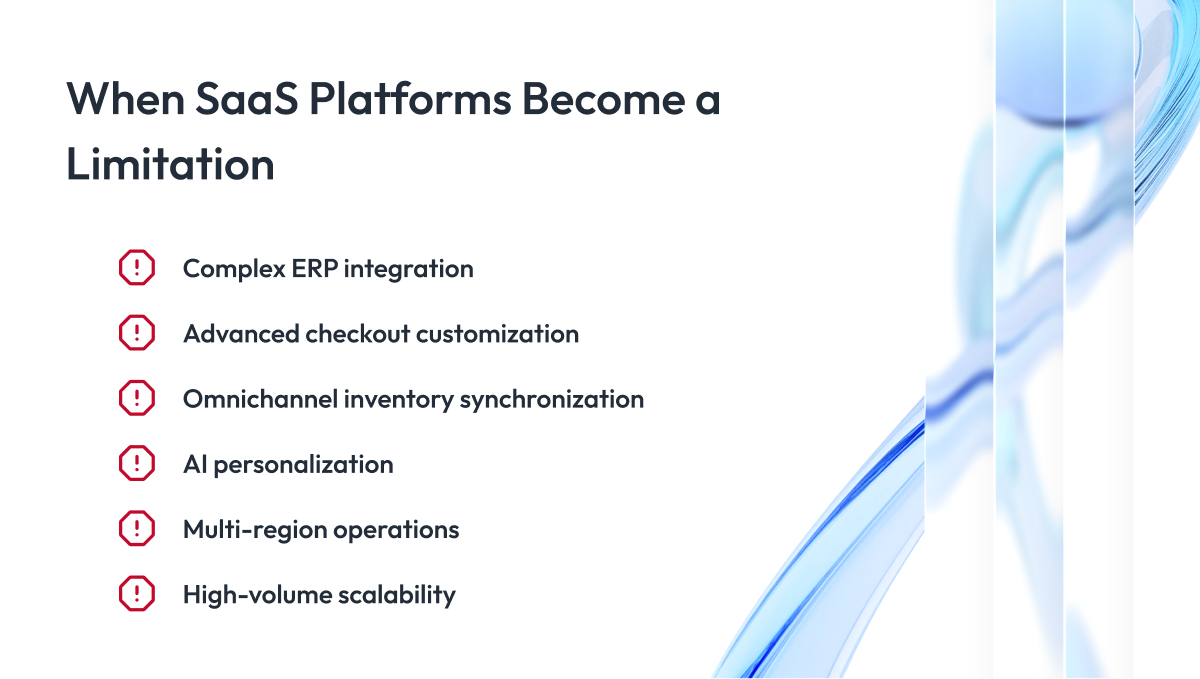
This usually happens when organizations need:
- Complex ERP integration
- Advanced checkout customization
- Omnichannel inventory synchronization
- AI personalization
- Multi-region operations
- High-volume scalability
At that stage, the real cost for ecommerce website development includes operational inefficiencies, platform limitations, and integration constraints that impact your ecommerce growth.
Zoolatech’s legacy modernization services help organizations evolve beyond restrictive commerce architectures.
Ecommerce Website Cost Breakdown by Business Size
Ecommerce website pricing varies significantly depending on operational complexity and platform architecture.
Website development costs vary because every ecommerce website includes different requirements. A basic ecommerce website may only need standard templates and integrations, while a custom-built ecommerce platform may require advanced architecture, AI services, and omnichannel capabilities.
| Business Type | Typical Website Scope | Estimated Cost Range |
| Startup or small business | SaaS storefront with basic customization | $5,000 – $20,000 |
| Growing e-commerce business | Custom storefront and integrations | $30,000 – $80,000 |
| Mid-market retailer | Custom commerce platform | $80,000 – $250,000 |
| Enterprise commerce ecosystem | Omnichannel and headless architecture | $250,000 – $1M+ |
Custom Ecommerce Website Cost and Development Considerations
Custom ecommerce website cost is higher than SaaS implementation pricing, but it provides greater flexibility, scalability, and operational control.
Custom ecommerce development is typically justified when businesses require capabilities that standard ecommerce website builders cannot support. The cost of building a custom website with a web development company is higher, but custom ecommerce solutions provide greater flexibility and long-term scalability.
- Unique customer experiences
- Complex integrations
- Large product catalogs
- Advanced search and personalization
- Scalable omnichannel operations
- Custom checkout logic
For many enterprise retailers, the cost of creating a custom ecommerce website is justified because it improves customer experience, supports complex ecommerce functionality, and reduces long-term operational constraints.
Unlike SaaS systems, custom platforms allow organizations to control architecture decisions and long-term scalability when they build your ecommerce website for growth.
Zoolatech’s software development services support scalable enterprise commerce systems and modernization initiatives.
How Much Does It Cost to Build an Ecommerce Website in 2026?
One of the most common questions retailers ask is: how much does it cost to build an ecommerce website? The answer depends on platform choice, custom design requirements, integrations, and long-term business goals.
The costs to build a new ecommerce website depend on architecture complexity, integrations, and operational scale.
| Project Type | Estimated Timeline | Estimated Cost |
| Basic SaaS storefront | 2–6 weeks | $5,000 – $20,000 |
| Custom SMB commerce website | 2–4 months | $30,000 – $80,000 |
| Mid-market custom platform | 4–8 months | $80,000 – $250,000 |
| Enterprise commerce ecosystem | 9–18 months | $250,000 – $1M+ |
Enterprise systems usually involve:
- ERP integration
- CRM synchronization
- Payment orchestration
- Inventory management
- AI recommendation engines
- Cloud-native infrastructure
The ecommerce website’s cost can range widely because costs depend on business size, integration depth, technology choices, and the need for custom design. A calculator can help estimate initial costs, but enterprise ecommerce websites usually require deeper discovery with an ecommerce web development company before final pricing.
E-Commerce Website Maintenance Cost and Total Costs
Ecommerce website maintenance cost is often underestimated during early planning.
The cost of your ecommerce website does not end when the website goes live. Ongoing maintenance, security, hosting, and performance optimization contribute to the overall ecommerce website cost and long-term success of ecommerce websites.
Ongoing operational costs commonly include:
- Cloud hosting
- Security updates
- Performance optimization
- DevOps support
- Third-party integrations
- Feature enhancements
- Compliance management
| Maintenance Area | Typical Monthly Cost |
| Basic SaaS maintenance | $100 – $1,000 |
| Custom SMB platform | $1,000 – $5,000 |
| Mid-market commerce system | $5,000 – $20,000 |
| Enterprise commerce ecosystem | $20,000+ |
Gartner research continues to emphasize operational resilience and scalability as critical enterprise technology priorities.
Why Mobile Commerce Matters More Than Ever for Online Shopping
Mobile commerce now dominates a large share of ecommerce traffic and online shopping revenue. A successful ecommerce website must provide a seamless online shopping experience across mobile devices, tablets, and desktop environments, so shoppers can navigate your website easily on any screen.
Adobe Digital Insights reported that mobile generated more than half of online holiday revenue.
Mobile commerce investments now directly affect:
- Customer retention
- Conversion rates
- Average order value
- Customer lifetime value
- Brand engagement
Custom mobile applications are often significantly faster and more personalized than a mobile ecommerce site.
How Much Does E-Commerce App Development Cost?
Mobile commerce applications now require far more than a simple storefront experience.
Modern retail apps include personalization engines, omnichannel integrations, loyalty systems, push notifications, AI recommendations, and real-time inventory synchronization.
These capabilities significantly affect ecommerce website development cost and mobile commerce investment planning.
Key cost drivers include:
- Native iOS and Android development
- Backend infrastructure
- Cloud scalability
- Payment integrations
- Loyalty systems
- AI personalization
- Push notification systems
- Analytics and customer tracking
| App Complexity | Typical Cost Range |
| Basic mobile commerce app | $25,000 – $50,000 |
| Mid-level custom commerce app | $50,000 – $120,000 |
| Enterprise mobile commerce platform | $120,000 – $300,000+ |
Enterprise retailers increasingly invest in mobile ecosystems because app users often demonstrate higher retention and stronger customer lifetime value.
Zoolatech’s mobile application development services support scalable mobile commerce experiences and omnichannel retail platforms.
Headless and Composable Commerce for Complex Ecommerce Websites
Modern enterprise retailers increasingly adopt headless and composable commerce architectures.
This approach separates frontend experiences from backend commerce logic.
Benefits include:
- Faster frontend innovation
- Better omnichannel scalability
- Flexible integrations
- Improved mobile performance
- Independent service scaling
Many enterprise ecommerce websites now adopt composable architecture because even the best ecommerce platforms like Shopify may not provide enough flexibility for complex ecommerce operations.
Shopify enterprise research continues to highlight growing adoption of headless commerce architectures.
Zoolatech’s cloud engineering services support composable and cloud-native commerce modernization.
How AI Is Changing E-Commerce Development
AI is becoming one of the largest drivers of modern commerce platform investment.
Retailers increasingly use AI to improve customer experience, increase operational efficiency, and optimize digital merchandising.
AI increasingly impacts your ecommerce website through personalization, search optimization, merchandising automation, and predictive analytics. These capabilities can increase the cost but often deliver measurable ROI.
Salesforce commerce research continues to show growing customer interaction with AI-powered shopping experiences.
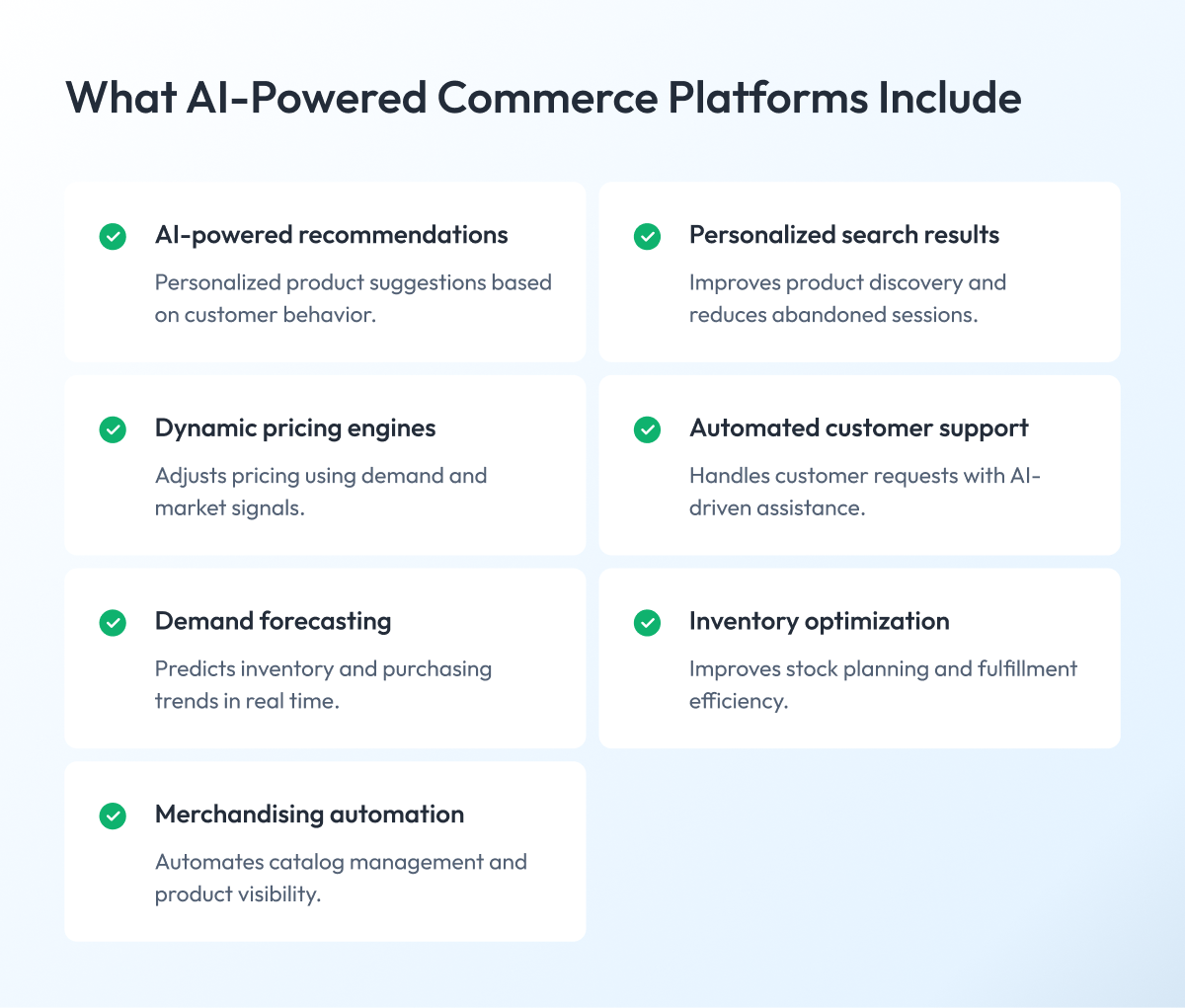
Modern AI-enabled commerce platforms commonly include:
- AI-powered product recommendations
- Personalized search results
- Dynamic pricing engines
- Automated customer support
- Demand forecasting
- Inventory optimization
- Merchandising automation
AI personalization engines now directly influence conversion rates and customer retention.
Modern recommendation systems analyze customer behavior, purchase history, browsing patterns, and inventory trends in real time.
Retailers also use AI-powered search to improve product discovery and reduce abandoned sessions.
AI is also transforming backend commerce operations.
Enterprise retailers increasingly use AI for:
- Supply chain optimization
- Fraud detection
- Automated catalog management
- Pricing optimization
- Customer segmentation
- Operational forecasting
These systems require scalable cloud infrastructure, real-time data processing, and strong integration architecture to ensure your website performs under load.
As AI adoption increases, businesses often need more flexible commerce platforms capable of supporting high-volume data flows and modular services.
That is one reason many enterprise retailers move toward headless and composable commerce architectures.
Zoolatech’s AI engineering services help organizations integrate production-ready AI into scalable commerce ecosystems.
Case Study: Building a Unified Retail Merchandising Platform
Zoolatech helped a major retailer modernize merchandising operations through a scalable cloud-native platform built for omnichannel commerce growth.
The project consolidated fragmented legacy systems into a centralized Retail Hub supporting real-time merchandising workflows, operational visibility, and scalable integrations.
Challenge
The retailer struggled with disconnected systems, fragmented workflows, and limited operational visibility across merchandising operations.
Existing tools made it difficult to scale workflows, onboard new applications, and support evolving omnichannel commerce requirements.
Solution
Zoolatech enhanced and expanded the client’s Retail Hub platform using a microservices and microfrontend architecture.
The engagement included:
- Cloud-native platform modernization
- Microservices and microfrontend architecture
- Kafka-based event-driven communication
- AWS infrastructure and analytics integration
- Centralized task and merchandising workflows
Outcome
The retailer improved operational efficiency, scalability, and cross-team collaboration.
The new platform enabled real-time insights, easier application onboarding, and long-term flexibility for evolving commerce operations.
Conclusion
The real ecommerce website cost depends on scalability requirements, integrations, customer experience goals, and operational complexity. While costs vary significantly, businesses that carefully evaluate their ecommerce platform, website design, development approach, and long-term maintenance requirements are better positioned to build an ecommerce website that supports sustainable growth.
Whether you choose a website builder, platforms like Shopify, or custom ecommerce website development, the costs to build depend on the features required, operational scale, and future business objectives. The overall cost of creating an ecommerce website can range from a few thousand dollars for a basic website to more than $1 million for complex enterprise ecosystems.
While SaaS platforms reduce initial investment, enterprise organizations often require custom commerce ecosystems that support omnichannel growth, AI integration, and operational flexibility.
The strongest commerce platforms are designed for scalability, performance, and continuous evolution.
Questions You May Have
How much does an ecommerce website cost?
Basic SaaS storefronts may cost between $5,000 and $20,000, while enterprise commerce platforms often exceed $250,000.
What affects ecommerce website development cost?
Major factors include integrations, custom functionality, scalability requirements, mobile commerce, AI features, and platform architecture.
What is the average ecommerce website maintenance cost?
Maintenance costs range from a few hundred dollars monthly for SaaS stores to more than $20,000 monthly for enterprise commerce systems.
What is the difference between SaaS and custom ecommerce development?
SaaS platforms provide faster deployment and lower upfront costs, while custom development offers greater flexibility and scalability.
How much does it cost to build an ecommerce app?
Basic commerce apps usually start around $25,000, while enterprise-grade mobile commerce platforms can exceed $300,000.
When should a business invest in custom ecommerce development?
Custom development is usually justified when businesses need advanced integrations, omnichannel scalability, AI personalization, or complex operational workflows.